Working Principle of PU Sandwich Panel Production Line
Sep 22, 2026
PU sandwich panel production line realizes continuous automated manufacturing of composite insulation panels through coordinated mechanical, chemical and pneumatic systems. It integrates material feeding, foaming, laminating, curing and cutting processes, turning raw polyurethane materials and metal sheets into integrated panels with heat preservation and structural support functions efficiently.
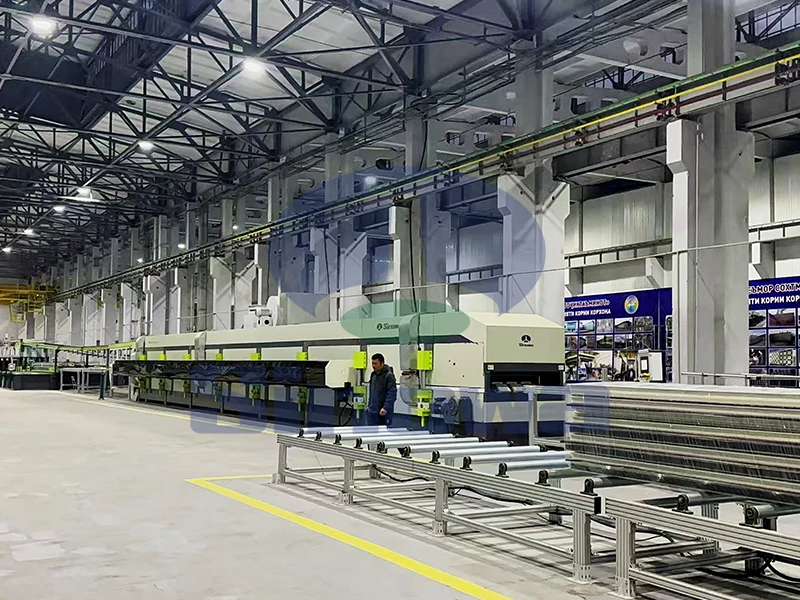
The entire production process of the PU sandwich panel line starts with the precise feeding and pretreatment of surface base materials, which lays a solid foundation for the subsequent composite molding process. In this stage, metal coil sheets, the main surface materials of sandwich panels, are unwound steadily by professional unwinding devices with constant tension control. The tension adjustment system effectively avoids sheet deformation, wrinkling and offset during the unwinding process, ensuring the flatness and dimensional stability of the base materials. After unwinding, the metal sheets will go through continuous leveling and surface cleaning procedures to remove dust, oil stains and oxide layers on the surface. These impurities would otherwise affect the bonding tightness between the metal sheet and PU foam layer, leading to delamination and quality defects of the finished panel. Meanwhile, auxiliary material feeding mechanisms synchronously prepare edge sealing materials and auxiliary filling materials according to production specifications, and transport them to the designated processing positions in a fixed proportion and speed. The whole feeding and pretreatment process adopts automatic linkage control, which keeps the material transmission speed consistent with the operating rhythm of subsequent processes, avoiding material accumulation or supply interruption, and realizing the continuous and orderly start of the whole production flow.
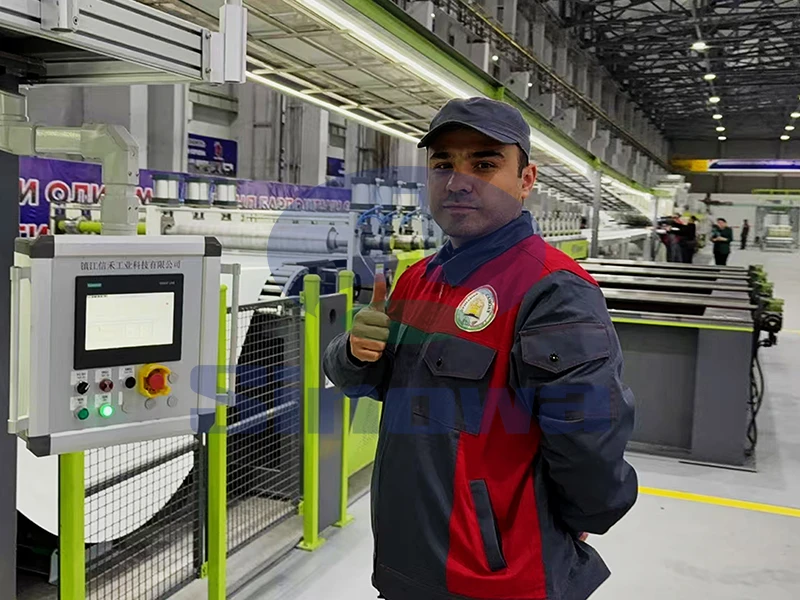
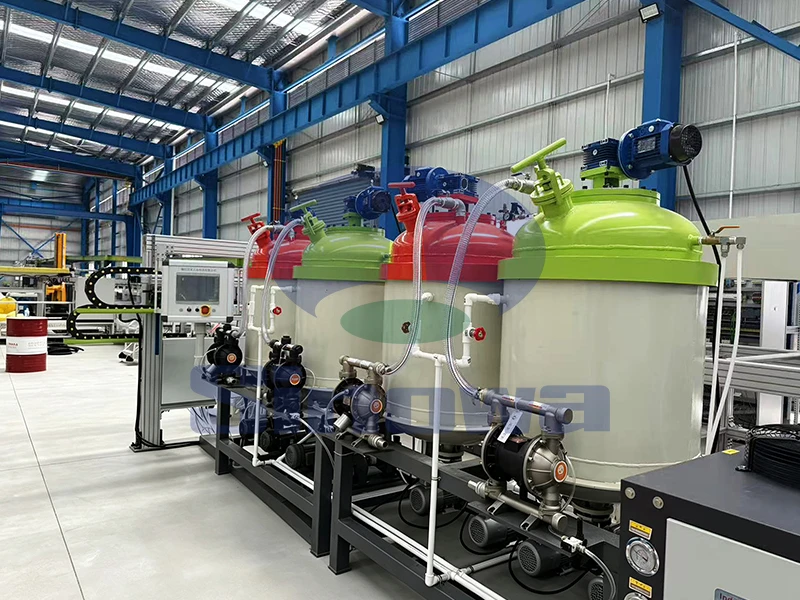
The laminating and pressure shaping process is a key link to form the integrated composite structure of PU sandwich panels, which ensures the tight combination of the upper and lower metal sheets and the PU foam inner core. After the PU raw materials are poured in place, the upper metal sheet that has completed pretreatment and transmission is accurately covered on the surface of the foaming raw materials through the automatic laminating mechanism. The production line adopts a segmented constant-pressure pressing system, which applies uniform and stable mechanical pressure to the composite board structure composed of upper and lower metal sheets and intermediate PU materials. The pressure value is precisely adjusted according to the panel thickness and material characteristics, which can not only promote the full expansion and filling of PU foam, but also prevent excessive pressure from causing foam pore collapse and metal sheet deformation. In the closed pressure molding space, the polyurethane materials complete continuous foaming, curing and bonding reactions. The foam pores grow uniformly and form a closed-cell structure, while the reactive groups on the surface of PU materials produce strong adhesive force with the metal sheet surface, realizing seamless bonding between layers. The whole pressure shaping process maintains a stable operating speed, matching the foaming reaction cycle of polyurethane, so that each batch of panels can achieve consistent structural density and bonding strength.
Constant temperature curing and structural stabilization treatment is an indispensable process to optimize the comprehensive performance of PU sandwich panels and eliminate internal structural stress. After preliminary pressure molding, the semi-finished panels enter the independent constant temperature curing channel of the production line. The curing channel is equipped with a circulating temperature control system to maintain a stable internal temperature environment, which provides optimal conditions for the complete curing of polyurethane foam. In this process, the residual chemical reactions inside the PU foam are fully completed, the foam structure tends to be stable, and the closed-cell rate and structural compactness of the inner core are further improved. Meanwhile, the bonding interface between the foam inner core and metal sheets undergoes secondary curing reinforcement, which significantly enhances the peeling resistance and shear resistance of the composite structure. In addition, the slow and uniform temperature conduction in the curing channel can effectively eliminate the internal stress generated in the processes of material lamination and pressure molding, avoiding panel warping, bending and size deviation in the subsequent use process. The curing time is automatically matched according to the panel thickness and production speed, ensuring that all performance indexes of the panel reach a stable and qualified state.
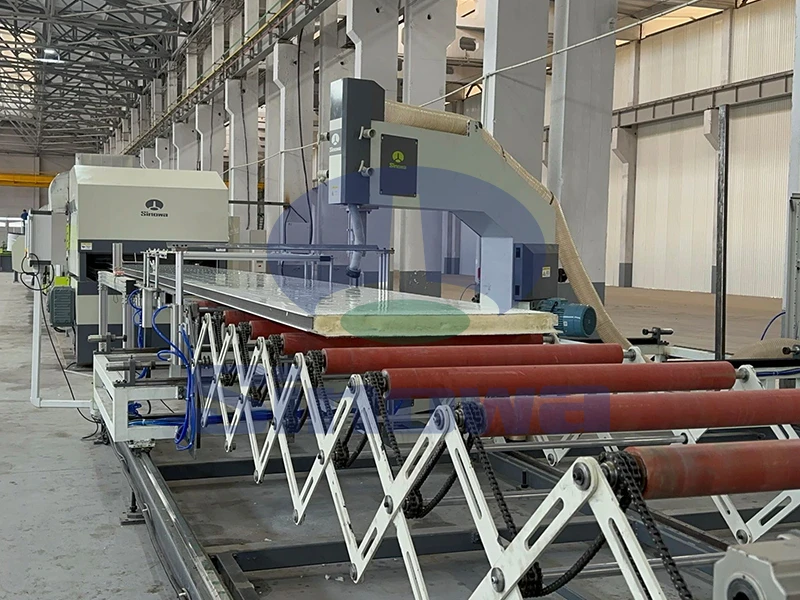
Fixed-length cutting and post-processing finishing processes realize the final sizing and quality optimization of finished PU sandwich panels. After completing curing and structural stabilization, the continuous long-strip composite panels are transported to the precision cutting station through the automatic conveying system. The production line adopts servo-driven fixed-length cutting equipment, which can accurately identify and set the cutting size according to production requirements, realizing high-precision fixed-length cutting of panels. The high-speed cutting blade with wear-resistant treatment ensures smooth and flat cutting sections without burrs, cracks or foam peeling, which guarantees the dimensional accuracy and appearance quality of finished panels. After cutting, the panels enter the post-processing link, including edge trimming, surface finishing and defect inspection. The edge trimming mechanism polishes and trims the panel edges to make the overall outline neat and standardized. The automatic inspection system preliminarily detects surface flatness, bonding integrity and cutting precision of the panels, screening out unqualified products in time. Finally, the qualified finished panels are automatically stacked and sorted by the stacking device, completing the whole automated production process.
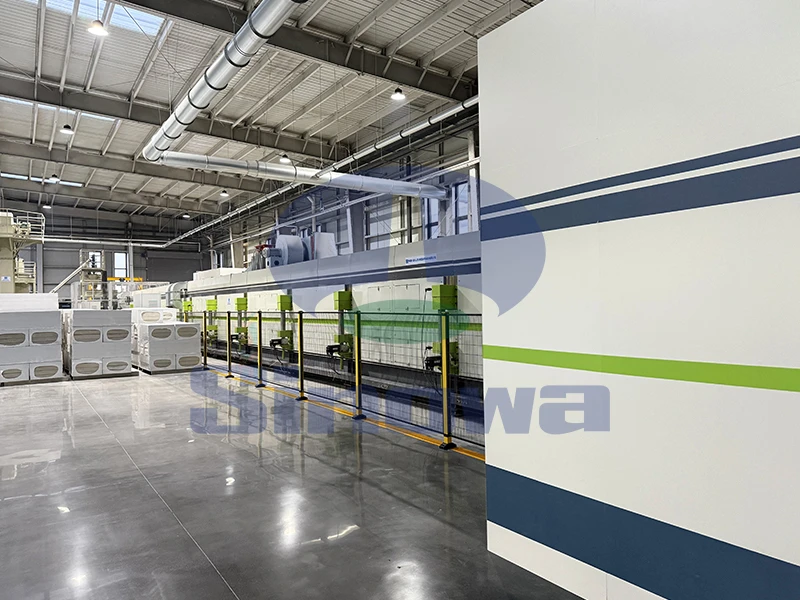
The overall linkage operation of the PU sandwich panel production line relies on the coordinated control of mechanical transmission, chemical reaction regulation and automatic sensing systems. All production links from material feeding to finished product stacking are connected in an orderly manner, realizing continuous and streamlined production. The automated precision control mode not only effectively reduces manual operation errors and improves production efficiency, but also ensures the consistency and stability of the structural performance, appearance quality and dimensional accuracy of each batch of sandwich panels. The scientific production principle enables the manufactured PU sandwich panels to have excellent heat insulation, sound insulation, compression resistance and weather resistance, meeting the application needs of various building enclosure and industrial insulation scenarios.
https://www.cnsinowa.com/faqs/working-principle-of-pu-sandwich-panel-production-line.html
Main Products
-

Continuous PU Sandwich Panel Production Line
This continuous PU sandwich panel production line is an integrated automatic equipment. It covers uncoiling, forming, foaming, curing and cutting processes. With automatic raw material proportioning and precise temperature & pressure control, PIR sandwich panel production line continuously composites panels with double skins. Polyurethane sandwich panel production line stably produces steel and aluminum sandwich panels. Featuring high automation, the line makes fireproof and thermal-insulation panels for building enclosure and cold storage. -

Rock Wool Sandwich Panel Production Line
Continuous rockwool sandwich panel production line is an automatic integrated production equipment, consisting of uncoiling, forming, gluing and compounding, heating curing, fixed-length cutting, automatic stacking and other modules. The mineral wool sandwich panel production line continuously conveys color steel plates and rock wool core materials to automatically complete lamination and curing, which can produce fireproof and thermal insulation sandwich panels. Featuring high automation degree and stable operation, this production line is suitable for mass production of panels used for building walls, roofs and other scenarios. -

Phenolic Insulation Board Production Line
This integrated automatic production line continuously manufactures PU and phenolic insulation boards. The insulation board production line covers raw material proportioning, high-pressure foaming, laminating, curing and fixed-length cutting. Featuring high automation and stable molding, the insulation panel production line supports various surface materials. PU boards offer excellent thermal insulation, while phenolic boards have superior fire resistance. These products are widely used in construction, cold chain, ventilation ducts and other thermal insulation fields.
Other FAQs
- Wearing Parts Replacement Cycle Of PU Sandwich Panel Production Line Equipment
- Sandwich Panel Production Line Upgrade And Expansion Feasible Solutions
- Standard Panel Thickness Range Of PU Sandwich Panel Line
- Equipment Foundation Construction Standard For PU Sandwich Panel Line
- Anti-corrosion Treatment Standard For PU Sandwich Panel Equipment