How To Maintain Foam Core Sandwich Panel Line Daily
Oct 13, 2026
Maintaining a foam core sandwich panel production line on a daily basis is essential for preserving product quality, extending equipment life, and preventing unexpected downtime. A well-executed maintenance routine catches small issues before they escalate into costly failures, ensures consistent panel performance, and creates a safer working environment for operators.
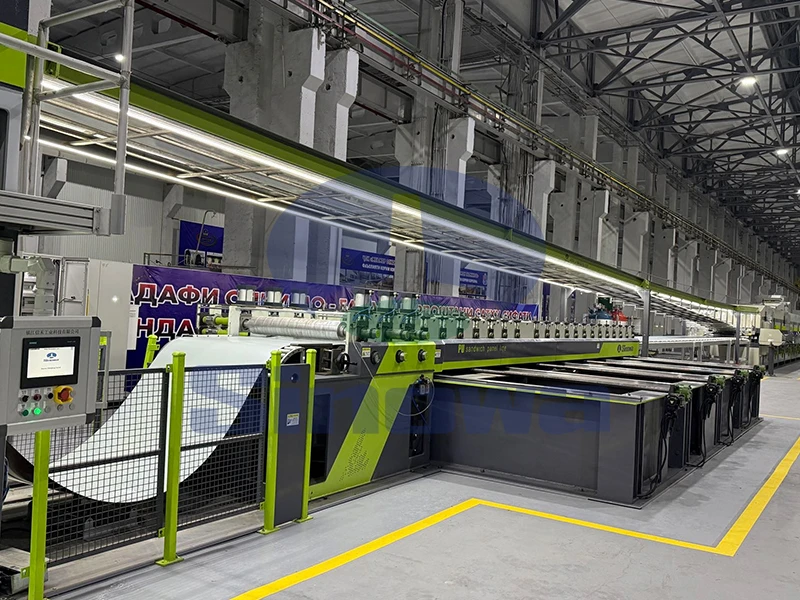
Begin each day with a thorough cleaning of the entire line, starting from the raw material entry point and moving all the way through to the finished panel exit. Foam residue, adhesive overspray, and dust buildup can accumulate quickly on rollers, belts, and guide rails, causing uneven feeding, surface blemishes, or misalignment over time. Use soft brushes and non-abrasive cloths to wipe down exposed surfaces, and clear away any cured foam scraps that may have clung to cutter blades or side trimming mechanisms. Pay special attention to the nip rollers and laminating platforms, because even a small fragment of hardened foam can imprint a visible defect across the face sheets of every panel produced that shift. Regular cleaning also gives technicians a natural opportunity to inspect surfaces for wear, corrosion, or unusual scratches that might signal a developing mechanical problem.
The conveyor belt system deserves particular attention during the daily walkthrough. Check the belt tension by observing how smoothly it tracks under no-load conditions; a belt that drifts to one side or shows visible slack can cause panel skewing and uneven edge bonding. Look for signs of fraying, cracking, or localized glazing on the belt surface, and confirm that all tracking rollers rotate freely without grinding or stiff spots. If the belt uses a textured or release coating, examine whether that layer is wearing thin in any section, because a compromised release surface can cause face sheets to stick or tear during separation. Lubricate the belt's end rollers according to the manufacturer's guidance, taking care not to over-apply grease, which can drip onto panels and contaminate the adhesive bond line. A clean, properly tensioned belt keeps materials moving at a consistent speed, which directly translates into uniform panel thickness and reliable bond strength.
The heating or curing section of the line must be inspected carefully before startup. Foam core panels depend on controlled heat to activate adhesives and stabilize the foam core, so any irregularity in the heating zones can lead to delamination, blistering, or incomplete curing. Verify that every zone reaches its setpoint within the expected warm-up window, and watch for hot spots or cool spots by running a simple temperature check across the panel width. Clean any dust or fiber accumulation from heating elements or platens, because insulating debris reduces heat transfer and forces the equipment to work harder than necessary. Inspect the condition of any silicone or PTFE-covered pressure plates that contact the hot faces of the panels; scratched or torn covers can leave marks on the metal skins. Also confirm that the cooling section downstream is functioning as intended, since rapid or uneven cooling after the heating stage can introduce internal stresses that cause panels to warp after stacking.
Cutting and trimming equipment should be examined for sharpness and alignment on a daily basis. Dull circular saw blades, worn guillotine knives, or misconfigured trimming wheels produce ragged edges, dimensional inconsistencies, and excess foam dust that spreads throughout the line. Confirm that the cutting length encoder is reading correctly by measuring the first few finished panels against the target dimension, because encoder drift is a common cause of cumulative length errors. Clear any built-up adhesive or foam residue from the cutting guard and dust extraction hood, and check that the vacuum or blower system for chip removal is operating at full suction. If pneumatic cylinders actuate the cutters, listen for air leaks and confirm that the pressure gauge sits within the recommended operating range. Small adjustments made at the start of a shift prevent the rejection rate from climbing as the day progresses.
The adhesive application system is another critical area for daily attention. Whether the line uses a sprayed, rolled, or extruded adhesive method, the nozzles, applicator heads, and distribution manifolds need to be cleared of any partially cured material that can clog flow paths. Check the adhesive temperature if the system relies on heated delivery, because viscosity shifts dramatically with temperature and directly affects coating weight and bond quality. Inspect the hoses and fittings for seepage or damp spots, and verify that the pump pressure is stable during operation. A consistent, even adhesive bead or film is the foundation of a durable sandwich panel, so any deviation in pattern, thickness, or coverage should be corrected immediately. Wipe down applicator surfaces after the shift ends to prevent overnight curing from hardening residues into difficult-to-remove deposits.
Rollers, compression stations, and side support guides should be checked for smooth rotation and parallel alignment. These components determine how the two face sheets and the foam core are pressed together during lamination, and even a slight deviation can result in uneven density distribution across the panel thickness. Hand-rotate each accessible roller when the line is stopped, feeling for stiffness, grinding, or lateral play that might indicate worn bearings. Look at the contact surfaces for any buildup of adhesive or foam, and scrape it away gently with a non-metallic tool to avoid scratching the roller finish. Verify that the side guides hold the core material centered as it enters the laminator, because a wandering foam core creates uneven edge margins and weak bond lines. Keeping these pressure and alignment components clean and properly set ensures that every panel comes off the line with uniform thickness and straight edges.
Electrical and control systems should not be overlooked during daily maintenance, even when everything appears to be running normally. Open the control cabinet briefly to confirm that cooling fans are operating and that filters are free of dust, because overheating is a leading cause of premature electronic failure. Inspect emergency stop buttons, safety interlocks, and light curtains by triggering them once at the start of the shift to verify that the line halts reliably. Check the condition of any pendant controls or HMI screens for unresponsive buttons or flickering displays, and note any error codes that have appeared since the previous shift. Loose cable connections near moving parts can work themselves free over time, so visually trace high-flex cables for abrasion or pinching. A clean, well-sealed electrical enclosure protects sensitive controllers from the foam dust and adhesive vapors that are inherent to this type of production environment.
Safety systems and housekeeping practices form an essential part of daily upkeep as well. Confirm that all guarding around nip points, cutter blades, and moving conveyors is securely fastened and not bypassed by operators for convenience. Ensure that fire suppression equipment, if installed near the heated sections, is accessible and has not been blocked by stored materials or panel stacks. Sweep or vacuum the floor around the line at the end of each shift, because accumulated foam pellets and adhesive residue create both a slip hazard and a potential dust exposure concern. Check that ventilation or local exhaust hoods over adhesive application zones are drawing air properly, and replace any visibly clogged filters. Encourage operators to report unusual noises, smells, or vibration immediately rather than waiting for the next scheduled inspection, since early warnings are the cheapest form of maintenance.
Finally, maintain a written daily log that records inspection results, minor adjustments made, and any outstanding issues flagged for repair. Documenting observations creates a historical record that helps identify recurring problems, such as a belt that consistently drifts on certain days or a heating zone that takes longer than usual to reach temperature. At the end of each shift, confirm that raw materials are covered, applicator heads are sealed, and the line has been brought to a safe shutdown state. Over time, these daily records become a valuable reference for planning deeper maintenance tasks, ordering replacement parts proactively, and training new operators on what normal performance looks like. A disciplined daily routine transforms maintenance from a reactive repair cycle into a predictable, cost-saving practice that keeps foam core sandwich panel production running smoothly day after day.
Gallery
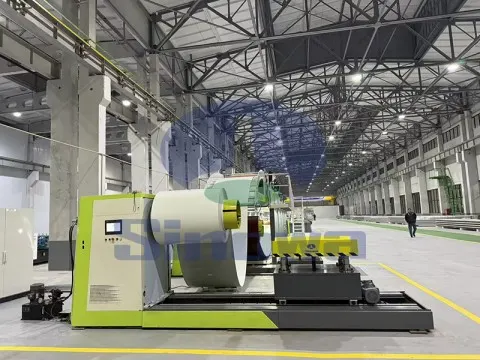
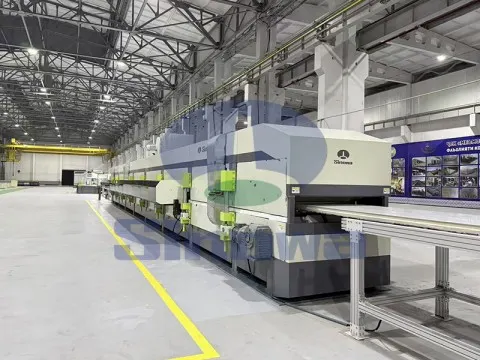
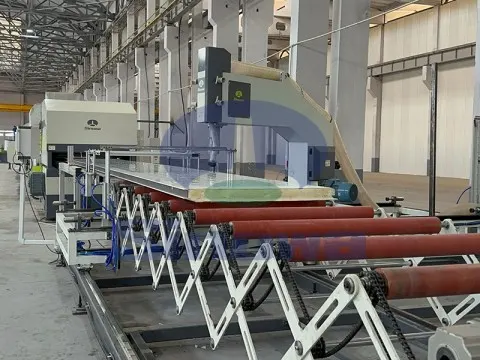
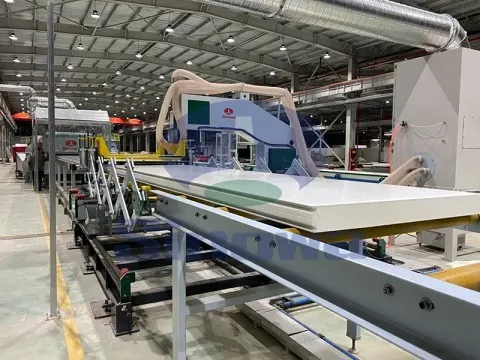
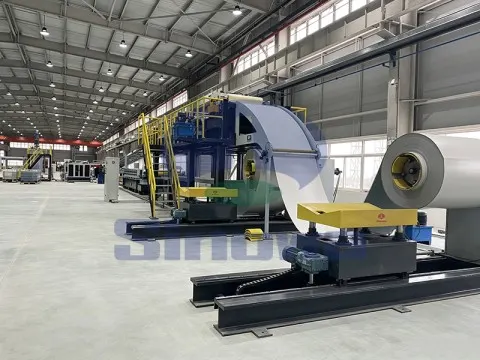
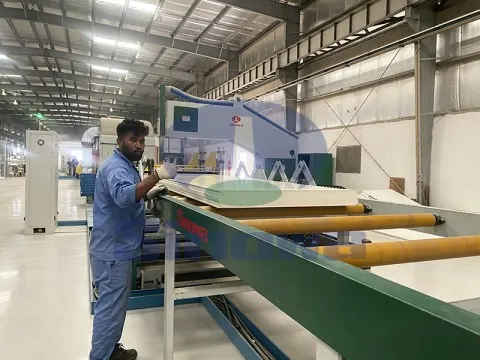
Sinowa is a professional manufacturer of sandwich panel machine in china, we provide diversified and high-performance sandwich panel production lines, including fully automatic continuous PU sandwich panel line and customized special lines to meet mass production and personalized order demands. These sandwich panel lines support processing multiple foam core materials, such as PU, PIR, mineral wool, rock wool and glass wool, covering different insulation and fireproof standards.
Featuring stable operation, high efficiency, energy saving and easy maintenance, our PU sandwich panel line deliver sandwich panels with excellent thermal insulation, fire resistance, sound insulation and lightweight durability. The finished panels are widely applied in industrial workshops, warehouse roofing and wall cladding, cold storage insulation, serving global construction and industrial insulation markets.
https://www.cnsinowa.com/faqs/how-to-maintain-foam-core-sandwich-panel-line-daily.html
Main Products
-

Continuous PU Sandwich Panel Production Line
This continuous PU sandwich panel production line is an integrated automatic equipment. It covers uncoiling, forming, foaming, curing and cutting processes. With automatic raw material proportioning and precise temperature & pressure control, PIR sandwich panel production line continuously composites panels with double skins. Polyurethane sandwich panel production line stably produces steel and aluminum sandwich panels. Featuring high automation, the line makes fireproof and thermal-insulation panels for building enclosure and cold storage. -
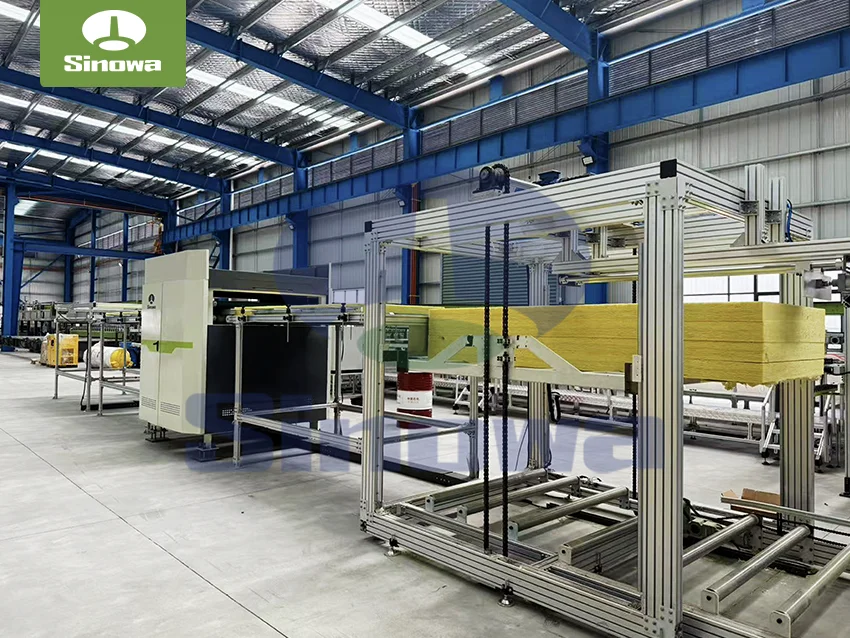
Rock Wool Sandwich Panel Production Line
Continuous rockwool sandwich panel production line is an automatic integrated production equipment, consisting of uncoiling, forming, gluing and compounding, heating curing, fixed-length cutting, automatic stacking and other modules. The mineral wool sandwich panel production line continuously conveys color steel plates and rock wool core materials to automatically complete lamination and curing, which can produce fireproof and thermal insulation sandwich panels. Featuring high automation degree and stable operation, this production line is suitable for mass production of panels used for building walls, roofs and other scenarios. -
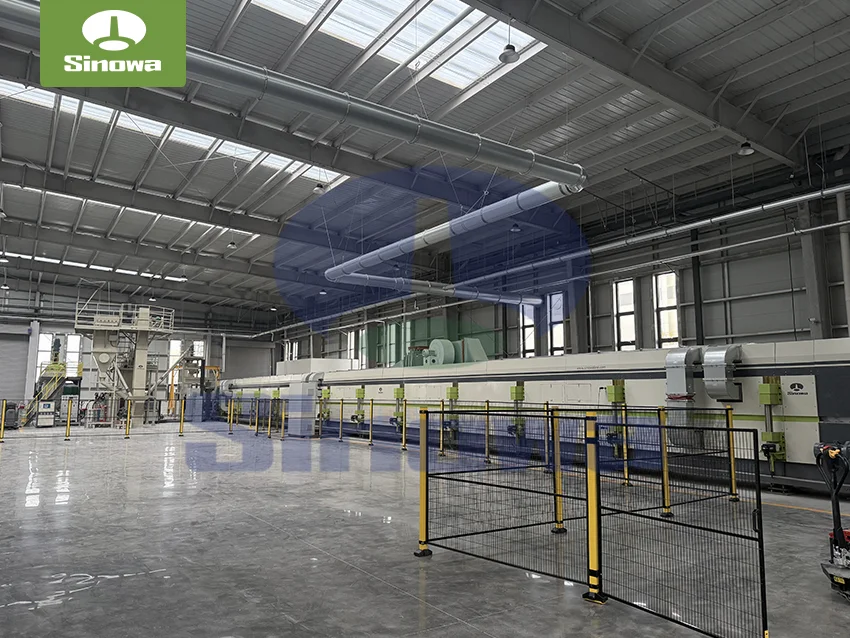
Phenolic Insulation Board Production Line
This integrated automatic production line continuously manufactures PU and phenolic insulation boards. The insulation board production line covers raw material proportioning, high-pressure foaming, laminating, curing and fixed-length cutting. Featuring high automation and stable molding, the insulation panel production line supports various surface materials. PU boards offer excellent thermal insulation, while phenolic boards have superior fire resistance. These products are widely used in construction, cold chain, ventilation ducts and other thermal insulation fields.
Other FAQs
- How To Improve The Flatness Of Boards From Insulation Panel Production Line
- Can PIR Sandwich Panel Production Line Produce Industrial Workshop Sound Insulation Panels
- Does The Continuous PU Sandwich Panel Manufacturing Line Support Automatic Stacking And Packing
- Can PIR Sandwich Panel Production Line Produce Prefabricated Container House Roof Panels
- Why Is The Foaming Expansion Rate Unstable On The PU Foam Production Line
- How Does A PUF Sandwich Panel Production Line Cut Panels To Fixed Lengths
- Automatic Error Correction Function Of Polyurethane Sandwich Panel Production Line
- Workshop Space Layout Requirement For PU Sandwich Panel Production Line
- Operator Professional Training Content For PU Sandwich Panel Line
- Energy Consumption Standard Of Automatic PU Sandwich Panel Production Equipment
Related Articles
- Industrial PIR Sandwich Panel Manufacturing Line
- PU Sandwich Panel Line With Double Belt Press And Cooling Tunnel
- PU Sandwich Panel Production Line For Prefab House Factories
- PUF Panel Making Machine
- Color Steel Continuous PU Sandwich Panel Line
- Cold Storage Sandwich Panel Machine
- Foam Sandwich Panel Production Line
- Continuous Polyurethane Sandwich Panel Line
- Continuous Sandwich Panel Machines
- Sandwich Panel Equipment