Can PIR Sandwich Panel Production Line Produce Industrial Workshop Sound Insulation Panels
Oct 13, 2026
The question of whether a PIR sandwich panel production line can produce industrial workshop sound insulation panels is one that many plant engineers and procurement teams ask when they plan a new facility or retrofit an existing one. The short answer is yes, but with important caveats that affect performance, installation, and long-term acoustic comfort. Understanding how these lines work, what PIR core material actually does to sound, and where the real acoustic limits lie is essential before committing to a specification.
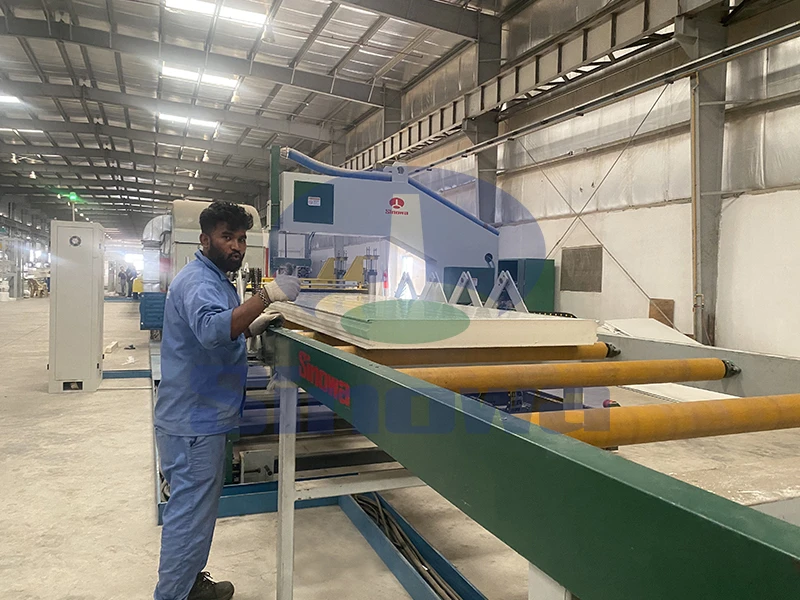
PIR stands for polyisocyanurate, a rigid foam insulation that is sandwiched between two metal face sheets, usually pre-painted steel or aluminum. In a continuous production line, the foam is mixed, injected between the faces, and then cured in a laminating oven under controlled pressure. The line is engineered primarily to deliver thermal insulation, dimensional stability, and a clean, flat facade. Sound insulation is not the design priority of a standard line, but the physical structure of a sandwich panel does contribute to acoustic attenuation in measurable ways. The two dense metal skins act as mass layers, and the low-density foam core acts as a resilient damping layer between them. This composite construction is, in principle, a constrained-layer damping system, which is a known architecture for reducing airborne sound transmission through walls and roofs.
To understand the acoustic behavior of a PIR panel, it helps to think in terms of frequency. Industrial workshops generate a wide spectrum of noise: low-frequency rumble from large machinery, mid-frequency hum from fans and motors, and high-frequency whine from compressed-air systems or metal-on-metal contact. A standard PIR panel with a thin steel skin on each side, say 0.5 to 0.6 millimeters, will perform reasonably well against high-frequency sound because mass and air gaps naturally attenuate short wavelengths. The foam core also prevents the two skins from vibrating in phase, which reduces the coincident dip that plagues single-sheet metal walls. However, at low frequencies, around 100 to 250 hertz, the lightweight nature of the panel becomes a limitation. Sound waves with long wavelengths easily move through light mass, and the panel may rattle or resonate if the core is too soft or if panel joints are not well sealed.
This leads to one of the most important points about PIR sandwich panels for sound insulation: the panel itself is only part of the solution. Joints, seams, roof-to-wall intersections, service penetrations, doors, and windows are often the weak points in an acoustic enclosure. Even a high-performance panel will fail its acoustic target if there is an unsealed gap between panels, because sound leaks through openings far more readily than through the panel body. On a standard PIR line, the side edges of the panel are typically profiled as a tongue-and-groove or shiplap joint designed for weather resistance and thermal continuity. Some manufacturers add a flexible gasket or a foam sealant groove during the lamination process, which the production line can accommodate with a minor tooling change. Without this upgrade, the acoustic performance of the overall wall will be compromised by flanking transmission through the joints.
The production line itself can be configured in several ways to improve the acoustic behavior of the finished panel without abandoning PIR as the core material. First, the density of the PIR foam can be increased. A higher-density core, say in the range of 50 to 60 kilograms per cubic meter instead of the typical 35 to 45, provides better structural damping and reduces resonant rattling. The line's mixing head and metering pumps can handle the higher formulation, although it changes the raw material cost and the curing profile. Second, the thickness of the metal skins can be increased on one or both sides. Heavier skins add mass, which is the single most effective variable for reducing airborne sound transmission. Many PIR lines allow flexible skin gauges, and changing the uncoiler setup is straightforward. Third, a barrier layer such as a loaded vinyl membrane or a bitumen-based damping sheet can be laminated to the inner skin during production, effectively turning the panel into a constrained-layer system with a much higher sound transmission loss.
Beyond these structural modifications, the core material itself can be combined with other acoustic layers on the same line. Some plants produce composite panels where the PIR foam is laminated alongside a layer of mineral wool. Mineral wool is widely recognized as an excellent sound-absorbing material, and when placed on the interior side of the panel, it reduces the reverberation time inside the workshop. A pure PIR panel, being non-porous, does almost nothing to absorb sound; it only reflects it, which can make a noisy workshop feel even louder because sound bounces off all the walls and ceiling. By adding a mineral wool liner, the panel becomes a hybrid: PIR provides thermal insulation and structural rigidity, while the wool provides acoustic absorption. This hybrid panel can be produced on a modified PIR line if the line has a second station for feeding the wool layer and a bonding step between the two cores.
It is also worth noting that PIR foam itself has good internal damping properties. Unlike air gaps in a double-skin wall, which only provide isolation up to a certain frequency and then suffer from mass-air-mass resonance, the PIR core fills the gap and eliminates the cavity resonance. This means that for mid-range frequencies, a PIR sandwich panel often outperforms a simple double-skin steel wall with the same total mass. The trade-off is that the foam core slightly reduces the decoupling effect between the two skins, so the high-frequency performance may not be as good as a fully decoupled double wall. In practice, for industrial workshop applications where the goal is to contain noise rather than to meet a high studio-level standard, this trade-off is usually acceptable.
When evaluating whether a PIR line can meet a specific workshop sound insulation requirement, it is useful to consider the typical noise sources in the space. If the workshop houses punch presses, forging hammers, or large compressors, the low-frequency energy is substantial, and a PIR-only panel wall will likely need supplementary treatment such as double-layer construction, floating floors, or acoustic enclosures around individual machines. If the workshop is quieter in nature, such as an assembly area, a packaging line, or a light manufacturing space, a well-specified PIR panel with increased skin gauge, sealed joints, and an internal acoustic liner will often deliver enough attenuation for both worker comfort and regulatory compliance at the property boundary.
Another practical consideration is the fire safety and durability of the panel. PIR foam has inherent fire-retardant properties compared to other polymer foams, and it also performs well in terms of moisture resistance. This is important for an industrial workshop where cleaning, humidity, or occasional water spray may be present. A mineral wool liner, on the other hand, may require a facing to prevent fibers from shedding into the workspace. The production line must be able to apply a suitable facing, such as aluminum foil or a non-woven tissue, to the wool surface. These are all standard processes that an experienced panel line can handle, but they do require a deliberate setup rather than running the default thermal-insulation product.
In conclusion, a PIR sandwich panel production line can absolutely produce panels suitable for industrial workshop sound insulation, but it should not be treated as a simple run-of-the-mill product. The line needs to be configured with the right foam density, appropriate skin gauges, sealed joints, and ideally an internal acoustic absorption layer or a constrained-layer damping membrane. The resulting panel will combine thermal efficiency, structural strength, and meaningful acoustic attenuation, making it a cost-effective solution for many industrial environments. The key is to define the acoustic target at the beginning, work backwards from that target to the panel construction, and then adjust the line settings accordingly. With that approach, a PIR line can deliver a wall system that keeps workers comfortable, reduces noise transmission to neighboring areas, and maintains the clean, durable appearance that sandwich panels are known for.
Gallery
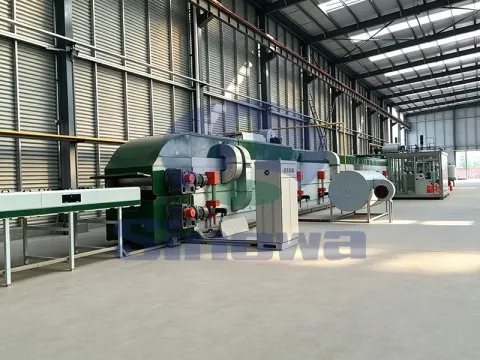
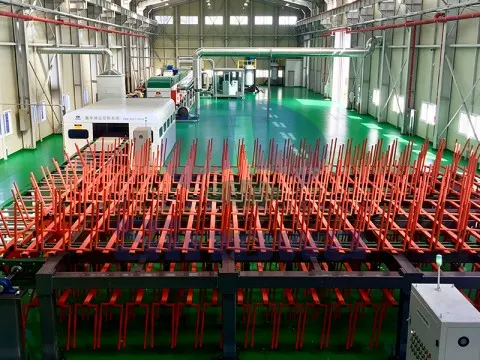
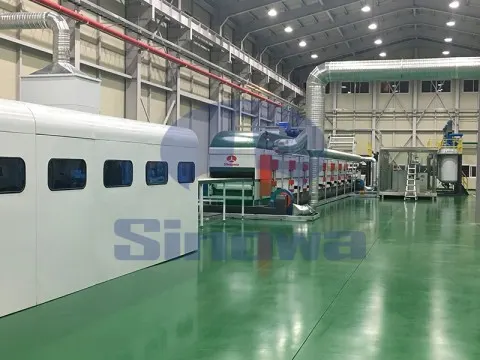
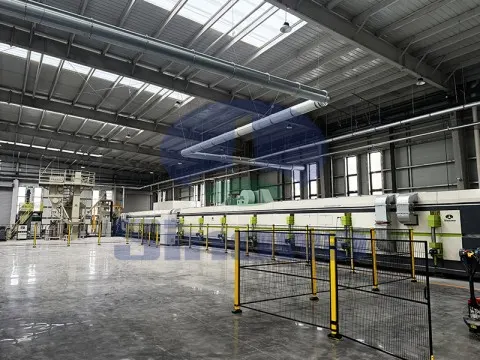
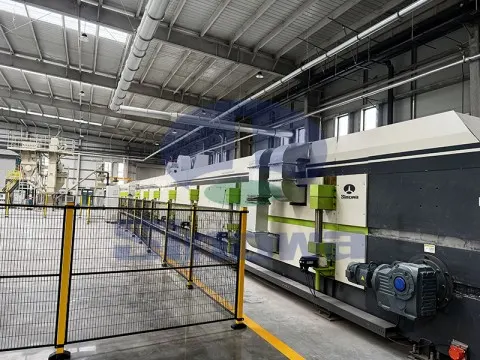
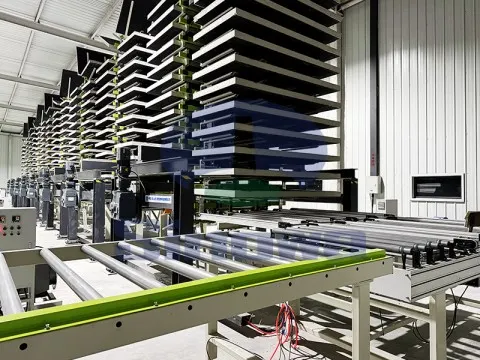
Sinowa is a professional manufacturer of sandwich panel machine in china, we provide diversified and high-performance sandwich panel production lines, including fully automatic continuous PU sandwich panel line and customized special lines to meet mass production and personalized order demands. These sandwich panel lines support processing multiple foam core materials, such as PU, PIR, mineral wool, rock wool and glass wool, covering different insulation and fireproof standards.
Featuring stable operation, high efficiency, energy saving and easy maintenance, our PU sandwich panel line deliver sandwich panels with excellent thermal insulation, fire resistance, sound insulation and lightweight durability. The finished panels are widely applied in industrial workshops, warehouse roofing and wall cladding, cold storage insulation, serving global construction and industrial insulation markets.
Main Products
-

Continuous PU Sandwich Panel Production Line
This continuous PU sandwich panel production line is an integrated automatic equipment. It covers uncoiling, forming, foaming, curing and cutting processes. With automatic raw material proportioning and precise temperature & pressure control, PIR sandwich panel production line continuously composites panels with double skins. Polyurethane sandwich panel production line stably produces steel and aluminum sandwich panels. Featuring high automation, the line makes fireproof and thermal-insulation panels for building enclosure and cold storage. -
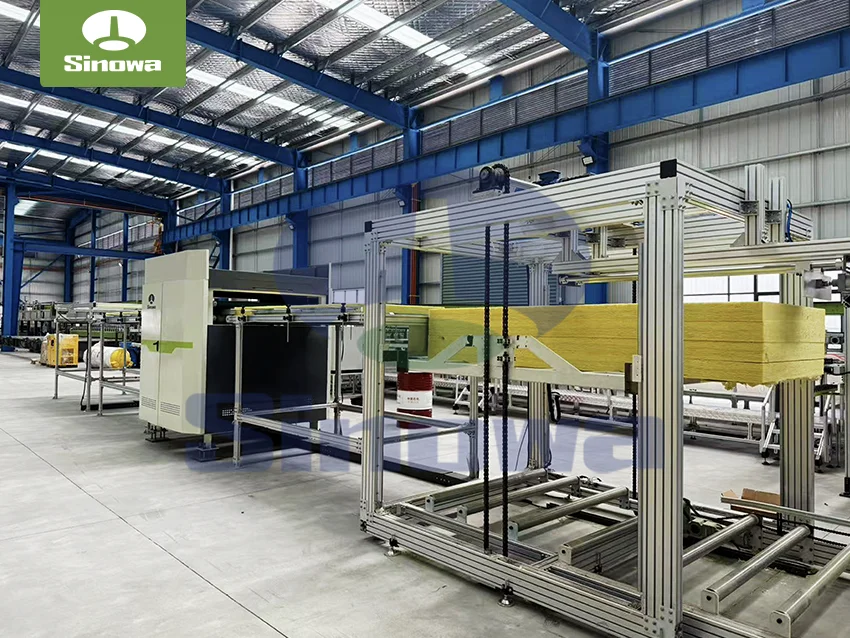
Rock Wool Sandwich Panel Production Line
Continuous rockwool sandwich panel production line is an automatic integrated production equipment, consisting of uncoiling, forming, gluing and compounding, heating curing, fixed-length cutting, automatic stacking and other modules. The mineral wool sandwich panel production line continuously conveys color steel plates and rock wool core materials to automatically complete lamination and curing, which can produce fireproof and thermal insulation sandwich panels. Featuring high automation degree and stable operation, this production line is suitable for mass production of panels used for building walls, roofs and other scenarios. -
Phenolic Insulation Board Production Line
This integrated automatic production line continuously manufactures PU and phenolic insulation boards. The insulation board production line covers raw material proportioning, high-pressure foaming, laminating, curing and fixed-length cutting. Featuring high automation and stable molding, the insulation panel production line supports various surface materials. PU boards offer excellent thermal insulation, while phenolic boards have superior fire resistance. These products are widely used in construction, cold chain, ventilation ducts and other thermal insulation fields.
Other FAQs
- Troubleshooting For Sandwich Panel Production Line Frequent Shutdown Failure
- How To Maintain The Mixing Head Of A PUF Sandwich Panel Production Line
- How To Solve Surface Bubble Problems Of Panels From PU Foam Core Sandwich Panel Line
- Why Does The Polyurethane Sandwich Panel Line Produce Uneven Foam Distribution
- How To Improve The Production Efficiency Of Insulation Board Production Line
- How To Solve Foam Shrinkage Issues On A Polyurethane Sandwich Panel Production Line
- Polyurethane Sandwich Panel Production Line Idle Period Maintenance Management Scheme
- Polyurethane Sandwich Panel Production Line Start-up Pre-inspection Complete Items
- Noise Reduction Measures For PU Sandwich Panel Production Equipment
- Difference Between PUR And PIR Sandwich Panel Production Lines
Related Articles
- PIR Sandwich Panel Line For Decorative Surface Panels
- PU Sandwich Panel Making Line With Edge Sealing Machine
- High Efficiency PU Foam Production Line
- Color Steel Sandwich Panel Machine
- Insulation Panel Manufacturing Line
- Automatic Foam Core Sandwich Panel Line
- Automatic Insulation Board Production Line
- Fireproof PU Sandwich Panel Line
- Polyurethane Sandwich Panel Manufacturing Line For Commercial Building
- High Efficiency PU Sandwich Panel Line On Sales