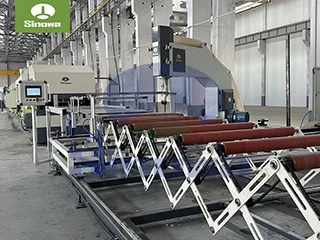
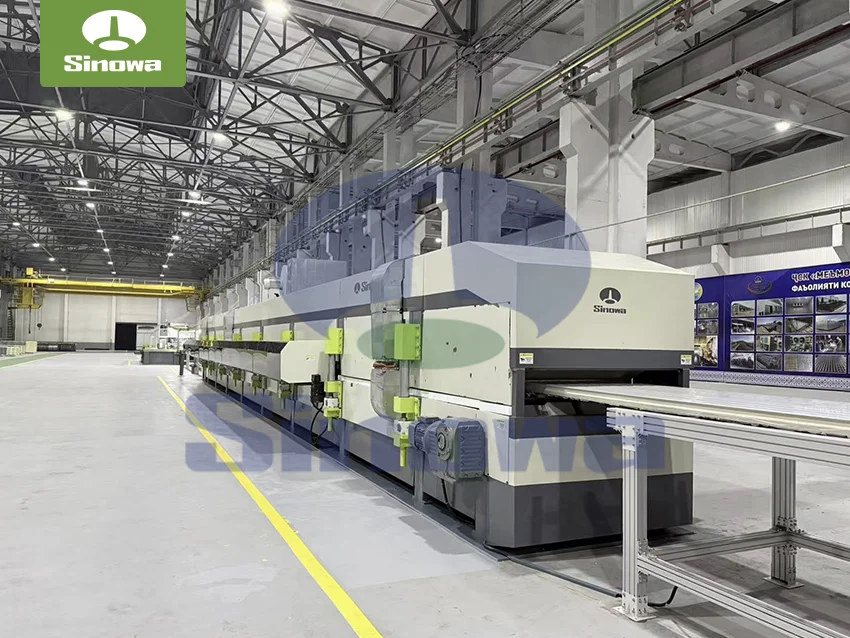
 sandwich panel line
The core structure of a PIR sandwich panel line for decorative surface panels consists of several key functional sections, each playing a crucial role in the overall production process. The first section is the raw material preparation and pretreatment system, which is responsible for processing the surface decorative materials and core materials to ensure they meet the production standards. The surface decorative facings, which are the visible part of the final panel, can be made of various materials such as galvanized steel, aluminum, fiber cement board, ceramic thin plate, and wood-based panels. These facings need to go through a series of pretreatment steps, including uncoiling, leveling, cleaning, and surface activation. The uncoiling device ensures that the coiled facing materials are unfolded smoothly without wrinkles or deformation; the leveling machine removes the internal stress generated during the rolling process, ensuring the flatness of the facings; the cleaning equipment eliminates oil stains, dust, and other impurities on the surface of the facings to enhance the adhesion between the facings and the core material; and the surface activation treatment further improves the bonding performance, laying a solid foundation for the subsequent composite process. For the core material, which is the key to the thermal insulation and fire resistance performance of the panel, the raw materials of PIR (polyisocyanurate) foam are precisely proportioned and mixed. PIR foam is a modified polyurethane material with a cross-linked chemical structure, and its performance is closely related to the mixing ratio of raw materials, temperature control, and mixing uniformity. The raw material preparation system is equipped with special storage tanks, metering devices, and mixing equipment to ensure that the PIR raw materials are accurately measured and fully mixed before being injected into the composite section.
Following the raw material pretreatment section is the core composite forming section, which is the key link determining the quality and performance of the decorative surface PIR sandwich panels. In this section, the pretreated surface facings (upper and lower layers) are continuously conveyed to the composite platform through a precision conveyor system. At the same time, the uniformly mixed PIR foam raw materials are injected into the gap between the two layers of facings through a high-pressure foaming device. The injection process requires precise control of the injection amount, speed, and uniformity to ensure that the PIR foam can fully fill the gap without gaps or excessive accumulation. After injection, the composite board enters a double-belt pressing device, where it is pressed under constant temperature and pressure conditions. The temperature and pressure in this process are strictly controlled, as they directly affect the foaming and curing effect of the PIR foam. Under the action of constant temperature and pressure, the PIR raw materials undergo a rapid foaming and curing reaction, forming a dense, uniform, and stable core layer that is closely bonded to the surface facings. To further enhance the bonding strength between the facings and the core layer, some production lines are equipped with a special adhesive coating device, which applies an appropriate amount of adhesive to the inner surface of the facings before composite. The adhesive is evenly distributed using a rotating brushing technology, which not only ensures the bonding effect but also avoids waste of adhesive. During the composite forming process, the surface facings can also be processed into different shapes, such as corrugated, ribbed, or flat, according to the design requirements, which not only enhances the aesthetic effect but also improves the structural strength and rigidity of the panel.
The post-processing section is another important part of the PIR sandwich panel line for decorative surface panels, which is responsible for processing the composite semi-finished products into qualified finished products. The first step in post-processing is fixed-length cutting. The continuously formed composite board is cut into finished products of different lengths according to the actual application needs using a flying saw cutting device. The flying saw cutting technology ensures that the cutting process is synchronized with the conveying speed of the composite board, resulting in flat, smooth cuts that do not damage the core layer or the surface facings. After cutting, the finished products enter a cooling and shaping area, where they are cooled by natural cooling or forced cooling. The cooling process is crucial to ensuring the dimensional stability of the panel, as it allows the PIR core layer to fully cure and the internal stress of the panel to be released. After cooling, the finished products undergo a surface cleaning and inspection process. The surface cleaning equipment removes dust, debris, and other impurities generated during the production process, ensuring the cleanliness and beauty of the surface. The inspection process is mainly to check the appearance quality and performance parameters of the finished products, such as whether there are cracks, bubbles, delamination, or uneven surfaces on the panel, and whether the thickness, density, and other parameters meet the design requirements. Unqualified products are sorted out for reprocessing or scrapping, while qualified products are sorted and stacked neatly for subsequent storage and transportation. In addition, some advanced production lines are also equipped with a surface finishing device, which can perform additional treatments on the surface of the panel, such as painting, film coating, or embossing, to further enhance the decorative effect and durability of the panel.
With the continuous development of technology, the structure of the PIR sandwich panel line for decorative surface panels is constantly being upgraded and optimized. Modern production lines have gradually realized the transformation from mechanical control to intelligent control, adopting PLC, human-machine interface, and servo drive systems to achieve precise control of production parameters and automated operation. The intelligent control system can monitor and adjust key parameters such as temperature, pressure, foaming time, and conveying speed in real-time during the production process, ensuring the stability and consistency of product quality. Some advanced production lines have also integrated digital twin technology and AI quality inspection systems. The digital twin technology can simulate the entire production process, optimize the parameter settings, and predict potential problems in the production process, thereby improving production efficiency and reducing production costs. The AI quality inspection system uses machine vision technology to automatically detect the appearance quality of the finished products, which is not only more efficient than manual inspection but also more accurate, reducing the error rate of inspection. In addition, modular design has become an important development trend of such production lines. Through modular combination, a single production line can flexibly switch between the production of different types of decorative surface panels, such as wall panels, roof panels, or partition panels, and can adapt to different surface facing materials and core layer thicknesses, greatly improving the adaptability and comprehensive utilization rate of the production line.
The performance of the PIR sandwich panels produced by the decorative surface PIR sandwich panel line is determined by the combination of the surface facings and the PIR core layer, as well as the production process. These panels possess a variety of excellent performance characteristics, making them widely used in various fields. One of the most prominent performance characteristics is excellent thermal insulation. The PIR core layer is a closed-cell foam material with extremely low thermal conductivity, which can effectively block the transfer of heat, ensuring that the indoor temperature remains stable. Compared with traditional insulation materials, PIR foam has a better thermal insulation effect, which can significantly reduce the energy consumption of heating and cooling systems in buildings, achieving the goal of energy conservation and environmental protection. In addition, the PIR core layer has excellent fire resistance. Due to its special chemical structure, PIR foam is difficult to burn, does not produce obvious flame spread, and releases less toxic and harmful gases when exposed to fire. This makes the decorative surface PIR sandwich panels suitable for application in places with high fire safety requirements, such as hospitals, schools, data centers, and high-rise buildings.
Another important performance characteristic of decorative surface PIR sandwich panels is their lightweight and high strength. The PIR core layer is lightweight, and the surface facings are made of high-strength materials, so the overall weight of the panel is relatively light, which can reduce the load on the building structure and reduce the comprehensive construction cost. At the same time, the composite structure of the panel gives it high structural strength and rigidity, which can withstand a certain degree of wind load, snow load, and impact load, ensuring the stability and safety of the building. The panels also have excellent water resistance and moisture resistance. The closed-cell structure of the PIR core layer prevents water from penetrating into the core layer, and the surface facings are treated with anti-corrosion and waterproof coatings, which can effectively prevent the panel from being eroded by water and moisture. This makes the panels suitable for application in humid environments, such as basements, garages, and coastal areas. In addition, the decorative surface PIR sandwich panels have good durability and weather resistance. The surface facings are treated with anti-corrosion, anti-ultraviolet, and anti-fading coatings, which can resist the erosion of sunlight, rain, wind, and other natural factors, ensuring that the panel maintains its original performance and appearance for a long time. The service life of the panels is usually more than 20 years, which can reduce the frequency of maintenance and replacement, saving maintenance costs.
The decorative surface PIR sandwich panels produced by the PIR sandwich panel line can be divided into different types according to various classification standards, which can meet the diverse needs of different application scenarios. According to the type of surface facing material, the panels can be divided into metal-faced decorative PIR sandwich panels, non-metal-faced decorative PIR sandwich panels, and composite-faced decorative PIR sandwich panels. Metal-faced decorative PIR sandwich panels are the most commonly used type, with surface facings made of galvanized steel, aluminum, or other metal materials. These panels have the advantages of high strength, good durability, and easy cleaning, and can be processed into different colors and shapes according to the design requirements. The surface of the metal facings can be treated with fluorocarbon coating, polyester coating, or other coatings, which not only enhance the decorative effect but also improve the anti-corrosion performance. Non-metal-faced decorative PIR sandwich panels have surface facings made of fiber cement board, ceramic thin plate, wood-based panel, or other non-metal materials. These panels have the advantages of good decorative effect, environmental protection, and sound insulation, and are suitable for application in interior decoration or places with high aesthetic requirements. Composite-faced decorative PIR sandwich panels are composed of two or more different surface facing materials, which combine the advantages of different materials to meet more complex application requirements. For example, a composite panel with a metal facing on the outer surface and a wood-based facing on the inner surface has both the durability of metal and the warmth of wood, making it suitable for both exterior and interior decoration.
According to the application scenario, the decorative surface PIR sandwich panels can be divided into exterior wall decorative PIR sandwich panels, interior wall decorative PIR sandwich panels, roof decorative PIR sandwich panels, partition decorative PIR sandwich panels, and floor decorative PIR sandwich panels. Exterior wall decorative PIR sandwich panels are mainly used for the exterior wall cladding of buildings, which not only need to have excellent thermal insulation, fire resistance, and weather resistance but also need to have a beautiful appearance to enhance the overall aesthetic effect of the building. These panels are usually designed with waterproof and anti-corrosion structures to resist the erosion of natural factors. Interior wall decorative PIR sandwich panels are used for the interior wall decoration of buildings, which focus on decorative effect, sound insulation, and environmental protection. These panels can be processed into various styles, such as wood grain, stone grain, or plain color, to meet different interior design styles. Roof decorative PIR sandwich panels are used for the roof of buildings, which need to have excellent waterproof, thermal insulation, and load-bearing performance. These panels are usually designed into corrugated or ribbed shapes to enhance the load-bearing capacity and waterproof effect. Partition decorative PIR sandwich panels are used for dividing the internal space of buildings, which have the advantages of lightweight, easy installation, and good sound insulation. These panels can be quickly installed without the need for complex construction processes, improving the construction efficiency. Floor decorative PIR sandwich panels are used for the floor of buildings, which need to have high strength, wear resistance, and moisture resistance. These panels are suitable for application in commercial buildings, industrial plants, and other places with high traffic volume.
In addition, according to the decorative effect, the decorative surface PIR sandwich panels can be divided into plain color decorative panels, pattern decorative panels, and embossed decorative panels. Plain color decorative panels have a simple and elegant appearance, suitable for application in places with a simple design style. Pattern decorative panels are printed with various patterns on the surface, such as wood grain, stone grain, floral pattern, etc., which have a rich decorative effect and can enhance the aesthetic appeal of the space. Embossed decorative panels have a three-dimensional embossed pattern on the surface, which not only has a good decorative effect but also can hide slight scratches on the surface, improving the durability of the panel. The diversity of types makes the decorative surface PIR sandwich panels widely applicable in various fields, meeting the different needs of different projects.
The decorative surface PIR sandwich panels produced by the PIR sandwich panel line have a wide range of applications, covering the fields of architectural decoration, industrial manufacturing, logistics and transportation, and agricultural construction. In the field of architectural decoration, these panels are widely used in the exterior wall cladding, interior wall decoration, roof decoration, and partition of various buildings, such as residential buildings, commercial buildings, office buildings, hotels, hospitals, schools, and cultural and sports venues. In residential buildings, the panels are used for exterior wall cladding and interior wall decoration, which not only provide excellent thermal insulation and sound insulation effects but also have a beautiful appearance, improving the living comfort and quality of the residence. In commercial buildings, such as shopping malls, supermarkets, and office buildings, the panels are used for exterior wall cladding and interior decoration, which can enhance the brand image and commercial value of the building. In hospitals and schools, the panels are favored for their excellent fire resistance, environmental protection, and easy cleaning, which can create a safe and healthy environment for patients and students.
In the field of industrial manufacturing, the decorative surface PIR sandwich panels are widely used in the construction of industrial plants, workshops, and warehouses. Industrial plants and workshops often have high requirements for thermal insulation, fire resistance, and corrosion resistance, and the decorative surface PIR sandwich panels can fully meet these requirements. The panels are lightweight and easy to install, which can shorten the construction period of the plant and reduce the construction cost. In addition, the panels have good sound insulation effect, which can reduce the noise pollution in the workshop, improving the working environment of employees. Warehouses, especially those used for storing food, medicine, and other items that require constant temperature and humidity, can use the decorative surface PIR sandwich panels for roof and wall cladding, which can effectively maintain the indoor temperature and humidity, ensuring the quality of the stored items. The panels also have good moisture resistance and corrosion resistance, which can prevent the warehouse from being eroded by moisture and harmful gases, extending the service life of the warehouse.
In the field of logistics and transportation, the decorative surface PIR sandwich panels are mainly used in the manufacturing of refrigerated trucks, container houses, and temporary buildings. Refrigerated trucks require excellent thermal insulation performance to maintain the low-temperature environment inside the truck, ensuring the freshness of the transported goods. The PIR core layer of the decorative surface PIR sandwich panels has extremely low thermal conductivity, which can effectively block the heat exchange between the inside and outside of the truck, meeting the thermal insulation requirements of refrigerated trucks. At the same time, the panels are lightweight, which can reduce the weight of the truck, saving fuel consumption. Container houses and temporary buildings are widely used in construction sites, disaster relief, and other occasions, which require lightweight, easy installation, and good durability. The decorative surface PIR sandwich panels are ideal materials for such buildings, as they can be quickly assembled into various types of houses, providing a safe and comfortable living and working environment. The panels also have a beautiful appearance, which can improve the comfort of the temporary buildings.
In the field of agricultural construction, the decorative surface PIR sandwich panels are used in the construction of greenhouses, livestock houses, and agricultural warehouses. Greenhouses require good thermal insulation performance to maintain the appropriate temperature and humidity inside the greenhouse, promoting the growth of crops. The decorative surface PIR sandwich panels can effectively block the heat loss in the greenhouse, reducing the energy consumption of heating equipment. Livestock houses require good ventilation, moisture resistance, and corrosion resistance, and the decorative surface PIR sandwich panels can meet these requirements, creating a comfortable living environment for livestock. Agricultural warehouses are used for storing agricultural products, seeds, and other items, which require good moisture resistance and thermal insulation, and the decorative surface PIR sandwich panels can effectively protect the stored items from moisture and temperature changes.
The wide application of decorative surface PIR sandwich panels is closely related to the continuous upgrading of the PIR sandwich panel line. The production line not only ensures the stable quality and excellent performance of the panels but also improves the production efficiency and reduces the production cost, making the panels more cost-effective and accessible. With the increasing emphasis on energy conservation, environmental protection, and aesthetic requirements in the construction industry, the demand for decorative surface PIR sandwich panels will continue to grow, and the PIR sandwich panel line for decorative surface panels will also develop in a more intelligent, efficient, and environmentally friendly direction. In the future, the production line will further optimize the production process, improve the performance of the panels, and develop more new types of decorative surface panels to meet the changing market needs. At the same time, the application field of decorative surface PIR sandwich panels will continue to expand, playing a more important role in promoting the development of the construction industry and other related fields.
https://www.cnsinowa.com/sandwich-panel-machines/pir-sandwich-panel-line-for-decorative-surface-panels.html