sandwich panel line
The fundamental design logic of the PIR sandwich panel line originates from the material characteristics of polyisocyanurate foam and the composite structural requirements of sandwich panels. Unlike ordinary polyurethane foam materials, polyisocyanurate molecular structures feature dense cross-linking bonds, which endow the foam with low thermal conductivity, high temperature resistance, and excellent dimensional stability. Such unique material properties impose strict technical requirements on every processing link of the production line, including raw material pretreatment, foaming reaction control, composite pressing, and post-processing shaping. The overall construction of the production line follows the principles of continuous production, precise parameter control, and stable structural operation. Each functional module is closely connected in sequence to avoid material transportation delays and parameter fluctuations during the production process. From the perspective of industrial production logic, the entire production line can be divided into three core functional sections: raw material feeding and pretreatment section, core foaming and composite molding section, and finished product cutting and post-processing section. Each section contains multiple specialized mechanical units, and the coordination between units is realized through a centralized intelligent control system to ensure the continuity and consistency of mass production.
The raw material feeding and pretreatment section serves as the initial processing link of the entire production line, undertaking the task of raw material arrangement, surface treatment, and quantitative conveying. This section mainly includes metal coil feeding devices, surface purification components, and raw material metering and transmission structures. For the metal surface layers commonly used in sandwich panels, the raw materials are usually rolled metal strips with uniform thickness and smooth surfaces. The feeding device adopts a double-station unwinding structure, which can realize uninterrupted material supply through alternating feeding of two material rolls. This structural design effectively avoids production stagnation caused by raw material replacement and improves the overall continuous operation efficiency of the production line. After the metal coil is unwound, the strip first enters the leveling unit, where multiple sets of precision pressing rollers eliminate the internal stress of the metal strip generated during rolling and storage. The leveling process ensures that the flatness of the metal strip meets the production standards, preventing bending, warping, and other morphological defects in the subsequent composite molding process.
Subsequently, the leveled metal strip enters the surface purification and treatment process. During the storage and transportation of metal raw materials, tiny dust particles, oil stains, and oxide layers inevitably adhere to the surface. These impurities will seriously affect the bonding strength between the metal surface layer and the foam core material, reducing the service life and structural stability of the finished panel. The purification unit is equipped with multi-stage brushing structures and low-pressure cleaning components to thoroughly remove surface attachments. After cleaning, the metal strip passes through a constant-temperature drying channel to completely evaporate the residual moisture on the surface. The temperature of the drying channel is stably controlled within a moderate range to avoid thermal deformation of the metal strip caused by excessive temperature. In addition to metal surface raw materials, this section also includes storage and quantitative supply equipment for chemical raw materials required for foam foaming. The liquid raw materials for polyisocyanurate foaming are stored in sealed constant-temperature storage tanks. The internal circulation temperature of the tanks is kept stable to prevent the chemical properties of the raw materials from changing due to temperature fluctuation. The metering pump group accurately controls the output flow of each liquid raw material according to the preset material ratio, laying a precise material foundation for the subsequent foaming reaction.
The core foaming and composite molding section is the most critical functional part of the entire PIR sandwich panel line, determining the core physical properties and structural quality of finished products. This section integrates chemical mixing, high-pressure pouring, continuous foaming, double-belt pressing, and constant-temperature curing processes, realizing the integral composite molding of metal surface layers and foam core materials. The chemically treated upper and lower metal strips are transported to the closed pouring station at a constant speed through synchronous transmission rollers. Before pouring, the guiding structure fine-tunes the relative positions of the two metal strips to ensure consistent spacing and parallelism between the upper and lower layers, which directly determines the thickness uniformity of the finished sandwich panel. At the pouring station, various liquid chemical raw materials are fully mixed through a high-pressure mixing head. The internal mixing cavity of the mixing head adopts a streamlined structural design, which enables the raw materials to complete rapid collision and fusion in an instant under high-pressure driving force.
The mixed liquid raw materials are evenly poured between the upper and lower metal strips in a linear continuous spraying manner. Immediately after pouring, the raw materials initiate a rapid chemical foaming reaction. In the initial stage of foaming, the liquid mixture gradually expands to form a loose porous foam structure. With the progress of the molecular cross-linking reaction, the foam density tends to be uniform, and the internal molecular structure gradually stabilizes. The foaming reaction process is extremely sensitive to temperature and pressure parameters; thus, the pouring station and the adjacent pressing area are built with an integral constant-temperature thermal insulation shell. The internal ambient temperature is dynamically adjusted through an intelligent temperature control system to maintain the optimal reaction temperature range required for polyisocyanurate foaming. After the initial foaming, the semi-finished panel enters the double-belt pressing unit. The upper and lower circulating steel belts of the unit fit closely with the metal surface layers of the panel, applying uniform and stable vertical pressure to the foaming material.
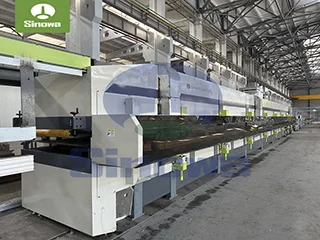
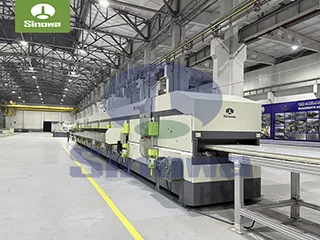
The pressing process not only shapes the flat appearance of the sandwich panel but also optimizes the internal pore structure of the foam. Under continuous constant pressure, the uneven bubbles generated in the initial foaming stage are squeezed and refined, forming closed-cell structures with uniform pore size and dense arrangement. This closed-cell structure is the key to ensuring the low thermal conductivity and high compressive strength of PIR panels. The running speed of the double belts keeps synchronous with the feeding speed of the front-end raw materials to avoid shear damage to the uncured foam caused by speed difference. After pressing and shaping, the semi-finished panel enters the constant-temperature curing channel. The internal temperature gradient of the curing channel is scientifically distributed, divided into a slow heating stage, constant-temperature heat preservation stage, and natural cooling stage. In the slow heating stage, the residual active chemical components inside the foam continue to complete cross-linking reactions; the constant-temperature heat preservation stage stabilizes the internal molecular structure and eliminates residual stress; the natural cooling stage gradually reduces the panel temperature to ambient temperature, avoiding structural cracks caused by rapid temperature drop.
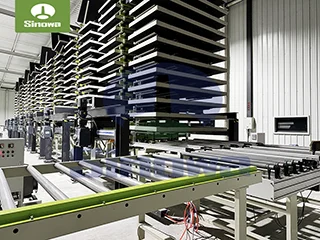
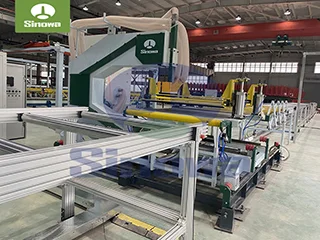
The finished product cutting and post-processing section undertakes the tasks of fixed-length cutting, edge trimming, surface inspection, and stacking packaging of cured sandwich panels. After completing curing and cooling, the continuous long-strip panel is transported to the fixed-length cutting unit through a high-precision conveying platform. The cutting system is equipped with intelligent length measurement sensors, which monitor the real-time moving distance of the panel and send cutting instructions to the hydraulic cutting device when reaching the preset specification length. The cutting tool adopts high-hardness alloy blades, which can complete smooth cutting of composite structures composed of metal layers and foam layers at one time without burrs, cracks, or edge collapses on the cutting section. In order to meet the installation and assembly requirements of engineering construction, some panels need edge trimming and grooving processing. The edge trimming unit uses multi-axis rotating trimming tools to trim the edges of the panel into concave-convex insertion structures, which facilitates the seamless splicing and assembly of multiple panels during on-site construction.
After mechanical processing, all finished panels will go through a manual and automatic combined quality inspection link. The automatic detection system uses high-precision sensors to detect the thickness flatness, surface smoothness, and internal compactness of the panels. Unqualified products with uneven thickness, surface depressions, and internal hollow structures are automatically marked and separated from the qualified product assembly line. Inspectors conduct secondary sampling inspections on the surface coating integrity and edge processing accuracy of qualified panels to eliminate subtle defective products that are difficult to identify by mechanical detection. The inspected qualified panels are transported to the stacking unit. The stacking manipulator automatically completes the orderly arrangement and stacking of panels according to the preset stacking parameters. The stacking process is equipped with buffer protection measures to avoid surface scratch damage caused by direct friction between panels. Finally, the stacked finished products are wrapped with protective films and packaging belts to complete the final packaging work, which is convenient for subsequent transportation and storage.
The stable operation of the entire PIR sandwich panel line cannot be separated from the support of the intelligent centralized control system. The control system adopts a modular programming structure, which integrates the parameter adjustment, state monitoring, and fault early warning functions of all mechanical units in the production line. The operation interface is simple and intuitive, displaying real-time operating data such as raw material feeding speed, mixing pressure, foaming temperature, pressing pressure, and cutting length on the display screen. Production technicians can modify the production parameters through the control terminal according to the production specifications of different panels. For example, adjusting the raw material ratio to change the foam density, modifying the pressing distance to produce panels of different thicknesses, and setting cutting parameters to customize panel lengths. In terms of safety monitoring, the system is equipped with multiple sensor components such as temperature sensors, pressure sensors, and vibration sensors. When abnormal parameters such as excessive temperature, sudden pressure drop, and mechanical vibration deviation occur in a certain link, the system will automatically trigger an alarm signal and perform slow-down or shutdown protection actions to avoid equipment failure and production safety accidents.
In actual industrial production, the daily maintenance and standardized operation of the PIR sandwich panel line are crucial to extending the service life of equipment and maintaining stable product quality. Daily maintenance work mainly includes surface cleaning of mechanical components, inspection of transmission parts, and calibration of precision instruments. After the daily production work is completed, the staff needs to clean the residual foam raw materials and metal debris inside the pouring station and cutting unit to prevent solidified impurities from affecting the operation accuracy of the equipment. The transmission rollers and circulating steel belts are regularly inspected for wear and deformation, and worn parts are replaced in a timely manner to ensure the flatness of material transmission. The metering pumps and mixing heads of the chemical raw material supply system need to be cleaned and maintained regularly to avoid raw material solidification and pipeline blockage. In addition, the temperature sensing elements and pressure sensing elements of the control system are calibrated periodically to ensure the accuracy of real-time monitoring data.
Standardized operation specifications require production technicians to receive professional pre-job training to master the basic mechanical structure and parameter adjustment logic of the production line. Before starting the machine every day, it is necessary to conduct an empty machine test run to check whether the transmission of each unit is smooth and whether the parameter monitoring system is normal. During the production process, the staff should avoid arbitrarily modifying the core reaction parameters to prevent unqualified products caused by unstable foaming reactions. For the chemical raw materials stored in the constant-temperature tank, the storage environment should be kept dry and ventilated to prevent the raw materials from deteriorating due to moisture and high temperature. In terms of environmental protection management, the production line is equipped with sealed waste gas collection and treatment devices to purify the trace volatile gas generated during the foaming reaction, ensuring that the production process meets environmental emission standards. The waste materials generated in the cutting and trimming process are centrally recycled and processed to realize resource reuse and reduce production waste loss.
From the perspective of industrial application value, the technological advantages of the PIR sandwich panel line determine the wide market applicability of finished panels. The panels produced by this production line have ultra-low thermal conductivity, which can effectively block heat transfer and meet the high-standard thermal insulation requirements of cold storage buildings, industrial workshops, and constant-temperature warehouses. The dense closed-cell foam structure gives the panels excellent waterproof and moisture-proof performance, avoiding structural mildew and performance degradation caused by humid environments. At the same time, the integral composite molding process ensures the high bonding strength between the metal surface layer and the foam core material. The panels will not suffer from layer separation and peeling during long-term use, maintaining stable structural performance. In terms of construction application, the standardized finished panels are lightweight and easy to transport and install, which can greatly shorten the construction cycle of buildings and reduce the labor cost of on-site construction.
With the continuous upgrading of global energy-saving policies and building environmental protection standards, the market demand for high-performance thermal insulation composite panels continues to grow, which also promotes the continuous technological iteration of PIR sandwich panel production lines. The traditional production line has limitations such as single production specification and low intelligent integration. The newly upgraded production line optimizes the mechanical structure of key units: the raw material metering system adopts higher-precision electronic metering components to reduce the error of raw material ratio; the foaming reaction chamber uses a more reasonable thermal insulation structure to improve the temperature control accuracy; the cutting and sorting unit adds intelligent identification technology to realize automatic classification and storage of finished products. In addition, the energy-saving transformation of the production line has become an important development direction. By optimizing the power distribution logic of heating and transmission equipment, reducing invalid energy consumption in the production process, and improving the overall energy utilization efficiency of the production line, the production cost is effectively reduced.
In the future industrial development layout, the PIR sandwich panel line will further develop in the direction of high intelligence, diversified production, and green environmental protection. In terms of intelligent upgrading, the production line will be connected with the industrial internet platform to realize remote monitoring, data statistics, and fault diagnosis of production equipment. The production data generated every day will be automatically summarized and analyzed to provide data support for production process optimization. In terms of diversified production, the optimized production line can switch between multiple panel specifications in a short time, meeting the personalized customization needs of different construction scenarios. In terms of green manufacturing, the production line will adopt more environmentally friendly chemical raw material formulas and low-carbon processing technologies to reduce carbon emissions in the production process and realize the coordinated development of production efficiency and environmental protection benefits.
In conclusion, the PIR sandwich panel line is a highly systematic and professional industrial production facility that integrates multiple disciplines such as mechanical engineering, chemical materials, and intelligent control. Each functional module in the production line has a clear division of labor and close connection, completing the whole process from raw material pretreatment, foaming composite molding to finished product post-processing. The excellent performance of finished panels is derived from the precise parameter control and scientific structural design of the production line. With the continuous progress of building industrialization and energy-saving technology, this type of production line will continuously carry out technological innovation and structural optimization to adapt to the changing market demand. Relying on its stable production performance, high product qualification rate, and broad application prospects, the PIR sandwich panel line will maintain an important position in the field of building material manufacturing and continuously promote the high-quality development of the thermal insulation composite panel industry.
https://www.cnsinowa.com/sandwich-panel-machines/pir-sandwich-panel-line.html