sandwich panel line
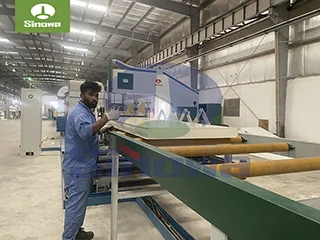
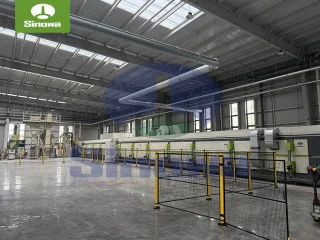
The PIR sandwich panel line is a highly automated production system designed to manufacture composite panels with a three-layer "sandwich" structure, consisting of two outer facing materials and a PIR foam core in the middle. The core working principle is to realize the precise compounding of the three layers through a series of continuous processes such as raw material preparation, panel pretreatment, foam pouring, pressing and curing, cooling and cutting. Unlike traditional discrete production methods, the continuous production mode of the PIR sandwich panel line ensures the uniformity of product quality and improves production efficiency, which can meet the large-scale demand for freezer room panels in different fields such as food storage, pharmaceutical logistics and agricultural product preservation.
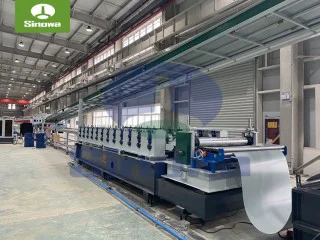
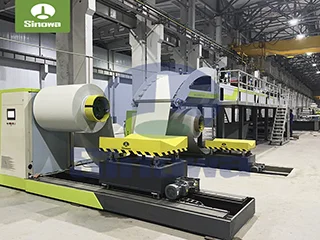
The core components of the PIR sandwich panel production line work together to ensure the smooth progress of the production process. The uncoiling system is responsible for stably uncoiling the coiled facing materials, which are usually color-coated steel plates, stainless steel plates or aluminum foils with excellent weather resistance and corrosion resistance. These facing materials need to be pre-treated before entering the next process, including leveling, cleaning and profiling. The profiling process can form the facing materials into corrugated, trapezoidal or other shapes to enhance the structural rigidity of the final panel. The foam mixing and pouring system is the key part of the production line, which accurately mixes the polyisocyanate, polyol, foaming agent, catalyst and other raw materials of PIR foam in a certain proportion, and then uniformly pours the mixed liquid raw materials onto the lower facing material moving at a constant speed. The foaming agent used in this process is usually environmentally friendly materials such as cyclopentane, which not only ensures the foaming effect but also meets the requirements of energy conservation and environmental protection.
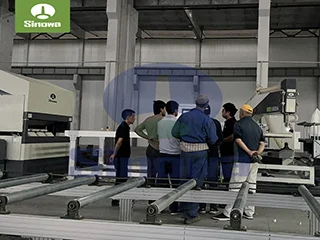
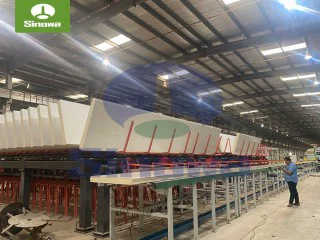
The laminating and curing system is another core link in the production line. After the foam raw materials are poured, the upper facing material is covered on the foam layer, and then the three-layer structure enters the continuous laminating machine. Under the action of set temperature, pressure and time, the PIR foam raw materials undergo a rapid polymerization reaction, expanding and filling the entire space between the upper and lower facing materials, and at the same time, they are firmly bonded to the facing materials. The temperature and pressure parameters in this process are strictly controlled, which directly affect the density, thermal conductivity and bonding strength of the PIR foam core. The cooling system is connected behind the laminating machine, which cools and shapes the composite panels just out of the laminating machine to ensure the dimensional stability of the panels. The cutting system uses high-precision cutting equipment to cut the continuous composite panels into specified lengths according to production orders, and at the same time performs edge trimming and grooving processes to facilitate the installation and connection of the panels in subsequent projects.
The production process of the PIR sandwich panel machine for freezer room panels is highly industrialized and standardized, which can be roughly divided into nine links: raw material preparation, facing material pretreatment, foam raw material mixing, pouring and foaming, composite laminating, curing, cooling and shaping, cutting and edge trimming, and quality inspection. In the raw material preparation stage, the facing materials need to be inspected for surface quality and thickness uniformity, and the PIR foam raw materials need to be tested for viscosity, reactivity and other indicators to ensure that they meet the production requirements. The facing material pretreatment stage includes processes such as leveling, degreasing and profiling. Leveling can eliminate the wrinkles of the facing material, degreasing can improve the bonding performance between the facing material and the foam core, and profiling can enhance the mechanical strength of the panel. In the foam raw material mixing stage, the production line uses high-precision metering equipment to accurately measure various raw materials, and through the high-speed mixing device, the raw materials are fully mixed to ensure the uniformity of the foam core.
During the pouring and foaming process, the mixed foam raw materials are evenly poured onto the lower facing material moving at a constant speed through the pouring head. With the movement of the facing material, the foam raw materials start to foam and expand, and the upper facing material is covered in time to form a closed space for foaming. The laminating and curing process is carried out in a closed environment. The composite structure is subjected to uniform pressure and appropriate temperature in the laminating machine, which promotes the full curing of the foam and the firm bonding between the foam and the facing material. The curing time is usually determined according to the type of foaming agent and the thickness of the panel, generally ranging from a few minutes to more than ten minutes. After curing, the panels enter the cooling system, and through air cooling or water cooling, the temperature of the panels is reduced to room temperature to ensure the dimensional stability of the panels. The cutting and edge trimming stage uses numerical control cutting equipment to cut the panels into specified lengths, and at the same time trims the edges of the panels to ensure the flatness and dimensional accuracy of the panel edges. The final quality inspection stage includes inspections of the panel's appearance, dimensions, foam density, bonding strength and thermal conductivity. Only the panels that pass all inspections can be put into storage and waiting for delivery.
The PIR sandwich panels produced by the PIR sandwich panel production machine have a series of excellent performance characteristics, making them particularly suitable for the construction of freezer room enclosure systems. First of all, they have excellent thermal insulation performance. The PIR foam core has a closed-cell rate of more than 95%, and its thermal conductivity is extremely low, which can effectively reduce the heat transfer between the inside and outside of the freezer room, maintain the stability of the low-temperature environment inside the freezer room, and reduce energy consumption. Compared with other thermal insulation materials such as EPS and XPS, PIR foam has better thermal insulation effect under the same thickness, which can reduce the thickness of the panel while ensuring the thermal insulation performance, thereby saving the use space of the freezer room.
Secondly, the PIR sandwich panels have excellent flame retardant performance. Due to the special chemical structure of PIR foam and the addition of flame retardants during the production process, the panels have good flame retardant properties. When exposed to fire, the PIR foam will carbonize and form a protective layer, which can effectively prevent the spread of the fire and reduce the generation of smoke, thus improving the safety of the freezer room. This flame retardant performance is particularly important for freezer rooms that store a large amount of flammable items such as food and packaging materials.
In addition, the PIR sandwich panels have the characteristics of light weight and high strength. The density of the PIR foam core is low, which makes the overall weight of the panel relatively light, reducing the load on the building structure of the freezer room and lowering the construction cost of the foundation. At the same time, the combination of the PIR foam core and the high-strength facing material makes the panel have good mechanical properties, which can withstand a certain degree of impact and load, and meet the structural requirements of the freezer room enclosure system. The panels also have good airtightness and water resistance. The precise connection between the panels and the high closed-cell rate of the foam core can effectively prevent cold air leakage and water vapor penetration, ensuring the stability of the internal environment of the freezer room and avoiding problems such as frost and condensation.
The PIR sandwich panel line for freezer room panels has a wide range of application scenarios, covering many fields that require low-temperature storage and transportation. In the food industry, it is widely used in the construction of freezer rooms for storing frozen food, aquatic products, fruits and vegetables, dairy products and other items. For example, in large-scale food processing plants, logistics distribution centers and supermarkets, freezer rooms built with PIR sandwich panels can maintain a stable low-temperature environment, extend the shelf life of food and ensure food quality and safety. In the pharmaceutical industry, the PIR sandwich panel freezer rooms are used to store vaccines, drugs and other items that require strict temperature control. The excellent thermal insulation performance of the panels can ensure the stability of the storage environment, avoid the deterioration of drugs due to temperature changes, and ensure the effectiveness and safety of drugs.
In the agricultural field, the PIR sandwich panel freezer rooms are used for the fresh-keeping storage of agricultural products such as fruits, vegetables and flowers, which can reduce the loss of agricultural products during storage and transportation and improve the economic benefits of farmers. In addition, the PIR sandwich panel line's products are also used in the construction of low-temperature storage rooms in the chemical industry, storing some chemical raw materials that need to be stored at low temperatures. With the continuous development of the cold chain logistics industry, the application scenarios of the PIR sandwich panel line will be further expanded, and the market demand will continue to grow.
With the increasing requirements for energy conservation, environmental protection and safety in the global construction industry, the PIR sandwich panel production equipment for freezer room panels is also facing new development opportunities and challenges. In the future, the production line will develop in the direction of higher automation, intelligence and environmental protection. On the one hand, the degree of automation of the production line will be further improved. Through the introduction of advanced intelligent control systems, the whole production process can be monitored and adjusted in real time, realizing automatic adjustment of parameters such as temperature, pressure and speed, improving production efficiency and product quality stability. At the same time, the intelligentization of the production line can also reduce the dependence on manual operations, reduce labor costs and human errors.
On the other hand, the PIR sandwich panel production line will pay more attention to environmental protection. In the selection of raw materials, more environmentally friendly foaming agents and additives will be used to reduce the impact on the environment. At the same time, the energy consumption of the production line will be further reduced. For example, energy-saving technologies will be adopted in the laminating machine, cooling system and other key energy-consuming links to improve energy utilization efficiency. In addition, the production line will also develop towards modularization and customization. Modular design can facilitate the installation, maintenance and upgrading of the production line, shorten the production cycle and reduce production costs. Customized production can meet the different needs of customers for panel thickness, size, facing material and other aspects, improving the market adaptability of the production line.
In the process of the development of the PIR sandwich panel machinery, there are also some challenges that need to be overcome. For example, the research and development of high-performance PIR foam raw materials needs to be strengthened to further improve the thermal insulation, flame retardant and mechanical properties of the panels. At the same time, the improvement of the production process and equipment technology is also crucial, which can help reduce production costs and improve product competitiveness. In addition, with the continuous improvement of relevant national standards and regulations, the requirements for the quality and performance of PIR sandwich panels will become more stringent, which requires manufacturers to continuously improve the quality control level of the production line to ensure that products meet the requirements of relevant standards.
In conclusion, the PIR sandwich panel manufacturing line for freezer room panels is an important part of the cold chain logistics industry, and its development level directly affects the quality and efficiency of freezer room construction. With its highly automated production process, it can produce PIR sandwich panels with excellent thermal insulation, flame retardant and mechanical properties, which are widely used in food, pharmaceutical, agricultural and other fields. In the future, with the continuous advancement of technology and the continuous expansion of market demand, the PIR sandwich panel production line will develop in the direction of intelligence, environmental protection and customization, making greater contributions to the sustainable development of the cold chain logistics industry. Manufacturers need to seize the development opportunities, continuously carry out technological innovation and process improvement, improve the performance and quality of production lines and products, and enhance market competitiveness.
https://www.cnsinowa.com/sandwich-panel-machines/pir-sandwich-panel-line-for-freezer-room-panels.html