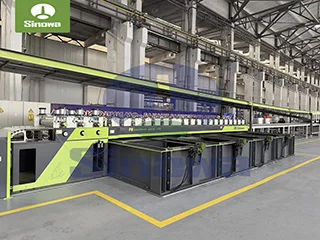
 sandwich panel machine
The core working logic of polyurethane sandwich panel machine relies on the perfect coordination of mechanical transmission and chemical foaming reaction. Polyurethane composite panels are composed of upper and lower surface decorative and protective materials and a middle polyurethane foaming core layer, and the equipment’s core function is to realize the seamless bonding and integral molding of the surface layer and the core layer through precise mechanical control and environmental regulation. In the entire production process, the equipment first completes the continuous conveying and leveling of surface materials, including metal color steel coils, aluminum sheets, and various non-metal decorative boards, ensuring that the surface materials maintain stable tension and flatness during high-speed operation to avoid wrinkles, deviations, and surface damage. Meanwhile, the supporting raw material metering and mixing system accurately transports polyurethane resin, curing agent, foaming agent, and other auxiliary materials according to fixed proportion parameters, and completes high-speed uniform mixing through a professional mixing structure. The fully mixed reaction materials are evenly coated on the surface of the bottom layer material through a reciprocating distributing mechanism, and with the continuous advancement of the surface material, the upper layer material is covered and compounded, forming a closed composite structure. Subsequently, the composite semi-finished product enters the constant-temperature curing and shaping system, where the polyurethane materials complete foaming, cross-linking, and curing reactions under stable temperature and pressure conditions, finally forming an integrated sandwich structure with tight bonding, uniform core density, and stable overall performance.
Complete polyurethane sandwich panel production equipment follows a standardized and streamlined production process, covering multiple key links from raw material pretreatment to finished product output, and each link is precisely controlled by independent mechanical units and linkage systems. The first link is surface material unwinding and pretreatment. The equipment is equipped with multi-station unwinding structures, which can stably release coiled surface materials and complete preliminary leveling, deviation correction, and surface cleaning. This process eliminates surface impurities and uneven stress of raw materials, laying a foundation for subsequent composite bonding quality. For metal surface materials, the equipment can also complete surface film covering and anti-corrosion pretreatment according to production requirements, enhancing the weather resistance and service life of the finished panels. The second link is raw material precision metering and dynamic mixing, which is the key core link determining the foaming quality of the polyurethane core layer. The equipment adopts high-precision metering pump groups to control the delivery volume of each raw material in real time, avoiding performance differences caused by raw material ratio deviations. The high-speed mixing head realizes instantaneous and sufficient mixing of materials, ensuring the uniformity of the reaction system and preventing local insufficient foaming or excessive foaming defects.
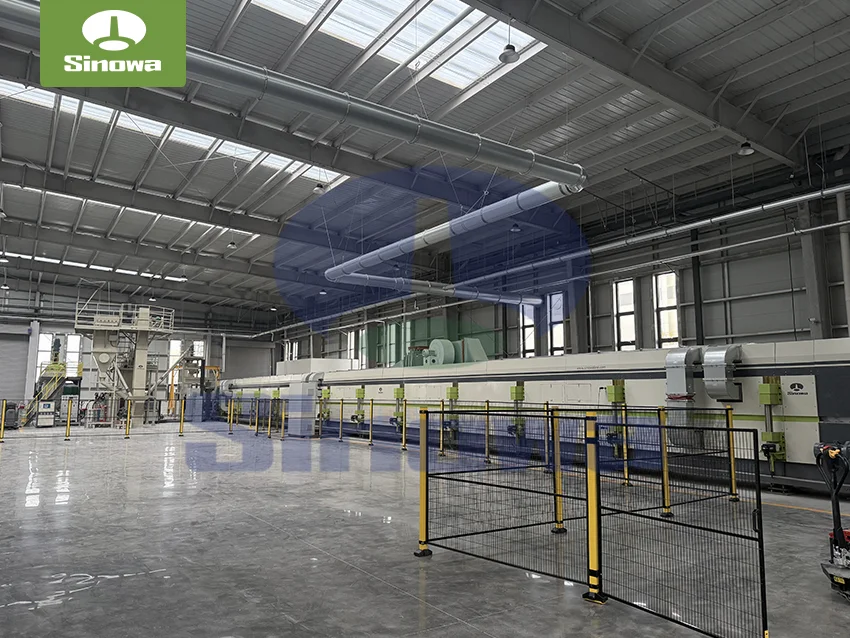
The third link is continuous material distribution and composite lamination. The mixed polyurethane reaction materials are evenly distributed on the moving bottom surface material through the automatic reciprocating distributing device of the equipment. The distributing speed and stroke can be adaptively adjusted according to the required thickness and width of the panel core layer, ensuring consistent material distribution across the entire board surface. After the completion of material distribution, the upper and lower surface materials are tightly laminated through the double-belt lamination system. The double-belt structure maintains constant pressure and linear conveying speed, which can effectively limit the free expansion range of polyurethane foam, make the foam fill the composite cavity uniformly, and ensure the flatness and uniform thickness of the upper and lower surfaces of the panel. The fourth link is thermal curing and constant-temperature shaping. The composite semi-finished panels enter the closed heating and heat-preserving tunnel, where the internal temperature field is evenly distributed to provide a stable reaction environment for polyurethane foaming and curing. In this process, the polyurethane materials undergo physical foaming volume expansion and chemical cross-linking curing reaction simultaneously, gradually forming a microporous closed-cell structure with high thermal insulation performance and structural strength. The equipment’s temperature control system can realize stepless adjustment of curing temperature according to different material formulas and panel specifications, ensuring that the curing reaction is fully completed while avoiding material aging and performance degradation caused by excessive temperature.
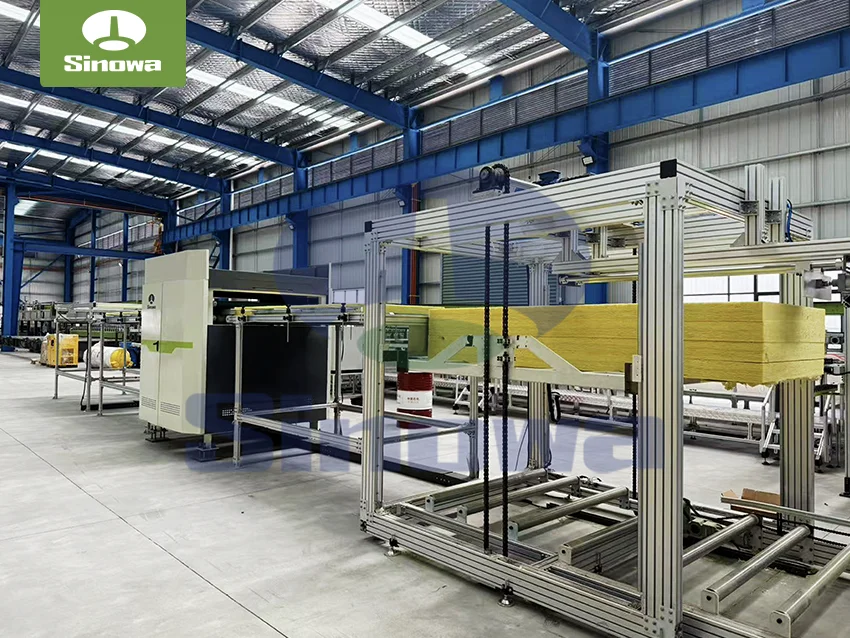
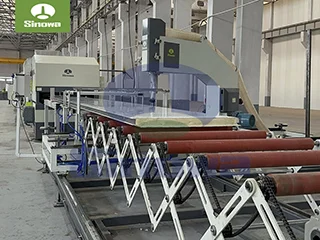
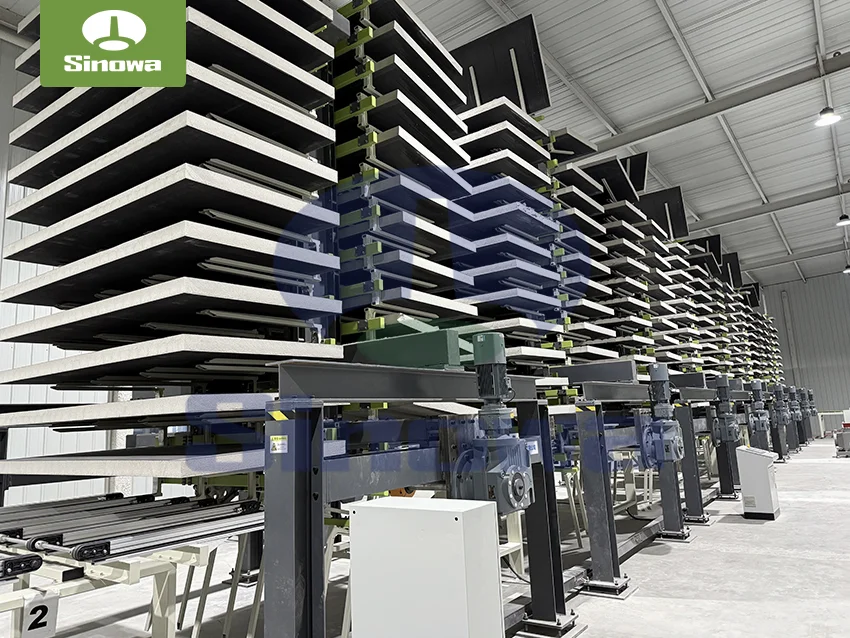
The fifth link is edge trimming, fixed-length cutting and post-processing finishing. After curing and shaping, the continuous integral panel has redundant edge materials on both sides and needs to pass through the automatic edge trimming device of the equipment to complete precise trimming, so that the panel width meets the set standard. Then, according to the preset length parameters, the high-speed cutting mechanism realizes fixed-length cutting of the continuous panel, with stable cutting precision and smooth cut surfaces without burrs. For panels used in special scenarios, the equipment can also be equipped with supporting post-processing units to complete surface flattening, defect detection, and protective film pasting, further improving the finished product quality and appearance effect. The last link is automatic stacking and output. The qualified finished panels are automatically transported to the stacking platform through the conveying system, and the mechanical stacking device realizes orderly stacking of panels, reducing manual intervention and improving the overall automation level of the production line.
From the perspective of structural composition, a complete set of PU sandwich panel machine consists of multiple independent and interlocking functional systems, each undertaking unique production functions and jointly supporting the efficient and stable operation of the entire production line. The raw material supply and metering system is responsible for the storage, filtration, pressure delivery, and precise proportioning of polyurethane raw materials and auxiliary materials. It is equipped with material temperature adjustment and pressure stabilization devices to ensure that the temperature, pressure, and flow rate of raw materials remain stable during continuous production, avoiding fluctuations in product quality caused by raw material state changes. The surface material conveying and correction system includes unwinding units, tension control devices, and automatic deviation correction mechanisms. It can adapt to surface materials of different thicknesses and textures, maintain constant material tension during high-speed operation, and automatically correct the lateral deviation of materials, effectively preventing finished panel size deviation and unilateral thickness inconsistency.
The foaming and composite molding system is the core functional component of the entire equipment, including high-speed mixing heads, reciprocating distributing mechanisms, and double-belt lamination molding units. The mixing head adopts a high-efficiency dynamic mixing structure to realize rapid and uniform mixing of multi-component raw materials and ensure the activity and reaction uniformity of the reaction materials. The reciprocating distributing structure can adjust the distributing track and speed according to the panel width and core thickness requirements, realizing full coverage and uniform distribution of materials. The double-belt lamination unit uses high-strength and high-flatness annular belts to form a closed molding cavity, which can provide stable lamination pressure and linear conveying speed, ensuring that the polyurethane foam forms a uniform and dense core layer structure during the foaming process, and the core layer is tightly bonded to the surface materials without hollowing or delamination.
The constant-temperature curing system is composed of a closed heat-preserving tunnel, heating components, and an intelligent temperature control module. The internal heating mode adopts uniform heat conduction design, which can eliminate local temperature differences in the curing area and ensure that each position of the panel undergoes consistent curing reaction. The temperature control module realizes real-time monitoring and dynamic adjustment of internal temperature, automatically compensating for temperature changes caused by production speed and external environmental fluctuations, maintaining the stability of the curing environment for a long time. The precision cutting and finishing system includes edge trimming mechanisms, fixed-length cutting devices, and surface finishing units. All cutting and trimming actions are driven by precision transmission components, with high processing accuracy, which can meet the size standard requirements of high-precision panel products. The automatic conveying and stacking system undertakes the transportation, transition, and finished product storage of semi-finished and finished panels, realizing the seamless connection of each production link and improving the continuous production capacity of the equipment.
According to different production modes and processing technologies, polyurethane sandwich panel line can be divided into continuous production equipment and discontinuous batch production equipment, which are applicable to different production scales and product customization needs, continuous PU sandwich panel line is suitable for large-scale, standardized, and mass production scenarios. The entire production process from surface material unwinding to finished product stacking is fully automated and connected without interruption, with fast production speed and stable product consistency. This type of equipment has high overall integration, can realize synchronous operation of multiple processes, and is the mainstream equipment for large-scale industrial production of standard sandwich panels. It is widely used in the production of conventional building thermal insulation panels, industrial plant enclosure panels, and cold storage thermal insulation panels.
Discontinuous batch polyurethane sandwich panel equipment is based on mold pressing and injection foaming technology, with relatively flexible structural design and low overall equipment investment cost. Its working mode is to place pre-processed surface materials in a fixed mold in advance, inject uniformly mixed polyurethane reaction materials into the mold cavity through the injection device, and complete foaming and curing molding under the action of mold pressure and temperature. This type of equipment does not require continuous unwinding and long-distance conveying of coiled materials, and can produce sandwich panels of special specifications, special shapes, and small-batch customized sizes. It has strong flexibility in product specification adjustment, and is suitable for small and medium-sized production enterprises and customized product production scenarios with diverse product types and small single-batch demand. Although its production efficiency is lower than that of continuous production lines, it has irreplaceable advantages in meeting personalized market demand.
In actual industrial production, the operational stability and product molding quality of polyurethane sandwich panel production line is affected by multiple key technical parameters, among which temperature control, pressure control, speed matching, and raw material metering accuracy are the four core influencing factors. Temperature control runs through the entire production process, including raw material preheating temperature, mixing reaction temperature, and curing molding temperature. Appropriate raw material preheating temperature can reduce the viscosity of polyurethane materials, improve mixing uniformity and fluidity, and facilitate uniform material distribution. Stable curing temperature can ensure that the polyurethane foaming reaction is fully completed, form a uniform closed-cell structure, and guarantee the thermal insulation performance and structural strength of the core layer. Excessively high temperature will cause excessive foaming and material aging, resulting in reduced core density and decreased structural stability; excessively low temperature will lead to incomplete reaction, insufficient foaming, and poor bonding fastness between the core layer and surface materials.
Pressure control mainly refers to the lamination pressure of the double-belt molding system and the mold pressure of batch production equipment. Stable and uniform pressure can limit the free expansion speed and range of foam, make the foam fill the entire composite cavity uniformly, eliminate internal voids and defects, and ensure the flatness and uniform thickness of the panel surface. Too low pressure will lead to loose core layer structure, large cell gaps, reduced thermal insulation effect, and easy deformation of the panel; too high pressure will cause excessive compression of the foam, damage the closed-cell structure, increase material density, and reduce the lightweight advantage of the product. Speed matching refers to the synchronous coordination between surface material conveying speed, raw material distributing speed, and curing conveying speed. The three speeds need to be precisely matched to ensure that the material distribution volume matches the panel advancing speed, and the curing time matches the foaming reaction cycle. Unreasonable speed matching will lead to uneven material distribution, insufficient curing time or excessive curing, resulting in unstable product quality.
Raw material metering accuracy is the fundamental guarantee for consistent product performance. The performance of polyurethane foam is directly determined by the proportion of polyether, isocyanate, and auxiliary materials. Slight proportion deviation will cause changes in foam density, hardness, thermal conductivity, and bonding performance. High-precision metering systems can effectively control the proportion error of each raw material within a tiny range, ensuring that the physical and chemical properties of each batch of products remain stable, and realizing the standardized production of products.
With the continuous progress of industrial manufacturing technology, modern PU sandwich panel line has achieved significant upgrades in automation level, intelligent control, energy-saving performance, and product adaptability compared with traditional equipment. In terms of automation control, the new generation of equipment adopts integrated intelligent control systems, realizing one-click setting of production parameters such as panel thickness, width, length, and production speed. The system can automatically adjust the operating parameters of each functional unit in real time according to the set production requirements, realizing the synchronous operation of the entire production line. At the same time, the equipment is equipped with real-time monitoring and fault self-diagnosis functions, which can automatically monitor the operating state of key components such as metering pumps, mixing heads, and transmission belts. Once abnormal parameters or equipment faults are detected, the system will automatically alarm and perform protective shutdown, effectively reducing equipment failure rates and production loss rates.
In terms of energy-saving and environmental protection optimization, modern PU sandwich panel production line optimizes the heating structure and heat preservation design of the curing tunnel, reducing heat loss and improving thermal energy utilization efficiency. The raw material supply system adopts closed-loop circulation design, which can effectively reduce the volatilization and waste of raw materials, avoid material residue and pollution caused by excessive feeding, and meet the requirements of green and environmentally friendly production. In addition, the equipment optimizes the mechanical transmission structure, reduces friction loss and power consumption during equipment operation, and further reduces the energy consumption of unit product production.
In terms of product adaptability, the upgraded equipment realizes modular functional design, and can quickly adjust and replace functional components according to different production needs, meeting the production requirements of various surface materials and different core layer thickness specifications. It can not only produce conventional single-layer polyurethane sandwich panels but also adapt to the composite production of multi-layer special structural panels, and can support the processing of functional panels with fire resistance, sound insulation, and high weather resistance by adjusting raw material matching and process parameters. This strong adaptability enables the equipment to cope with the increasingly diversified and personalized market demand and expand the application scope of polyurethane sandwich panels.
Polyurethane sandwich panel machinery serves a wide range of downstream industries, covering construction engineering, industrial manufacturing, cold chain logistics, municipal engineering, and special facility construction fields. In the construction field, the equipment-produced sandwich panels are widely used in the enclosure structures, roof systems, and interior partition walls of industrial plants, logistics warehouses, and temporary construction buildings. The lightweight and high-strength characteristics of the panels can reduce the overall load of buildings, and the excellent thermal insulation performance can effectively reduce building energy consumption, achieving the dual effects of energy saving and cost reduction. In the cold chain logistics industry, the high closed-cell rate and low thermal conductivity of polyurethane core layers make the panels ideal materials for cold storage, freezer, and constant-temperature warehouse enclosure and thermal insulation layers. The stable molding performance of equipment ensures the overall air tightness and thermal insulation uniformity of cold storage panels, reducing cold air loss and improving the operational efficiency of cold storage facilities.
In the field of special industrial facilities, the equipment can produce customized sandwich panels with sound insulation, shock resistance, and anti-corrosion functions, which are applied to industrial workshops with high noise, high humidity, and corrosive environments, as well as equipment room partition structures. In municipal engineering and public facility construction, the panels produced by the equipment are used in public building exterior wall thermal insulation, roof waterproof thermal insulation, and landscape facility enclosure structures, relying on their excellent weather resistance and decorative performance to improve the overall quality and service life of public facilities. In addition, with the rapid development of the new energy industry, polyurethane sandwich panels are increasingly used in the enclosure and thermal insulation of photovoltaic power station auxiliary buildings, wind power supporting facilities, and new energy equipment workshops, further expanding the application boundary of equipment products.
In the context of global energy conservation, emission reduction, and green building development, the technological upgrading and market development potential of polyurethane sandwich panel production machinery are extremely huge. The entire industry is gradually developing towards high intelligence, high efficiency, low energy consumption, and strong customization. In the future, equipment will further integrate digital twin technology and automatic parameter optimization functions, realizing intelligent matching of process parameters according to different raw material characteristics and product requirements, and further improving production accuracy and product stability. At the same time, with the improvement of environmental protection production standards, the equipment will continue to optimize the closed production system, reduce the emission of volatile substances in the production process, and realize cleaner and more environmentally friendly production.
In terms of production efficiency improvement, the high-speed continuous production technology of equipment will be further optimized, breaking through the bottleneck of production speed under the premise of ensuring product quality, and improving the single-line production capacity to meet the growing market demand for energy-saving building materials. In terms of customized production capacity, the equipment will realize more flexible modular adjustment functions, which can quickly respond to the personalized production needs of special-shaped panels, multi-functional composite panels, and ultra-thick and ultra-thin specification panels, and expand the product coverage of a single production line. In addition, with the development of circular economy concepts, the equipment will gradually be compatible with the production of recycled polyurethane materials, realizing the recycling and reuse of raw materials, reducing production costs, and promoting the sustainable development of the entire industry chain.
In conclusion, PU sandwich panel manufacturing machinery, as the core equipment for the production of high-efficiency energy-saving composite materials, has a mature and perfect technical system and production process after years of technical iteration and industrial verification. Its stable mechanical performance, flexible production capacity, and excellent product molding effect provide strong technical support for the large-scale application of polyurethane sandwich panels in various fields. With the continuous advancement of industrial intelligence and green manufacturing technology, Polyurethane Sandwich Panel Production Machinery will continue to carry out technological innovation and structural optimization, continuously improve production efficiency, product quality, and environmental protection performance, adapt to the changing market demand and industrial development trends, and play a more important role in the construction of energy-saving buildings, the upgrading of industrial supporting facilities, and the development of green environmental protection industries. The continuous progress of this equipment industry will also effectively drive the technological innovation and industrial upgrading of the entire composite building material industry, injecting lasting power into the development of modern low-carbon and energy-saving industrial economy.
https://www.cnsinowa.com/sandwich-panel-machines/polyurethane-sandwich-panel-machinery.html