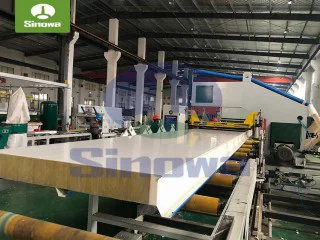
sandwich panel machine
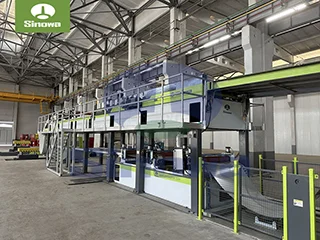
The basic structural design of a sandwich panel making machine follows the logic of continuous industrial production, and the whole equipment is composed of multiple interconnected and coordinated functional subsystems. Each subsystem has an independent mechanical structure and control logic, and realizes seamless docking with adjacent modules through transmission devices, ensuring the continuity and stability of the production process. The raw material feeding system is the starting part of the whole production line, which undertakes the transportation and preliminary arrangement of raw materials required for panel production. For metal surface sandwich panels, this system mainly completes the unreeling and leveling of metal coiled materials. The unreeling mechanism adopts a symmetrical mechanical support structure, which can fix large-diameter metal coiled materials and realize slow and uniform discharging under the drive of a low-speed motor. During the unreeling process, the auxiliary leveling roller group can eliminate the bending stress and surface wrinkles of the metal coiled materials generated during the winding process, ensuring the flatness of the surface panels before molding. For non-metal surface sandwich panels, the feeding system is equipped with a special raw material distribution device, which can quantitatively transport flat non-metal plates to the subsequent processing station according to the production rhythm. In addition, the feeding system also includes a core material conveying unit, which is responsible for cutting and arranging bulk or coiled core materials such as foam, rock wool and glass wool, so that the core materials can maintain uniform thickness and regular shape before lamination, laying a foundation for the subsequent composite molding process.
Following the feeding system is the surface panel molding and pretreatment system, which is one of the key modules affecting the surface quality of finished sandwich panels. After the flat metal plate is output from the feeding mechanism, it will enter the roller pressing molding device. This device is composed of multiple groups of precision alloy rollers arranged in an orderly manner. The spacing and radian of each roller are designed according to the structural requirements of different panel types. Under the gradual rolling of the roller group, the flat metal plate undergoes cold bending deformation to form the edge sealing, buckle and groove structures required for panel assembly. This cold processing method will not change the internal physical properties of the metal material, and can maintain the tensile strength and surface hardness of the surface panel. In the pretreatment link, the equipment is equipped with a surface cleaning and dedusting mechanism. Through high-pressure air flow and soft brush components, the dust, oil stains and metal debris attached to the surface of the panel are removed, which can effectively improve the bonding tightness between the surface panel and the core material. Some optimized equipment models are also equipped with surface polishing and anti-corrosion coating auxiliary structures, which can complete simple surface treatment processes in the production flow and enhance the environmental corrosion resistance of the finished panels.
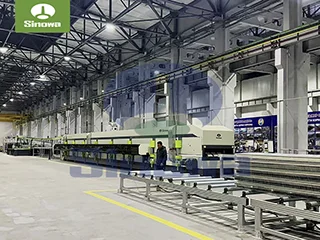
The gluing and composite bonding system is the core functional module of the entire sandwich panel making machine, and its operating parameters directly determine the bonding strength and service life of the composite panel. After the pretreatment of the surface panel is completed, the automatic gluing device evenly coats the high-viscosity adhesive on the inner surface of the panel. The gluing mechanism adopts a multi-point synchronous spraying structure, which can adjust the gluing amount and spraying range according to the thickness and material characteristics of the core material. The uniform adhesive layer can avoid hollowing and degumming between layers caused by uneven glue application. After the gluing operation is completed, the surface panel and the cut core material are accurately assembled through the positioning and docking mechanism, and then enter the pressing composite station. The pressing system is divided into normal-temperature mechanical pressing and thermal pressure composite according to different production processes. The thermal pressure composite structure is equipped with an internal heating assembly, which can stably control the processing temperature within a reasonable range. Under the dual action of constant temperature and uniform pressure, the adhesive undergoes physical curing and chemical cross-linking reactions, so that the surface panel and the core material are closely integrated into a unified structure. The pressure control system adopts hydraulic transmission technology, which can maintain stable pressure output during the pressing process, avoiding panel deformation and core material crushing caused by excessive local pressure.
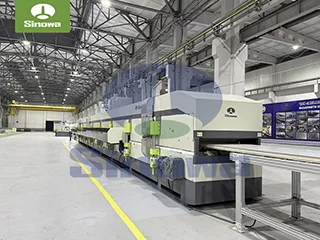
The constant-temperature curing and shaping system plays a vital role in stabilizing the structural performance of sandwich panels. After the preliminary composite pressing is completed, the semi-finished panels are transported to the constant-temperature curing channel through the conveying track. The internal space of the curing channel is a fully enclosed thermal insulation structure, and the internal temperature and humidity are monitored in real time by high-sensitivity sensors. According to the characteristics of different adhesives and core materials, the system can dynamically adjust the curing parameters to ensure that the adhesive is completely cured and the internal stress of the composite structure is fully released. During the curing process, the slow conveying speed of the track ensures that each panel stays in the constant-temperature environment for a sufficient time, eliminating the residual stress generated in the cold bending and pressing links. For sandwich panels with special fireproof and thermal insulation requirements, the curing system can also complete the secondary shaping of the core material structure, optimize the internal pore uniformity of porous core materials, and further improve the thermal insulation and sound absorption performance of the panels. The design of the enclosed curing channel can also reduce the heat loss in the production process and improve the energy utilization efficiency of the equipment.
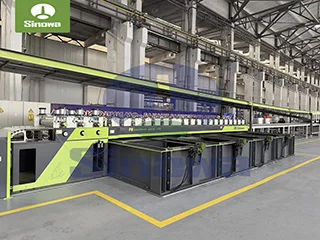
The precise cutting and edge trimming system is responsible for the final sizing and finishing of finished panels. After curing and shaping, the continuous strip semi-finished products are transported to the cutting station, and the intelligent control system automatically sets the cutting length according to the production parameters preset by the staff. The cutting mechanism adopts high-speed hard alloy cutting tools, which have the characteristics of wear resistance and high cutting precision. During the cutting process, the equipment is equipped with a fixing and pressing device to prevent the panel from shifting and bouncing, ensuring that the cutting section is flat and free of burrs. For the irregular edges generated during the composite molding process, the edge trimming mechanism conducts synchronous trimming and polishing to make the edge structure of the panel neat and smooth, which is convenient for subsequent on-site assembly and docking. In addition, the cutting system is matched with a waste recycling device, which can collect the cut leftover materials and process them into recyclable auxiliary raw materials, reducing the waste rate of production raw materials and improving the economic benefits of production.
The final link of the production line is the finished product output and stacking system. The qualified panels after cutting and trimming are smoothly transported out of the production line through the low-noise conveying roller table. The automatic stacking device is installed at the end of the equipment, which can realize orderly stacking of finished panels according to the set spacing and layers. The stacking mechanism is equipped with a buffer protection structure, which can avoid surface scratches and structural damage caused by hard collision between panels during the stacking process. At the same time, the finished product area is equipped with a simple quality inspection auxiliary device. Staff can complete rapid sampling inspection on the surface flatness, bonding tightness and dimensional accuracy of the finished panels, and screen out unqualified products in time to prevent defective products from entering the storage link. The whole output process realizes unmanned automatic operation, which greatly reduces the labor intensity of staff and improves the transfer efficiency of finished products.
From the perspective of overall operating principles, the sandwich panel making machine takes mechanical transmission as the power basis, intelligent sensing as the monitoring means, and physical compression and thermal curing as the core molding methods to realize the continuous production of composite panels. In the actual operation process, all subsystems maintain a synchronous matching operating rhythm, and the running speed of each module is dynamically adjusted by the central control unit to avoid production stagnation caused by asynchronous docking. The internal transmission structure mostly adopts chain and gear transmission, which has strong load-bearing capacity and stable operation performance, and can adapt to long-term uninterrupted industrial production. The sensing components distributed in each station can collect real-time data such as equipment operating temperature, transmission speed, pressing pressure and raw material consumption, and feed the data back to the central control system. The system compares the collected data with the preset standard parameters, and automatically corrects the deviation parameters to ensure that each production link is always in a stable operating state. This closed-loop control mode effectively reduces the fluctuation of product quality caused by human operation errors and improves the consistency of finished panel performance.
Different types of sandwich panel making machines have differentiated structural designs and performance characteristics to adapt to diverse production demands. According to the degree of automation, the equipment can be divided into semi-automatic production lines and fully automatic production lines. Semi-automatic sandwich panel making machines have relatively simplified structural configurations, with partial links such as raw material feeding and finished product stacking requiring manual assistance. This type of equipment has the advantages of small floor area, low operation difficulty and flexible production switching, and is suitable for small-scale building material processing enterprises with low production output requirements. Fully automatic production lines integrate all production processes into an intelligent control system, realizing unmanned operation from raw material input to finished product output. The equipment is equipped with intelligent alarm and fault self-detection functions. When mechanical jamming, parameter deviation or material shortage occurs, the system will automatically trigger an alarm and perform emergency shutdown protection to avoid equipment damage and production accidents. Although fully automatic equipment has a higher configuration threshold, it has outstanding advantages in production efficiency and product stability, and is widely used in large-scale standardized building material production factories.
According to the applicable raw material types, sandwich panel making machines can also be classified into metal surface panel production equipment and non-metal surface panel production equipment. Metal surface panel production equipment is optimized for metal coiled materials such as color steel plates and aluminum alloy plates. The roller pressing structure has high forming hardness, and the pressing and cutting components are made of wear-resistant alloy materials to adapt to the processing characteristics of metal materials. Non-metal surface panel production equipment is suitable for processing cement fiber boards, gypsum boards and other inorganic plates. The equipment is equipped with a shock absorption and protection structure to avoid brittle fracture of non-metal plates during the processing process. In addition, aiming at different core materials such as rock wool, polyurethane and polystyrene, the equipment has adjustable parameters in the pressing pressure and curing temperature links to match the molding requirements of core materials with different densities and thermal conductivity.
The excellent production performance of sandwich panel making machines brings multiple application advantages to the building material manufacturing industry. In terms of production efficiency, the continuous assembly line production mode breaks through the limitations of intermittent processing of traditional composite material processing equipment. The streamlined docking of each functional module shortens the intermediate transfer time of semi-finished products, and the overall production cycle of a single panel is greatly compressed. In terms of product quality control, the standardized parameter setting and automatic processing mode minimize the interference of human factors. The dimensional error of the produced panels is controlled within a tiny range, and the bonding uniformity and structural stability of the composite layers are significantly better than those of manually processed products. In terms of production cost control, the integrated structural design reduces the number of intermediate transportation equipment, and the intelligent material distribution system accurately controls the consumption of raw materials such as adhesives and core materials, effectively reducing the waste of production materials. At the same time, the centralized control mode reduces the number of on-site operators, lowering the daily labor cost of the production line.
In terms of environmental protection and energy saving, modern sandwich panel making machines have carried out optimized upgrades in structural design and energy consumption control. The heating system of the thermal curing link adopts an insulated heating structure, which reduces heat radiation loss and improves the utilization rate of heat energy. The transmission motor adopts energy-saving drive components, which can automatically adjust the operating power according to the production load, avoiding the energy waste caused by no-load operation. For the harmful gas and fine dust generated during the gluing and cutting process, the equipment can be equipped with an auxiliary dust removal and gas purification device. Through physical adsorption and filtration, the pollutants generated in the production process are processed to meet the environmental emission standards. In addition, the leftover materials generated in the production process can be recycled and reused after being processed by the supporting recycling equipment, realizing the cyclic utilization of production resources and conforming to the development concept of green industrial production.
The daily maintenance and scientific maintenance of sandwich panel making machines are key measures to extend the service life of equipment and maintain stable production performance. In the daily production process, the staff need to carry out regular cleaning operations on each processing station of the equipment, focusing on removing the residual adhesive, material debris and dust attached to the roller group, cutting tools and conveying tracks. Long-term accumulation of attachments will increase the operating friction of mechanical components, resulting in slow transmission speed and reduced processing accuracy. The transmission parts such as gears, chains and bearings need to be regularly filled with high-quality lubricating oil to reduce mechanical wear during operation. The lubrication cycle should be reasonably formulated according to the operating frequency of the equipment, and the aging and deteriorated lubricating oil should be replaced in a timely manner.
The electrical control system and sensing components belong to the precision parts of the equipment, and need to be protected against moisture, dust and static electricity. The staff should regularly check the circuit connection status of the control cabinet to avoid production failures caused by loose wiring and line aging. The temperature, pressure and distance sensors distributed in each station need to be calibrated regularly to ensure that the collected data is accurate and reliable, preventing product quality problems caused by parameter deviation. For the vulnerable parts such as cutting tools and pressing rollers, the wear degree should be detected regularly. Once serious wear and deformation are found, the vulnerable parts should be replaced in time to ensure the processing precision of the equipment. In addition, the equipment should be shut down regularly for overall inspection and maintenance, and potential mechanical faults should be eliminated in the dormant period to avoid sudden equipment failure during peak production periods.
In the global industrial layout, sandwich panel making machines have a wide range of application scenarios and market adaptation capabilities. In the industrial construction field, the equipment provides high-quality thermal insulation and fireproof sandwich panels for factory workshops, logistics warehouses and cold storage facilities. The produced panels can adapt to high and low temperature environments and harsh weather conditions, reducing the energy consumption of building temperature regulation. In the field of temporary construction engineering, the efficient production characteristics of the equipment can meet the rapid supply demand of prefabricated building panels for temporary dormitories, construction offices and emergency rescue facilities. The standardized size of the finished panels simplifies the on-site assembly process and shortens the construction cycle of temporary buildings.
In the field of special buildings such as purification workshops and medical isolation rooms, the high-precision processing performance of sandwich panel making machines ensures that the surface of the panels is smooth, seamless and easy to clean and disinfect. The composite structure of the panels has good air tightness and dust resistance, which meets the strict environmental requirements of special production and medical spaces. In addition, with the rapid development of the new energy industry, sandwich panels are increasingly used in the construction of photovoltaic power stations and wind power supporting facilities. The corrosion-resistant and weather-resistant panels produced by professional equipment can maintain stable structural performance in outdoor open-air environments for a long time, reducing the maintenance frequency of new energy facilities.
Affected by the development trend of global industrial intelligence and green manufacturing, sandwich panel making machines are constantly carrying out technological innovation and structural optimization. In terms of intelligent upgrading, the equipment is gradually combined with industrial Internet and data analysis technology. The production line can record and store production data such as raw material consumption, product output and parameter changes in real time. Manufacturers can analyze the operating data of the equipment to optimize production processes and improve production efficiency. The human-computer interaction interface of the control system is continuously optimized, with simpler operation logic and more intuitive data display, reducing the professional operation threshold of the equipment.
In terms of structural performance optimization, the equipment is developing towards high precision and high stability. The upgraded transmission and pressing components have higher processing accuracy, which can produce ultra-thin and ultra-long customized sandwich panels to meet the personalized construction needs of special engineering projects. The vibration reduction and noise reduction structure is added to the mechanical operation part, which reduces the mechanical vibration and operating noise during the production process and improves the on-site production environment. In terms of green production optimization, the equipment is compatible with more environmentally friendly and low-carbon adhesives and core materials. The internal heating system adopts clean energy heating modes to reduce the emission of polluting gases in the production process.
In terms of market development, with the continuous acceleration of global urbanization and the increasing emphasis on energy-saving building standards in various countries, the market demand for sandwich panels will continue to grow, which will drive the continuous expansion of the application scale of sandwich panel making machines. The equipment will gradually realize modular combined design, and users can freely assemble functional modules according to production demands, realizing flexible switching of different types of panel production. At the same time, the equipment will develop towards miniaturization and mobility to meet the production needs of scattered small-scale processing sites and temporary construction sites.
In conclusion, the sandwich panel making machine is a comprehensive industrial equipment integrating mechanical manufacturing, automatic control and material composite processing technologies. Its scientific structural layout and perfect production process realize the efficient and standardized production of sandwich panels. From raw material feeding to finished product output, each functional subsystem cooperates closely to ensure the stable quality and excellent performance of finished panels. With the advantages of high production efficiency, low comprehensive consumption and wide application range, the equipment has become an important supporting facility in the field of modern building material production. In the future, driven by intelligent manufacturing and green industrial concepts, sandwich panel making machines will continue to make breakthroughs in technological innovation, structural optimization and energy conservation and emission reduction. It will further adapt to the diversified and high-quality development needs of the construction industry, provide more reliable material guarantee for the construction of various engineering projects, and create greater economic and social value for the global building material manufacturing industry.
https://www.cnsinowa.com/sandwich-panel-machines/sandwich-panel-making-machine.html