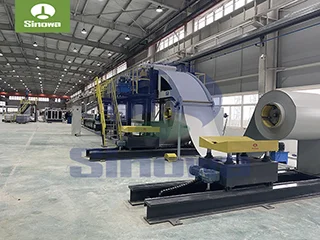
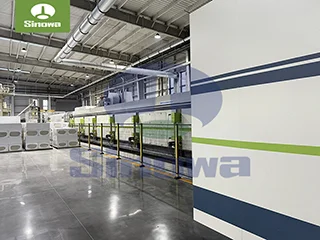
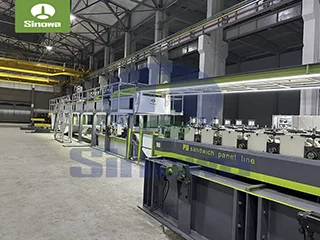
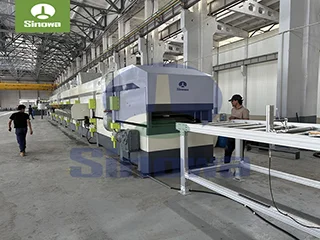
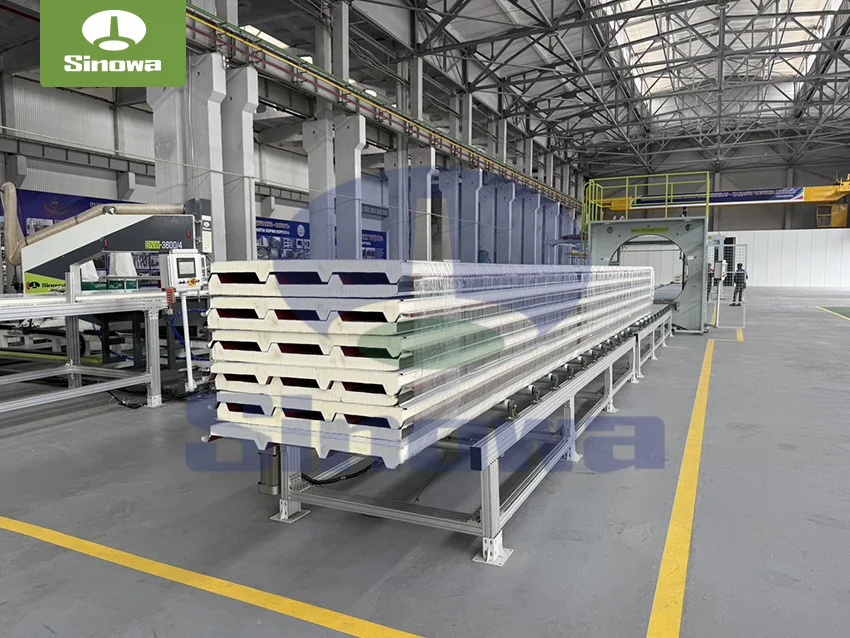
 sandwich panel line
The fundamental structural performance of all foam core sandwich panels produced by continuous production lines originates from the typical composite sandwich structure mechanical principle, in which the upper and lower surface layers mainly bear the external tensile stress and compressive stress generated by bending load and impact load, while the middle foam core layer undertakes the shear stress between the two surface layers and disperses and transfers the external pressure evenly to the whole panel structure. This reasonable structural stress distribution mode enables the foam core sandwich panel to break through the performance limitations of single homogeneous building materials and industrial plates. Under the premise of maintaining extremely low overall self-weight, the panel obtains far higher structural rigidity and bending resistance than traditional solid plates of the same thickness, effectively avoiding structural deformation, bending sagging and local damage caused by long-term load-bearing and external environmental erosion. The foam core layer formed by continuous on-site foaming has a fine and uniform internal cellular structure, which not only provides stable mechanical support for the overall structure of the panel, but also forms a large number of closed or semi-closed tiny air cavities inside the core layer. These air cavities become natural thermal insulation and sound insulation media, enabling the panel to have excellent thermal insulation performance and sound absorption and noise reduction performance while maintaining basic structural mechanical properties. In addition, the continuous thermal compounding and bonding process adopted by the production line makes the bonding interface between the foam core layer and the surface layer form an integrated tight connection state without gaps and degumming, which effectively enhances the overall structural integrity of the panel, prevents the separation of the surface layer and the core layer under long-term external force and temperature alternating changes, and greatly extends the long-term service stability and service life of the panel in complex working environments.
In terms of core structural performance classification, the foam core sandwich panels manufactured by continuous production lines can be divided into multiple types according to different core layer foam densities, internal cellular structural forms, surface layer material matching types and overall structural stress-bearing design orientations, each with distinct targeted structural performance advantages and applicable working condition boundaries. The first category is the light-duty thermal insulation structural foam core sandwich panels, which are produced with low-density closed-cell foam as the core material and thin-layer lightweight rigid materials as the double-sided surface layers. This type of panel is designed with a focus on optimizing thermal insulation lightweight performance, and its structural design priority is given to reducing overall self-weight and enhancing thermal and sound insulation effects, while maintaining basic wind pressure resistance and simple flat load-bearing capacity. The low-density foam core layer has extremely low thermal conductivity, which can effectively block the heat conduction and heat exchange between the two sides of the panel, and the closed-cell structure can avoid air convection heat transfer inside the core layer, achieving excellent constant temperature maintenance effect. The overall structure of the panel is light and easy to handle and install, and the structural stress is relatively mild, which is not suitable for bearing large external impact load and long-term heavy pressure load, but it can meet the daily structural stability requirements of conventional enclosure and thermal insulation occasions. The second category is the medium-strength load-bearing thermal insulation integrated foam core sandwich panels, which adopt medium-density reinforced foam core materials and thickened high-strength surface layers, and the internal bonding structure is strengthened by continuous high-pressure laminating process. This type of panel balances structural load-bearing performance and thermal insulation performance in structural design, not only retaining good thermal insulation and sound insulation basic attributes, but also significantly improving the shear resistance, bending resistance and external wind and pressure impact resistance of the overall structure. The medium-density foam core layer has higher internal structural compactness and shear bearing capacity, which can stably transfer external loads and avoid local structural collapse caused by stress concentration. The matching thickened surface layer enhances the tensile and compressive resistance of the panel surface, effectively resisting external bending deformation and surface scratch damage, making this type of panel the most widely used conventional structural type in the market, adapting to most industrial and civil conventional use scenarios that require both thermal insulation and basic load-bearing enclosure functions.
The third category is the high-strength special structural foam core sandwich panels, which are customized and produced by continuous production lines through high-density reinforced modified foam core and high-rigidity special surface materials, and the overall structural design focuses on extreme structural stability, strong impact resistance and long-term weathering durability. The high-density modified foam core layer has excellent compressive strength and shear structural stability, and can maintain stable structural performance without deformation and damage even under long-term heavy load, frequent impact and extreme temperature alternating environment. The special surface layers used have good corrosion resistance, aging resistance and puncture resistance, and can resist the erosion of humid, high salt, strong oxidation and other harsh external environments. The overall structural connection of the panel is optimized and reinforced, with stronger interface bonding strength and overall structural toughness, which can withstand extreme external loads and harsh environmental tests. This type of panel does not pursue ultra-lightweight and ultra-thin structural design, but takes structural safety and long-term stable operation as the core design goal, and is mainly used for special engineering scenarios with harsh service conditions and high structural performance requirements. The fourth category is the flexible assembled structural foam core sandwich panels, which adopt standardized modular structural design in continuous production, with optimized special joint structures on both sides of the panel body. The structural performance of this type of panel focuses on assembly convenience, overall connection tightness and quick disassembly and relocation performance on the basis of maintaining conventional structural strength and thermal insulation effects. The standardized size production of the continuous production line ensures the precise matching of the panel joint structures, and the tight lap joint design between panels can effectively eliminate structural gaps, avoid air leakage and heat loss at the assembly connection, and maintain the overall structural integrity and thermal insulation continuity of the assembled enclosure system. The panel structure is lightweight and modular, convenient for rapid on-site assembly, disassembly and repeated relocation and reuse, with good structural flexibility and recyclable utilization characteristics, adapting to temporary construction and mobile use scenarios that require frequent layout adjustment.
Beyond the basic mechanical and thermal structural performances, different types of foam core sandwich panels produced by continuous lines also possess differentiated auxiliary structural performances that further expand their application scope and adaptability to complex environments. All series of panels have good structural shock absorption and energy absorption performance due to the porous foam core structure. When subjected to external vibration and impact, the internal cellular structure of the foam core can absorb and buffer impact energy and vibration energy, reduce structural vibration transmission and external impact damage, and protect the overall structural stability of the building and equipment inside the enclosure. In terms of structural weather resistance, the integrated composite structure formed by continuous production can effectively resist the influence of natural factors such as temperature change, humidity variation and ultraviolet radiation, without easy delamination, cracking, deformation and other structural damage, maintaining stable overall structural performance in long-term outdoor and indoor use. In terms of structural sealing performance, the continuous molding process makes the panel surface flat and smooth with tight internal structure, and the matching assembly joint structure can realize good sealing effect, preventing rainwater penetration, dust intrusion and air convection exchange, ensuring the structural tightness and internal environmental stability of the enclosed space. In addition, the panel structure has good processing adaptability, and the finished panels can be cut, drilled and shaped on site according to actual construction needs without damaging the overall structural stability and core performance, bringing great flexibility to on-site construction and installation.
In terms of practical application purposes, light-duty thermal insulation structural foam core sandwich panels are mainly used in low-load and high thermal insulation demand scenarios, focusing on building internal partition enclosure, simple temporary building walls and roofs, indoor constant temperature space partition and ordinary warehouse thermal insulation enclosure. In civil building renovation and new simple office and living temporary facilities, this type of panel is used for internal wall and roof enclosure structures, relying on its lightweight and convenient installation characteristics to quickly complete building enclosure construction, and its excellent thermal insulation performance can effectively reduce indoor and outdoor heat exchange, improve indoor living and working comfort, and reduce daily energy consumption for temperature regulation. In ordinary industrial warehouses and storage spaces that do not bear heavy equipment loads, the panels are used for peripheral enclosure and roof thermal insulation structures, which can meet the basic wind and rain resistance and thermal insulation needs of the warehouse, while reducing the overall construction weight and engineering construction cost of the warehouse. In addition, this type of panel is also widely used for indoor functional partition walls of shopping malls, exhibition halls and office buildings, realizing rapid space division without increasing the overall building structural load, and achieving good sound insulation and thermal insulation auxiliary effects.
Medium-strength load-bearing thermal insulation integrated foam core sandwich panels, as the most versatile structural type, are widely applied in industrial factory building main enclosure, large-span warehouse roof and wall structure, purification workshop internal and external enclosure, cold storage and constant temperature logistics warehouse professional thermal insulation enclosure. In modern industrial production plants, the panels are used for external wall and roof enclosure structures, which can not only resist external wind pressure, rainwater erosion and daily temperature changes, ensuring the long-term stable structural safety of the plant building, but also effectively insulate heat and reduce the energy consumption of production workshop temperature regulation, creating a stable production working environment for industrial production activities. In large-span logistics warehouses and storage bases, the excellent bending resistance and structural rigidity of the panels can meet the structural stability requirements of large-span roof and wall enclosure, and the lightweight characteristics reduce the load-bearing pressure of the warehouse main steel structure, optimizing the overall structural design and construction cost of the warehouse. In purification workshops and dust-free production spaces with high environmental cleanliness requirements, the flat and smooth surface of the panels is not easy to accumulate dust and convenient for daily cleaning and maintenance, and the good sealing and thermal insulation performance can maintain the internal dust-free, constant temperature and dry production environment, meeting the strict environmental requirements of precision manufacturing, pharmaceutical production and food processing industries. In cold storage and low-temperature logistics storage facilities, the excellent thermal insulation structural performance of the panels effectively blocks external heat from entering the warehouse, maintains the long-term stability of the low-temperature environment inside the cold storage, reduces the operating load of refrigeration equipment, and realizes energy-saving and efficient operation of cold chain storage.
High-strength special structural foam core sandwich panels are mainly deployed in harsh environment engineering, special industrial facilities, marine and coastal engineering corrosion-resistant enclosure and heavy-load special space structural enclosure. In coastal areas with high salt spray and high humidity, the panels are used for external enclosure structures of coastal industrial facilities and marine auxiliary buildings, relying on their excellent corrosion resistance and weather resistance structural performance to resist long-term erosion of salt spray and humid air, avoiding structural aging, corrosion and damage of the enclosure panels and ensuring the long-term safe use of coastal buildings. In heavy industrial production workshops and equipment operation areas with heavy mechanical vibration and frequent impact, the high-strength load-bearing and shock absorption energy absorption structural performance of the panels can resist long-term mechanical vibration and external impact load, maintain the stability of the enclosure structure, and protect the normal operation of internal production equipment and staff safety. In outdoor special engineering facilities and remote field operation stations, the panels can adapt to extreme temperature changes and harsh natural environmental conditions, maintaining stable structural and thermal insulation performance without being affected by extreme weather, and providing safe and stable enclosure protection for field operation and special engineering work. In addition, this type of panel is also used for structural enclosure of special storage spaces for hazardous materials, relying on its good structural stability and isolation performance to ensure the safety and stability of special storage environments.
Flexible assembled structural foam core sandwich panels are mainly used for temporary mobile buildings, mobile logistics transportation equipment enclosure, emergency engineering facilities and rapid assembly of temporary activity spaces. In mobile refrigerated transport vehicles, RVs and mobile vending vehicles, the panels are used for the carriage and compartment enclosure structures, relying on lightweight, thermal insulation and assembled structural characteristics to reduce the overall weight of mobile equipment, reduce transportation energy consumption, and maintain the constant temperature environment inside the carriage and compartment, meeting the functional needs of cold chain transportation and mobile operation. In emergency rescue facilities, temporary disaster relief resettlement houses and construction site temporary dormitories and office facilities, the modular assembled design of the panels enables rapid on-site assembly and construction, quickly completing the construction of temporary living and working spaces. When the temporary use demand ends, the panels can be quickly disassembled, transported and reused, reducing engineering waste and improving resource utilization efficiency. In large-scale exhibition activities, temporary exhibition booths and temporary activity venues, the flexible assembly and disassembly characteristics of the panels facilitate the rapid layout and later demolition of the activity space, with low construction cost and short construction period, and can meet the temporary use needs of various large-scale public activities.
With the continuous progress of continuous foam core sandwich panel production line manufacturing technology and the continuous expansion of downstream industry application demands, the structural performance design of foam core sandwich panels is constantly developing towards refinement, specialization and high efficiency, and the matching degree between structural performance types and practical application scenarios is getting higher and higher. The continuous production mode ensures that the panels maintain stable and consistent structural performance in mass production, and the diversified structural performance classification enables the panels to accurately cover the use needs of different fields such as construction engineering, logistics and transportation, special engineering and temporary facilities. In the future, with the in-depth development of energy-saving and low-carbon industry and lightweight composite material technology, the continuous foam core sandwich panel production line will further optimize the structural design and production process of finished panels, develop more new structural performance types adapted to emerging industry needs, and continuously expand the application boundary of foam core sandwich composite panels, providing more efficient, energy-saving and reliable composite structural material solutions for modern industrial development and construction engineering construction.
https://www.cnsinowa.com/sandwich-panel-machines/continuous-foam-core-sandwich-panel-line.html