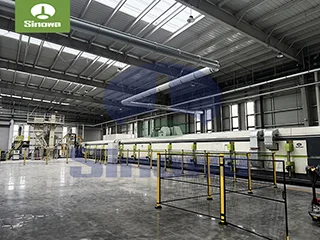
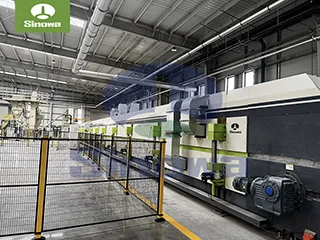
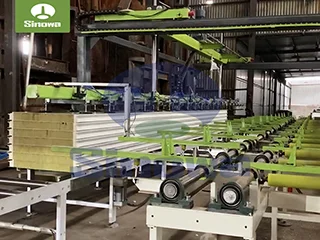
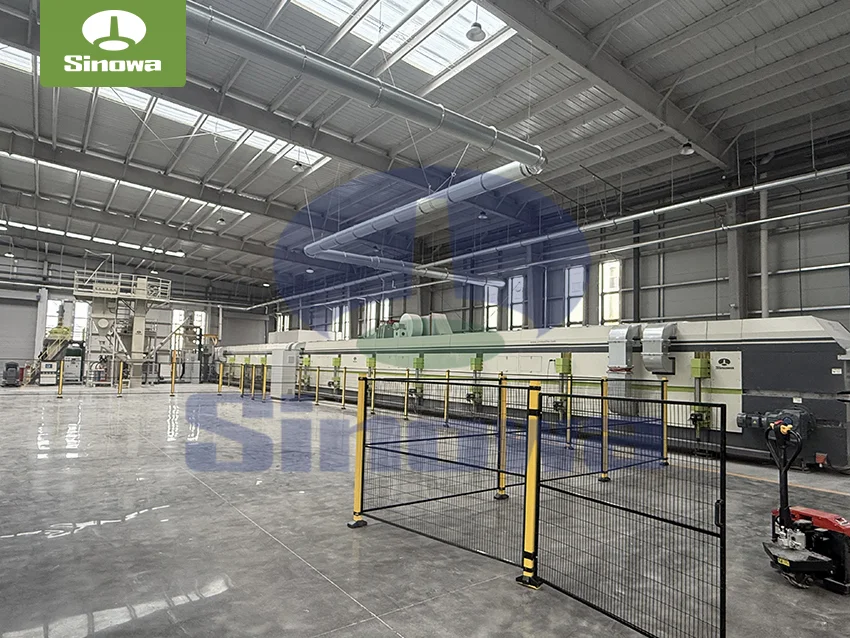
 sandwich panel line
In the modern construction and industrial manufacturing sector, the continuous upgrading of building enclosure materials and thermal insulation structural components has driven the steady development of professional sandwich panel production systems. Sandwich panels have become indispensable core materials for industrial plants, commercial buildings, cold storage facilities, and special functional construction projects due to their excellent thermal insulation performance, structural stability, convenient installation characteristics, and long-term service durability. All kinds of professional sandwich panel production lines are designed and configured according to different core material properties, building use scenarios, and structural stress requirements, realizing continuous, automated, and standardized integrated production from raw material feeding, surface plate forming, core material compounding, high-pressure bonding, constant-temperature curing to fixed-length cutting and finished product stacking. Each type of sandwich panel production line has unique process adjustment logic and equipment configuration characteristics, matching the physical properties, fire resistance grades, thermal conductivity parameters, and structural mechanical demands of different core materials, including polyurethane, rock wool, phenolic foam, and polyisocyanurate, while also targeting the differentiated construction needs of building roofs, building walls, and low-temperature cold storage spaces to complete targeted production optimization and process refinement. The rational operation and scientific configuration of these continuous sandwich panel production lines not only determine the overall production efficiency and product consistency of finished sandwich panels but also directly affect the later installation quality, long-term operational stability, and comprehensive environmental adaptability of building enclosure structures in different regional climates and industrial use environments. With the continuous progress of building energy conservation policies and industrial construction standardization requirements around the world, the iterative upgrading of sandwich panel production line technology and the optimization of production processes have become important supports for promoting the high-quality development of the construction material industry, realizing lightweight, energy-saving, and safe building construction, and meeting the diversified and personalized material supply needs of various construction engineering projects.
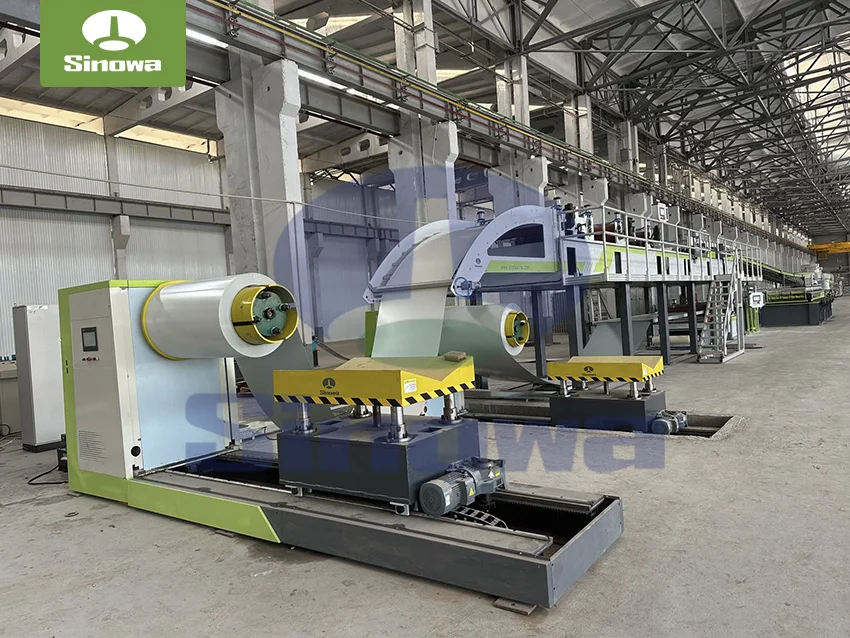
Polyurethane sandwich panel production line is one of the most widely used and technically mature continuous composite production equipment in the field of thermal insulation sandwich panel manufacturing, specially designed for the integrated compound forming process of polyurethane foam core material and metal surface plates. The entire production workflow of this production line follows a fully automated continuous operation mode, starting from the uncoiling and leveling of metal color steel coils, followed by surface film protection treatment and precise roll forming of upper and lower metal plates according to preset structural profiles. In the core material composite link, the fully automatic sandwich panel production line is equipped with a professional high-pressure foaming and injection system, which can accurately mix polyurethane raw materials in a scientific proportion and inject the liquid raw material evenly between the upper and lower formed metal plates at a stable flow rate. The liquid polyurethane material undergoes rapid chemical foaming and expansion inside the closed composite space of the production line, forming a uniform and dense foam core layer, and achieving a tight and seamless bonding effect with the inner surface of the metal plates under the action of continuous mechanical pressure and constant-temperature environmental conditions. The sandwich panel line is equipped with a multi-section zoning temperature control curing tunnel, which can accurately adjust the internal curing temperature according to the thickness specifications of the produced panels and the foaming characteristics of polyurethane materials, ensuring that the polyurethane foam completes sufficient curing and shaping reaction within the specified time, stabilizing the bonding strength between the core material and the metal surface plates, and avoiding problems such as core material deformation, degumming, and uneven foaming density that may occur during the production process. After the curing and shaping process is completed, the production line carries out precision edge trimming and fixed-length cutting of the composite integrated plates through automated cutting and trimming equipment, maintaining high dimensional tolerance of the finished panels, and finally completing automatic cooling and stacking of finished products to facilitate subsequent transportation and on-site construction and installation. The polyurethane sandwich panel produced by this production line has extremely low thermal conductivity, good overall thermal insulation and heat preservation effects, light structural weight, and good bending and compression resistance, making it suitable for a wide range of conventional industrial and civil building thermal insulation enclosure projects, and the production line can flexibly adjust production parameters to manufacture sandwich panels of different thickness specifications to adapt to different regional temperature differences and building energy conservation design requirements.
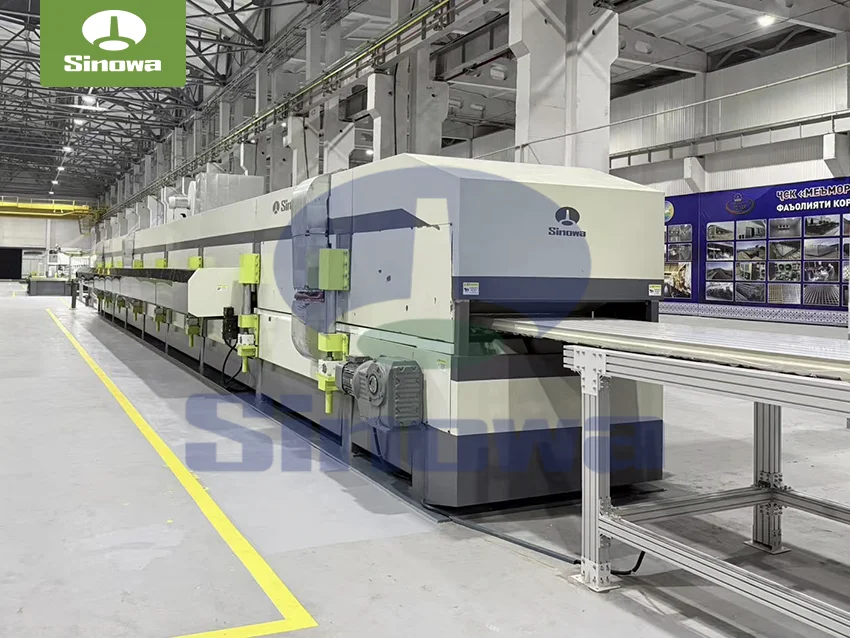
Rock wool sandwich panel production line is a professional production and processing equipment developed for rock wool inorganic fiber core materials, focusing on meeting the building fire protection, sound insulation, and high-temperature resistant structural manufacturing needs of special construction scenarios. Different from the chemical foaming composite process adopted by polyurethane sandwich panel production lines, the rock wool sandwich panel production line adopts a physical composite and high-strength bonding process, adapting to the non-combustible characteristics and fiber porous structure of rock wool core materials. The front-end process of the production line is consistent with other types of sandwich panel production equipment, completing the uncoiling, leveling, film pasting, and roll forming processing of upper and lower metal surface plates to ensure the flatness and structural profile accuracy of the outer protective layer of the panels. In the core material feeding and composite stage, the production line is equipped with a special rock wool automatic cutting and arranging device, which can cut large-size rock wool raw materials into uniform and regular core material blocks according to production specifications, and arrange the rock wool core materials neatly and closely arranged without gaps in the middle of the upper and lower metal plates, avoiding hollowing and uneven core material arrangement inside the finished panels. The mineral wool sandwich panel production line is equipped with a high-efficiency adhesive spraying and laminating system, which sprays special environmental protection structural adhesive on the bonding contact surface between the rock wool core material and the metal plates, and then uses a multi-group synchronous pressing mechanism to perform uniform pressurized lamination treatment on the composite plates, ensuring that the rock wool core material and the metal surface plates form a firm and integrated bonding structure. In the curing and shaping link, the production line adopts low-temperature slow curing process parameters suitable for inorganic rock wool materials, avoiding core material damage and adhesive failure caused by high-temperature curing, and fully ensuring the stability of the internal structure of the rock wool sandwich panels. After curing, the production line completes precision cutting, edge trimming, and surface quality inspection of the panels, and finally realizes automatic stacking and packaging of finished products. The rock wool sandwich panels manufactured by this production line have excellent fire resistance, outstanding sound insulation and noise reduction performance, and good high-temperature resistance, and the production line can adjust the arrangement density and thickness of rock wool core materials according to the fire protection design standards of different buildings, meeting the strict fire safety construction requirements of high-rise buildings, industrial fireproof workshops, public service buildings, and other key projects, effectively improving the overall fire protection level and safety performance of building enclosure structures.
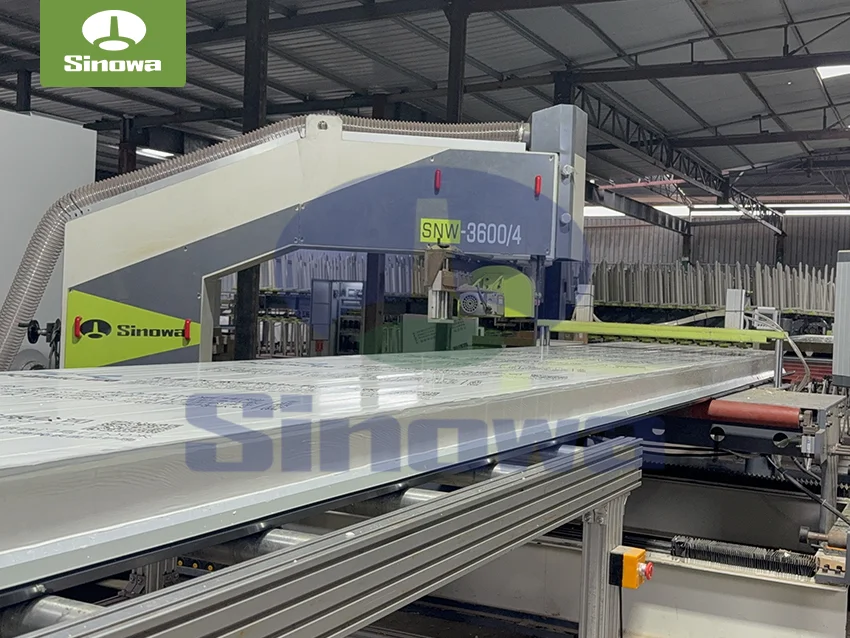
Phenolic sandwich panel production line is professional manufacturing equipment oriented to high-efficiency fire prevention, ultra-low thermal insulation, and anti-corrosion and moisture-proof special application scenarios, specially configured for the phenolic foam core material with excellent fire resistance and thermal insulation comprehensive performance. Phenolic foam material has the characteristics of low smoke, non-toxicity, no molten drop during combustion, and good closed-cell thermal insulation structure, so the process design and equipment parameter setting of the phenolic sandwich panel production line are optimized and adjusted for the chemical stability and physical foaming characteristics of phenolic materials. The production line maintains a standardized automated process flow in the surface plate processing stage, completing continuous uncoiling, leveling, roll forming, and surface protection treatment of metal plates to ensure that the outer protective layer of the panels has smooth surface and stable structural size. In the core material foaming and composite link, the phenolic sandwich panel production line adopts a special low-temperature foaming and slow reaction injection process, different from the high-speed foaming mode of polyurethane materials, because phenolic raw materials need a relatively mild reaction environment to form uniform and fine closed-cell foam structure and avoid foam cracking and internal voids caused by excessive reaction speed. The production line is equipped with a special precision batching and mixing system for phenolic raw materials, which can accurately control the mixing ratio and injection volume of each raw material component, ensuring the consistency of foam density and structural performance of each batch of phenolic core materials. After the raw materials are injected and foamed, the composite plates enter the segmented constant-temperature curing tunnel of the production line, and the curing temperature and time are precisely controlled according to the foaming and curing characteristics of phenolic materials, so that the phenolic foam core material and the metal surface plates are fully bonded and solidified to form an integrated composite structure with stable performance. The subsequent cutting, trimming, cooling, and stacking processes are all completed by automated supporting equipment, ensuring that the dimensional accuracy and surface quality of finished phenolic sandwich panels meet the construction engineering standards. The phenolic sandwich panels produced by this production line not only have excellent thermal insulation and energy-saving effects, but also have far better fire safety performance than many other organic foam core materials, and also have good corrosion resistance, moisture resistance, and aging resistance. The production line is often used to produce sandwich panels for high-standard fire protection and thermal insulation projects such as high-rise building exterior wall enclosure, industrial anti-corrosion workshops, and special environmental protection buildings, providing reliable material support for safe and energy-saving building operation.
PIR sandwich panel production line is an upgraded and optimized continuous composite production equipment based on polyurethane sandwich panel production technology, professionally used for the production and manufacturing of polyisocyanurate foam core sandwich panels with higher thermal stability and better fire retardant performance. PIR material is a modified upgrade of polyurethane material, with higher isocyanate proportion in the raw material formula, forming a more stable aromatic molecular structure after foaming and curing, so the PIR sandwich panel production line has carried out targeted upgrades in raw material batching ratio control, foaming reaction temperature regulation, and curing process parameter setting compared with ordinary polyurethane sandwich panel production lines. The basic mechanical structure of the production line covers all standard links such as metal plate uncoiling, leveling, roll forming, surface treatment, core material injection foaming, composite lamination, constant-temperature curing, fixed-length cutting, and finished product stacking, realizing fully automated continuous production operation. In the core material production link, the production line is equipped with a high-precision synchronous batching system suitable for PIR raw materials, which can accurately control the proportion of each chemical component to ensure that the PIR foam forms a compact and stable molecular structure after foaming, improving the thermal stability and fire resistance of the core material. The production line adopts an intelligent infrared real-time temperature monitoring system in the curing stage, with high temperature control accuracy, which can adjust the temperature of each curing section in real time according to the foaming progress and curing state of PIR materials, ensuring that the foam completes sufficient cross-linking reaction without thermal damage, and enhancing the bonding fastness between the core material and the metal surface plates. The production line has a fast production operation speed while maintaining high production accuracy, and can efficiently produce PIR sandwich panels of different thickness and structural specifications. The finished PIR sandwich panels have lower thermal conductivity, better high-temperature thermal stability, and more excellent fire retardant performance than ordinary polyurethane sandwich panels, and have long-term stable anti-aging and weather resistance. The production line is widely used in the production of high-end thermal insulation and fireproof sandwich panels for industrial plants, commercial complex buildings, and special low-temperature and high-temperature environment projects, meeting the higher requirements of modern buildings for thermal insulation energy saving and fire safety dual performance.
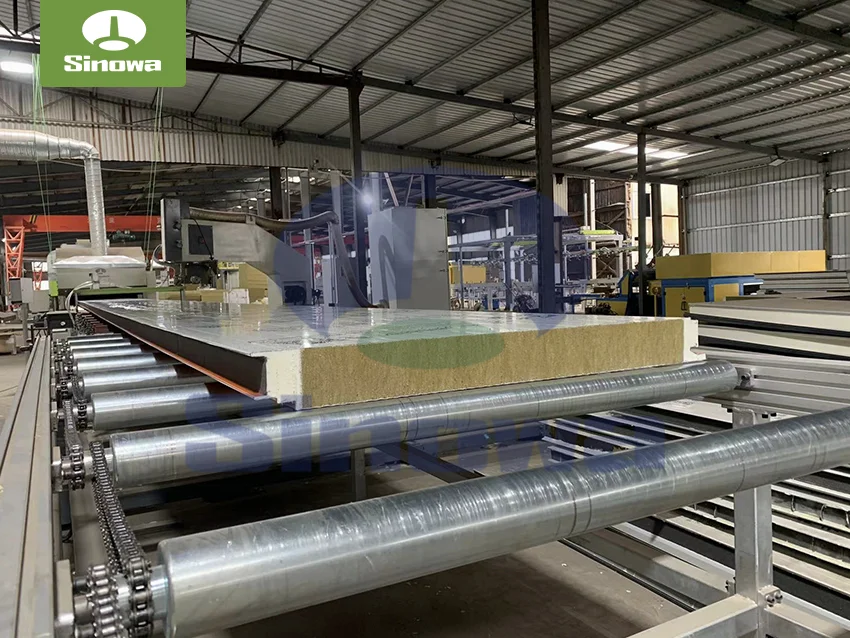
Roof sandwich panel production line is special customized production equipment designed for the structural stress characteristics, waterproof and drainage requirements, and outdoor weather resistance performance needs of building roof enclosure parts. Different from general conventional sandwich panel production equipment, the process configuration and molding design of the roof sandwich panel production line are fully oriented to the outdoor use environment and roof structural installation characteristics of the panels. In the surface plate roll forming stage, the production line is equipped with a special profiled roll forming device, which can process metal plates into roof panel structures with special corrugated profiles, plug-in connection structures, and waterproof edge folding designs, ensuring that the finished roof sandwich panels have good lap joint sealing performance and rainwater drainage effect after on-site installation, avoiding roof water seepage and leakage problems. In the core material composite and bonding link, the production line can be compatible with the production and processing of a variety of core materials including polyurethane, PIR, rock wool, and phenolic foam, and can flexibly switch production processes and adjust equipment parameters according to the roof fire protection and thermal insulation design requirements of different buildings. The production line strengthens the structural pressure regulation function in the composite lamination stage, improving the overall structural compression resistance and bending resistance of the roof sandwich panels, so that the panels can withstand the external loads such as wind pressure, snow pressure, and external impact encountered in the outdoor roof use process. In the post-processing stage, the production line is equipped with special edge waterproof trimming and sealing treatment equipment, carrying out professional sealing and waterproof reinforcement treatment on the lap joint edges and cutting ends of the roof panels, further enhancing the overall waterproof and moisture-proof performance of the finished products. The roof sandwich panels produced by this production line have excellent outdoor weather resistance, stable structural bearing capacity, good waterproof and drainage performance, and reliable thermal insulation and fireproof effects. The production line can produce roof sandwich panels of different slopes, thicknesses, and connection specifications according to the design requirements of various industrial plants, warehouse roofs, commercial building roofs, and agricultural greenhouse roofs, adapting to different climatic conditions and roof structural design standards in various regions, and ensuring the long-term stable and safe operation of building roof enclosure systems.
Wall sandwich panel production line is professional production and manufacturing equipment focusing on the internal and external wall enclosure and partition structure needs of buildings, optimized and designed for the indoor and outdoor wall use environment, installation convenience, and space partition functional requirements of sandwich panels. The structural design and process flow of the wall sandwich panel production line focus on the flatness of the panel surface, the simplicity of on-site assembly and installation, and the balance of thermal insulation, sound insulation, and fireproof performance, and can be compatible with the composite production of a variety of core materials such as polyurethane, rock wool, and phenolic foam. In the surface plate forming process, the production line adopts flat or fine decorative profiling roll forming process, ensuring that the surface of the finished wall sandwich panels is flat and smooth, with neat and beautiful edges and corners, no obvious deformation and unevenness, and can be directly used for building outer wall decoration and indoor space partition without additional complex surface decoration treatment. In the core material compounding and bonding stage, the production line adopts stable low-pressure uniform lamination and moderate-temperature curing process, ensuring that the wall panels have light weight and high structural strength, meeting the wall partition stress requirements without increasing the overall building load. The production line is equipped with precise fixed-length cutting and edge finishing equipment, which can produce wall sandwich panels of different heights and width specifications according to the building wall design size, realizing modular and standardized production, and facilitating rapid assembly and splicing on the construction site to shorten the construction cycle of building wall enclosure projects. For the outer wall sandwich panels that need high fire protection and thermal insulation performance, the production line can switch to rock wool or phenolic core material production processes; for the inner wall partition panels that focus on sound insulation and light weight, the production line can adopt polyurethane core material production configuration. The wall sandwich panels manufactured by this production line have good thermal insulation and energy-saving effect, excellent sound insulation and noise reduction performance, convenient and fast installation and construction, and stable long-term use performance. The production line is widely used in the production of wall enclosure and partition panels for industrial workshops, office buildings, residential supporting buildings, purification workshops, and temporary construction buildings, effectively improving the construction efficiency of building walls and the overall living and working environment comfort of buildings.
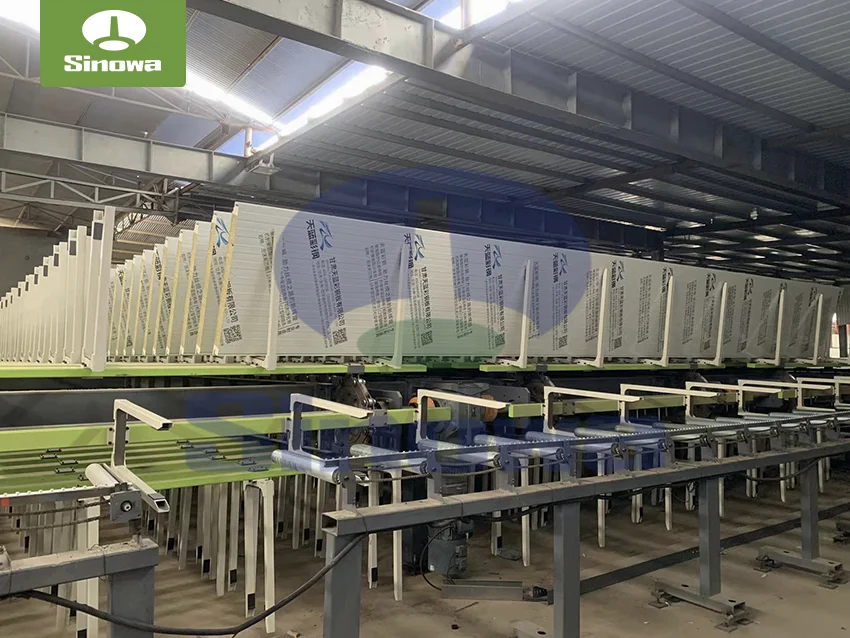
Cold storage sandwich panel production line is special professional production equipment developed for low-temperature refrigeration storage, constant-temperature fresh-keeping warehouses, and cold chain logistics storage engineering projects, focusing on the low-temperature resistance, ultra-low thermal conductivity, anti-freezing and anti-corrosion performance, and low-temperature bonding stability of sandwich panels in long-term low-temperature operating environments. The process design and equipment parameter setting of the cold storage sandwich panel production line are all optimized around the core demand of maintaining stable low-temperature thermal insulation effect of cold storage enclosure structures for a long time, and it is mainly suitable for the production of polyurethane and PIR core material sandwich panels with excellent low-temperature thermal insulation performance. In the raw material processing link, the production line adopts special low-temperature resistant metal surface plates and low-temperature stable adhesive raw materials, avoiding material aging, bonding degumming, and performance attenuation caused by long-term operation in low-temperature environment. In the core material foaming and composite stage, the production line adopts high-precision high-pressure foaming and closed-cell rate control technology, ensuring that the foam core material has a high closed-cell structure, effectively reducing cold air penetration and heat transfer, and maintaining the stable low-temperature environment inside the cold storage. The production line strictly controls the foaming density and curing thickness of the core material, improving the low-temperature dimensional stability of the cold storage sandwich panels, avoiding panel deformation, shrinkage, and cracking caused by long-term alternating cold and heat. In the edge sealing and post-processing link, the production line is equipped with special low-temperature anti-seepage edge sealing equipment, carrying out multi-layer sealing and anti-corrosion treatment on the cutting edges and lap joints of the cold storage panels, preventing water vapor penetration and frost condensation inside the panels, and avoiding the damage of the core material structure caused by frost and ice accumulation. The cold storage sandwich panels produced by this production line have ultra-low thermal conductivity, excellent low-temperature resistance and anti-aging performance, good sealing and anti-frost effect, and stable structural bonding performance in long-term low-temperature environment. The production line can produce cold storage sandwich panels of different thickness and sealing specifications according to the temperature design requirements of different types of cold storage, including low-temperature frozen cold storage, normal-temperature fresh-keeping cold storage, and logistics transfer cold storage, effectively reducing the energy consumption of cold storage refrigeration equipment, maintaining the constant-temperature operation stability of the cold storage, and extending the long-term service life of the cold storage enclosure structure.
The coordinated development and differentiated application of PU sandwich panel production line, rockwool sandwich panel production line, PF sandwich panel production line, PIR sandwich panel manufacturing line, roof sandwich panel making line, wall sandwich panel line and cold room sandwich panel production line build a complete manufacturing system for modern building thermal insulation and enclosure sandwich panels, covering all mainstream core material types and all building functional application scenarios. Each production line has its own unique process advantages and applicable positioning, adapting to the different performance requirements of building structures for fire protection, thermal insulation, waterproofing, sound insulation, low-temperature resistance, and weather resistance. With the continuous development of building industrialization and energy-saving construction concepts, all types of sandwich panel production lines are constantly moving towards intelligent regulation, automated operation, and green environmental protection production, further improving production efficiency, product quality stability, and resource utilization efficiency. The reasonable selection and targeted configuration of different production lines according to the actual engineering construction needs can not only meet the diversified material supply requirements of various construction projects, but also promote the continuous optimization and upgrading of building enclosure structure performance, lay a solid foundation for the development of high-quality, energy-saving, safe and durable modern construction engineering, and drive the steady progress of the entire building thermal insulation material manufacturing industry in the direction of standardization, refinement and high efficiency.
https://www.cnsinowa.com/sandwich-panel-machines/sandwich-panel-production-line.html