 sandwich panel line
The core advantage of the energy-saving PIR sandwich panel production line with closed-loop heating lies in the innovative reconstruction of the traditional heating and thermal circulation system, realizing the closed collection, recycling and secondary utilization of waste heat generated in the production process. In the traditional open heating mode, the heating equipment continuously outputs heat to maintain the curing temperature of PIR foam materials and the bonding temperature of composite layers, and a large amount of residual heat is directly dissipated into the production environment along with air circulation, resulting in serious thermal energy waste. Meanwhile, the open heating environment is easily affected by external temperature changes, air convection and workshop ventilation conditions, leading to frequent fluctuations in the internal temperature of the curing area. Unstable temperature parameters will directly affect the foaming density, cell structure uniformity and interlayer bonding strength of PIR core materials, resulting in inconsistent product quality and increased defective rate. The closed-loop heating system completely solves these pain points through a fully sealed thermal circulation structure and intelligent heat regulation logic, creating a constant and efficient thermal environment for the whole process of PIR material foaming, curing and composite molding.
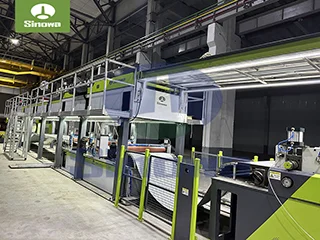
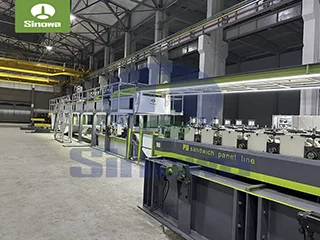
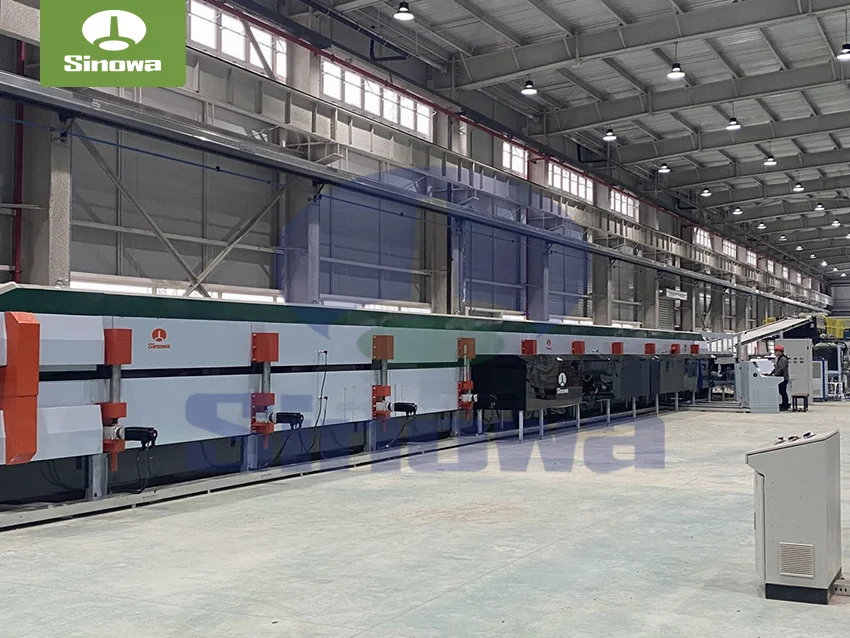
The overall structural design of the sandwich panel production line focuses on energy saving, precision and continuity, covering raw material feeding, surface layer leveling, core material foaming, closed-loop heating curing, pressure shaping, fixed-length cutting and finished product conveying. All processing links are connected in a continuous assembly line mode, avoiding intermittent production energy consumption and material loss caused by segmented processing. The closed-loop heating system runs through the core curing and molding section of the entire production line, adopting a segmented temperature control structure that integrates preheating, constant-temperature curing and slow cooling. Each temperature zone forms an independent closed thermal circulation unit, which can independently adjust temperature parameters according to the physical characteristics of PIR materials and production process requirements, ensuring that each production stage is completed under the most suitable thermal conditions. The preheating zone gently raises the temperature of the metal surface layer and auxiliary bonding materials to activate molecular activity of adhesives and eliminate material internal stress, laying a foundation for tight composite bonding. The constant-temperature curing zone maintains a highly stable thermal field, which promotes the full foaming and cross-linking reaction of PIR raw materials, forms a uniform and dense closed-cell structure, and maximizes the thermal insulation performance and structural strength of the core material. The slow cooling zone realizes gradual heat dissipation through closed-loop heat recovery, avoiding product deformation and internal stress concentration caused by rapid temperature drop, and effectively improving the flatness and dimensional stability of finished panels.
The working principle of the closed-loop heating system is based on thermal energy recycling and dynamic balance regulation. During the production process, the heat generated by the heating module acts on the PIR composite materials, and the residual heat that is not absorbed by the materials will not be directly discharged. Instead, it is collected through a sealed heat conduction pipeline and a circulating air duct system, and after fine filtration and temperature adjustment, it is re-transported to the preheating and curing areas for secondary use. This internal circulation mode greatly reduces the demand for external heat supplementation, and the thermal energy utilization rate of the entire sandwich panel line is significantly improved compared with traditional open equipment. Equipped with intelligent frequency conversion regulation components, the system can dynamically adjust heating power and circulating air volume according to real-time production speed, material thickness and ambient temperature changes. When the production load decreases or the ambient temperature rises, the system automatically reduces heating output and circulating power to avoid ineffective energy consumption; when the production load increases or the ambient temperature drops, it quickly supplements heat and adjusts circulation efficiency to maintain the stability of the internal thermal field. This adaptive intelligent regulation mode fundamentally avoids the long-term high-power operation of heating equipment in traditional production lines and realizes precise energy consumption control in the whole production cycle.
In terms of practical production performance, the closed-loop heating structure endows the production line with outstanding energy-saving effects and production stability. In low-temperature production environments, the system can quickly raise the internal process temperature to the standard operating range within a short time without additional auxiliary heating equipment, eliminating the extra energy consumption caused by preheating the workshop environment. The fully sealed thermal circulation structure isolates the interference of external air convection and temperature changes, making the temperature fluctuation range of the curing zone controlled within an extremely small interval. Stable thermal conditions ensure that the foaming ratio, cell uniformity and curing degree of PIR core materials remain consistent in each batch of products, effectively reducing the quality difference of finished panels and greatly lowering the rate of defective products caused by temperature instability. At the same time, the closed-loop heat recovery system reduces the heat dissipation of the production workshop, improves the comfort of the production environment, and avoids the energy consumption of workshop ventilation and cooling equipment caused by excessive heat accumulation in traditional production workshops.
The energy-saving advantages of the PIR sandwich panel machine are also reflected in the matching optimization of the whole machine power system. All driving and operating components of the equipment adopt low-power and high-efficiency structural design, and cooperate with variable frequency speed regulation technology to realize energy-saving operation of mechanical parts. In the continuous production process, the equipment automatically matches the operating speed and power output according to the production rhythm, avoiding the energy waste caused by no-load and overload operation. The pressure forming system of the production line adopts stepless pressure regulation design, which can match the optimal pressure parameters according to the thickness and compression resistance characteristics of different PIR core materials and surface layer materials. It effectively prevents irreversible deformation of the core material and peeling of the composite layer caused by excessive pressure, and also avoids incomplete bonding and loose structure caused by insufficient pressure, further improving the yield and material utilization rate of products. The high-precision feeding and metering system realizes accurate proportioning of PIR foaming raw materials, minimizes material residue and waste in the production process, and realizes energy saving and consumption reduction from the source of raw material application.
The finished PIR sandwich panels produced by this energy-saving production line have excellent comprehensive performance, which can adapt to the stringent application requirements of multiple fields. The closed-loop constant-temperature curing environment enables the PIR core material to form a complete and uniform closed-cell structure, making the panel have ultra-low thermal conductivity and excellent long-term thermal insulation stability. Compared with panels produced by traditional open heating equipment, the products have more stable dimensional change rate under high and low temperature alternating environments, and are not prone to warping, cracking and interlayer degumming after long-term use. The stable bonding performance between the core material and the surface layer also improves the overall structural strength, impact resistance and weather resistance of the panel, enabling it to maintain stable thermal insulation and structural performance in extreme temperature environments such as high temperature, severe cold and high humidity. These performance advantages make the panels widely applicable to thermal insulation enclosure of industrial workshops, constant-temperature storage of cold chain logistics, thermal insulation and energy saving of public buildings, and special thermal insulation engineering fields that require high precision and high stability of thermal insulation structures.
From the perspective of industrial sustainable development, the popularization and application of energy-saving PIR sandwich panel line with closed-loop heating is of great significance for promoting the green upgrading of the insulation panel manufacturing industry. Traditional production modes have long faced the problems of high comprehensive energy consumption, low resource utilization rate and unstable product quality, which restrict the high-quality development of the industry. The closed-loop heating energy-saving technology breaks through the technical bottleneck of low thermal efficiency of traditional equipment, realizes the efficient recycling of waste heat resources, and greatly reduces the unit energy consumption of product production. The intelligent and precise production control mode reduces the generation of defective products and material waste, improves the overall resource utilization efficiency of the production process, and reduces the environmental load caused by production activities. In the context of the global promotion of industrial energy conservation, emission reduction and green manufacturing, this innovative production equipment provides a reliable technical path for the insulation panel industry to realize low-carbon transformation, and promotes the industry to develop towards high efficiency, low energy consumption and high added value.
In actual industrial operation, the continuous sandwich panel production line also has excellent adaptability and operational flexibility. It can meet the production requirements of PIR sandwich panels with different thicknesses, different surface layer materials and different structural specifications through simple parameter adjustment, and can switch production specifications efficiently without long-term equipment debugging and parameter calibration. The modular structural design makes the equipment easy to maintain and operate, reduces the failure rate of mechanical and thermal circulation systems, and lowers the later operation and maintenance cost of the production line. The closed-loop heat circulation system adopts a fully enclosed operation mode, which reduces the volatilization and diffusion of trace harmful substances generated during material foaming and curing, optimizes the production working environment, and realizes the coordinated development of production efficiency, energy saving effect and environmental protection performance.
With the continuous improvement of green building standards and industrial energy-saving requirements, the market demand for high-performance and low-consumption PIR sandwich panels continues to grow, which also puts forward higher requirements for the technical level of supporting production equipment. The energy-saving PIR sandwich panel production line with closed-loop heating, as an upgraded and innovative equipment in the industry, integrates heat energy recycling, intelligent temperature control, precise molding and efficient continuous production technologies, and solves many pain points of traditional production equipment in energy consumption, quality control and environmental protection. In the future, with the further optimization and upgrading of thermal circulation technology and intelligent control system, such production lines will achieve higher thermal energy utilization rate and more precise production control, further reduce the comprehensive production energy consumption of enterprises, improve the stability and consistency of product performance, and provide more solid technical support for the high-quality development of the green building thermal insulation material industry and the realization of industrial low-carbon development goals.
https://www.cnsinowa.com/sandwich-panel-machines/energy-saving-pir-sandwich-panel-production-line-with-closed-loop-heating.html