 sandwich panel line
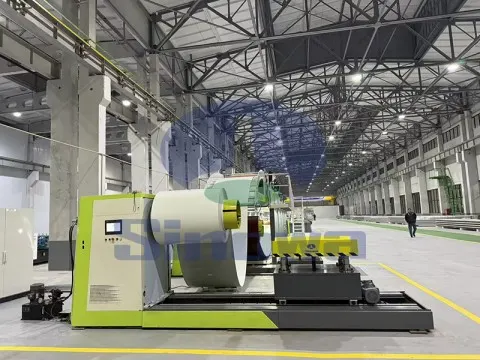
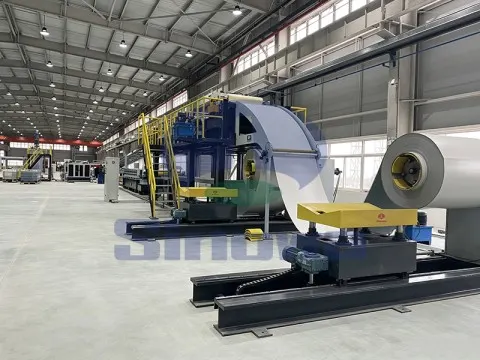
At the forefront of the PU sandwich panel making line lies the raw material preparation and uncoiling section, a critical phase that lays the foundation for flawless subsequent processing. The primary facing materials for corrugated roof panels are typically metal coils, most commonly galvanized steel, aluminum alloy, or color-coated steel, chosen for their malleability, corrosion resistance, and load-bearing capacity. These coils are loaded onto heavy-duty uncoiling machines equipped with tension control systems, which regulate the unwinding speed and tension to prevent material wrinkling, misalignment, or tearing during feeding. The uncoiling process is fully synchronized with the rest of the production line, ensuring a steady, uninterrupted flow of raw material that matches the line’s operating speed. After uncoiling, the metal sheets pass through a precision leveling unit, which eliminates any warping, curvature, or surface imperfections caused by storage, transportation, or coiling. This leveling step is vital for corrugated roof panels, as even minor surface irregularities can disrupt the forming process, compromise the fit of interlocking panel edges, or weaken the bond between the metal facing and the PU foam core. Some advanced production lines also integrate a surface cleaning and pretreatment module at this stage, removing dust, oil residues, or oxidation layers from the metal sheets to enhance adhesion and extend the service life of the finished panels.
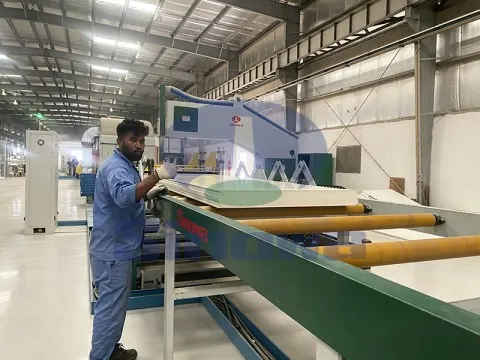
Following leveling and pretreatment, the metal sheets move into the corrugation roll forming section, the heart of the line’s profile-shaping process. This section features a series of custom-designed roll forming stands, each fitted with precision-machined rollers that gradually bend and shape the flat metal sheets into the distinctive corrugated pattern characteristic of roof panels. The roller sets are engineered to match the specific wave height, wave spacing, and panel thickness required for different corrugated roof designs, with adjustable settings to accommodate varying product specifications without the need for extensive retooling. The roll forming process operates with micron-level precision, ensuring that every corrugation is uniform, symmetrical, and free of cracks, stress fractures, or deformation. Unlike manual or semi-automated forming methods, the continuous roll forming system maintains consistent pressure and speed across the entire length of the sheet, resulting in corrugated panels with uniform structural strength and dimensional stability. As the upper and lower corrugated metal facings take shape, they are guided along dedicated conveyor paths toward the core bonding and foaming section, with edge alignment mechanisms ensuring perfect overlap and positioning to prepare for the integration of the PU foam core.
The core foaming and lamination stage is where the functional integrity of the corrugated roof sandwich panel is realized, merging the structural metal facings with the insulating PU foam core through a controlled chemical reaction and bonding process. Before the foam is introduced, the pre-formed corrugated metal sheets pass through a preheating unit, which raises the material temperature to an optimal range for foam curing and adhesion. This preheating step accelerates the chemical reaction of the PU components, strengthens the bond between the metal and foam, and prevents cold spots that could lead to uneven foam density or delamination. The PU foam core is produced via a high-pressure mixing and injection system, which precisely blends polyol, isocyanate, and specialized additives—including blowing agents, catalysts, and flame retardants—in predetermined ratios. The mixing process occurs in a closed, pressurized chamber to ensure homogeneity, and the mixed liquid PU compound is continuously and evenly distributed between the upper and lower corrugated metal facings using a movable dispensing head. This dispensing system is calibrated to match the line speed and panel width, ensuring consistent foam thickness across the entire panel surface and eliminating gaps, air bubbles, or uneven density that could compromise insulation and structural performance.
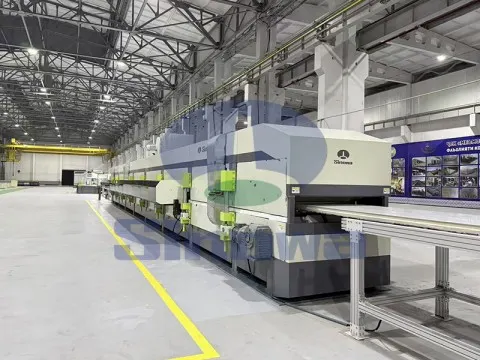
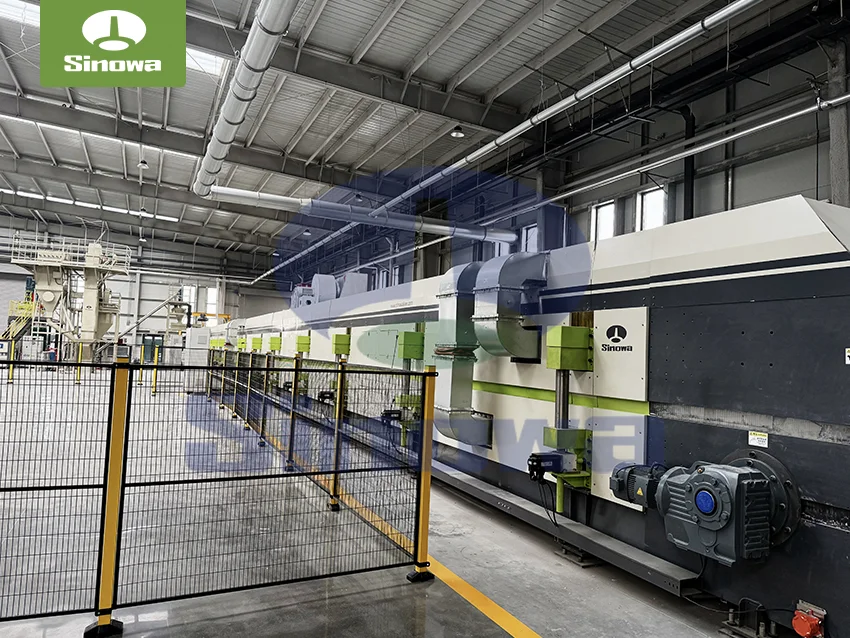
Immediately after the PU compound is injected between the corrugated metal facings, the assembly enters a double-belt pressing and curing system, which shapes the panel to the desired thickness, facilitates complete foam expansion, and initiates the curing process. The double-belt system consists of two parallel, heat-regulated conveyor belts that apply uniform, controlled pressure to the panel assembly, compressing the expanding PU foam to the set thickness and ensuring full contact between the foam core and both metal facings. The belts are equipped with precise temperature control modules, maintaining a constant heating environment that accelerates the cross-linking reaction of the PU materials, transforming the liquid compound into a rigid, closed-cell foam structure. The speed of the double-belt system is synchronized with the upstream roll forming and injection processes, allowing sufficient curing time for the foam to solidify fully and bond securely to the metal facings without slowing production. This continuous pressing and curing process eliminates the need for batch curing, significantly boosting production efficiency and ensuring that every panel exits the system with a fully cured, stable core and a tight, durable bond between all layers. For corrugated roof panels, the uniform pressure distribution also preserves the integrity of the corrugated profile, preventing flattening or distortion of the wave structure during curing.
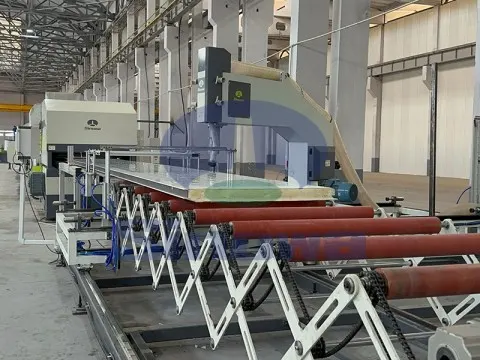
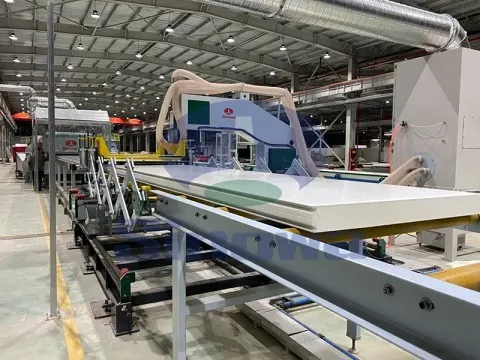
Once the PU foam core is fully cured and bonded to the corrugated metal facings, the continuous sandwich panel strip moves into the precision cutting and trimming section, where it is cut into custom lengths and finished to meet project-specific requirements. This section features a flying cutting mechanism that operates in sync with the line’s conveyor speed, allowing for accurate, clean cuts without halting production—a key feature for maintaining high throughput and minimizing downtime. The cutting system can be programmed to produce panels of varying lengths, accommodating the unique dimensions of different roofing projects, from small residential additions to large industrial warehouses. After cutting, the panels pass through a trimming unit that smooths rough edges, removes excess material, and ensures consistent panel dimensions, with edge profiling options to facilitate easy on-site installation and interlocking between adjacent panels. Dust extraction systems are integrated into the cutting and trimming area to capture debris, maintaining a clean working environment and preventing particulate contamination of the finished panels. This stage prioritizes both precision and efficiency, ensuring that each cut panel meets strict dimensional tolerances and is ready for further processing or direct shipment.
The final stages of the PU sandwich panel making line focus on quality inspection, cooling, stacking, and packaging, completing the production cycle and preparing the corrugated roof panels for distribution. Freshly cut panels are transported through a cooling conveyor system, which brings the panel temperature down to ambient levels to prevent warping, condensation, or damage during storage and transportation. Along the cooling line, automated quality inspection systems conduct real-time checks for defects, including surface scratches, foam delamination, uneven thickness, corrugation distortion, or incomplete curing. Any panels that do not meet quality standards are automatically diverted from the production flow for reprocessing or disposal, ensuring that only flawless products move forward to stacking. The stacking system uses robotic arms or mechanical lifters to carefully arrange the finished corrugated panels into neat, stable stacks, with protective layers placed between panels to prevent surface scratching or damage during handling. Finally, the stacked panels are transferred to the packaging station, where they are wrapped in protective film or secured with strapping to shield them from moisture, dust, and physical damage during transit. The packaging process is designed for efficiency, with customizable wrapping options to suit different transportation modes and storage conditions, ensuring the panels arrive at construction sites in pristine condition.
Beyond its core production functions, a high-performance PU sandwich panel making line for corrugated roofs is equipped with a centralized automated control system that oversees and coordinates every operational stage, enhancing efficiency, reliability, and ease of operation. The control system features an intuitive human-machine interface (HMI) that allows operators to input production parameters, monitor line performance in real time, adjust settings for different panel specifications, and troubleshoot potential issues. Integrated sensors placed throughout the line track critical metrics such as line speed, material tension, preheating temperature, foam mixing ratios, curing temperature, cutting accuracy, and panel dimensions, feeding data back to the central control unit to maintain optimal operating conditions. This automated oversight reduces the risk of human error, ensures consistent product quality across all production runs, and allows for quick transitions between different panel types and sizes. The control system also includes safety features such as emergency stop buttons, overload protection, and safety interlocks, safeguarding both operators and equipment from potential hazards and ensuring compliance with strict industrial safety standards. With minimal manual intervention required, the automated control system also reduces labor costs and streamlines production management, making the line highly scalable for both small-batch and large-scale manufacturing operations.
The design and functionality of the corrugated roof PU sandwich panel production line are deeply aligned with the performance demands of the finished panels, which have become a preferred choice in modern construction due to their unparalleled combination of benefits. Corrugated PU sandwich panels offer exceptional thermal insulation, thanks to the closed-cell PU foam core that minimizes heat transfer, reducing energy consumption for heating and cooling in buildings and supporting sustainable construction practices. The corrugated metal facing provides robust structural strength, enabling the panels to withstand heavy wind loads, snow accumulation, and physical impact, making them suitable for use in regions with harsh weather conditions. Additionally, the panels are lightweight yet durable, reducing transportation and installation costs while maintaining long-term structural integrity; they are also easy to cut, shape, and install on-site, accelerating construction timelines and lowering labor expenses for building projects. The water-resistant and corrosion-resistant properties of the metal facings, combined with the closed-cell PU core, prevent water infiltration, mold growth, and material degradation, extending the service life of roofs and reducing maintenance requirements over time. These performance attributes make corrugated PU sandwich panels versatile, suitable for a wide range of applications including industrial warehouses, agricultural buildings, commercial complexes, residential roofing, storage facilities, and temporary construction structures.
In addition to performance and versatility, the PU sandwich panel line for corrugated roofs is engineered with sustainability and operational efficiency in mind, addressing key challenges in modern manufacturing. The continuous production process minimizes material waste by optimizing raw material usage, with scrap metal and excess foam collected for recycling or repurposing, reducing the environmental footprint of production. The automated systems and energy-efficient components of the line lower energy consumption compared to traditional, semi-automated manufacturing setups, aligning with global efforts to reduce industrial carbon emissions. The closed-cell PU foam used in the panels is also a sustainable choice, offering high thermal efficiency with minimal material usage and contributing to improved building energy ratings. Furthermore, the line’s modular design allows for easy maintenance, component upgrades, and scalability, enabling manufacturers to adapt to evolving market demands, new material technologies, and changing construction standards without complete overhauls of the production system. This adaptability ensures that the production line remains a cost-effective, long-term asset for manufacturing facilities, supporting consistent growth and innovation in the building materials sector.
As the global construction industry continues to prioritize energy efficiency, durability, and cost-effectiveness, the demand for high-quality corrugated PU sandwich panels is steadily rising, driving the need for advanced, reliable production lines. A well-designed PU sandwich panel making line for corrugated roofs represents a strategic investment for manufacturers, combining cutting-edge technology, streamlined workflows, and rigorous quality control to produce panels that meet the highest industry standards. Every component of the line, from the uncoiling and forming stations to the foaming, curing, and packaging systems, is engineered to work in perfect harmony, delivering consistent, high-quality output while maximizing production efficiency and minimizing operational costs. Whether serving small-scale local construction projects or large international infrastructure developments, this specialized production line plays a pivotal role in supplying the building industry with a critical, high-performance material that enhances the sustainability, resilience, and affordability of modern roofing systems. With ongoing advancements in material science, automation technology, and manufacturing engineering, these production lines will continue to evolve, further improving product quality, expanding production capabilities, and supporting the global shift toward smarter, more sustainable construction practices.
Sinowa is a professional manufacturer of sandwich panel machine in china, we provide diversified and high-performance sandwich panel production lines, including fully automatic continuous PU sandwich panel line and customized special lines to meet mass production and personalized order demands. These sandwich panel lines support processing multiple foam core materials, such as PU, PIR, mineral wool, rock wool and glass wool, covering different insulation and fireproof standards.
Featuring stable operation, high efficiency, energy saving and easy maintenance, our PU sandwich panel line deliver sandwich panels with excellent thermal insulation, fire resistance, sound insulation and lightweight durability. The finished panels are widely applied in industrial workshops, warehouse roofing and wall cladding, cold storage insulation, serving global construction and industrial insulation markets.
https://www.cnsinowa.com/sandwich-panel-machines/pu-sandwich-panel-making-line-for-corrugated-roof.html