sandwich panel line
At its core, the PU sandwich panel production line for ventilation ducts is designed to create a three-layer composite structure: two outer facing layers, typically made of galvanized steel, aluminum alloy, or other corrosion-resistant metal sheets, and a middle core layer of rigid polyurethane foam. The outer layers provide mechanical strength, rigidity, and resistance to physical damage, moisture, and corrosion, while the PU foam core delivers outstanding thermal insulation, sound absorption, and lightweight characteristics, making the final panels ideal for transporting conditioned air with minimal heat loss, reduced noise transmission, and easy installation. The production line operates on a continuous, automated workflow, eliminating manual handling errors and ensuring that every panel meets uniform quality standards, which is critical for ventilation duct systems that require seamless fitting, tight sealing, and consistent performance across long runs of ductwork. Every component of the production line is calibrated to work in tandem, from raw material feeding to final panel cutting and stacking, with real-time monitoring and adjustment of key parameters to maintain production stability and product quality.
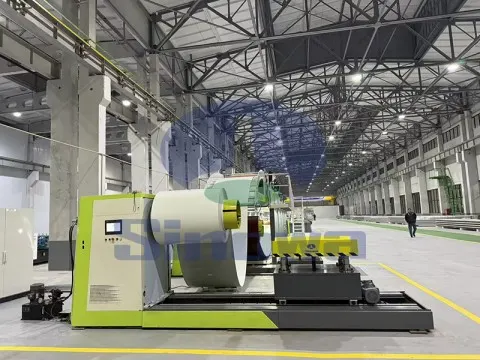
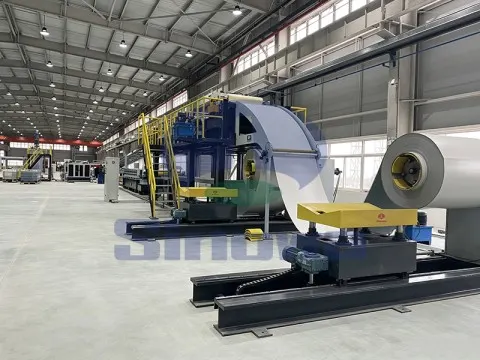
The production process of the PU sandwich panel line for ventilation ducts unfolds in a sequential, uninterrupted manner, starting with the preparation and feeding of raw materials, which lays the foundation for high-quality panel manufacturing. The first stage involves the unwinding and pretreatment of the outer metal facing coils. Heavy coils of metal sheets are loaded onto automatic decoiling machines, which unwind the material smoothly and steadily to prevent wrinkling, warping, or misalignment. The unwound sheets then pass through a leveling mechanism that corrects any surface irregularities, ensuring a flat, uniform base for subsequent processing. Following leveling, the sheets move through a preheating station, where controlled heating optimizes the surface adhesion properties of the metal, enabling a stronger, more durable bond with the PU foam core during the lamination stage. Some configurations also include a surface cleaning step to remove dust, oil, or other contaminants that could weaken the bonding force between the metal and foam, a critical detail for ventilation ducts that are often exposed to humid or dusty environments and require long-term structural integrity.
After the outer facing sheets are fully prepared, the production line enters the core forming stage, which centers on the precise mixing, injection, and foaming of polyurethane materials. This stage is the heart of the entire production process, as the quality of the PU foam core directly determines the thermal insulation, density, and structural strength of the ventilation duct panels. The PU raw materials, consisting of polyol and isocyanate as the primary reactive components, are stored in sealed storage tanks and transported to a high-precision metering system via pressure-driven pipelines. The metering system strictly controls the flow ratio and output of the two raw materials, ensuring a perfect chemical balance that triggers efficient foaming and curing reactions. The accurately proportioned materials are then fed into a high-speed mixing head, where they are blended uniformly under high pressure to form a homogeneous liquid mixture. This mixture is continuously and evenly injected into the gap between the two pre-treated outer metal sheets, which are moving synchronously along the production line to maintain consistent spacing and alignment.
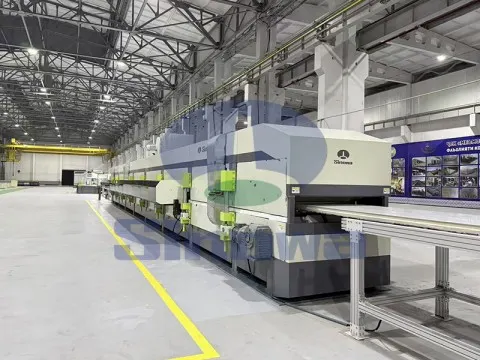
Once injected, the liquid PU mixture begins a rapid chemical foaming reaction, expanding to fill the entire cavity between the outer layers and forming a rigid, closed-cell foam structure. Simultaneously, the sandwich assembly enters a double-belt laminating system, which applies uniform, controlled pressure and temperature to the panel. The pressure ensures that the foam core bonds tightly with the outer metal sheets, eliminating voids, gaps, or delamination that could compromise airtightness and structural strength, while the controlled temperature accelerates the curing process, transforming the soft foam into a solid, stable core. The laminating system is designed with adjustable speed and pressure settings to accommodate different panel thicknesses, foam densities, and production speeds, allowing manufacturers to customize panels for various ventilation duct specifications, from small-scale commercial HVAC systems to large industrial ventilation networks. The continuous movement of the double belts ensures that the panel cures evenly along its entire length, avoiding uneven density or partial curing that would affect the panel’s performance in real-world ventilation applications.
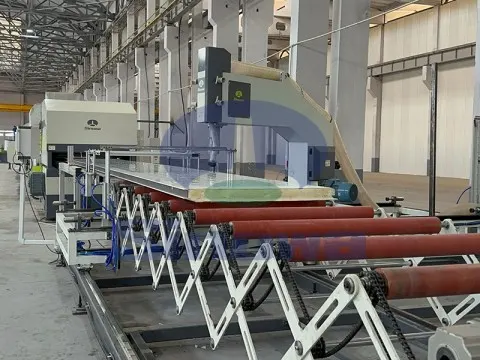
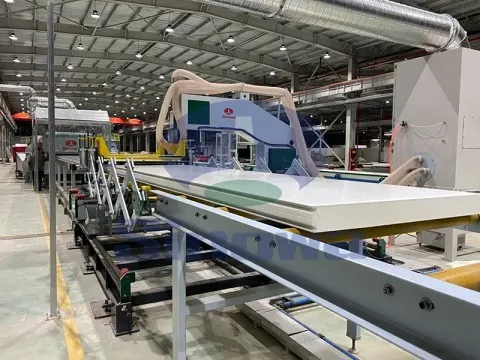
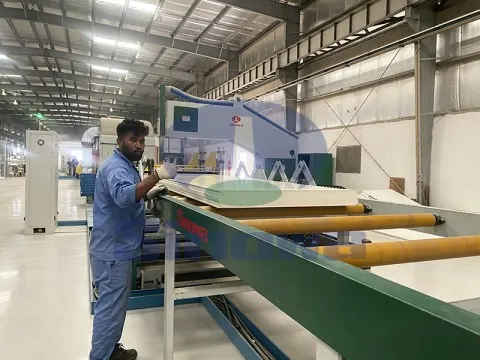
Following the curing and lamination stage, the semi-finished PU sandwich panels move through a cooling section to stabilize the material structure and lock in the panel’s dimensional accuracy. Rapid, controlled cooling prevents thermal deformation, shrinkage, or warping of the panels, which is essential for ventilation ducts that require precise cutting and seamless assembly. After cooling, the panels enter an automatic cutting and trimming station, where high-precision cutting equipment trims the edges to remove excess material and cuts the continuous panel into custom lengths based on ventilation duct design requirements. The cutting system is equipped with real-time positioning and length adjustment functions, ensuring millimetric accuracy in every cut, which is vital for ensuring tight fits between adjacent duct sections and minimizing air leakage— a key performance indicator for efficient ventilation systems. Some advanced production lines also integrate auxiliary processing stations, such as edge sealing, hole punching, or surface profiling, to add functional features to the panels and streamline the subsequent ventilation duct fabrication process, reducing post-production processing time and labor input.
The final stage of the production process involves automatic stacking, sorting, and temporary storage of the finished PU sandwich panels. The cut panels are conveyed to a stacking machine, which arranges them neatly and safely to prevent surface scratches, bending, or damage during handling and storage. This automated stacking process not only protects the product quality but also improves production efficiency by reducing manual labor and minimizing the risk of workplace injuries associated with heavy panel handling. Throughout the entire production line, a centralized automated control system oversees every operation, collecting real-time data on parameters such as material feeding speed, temperature, pressure, foam mixing ratio, curing time, and cutting length. Operators can monitor and adjust these parameters via a user-friendly control interface, ensuring that the production line runs smoothly and consistently. The control system also features fault detection and early warning functions, identifying potential issues such as material blockages, parameter deviations, or equipment malfunctions before they escalate, reducing downtime and maintaining continuous production flow.
One of the most prominent advantages of a dedicated PU sandwich panel line for ventilation ducts is its ability to deliver consistent, high-quality products that meet the stringent performance demands of HVAC and ventilation systems. Compared to traditional ventilation duct materials, such as single-layer metal sheets or fiberglass ducts, PU sandwich panels produced by this specialized line offer superior thermal insulation, which significantly reduces heat gain or loss during air transmission, lowering the energy consumption of HVAC systems and cutting long-term operational costs for commercial and industrial facilities. The closed-cell PU foam core also provides excellent airtightness, minimizing air leakage from the ducts, which not only improves the efficiency of ventilation and air conditioning systems but also maintains indoor air quality by preventing the ingress of dust, pollutants, and external moisture. Additionally, the composite structure of the panels delivers enhanced mechanical strength and durability, resisting deformation, impact damage, and corrosion, extending the service life of ventilation ducts and reducing the need for frequent repairs or replacements.
The lightweight nature of PU sandwich panels further adds to their practical value, as lighter duct materials reduce the structural load on buildings, simplify transportation and installation, and lower labor and installation costs. Unlike heavy traditional duct materials, PU sandwich panels can be easily handled and assembled on construction sites, speeding up project timelines and improving overall construction efficiency. The production line’s high degree of automation also translates to improved production efficiency and reduced labor dependency, enabling large-scale, continuous production to meet the growing demand for ventilation duct materials in residential, commercial, industrial, and public infrastructure projects. Moreover, the line offers high flexibility in product customization, allowing manufacturers to adjust panel thickness, width, length, foam density, and outer facing material types to cater to diverse ventilation system requirements, from low-pressure residential ventilation to high-pressure industrial exhaust systems, and from standard indoor environments to humid, corrosive industrial settings.
To ensure the long-term stable operation and optimal performance of the PU sandwich panel production line for ventilation ducts, regular maintenance and standardized operational management are essential. Daily maintenance tasks include visual inspections of all production components, cleaning of residual PU foam and metal debris from rollers, mixing heads, and cutting tools, checking lubrication levels for moving parts, and verifying the accuracy of sensors and monitoring equipment. Regular calibration of metering systems, temperature sensors, and pressure gauges is crucial to maintain the precision of material mixing, curing, and forming processes, preventing quality defects in the final panels. Periodic maintenance, conducted on a monthly or quarterly basis, involves thorough inspections of mechanical transmission parts, electrical components, and the laminating system, replacing worn parts such as rollers, cutting blades, and sealing gaskets to avoid equipment failures. Proper maintenance not only extends the service life of the production line but also preserves product quality consistency and reduces production waste, enhancing the overall economic benefits of the manufacturing process.
In terms of operational safety, the production line is equipped with multiple safety protection mechanisms, including emergency stop buttons, safety barriers, and anti-pinch devices, to safeguard operators from potential hazards associated with high-speed moving parts, high-pressure systems, and chemical materials. Operators are required to follow standardized operating procedures, wear appropriate protective equipment, and receive comprehensive training on equipment operation, fault handling, and safety protocols to minimize the risk of accidents. Additionally, proper storage and handling of PU raw materials are critical, as these chemical components require sealed storage in a dry, well-ventilated environment to prevent degradation, moisture absorption, or accidental reactions that could affect foam quality and production safety. Adhering to strict operational and safety standards not only protects the workforce but also ensures the stable, uninterrupted operation of the production line, supporting consistent output of high-quality ventilation duct panels.
Looking ahead, the development of PU sandwich panel production lines for ventilation ducts is aligned with the broader trends of industrial automation, energy efficiency, and sustainable manufacturing in the construction and HVAC industries. Future advancements will focus on further enhancing the intelligence of the production line, with the integration of artificial intelligence and Internet of Things (IoT) technologies to enable real-time data analysis, predictive maintenance, and autonomous parameter adjustment, optimizing production efficiency and product quality with minimal human intervention. There will also be a greater emphasis on eco-friendly production practices, including the use of low-carbon, non-toxic PU raw materials and blowing agents, energy-efficient production equipment, and waste recycling systems to reduce the environmental footprint of the manufacturing process. As global demand for energy-efficient, low-carbon building systems continues to grow, the PU sandwich panel, as a high-performance ventilation duct material, will become even more widely adopted, driving the continuous upgrading and innovation of dedicated production lines to meet stricter performance standards and market demands.
In conclusion, the PU sandwich panel production line for ventilation ducts is a cornerstone of modern HVAC and ventilation system manufacturing, combining advanced automation, precise chemical processing, and robust mechanical engineering to produce high-quality, high-performance composite panels that address the core needs of ventilation applications. From raw material preparation to finished product output, every stage of the production process is optimized for consistency, efficiency, and quality, delivering panels that offer superior thermal insulation, airtightness, durability, and lightweight properties. Beyond product performance, the line also brings significant economic and practical benefits, including reduced energy consumption for end-users, lower installation and maintenance costs, and scalable production to meet market demand. With ongoing technological innovation and a growing focus on sustainable construction, this specialized production line will continue to play a vital role in the development of efficient, eco-friendly ventilation systems, supporting the evolution of modern buildings towards smarter, more energy-efficient, and more sustainable designs. As the construction industry evolves and the requirements for ventilation system performance become more stringent, the PU sandwich panel production line will remain a key asset, adapting to new challenges and driving progress in the field of HVAC and ventilation material manufacturing.
Sinowa is a professional manufacturer of sandwich panel machine in china, we provide diversified and high-performance sandwich panel production lines, including fully automatic continuous PU sandwich panel line and customized special lines to meet mass production and personalized order demands. These sandwich panel lines support processing multiple foam core materials, such as PU, PIR, mineral wool, rock wool and glass wool, covering different insulation and fireproof standards.
Featuring stable operation, high efficiency, energy saving and easy maintenance, our PU sandwich panel line deliver sandwich panels with excellent thermal insulation, fire resistance, sound insulation and lightweight durability. The finished panels are widely applied in industrial workshops, warehouse roofing and wall cladding, cold storage insulation, serving global construction and industrial insulation markets.
https://www.cnsinowa.com/sandwich-panel-machines/pu-sandwich-panel-production-line-for-ventilation-duct.html