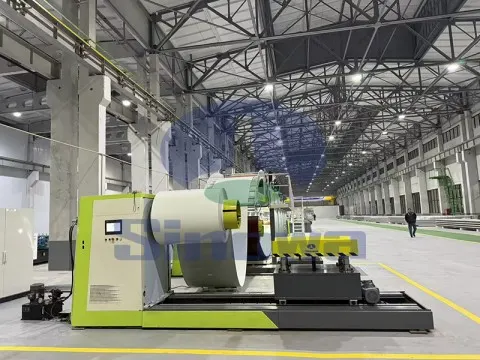
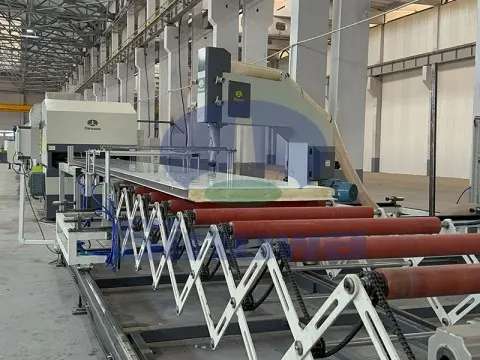
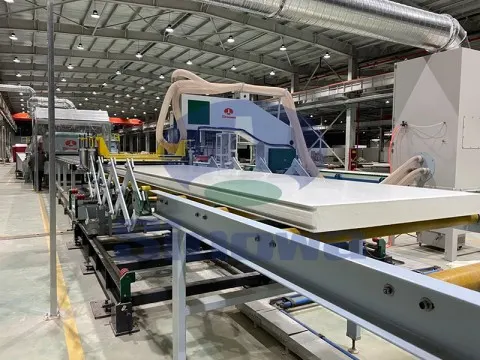
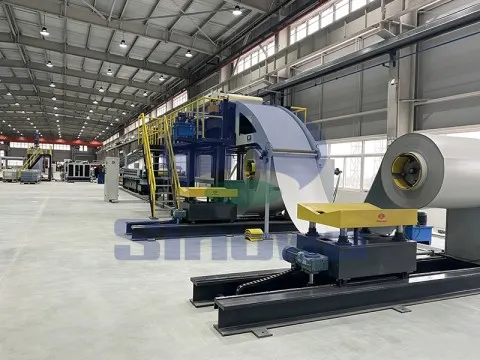
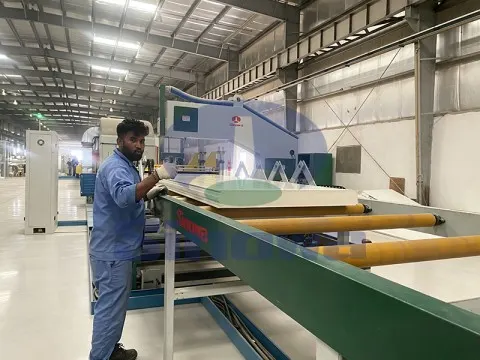
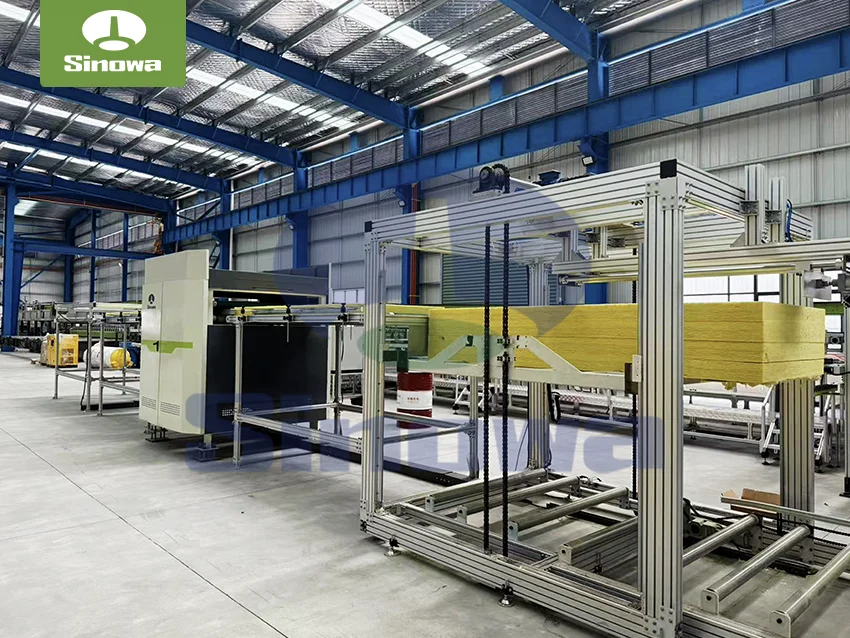
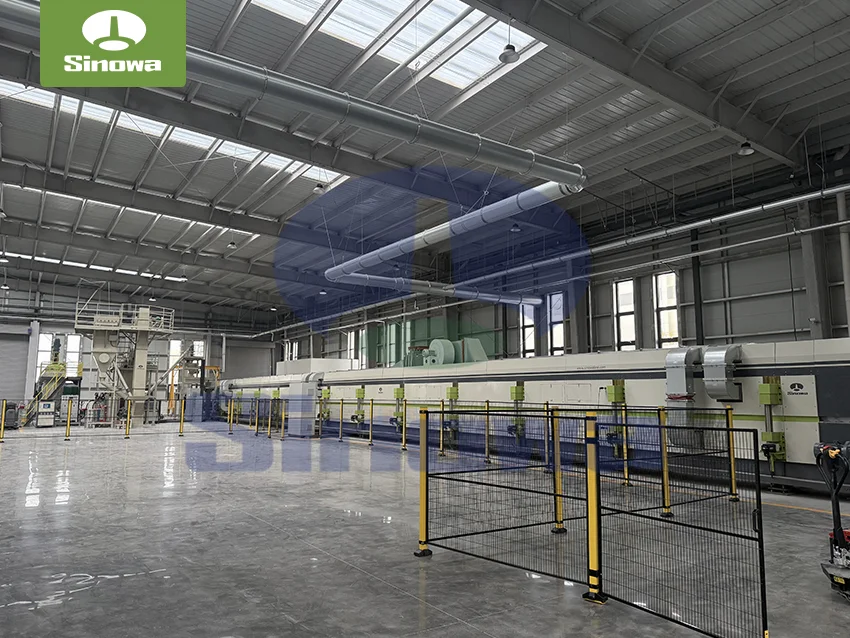
sandwich panel line
The core logic of adjustable laminating pressure technology lies in the synchronous coordination of mechanical pressure execution, real-time data monitoring, and dynamic parameter adjustment, which perfectly adapts to the entire foaming and curing cycle of polyurethane materials. Polyurethane foam undergoes complex physical and chemical changes during production, including liquid material mixing, rapid expansion, gradual curing, and final shaping, and each stage requires matched pressure conditions to ensure tight integration with metal or non-metal face sheets. In the initial foaming stage, the polyurethane mixed liquid presents high fluidity and rapid volume expansion, requiring relatively low and evenly distributed lamination pressure to reserve sufficient space for foam expansion while preventing liquid material overflow caused by excessive pressure. As the foaming reaction proceeds, the foam gradually increases in density and forms preliminary structural strength, and moderately increased lamination pressure can eliminate tiny air gaps between the foam core and face sheets, promoting full contact and molecular bonding between interfaces. In the final curing and shaping stage, stable and optimized pressure maintains the overall flatness of the panel and locks the interfacial bonding state, avoiding structural loosening or warping deformation during material cooling and shrinkage.
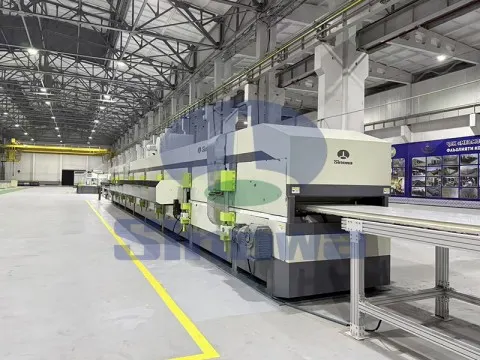
The adjustable laminating pressure system of the modern PU sandwich panel line adopts a multi-stage servo-driven pressure roller structure, abandoning the traditional single-group fixed-pressure pressing mode that easily causes local pressure imbalance. The entire lamination unit consists of multiple sets of upper and lower paired pressure rollers and circulating conveyor belt pressing components, with each pressure group supporting independent pressure parameter adjustment and gap calibration. This segmented adjustable structure enables horizontal pressure distribution optimization across the entire panel width, effectively solving the problem of uneven bonding strength between the edge and middle areas of panels that commonly occurs in traditional production processes. The servo drive mechanism delivers highly sensitive pressure output, achieving micro-scale pressure fine-tuning to adapt to subtle changes in material characteristics and production speed, ensuring that the pressure acting on the composite panel blank remains within the optimal bonding range at every production moment.
Equipped with a real-time pressure monitoring and feedback mechanism, the polyurethane sandwich panel production line can continuously collect pressure data from each pressing area during the lamination process, forming a closed-loop control system for pressure output and correction. The system captures real-time fluctuations in foam expansion force, material feeding speed, and panel thickness, and automatically calibrates the lamination pressure parameters through built-in operational algorithms. When producing thin-specification panels with lightweight face sheets, the system automatically reduces pressing pressure to avoid crushing the delicate foam core structure and prevent excessive compression that weakens the thermal insulation performance of the panel. For thick panels with high-density foam cores and thickened face sheets, the system intelligently increases lamination pressure to fully compress tiny gaps inside the composite structure, enhance the interfacial adhesion effect, and significantly improve the overall bonding strength and structural rigidity of the finished panel. This adaptive pressure adjustment mode completely breaks the constraints of fixed parameter production, enabling one sandwich panel production line to meet the manufacturing requirements of multiple specifications of polyurethane sandwich panels.
The coordination of adjustable laminating pressure and temperature control further amplifies the bonding performance of polyurethane sandwich panels, forming a synergistic optimization mechanism of temperature and pressure. The lamination area of the PU sandwich panel line is divided into multiple continuous heating and temperature maintenance zones, with each temperature zone corresponding to a matched pressure curve. Infrared temperature measurement components monitor the surface temperature of panels and the internal reaction temperature of foam in real time, and interlock with the pressure adjustment system to ensure that pressure changes fully fit the temperature-dependent curing characteristics of polyurethane materials. Moderate heating softens the inner surface of face sheets and activates the molecular activity of polyurethane foam, while precisely matched lamination pressure drives the foam to fully infiltrate the microscopic texture of the face sheet surface, forming a mechanical occlusion structure at the interface level. This temperature-pressure collaborative control effectively avoids common quality defects such as virtual bonding, partial delamination, and low peeling strength caused by mismatched temperature and pressure in traditional production processes.
Compared with traditional fixed-pressure lamination equipment, the polyurethane sandwich panel line with adjustable laminating pressure shows outstanding advantages in improving bonding consistency and product qualification rate. In continuous batch production, minor deviations in material formula, ambient temperature, and feeding speed are inevitable, and fixed-pressure equipment cannot respond to these subtle changes, leading to fluctuating bonding strength of finished panels and unstable product quality. The dynamic adjustable pressure system can automatically compensate for production deviations in real time, maintaining consistent interfacial pressing force throughout the long-term continuous production process. It effectively eliminates residual air bubbles between the foam core and face sheets, which are the main cause of reduced bonding strength and shortened service life of sandwich panels. Uniform and appropriate pressure makes the polyurethane foam form a dense and uniform cellular structure inside the core layer, while the interface forms a continuous and stable bonding layer, ensuring that each finished panel maintains stable and reliable bonding strength indicators.
The mechanical structure design of the adjustable lamination unit fully considers the stability and durability of long-term continuous operation. The pressure rollers adopt high-precision horizontal calibration technology to ensure parallel operation of upper and lower roller groups, avoiding local pressure deviation caused by roller inclination. The circulating double-belt pressing structure realizes full-area coverage pressing on the panel surface, different from the linear pressing of traditional pressure rollers, which realizes planar uniform pressure transmission and ensures consistent bonding strength in all parts of the panel. The pressure adjustment stroke and response speed are precisely optimized to adapt to frequent switching of panel specifications in actual production. When switching production between different thicknesses and material types, the system can complete rapid pressure calibration and parameter matching without manual repeated debugging, greatly improving production efficiency while maintaining stable bonding quality.
Reasonable adjustable pressure parameters also play a key role in balancing the bonding performance and functional characteristics of polyurethane sandwich panels. Excessively high lamination pressure will excessively squeeze the foam core, reduce the internal void ratio of the foam, damage the thermal insulation and sound insulation performance of the panel, and even cause permanent deformation of the face sheet. Insufficient pressure will lead to loose interfacial bonding, insufficient peeling strength, and easy delamination and cracking of the panel during subsequent cutting, installation, and use. The intelligent adjustable pressure system always maintains the optimal balance point, ensuring maximum interfacial bonding strength while retaining the complete and stable cellular structure of the polyurethane foam core, so that the finished panels have both excellent structural stability and intact thermal insulation, sound absorption, and shock resistance functions.
In practical industrial production applications, the adjustable laminating pressure technology significantly reduces the rate of defective products caused by bonding problems and lowers the comprehensive production cost of sandwich panels. Traditional production processes require frequent manual inspection of panel bonding quality and repeated adjustment of equipment parameters, which not only consumes a large amount of human resources but also leads to material waste and production downtime losses due to unstable quality. The automated dynamic pressure adjustment system realizes unmanned precise control of the lamination process, greatly reducing human intervention in the production link. The stable and consistent bonding quality reduces the rework and scrap rate of finished products, improves the continuous operation efficiency of the sandwich panel line, and creates higher economic benefits for industrial mass production.
With the continuous upgrading of downstream application requirements for sandwich panels, the demand for high-bonding-strength, high-stability, and multi-specification adaptable polyurethane panels is increasing in fields such as industrial factory buildings, cold chain storage facilities, and modular construction. The adjustable laminating pressure technology becomes the core support for the production of high-quality sandwich panels, as it can flexibly adapt to the production of different face sheet materials including color-coated steel sheets, stainless steel sheets, and aluminum alloy sheets, as well as different density polyurethane foam cores. For lightweight panels used in interior decoration and high-strength load-bearing panels used in exterior building enclosure systems, the equipment can realize targeted pressure matching to ensure that the bonding performance of products meets the differentiated application standards of different scenarios.
In terms of long-term product performance, panels produced by adjustable pressure lamination technology show better anti-aging performance and structural stability in complex service environments. Stable and sufficient interfacial bonding strength can resist the structural stress caused by temperature difference expansion and contraction, external wind pressure, and mechanical vibration, effectively avoiding panel delamination, bulging, and cracking problems that often occur in long-term use. The uniform internal structure and tight interfacial bonding also improve the overall waterproof and moisture-proof performance of the panel, preventing moisture from penetrating into the interface and causing bonding failure and core layer deterioration. This excellent long-term stability greatly extends the service life of polyurethane sandwich panels and improves the comprehensive application value of the products.
In conclusion, the PU sandwich panel production line equipped with adjustable laminating pressure systems solves the core quality bottleneck of unstable bonding strength in traditional fixed-pressure production processes through dynamic pressure matching, temperature-pressure collaborative control, and full-area uniform pressing technology. It realizes precise adaptation to the whole-process changes of polyurethane foaming and curing, as well as differentiated production requirements of diverse panel specifications and materials. While significantly improving the interfacial bonding strength and production consistency of sandwich panels, it balances the structural performance and functional characteristics of finished products, reduces production quality risks and comprehensive costs. As a key advanced manufacturing technology in the sandwich panel industry, adjustable laminating pressure lays a solid technical foundation for the production of high-performance, long-life, and multi-scenario adaptable polyurethane sandwich panels, and continuously promotes the upgrading and optimization of the entire industry’s manufacturing level.
Sinowa is a professional manufacturer of sandwich panel machine in china, we provide diversified and high-performance sandwich panel production lines, including fully automatic continuous PU sandwich panel line and customized special lines to meet mass production and personalized order demands. These sandwich panel lines support processing multiple foam core materials, such as PU, PIR, mineral wool, rock wool and glass wool, covering different insulation and fireproof standards.
Featuring stable operation, high efficiency, energy saving and easy maintenance, our PU sandwich panel line deliver sandwich panels with excellent thermal insulation, fire resistance, sound insulation and lightweight durability. The finished panels are widely applied in industrial workshops, warehouse roofing and wall cladding, cold storage insulation, serving global construction and industrial insulation markets.
https://www.cnsinowa.com/sandwich-panel-machines/pu-sandwich-panel-line-with-adjustable-laminating-pressure-for-bonding-strength.html