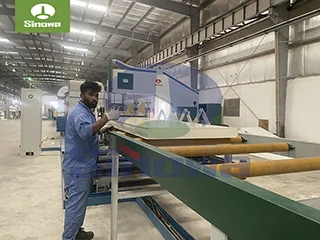
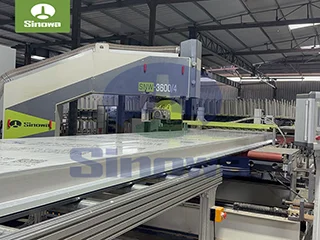
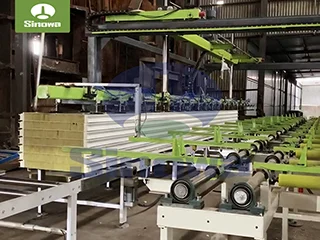
sandwich panel machine
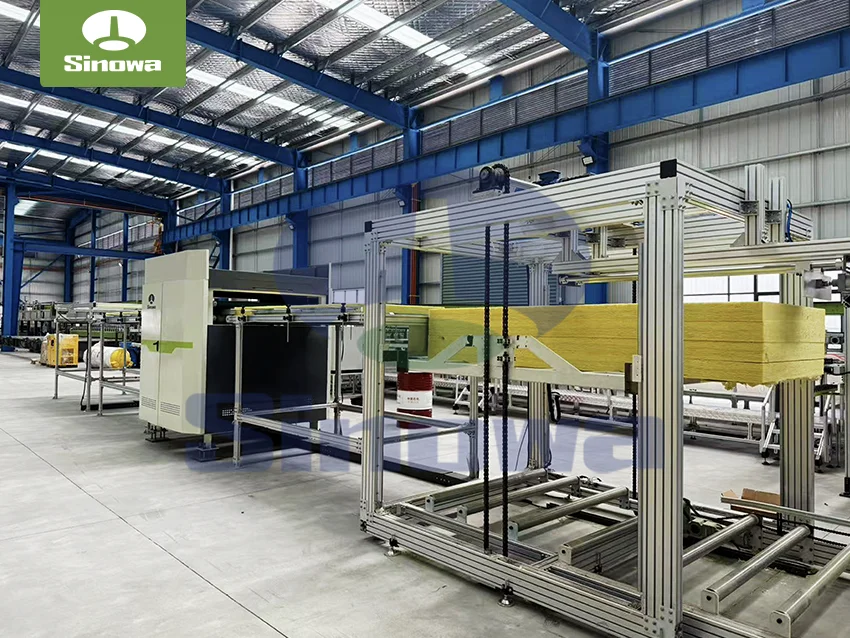
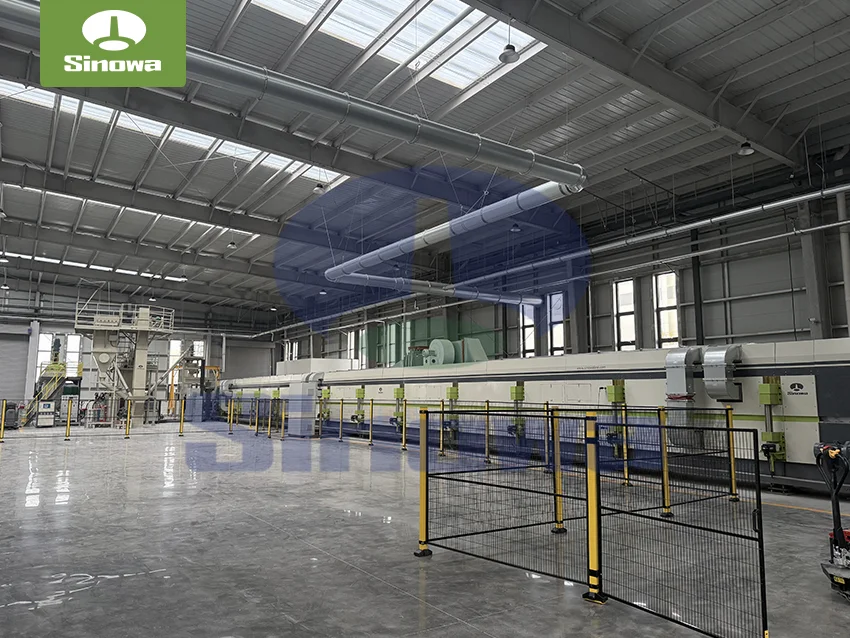
The overall structural design of sandwich panel equipment follows the logic of continuous industrial production, and the complete production line consists of multiple interconnected functional systems that cooperate with each other to complete the whole process from raw material pretreatment to finished product output. Each functional system has independent mechanical structures and control modules, and the parameter coordination between systems ensures the stability and consistency of the production process. The basic composition of conventional sandwich panel production equipment includes raw material conveying and pretreatment system, surface layer leveling and forming system, core material processing and feeding system, gluing and composite pressing system, constant temperature curing system, fixed-length cutting system, surface post-processing system and finished product conveying and stacking system. These functional modules are arranged in a linear production layout, which is convenient for the one-way flow of materials in the production process, reducing material transfer consumption and improving the overall production continuity. In addition to the main processing modules, the equipment is also equipped with auxiliary supporting structures such as power transmission devices, hydraulic regulation components, dust removal and purification components, and intelligent sensing modules, which jointly maintain the stable operation of the production line in complex industrial environments.
The raw material conveying and pretreatment system is the starting link of the sandwich panel production line, undertaking the task of screening, conveying and preliminary processing of various raw materials required for panel production. The raw materials involved in sandwich panel manufacturing are divided into surface layer raw materials and core layer raw materials, and the pretreatment methods vary greatly according to different material characteristics. For metal surface materials commonly used in industrial production, such as coated steel plates and galvanized steel plates, the pretreatment system is equipped with leveling machines, surface polishing devices and dust removal structures. During the processing, coiled metal materials are continuously unfolded through hydraulic uncoiling devices, and the tension control structure maintains the flat state of the metal plate surface to avoid wrinkles and deformation caused by uneven stress in the conveying process. The polishing component removes surface oxide layers and tiny burrs, while the high-pressure dust removal device cleans floating dust and impurities on the plate surface, laying a flat and clean foundation for subsequent gluing and composite processing. For non-metal surface materials such as cement fiber boards and color steel composite plates, the pretreatment process includes surface sanding and roughness adjustment, which enhances the adhesion between the surface layer and the adhesive. In terms of core material pretreatment, porous thermal insulation materials such as rock wool, glass wool and polyurethane foam need to be processed into uniform fixed-thickness plates through cutting and shaping structures. Bulk granular core materials need to be screened and impurity removed to ensure consistent material density, and the feeding speed is adjusted through quantitative conveying equipment to match the composite rhythm of the production line.
The surface layer leveling and forming system is responsible for shaping the flat raw plate into the structural contour required for finished sandwich panels. Different from flat single-layer plates, many sandwich panels for building enclosure structures need to have irregular edge structures such as waterproof grooves and occlusion joints to enhance the assembly tightness between plates. This sandwich panel line system adopts multi-group rolling forming structures, which are arranged in sequence according to the plate forming process. Each group of rolling rollers is equipped with adjustable spacing and angle structures, and the mechanical extrusion force generated by the relative rotation of the rollers slowly changes the physical shape of the metal plate. The gradual forming processing method effectively avoids plate cracking and coating peeling caused by one-time strong extrusion. In the working process, the sensing module detects the running speed and flatness of the plate in real time, and feeds back the data to the control terminal to automatically adjust the rolling pressure and conveying speed. For plates with high flatness requirements used in purification workshops and medical buildings, the system is additionally equipped with fine correction components to eliminate tiny bending deformation generated in the rolling process and ensure that the flatness error of the surface layer is controlled within a tiny range. The whole forming process does not require manual intervention, and the continuous rolling structure realizes uninterrupted molding of long plates, greatly improving the continuity of production.
The core material processing and feeding system is a key module that determines the thermal insulation and shock absorption performance of sandwich panels. The core material is the middle functional layer of the sandwich panel, which mainly undertakes the functions of heat insulation, sound insulation and buffer shock absorption. Different types of core materials have different processing requirements, and the feeding system needs to realize adaptive adjustment according to the physical characteristics of materials. For rigid foam core materials such as polyurethane and phenolic foam, the system adopts layered cutting and quantitative feeding technology to cut bulk foam raw materials into standard plates matching the surface layer size, and the high-precision cutting structure ensures consistent thickness of each core plate. For fibrous flexible core materials such as rock wool and glass wool, the system is equipped with fiber carding and compaction structures to uniformly disperse agglomerated fibers and adjust the bulk density of the core material, so as to avoid local hollowing and uneven density inside the finished plate. In the feeding link, the intelligent conveying mechanism synchronizes the feeding speed of the core material with the moving speed of the upper and lower surface layers, and the deviation correction device ensures that the core material is completely aligned with the surface layer in the horizontal direction, preventing dislocation and offset in the subsequent composite process. In addition, the feeding system is designed with an anti-blocking structure to avoid material accumulation and equipment stalling caused by excessive feeding of bulk core materials, improving the operational stability of the equipment.
The gluing and composite pressing system is the core processing unit of sandwich panel manufacturing equipment, which completes the bonding and integral forming of the surface layer and the core layer. The bonding quality directly determines the structural stability and service life of the finished sandwich panel, so the gluing process requires precise control of glue application amount, coating uniformity and glue viscosity. The automatic gluing device adopted by the system includes roller coating and spray coating structures. Roller coating is suitable for flat plates with smooth surfaces, which can form uniform adhesive films on the plate surface; spray coating is applied to rough porous core materials, and the atomized adhesive can penetrate into the material gaps to enhance bonding fastness. The internal temperature control module of the gluing device keeps the adhesive in the optimal viscosity state, avoiding excessive fluidity affecting gluing effect or excessive viscosity causing uneven coating. After the gluing operation is completed, the multi-layer materials enter the pressing composite area, and the system adopts the combined processing mode of heating and pressurizing. The hydraulic pressing structure provides stable and uniform pressure, and the internal heating components maintain a constant processing temperature, which accelerates the curing reaction of the adhesive and realizes tight bonding between layers. The pressure value and heating temperature can be adjusted according to the material hardness and adhesive type. For metal composite plates with high bonding strength requirements, the system increases the pressing time and appropriately raises the curing temperature; for lightweight non-metal composite plates, low-pressure and low-temperature composite parameters are adopted to prevent material deformation and damage. The cooling and shaping structure is arranged at the rear end of the pressing area to slowly reduce the temperature of the composite plate, eliminate internal stress generated in the high-temperature pressing process, and improve the structural stability of the plate.
The constant temperature curing system is an indispensable auxiliary structure for improving the comprehensive performance of sandwich panels. After the initial composite pressing, the adhesive inside the plate has not been completely cured, and the bonding strength between layers is low. If the plate is directly cut and processed, it is easy to produce layer separation and edge warping. The curing system builds a closed constant-temperature heat preservation space through thermal insulation materials, and the internal circulating air system keeps the temperature and humidity in the space evenly distributed. The composite plates after pressing enter the curing space with the conveying mechanism and move forward at a slow constant speed. The reasonable curing time enables the adhesive to complete chemical cross-linking reaction, forming a stable adhesive layer structure. The curing parameters are dynamically adjusted according to the ambient temperature and plate thickness. In low-temperature industrial environments, the system automatically increases the heating power to compensate for heat loss; for ultra-thick sandwich panels used in special engineering, the conveying speed is reduced to extend the curing time. In addition to improving bonding strength, the curing process can also eliminate residual moisture inside the core material, reduce the moisture content of the finished plate, and effectively avoid mildew and corrosion problems during long-term use of the plate. The whole curing process is carried out in a closed space, which reduces the volatilization of harmful substances in the adhesive and improves the environmental protection level of production.
The fixed-length cutting system realizes quantitative segmentation of continuously produced long plates to meet the size requirements of different application scenarios. This system is equipped with high-precision sensing and positioning components, which can automatically measure the moving distance of the plate in real time. When the plate reaches the preset cutting length, the control system instantly triggers the cutting execution structure. Different from traditional manual cutting equipment, the cutting mechanism of sandwich panel equipment adopts non-contact high-speed cutting and mechanical shear cutting modes in a targeted manner. For brittle foam core composite plates, the high-speed rotating alloy cutting blade is used for smooth cutting to avoid core material fragmentation and edge collapse; for metal surface composite plates with high hardness, the hydraulic shear structure completes one-time shear molding, ensuring neat and burr-free cutting sections. In order to prevent plate displacement during cutting, the system is equipped with an automatic compression positioning device, which fixes the plate instantly before cutting and releases the compression state after cutting is completed, without affecting the continuous conveying of subsequent plates. The cutting parameters can be set through the intelligent control terminal, realizing flexible switching of multiple specifications such as different lengths and widths. Meanwhile, the dust collection structure collects cutting debris and dust generated in the processing process, maintaining the cleanliness of the production environment and reducing material waste.
The surface post-processing system optimizes the appearance quality and surface protection performance of the cut finished plates. After cutting, the edges and corners of the plate have tiny burrs and rough edges, and the surface may have residual adhesive stains and dust. The post-processing system completes edge trimming, surface cleaning and anti-scratch protection treatment in sequence. The edge trimming structure polishes the four sides of the plate to make the edges smooth and flat, which is convenient for later on-site assembly and splicing. The high-pressure cleaning device removes surface residual impurities, and the drying structure quickly evaporates surface moisture to keep the plate dry. For plates used in outdoor building structures, the system is equipped with film covering components to attach transparent protective films on the plate surface, preventing surface coating abrasion and corrosion during transportation and stacking. Some advanced production lines are also equipped with surface embossing and color correction structures to process personalized textures on the plate surface, enriching the appearance diversity of finished products and meeting the decorative needs of different architectural styles. All post-processing procedures are connected in series on the production line, realizing one-time completion of plate processing and avoiding secondary damage caused by repeated handling.
The finished product conveying and stacking system is the terminal link of the sandwich panel machine, responsible for the orderly collection and temporary storage of finished sandwich panels. The processed finished plates are transported to the stacking area through the low-noise conveying roller table. The intelligent stacking mechanism adopts mechanical arm and hydraulic lifting structures, which can automatically complete plate sorting, stacking and binding according to preset specifications. In order to avoid extrusion damage between plates, the stacking system is equipped with buffer spacing components to keep a reasonable gap between adjacent plates. The stacking height and arrangement mode can be adjusted according to the plate thickness and material hardness. For lightweight fragile composite plates, layered slow stacking is adopted to reduce extrusion pressure; for high-strength metal composite plates, dense stacking is used to improve space utilization. The system is also integrated with a counting and sorting module, which automatically classifies qualified products and defective products detected in the production process, and records production data in real time to provide data support for production management. After stacking, the finished plates are bound and fixed to facilitate subsequent transportation and warehouse storage.
In addition to the main functional systems, the auxiliary supporting systems of sandwich panel equipment also play an important role in ensuring stable production. The power transmission system adopts frequency conversion motor and silent transmission chain structure, which can adjust the operating power according to the production load, reduce energy consumption during idle operation, and effectively control the operating noise of the equipment. The hydraulic regulation system provides stable power support for pressing, shearing and lifting structures, and the internal pressure monitoring module avoids equipment failure caused by excessive pressure. The intelligent sensing system is distributed in all processing links of the production line, including temperature sensors, pressure sensors, speed sensors and deviation correction sensors, which monitor the operating state of the equipment in real time and transmit abnormal data to the control terminal in time. The dust removal and purification system collects production waste gas and debris generated in gluing, cutting and polishing processes, and purifies the waste gas through physical filtration to reduce air pollution. The circulating cooling system dissipates heat for high-temperature processing components to avoid equipment aging and performance degradation caused by long-term high-temperature operation.
From the perspective of processing technology characteristics, modern sandwich panel production equipment has obvious advantages in production efficiency, material adaptability and processing precision. In terms of production efficiency, the integrated linear production mode realizes uninterrupted continuous processing. The linkage operation of each functional module greatly shortens the material transfer time, and the automated operation mode reduces manual intervention links. Compared with traditional intermittent processing equipment, the continuous production line has significantly improved single-hour output and annual production capacity. In terms of material adaptability, the adjustable mechanical structure enables the equipment to process multiple types of surface and core materials. By replacing rolling molds and adjusting feeding parameters, it can meet the production requirements of thermal insulation plates, purification plates, fireproof plates and other different functional sandwich panels, realizing multi-purpose use of one production line. In terms of processing precision, the digital control technology accurately controls parameters such as plate thickness, cutting size and pressing pressure. The error of finished product size is kept within a very small range, and the consistency of product quality is effectively guaranteed, which is conducive to standardized batch production.
The application scope of sandwich panels produced by professional equipment covers multiple industrial and civil fields, and the diversification of application scenarios also promotes the continuous technical optimization of production equipment. In the field of industrial buildings, sandwich panels are widely used in the enclosure structures of factory workshops, cold storage and logistics warehouses. The equipment can produce thickened thermal insulation panels with low thermal conductivity, which effectively reduce the energy consumption of building temperature regulation. In the field of purification engineering, the production line adopts dust-free and pollution-free processing technology to produce smooth and corrosion-resistant purification plates, which are suitable for the construction of medical laboratories, pharmaceutical workshops and food processing workshops. In the field of temporary construction, lightweight and easy-to-assemble sandwich panels are used for prefabricated houses and emergency rescue buildings. The equipment realizes rapid molding of thin and lightweight plates to meet the demand for rapid construction. In addition, with the development of new energy and transportation industries, sandwich panels are also applied to the outer protective structures of energy storage equipment and vehicle carriage plates, putting forward higher requirements for the fire resistance and compression resistance of the plates, which also drives the upgrading of high-strength composite processing modules of the equipment.
In the actual production and operation process, the daily maintenance and parameter debugging of sandwich panel making equipment are crucial to prolong the service life and maintain production stability. The daily maintenance work includes regular cleaning of residual materials on the surface of mechanical parts, lubrication of transmission bearings and gears, and inspection of the tightness of connecting bolts. The residual adhesive and cutting debris attached to the rolling structure and cutting blade need to be cleaned regularly to avoid affecting the processing accuracy. The hydraulic oil and cooling circulating fluid inside the equipment should be replaced periodically to ensure the normal operation of the hydraulic system and cooling system. In terms of parameter debugging, production personnel need to adjust equipment parameters according to the ambient temperature, raw material hardness and production batch requirements. When switching different types of raw materials, the gluing amount, pressing pressure and curing temperature need to be reset to adapt to the material characteristics. Regular calibration of sensing components and positioning devices can prevent detection deviation and ensure the long-term processing precision of the equipment. Scientific maintenance and debugging can effectively reduce equipment failure rate, avoid production interruption caused by mechanical faults, and reduce the comprehensive production cost of enterprises.
With the continuous progress of industrial intelligent manufacturing technology, the development trend of sandwich panel equipment is gradually moving towards intelligence, energy conservation and environmental protection, and high integration. In terms of intelligent upgrading, more production lines are equipped with centralized intelligent control terminals to realize one-click setting of production parameters and automatic linkage operation of each module. The fault self-diagnosis function can automatically identify abnormal parts of the equipment and give early warning prompts, reducing the difficulty of manual maintenance. The data statistical analysis module records production output, material consumption and failure frequency in real time, providing intuitive data reference for enterprise production planning. In terms of energy conservation and environmental protection, the new generation of equipment adopts frequency conversion energy-saving motors and heat recovery structures to reuse waste heat generated in the heating and curing process, reducing energy consumption. The closed production space and efficient waste gas purification devices reduce the emission of harmful substances, and the recycled processing debris realizes secondary utilization of resources, which conforms to the development concept of green industrial manufacturing. In terms of structural integration, the optimized equipment layout integrates scattered functional modules into a compact integrated structure, reducing the occupied space of the production line. At the same time, the quick disassembly and assembly design of key components simplifies the mold replacement and equipment maintenance process, and improves the production flexibility of the equipment.
Despite the mature application of sandwich panel manufacturing equipment in the building material industry, the industry still faces some technical bottlenecks and development challenges at this stage. In the processing of special high-performance plates, the existing conventional equipment has limitations in ultra-high temperature resistance, ultra-low temperature resistance and strong corrosion resistance composite processing. Some special core materials with complex physical properties are difficult to achieve uniform bonding and stable molding by traditional pressing technology. In terms of intelligent level, some small and medium-sized production lines still rely on manual auxiliary operation, with low automation degree and insufficient data synchronization capability between modules. In terms of service life of vulnerable parts, the rolling molds and cutting blades that are in contact with raw materials for a long time are prone to wear and aging, and the replacement cost of parts increases the long-term operation cost of enterprises. In addition, with the continuous improvement of industry requirements for building material fire resistance and environmental protection, production equipment needs to continuously upgrade processing technology to adapt to higher production standards.
In view of the existing industry challenges, the future technical optimization direction of sandwich panel equipment is clear. First, optimize the composite processing technology of special materials, develop variable temperature and variable pressure composite structures, and realize adaptive processing of high-strength, fire-resistant and corrosion-resistant special sandwich panels. Second, deepen the application of intelligent control technology, build interconnected production line data systems, realize automatic monitoring and remote debugging of the production process, and reduce manual operation dependence. Third, improve the manufacturing process of vulnerable parts, adopt high-strength wear-resistant alloy materials to produce molds and cutting components, extend the service life of parts, and reduce equipment maintenance costs. Fourth, strengthen the research and development of green production technology, develop low-carbon environmental protection adhesive coating structures and zero-discharge waste gas treatment systems, and further reduce the environmental pollution degree of the production process. Fifth, expand the personalized customization function of the equipment, realize flexible adjustment of plate thickness, shape and surface texture, and meet the customized production needs of high-end engineering and special scenarios.
From the perspective of industrial development, the market demand for sandwich panels will continue to grow with the acceleration of global infrastructure construction and the upgrading of building energy conservation standards. As the core production carrier of sandwich panels, sandwich panel equipment will usher in a broader market development space. The iterative upgrading of equipment technology will further promote the improvement of production efficiency and product quality of composite plates, and drive the standardized and standardized development of the building composite material industry. In the future, with the integration of artificial intelligence, Internet of Things and new material processing technology, sandwich panel equipment will develop into a fully intelligent unmanned production line, realizing full-process automatic control from raw material feeding to finished product warehousing. While improving production benefits, it will reduce the consumption of human resources and energy, and make greater contributions to the development of green, efficient and intelligent modern construction industry. In conclusion, sandwich panel equipment, as an important part of the building material manufacturing industry, has irreplaceable industrial value. Continuous technological innovation and structural optimization will surely make this type of equipment adapt to more complex production requirements and promote the sustainable development of the entire composite material manufacturing industry.
https://www.cnsinowa.com/sandwich-panel-machines/sandwich-panel-equipment.html