sandwich panel line
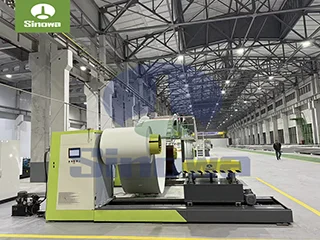
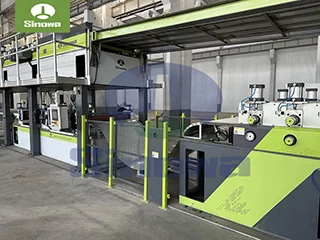
At the core of the operational logic of every industrial sandwich panel line lies the perfect coordination between mechanical transmission systems, material processing modules, and automatic control systems, with each functional unit working in precise synchronization to ensure every production link maintains stable operating parameters and consistent processing quality. The initial stage of the entire production workflow starts with the raw material feeding and pre-processing module, which mainly undertakes the storage, unwinding, and preliminary leveling of upper and lower metal surface materials used for sandwich panel production. Metal coils, the primary surface raw materials for sandwich panels, are loaded onto dedicated unwinding equipment, which adopts a stable hydraulic and mechanical linkage structure to achieve slow, uniform, and tension-controlled unwinding of metal coils. This tension control function is particularly critical in the early production stage, as uneven tension during unwinding will directly lead to uneven flatness of subsequent metal sheets, causing deviations in follow-up forming and compounding processes, and ultimately affecting the overall flatness and structural uniformity of finished sandwich panels. After unwinding, the metal sheets immediately enter the precision leveling and surface conditioning unit, where multiple sets of parallel leveling rollers gradually eliminate the internal mechanical stress generated during metal coil rolling and storage, smoothing out subtle surface wrinkles and irregular deformations on the metal sheets. In addition to physical leveling, this stage also includes basic surface cleaning and dust removal treatment, removing surface floating dust, fine impurities, and residual oil stains that may adhere to the metal surface, creating a clean and dry bonding interface for the subsequent adhesion and composite processing between metal sheets and core materials, and ensuring long-term bonding firmness between different material layers of the sandwich panel in later use.
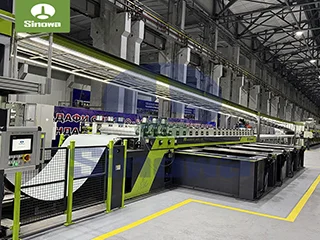
Following the completion of metal surface material pre-processing, the sheets are automatically conveyed to the roll forming station, a key functional module that shapes flat metal sheets into the required structural profiles for sandwich panel production. This station is composed of multiple groups of high-precision forming rollers arranged in an orderly gradient sequence, and each group of forming rollers is designed with targeted pressing and bending structures according to the structural design requirements of different types of sandwich panels. As the metal sheets pass through the gradual extrusion and bending of each group of forming rollers, flat metal plates are gradually processed into trapezoidal grooves, longitudinal ribs, or other customized structural shapes needed for panel production. The structural profiles formed in this process are not only designed to enhance the overall mechanical strength and pressure resistance of the outer surface of the sandwich panel but also play an important role in improving the assembly convenience and connection tightness between adjacent panels during on-site construction and installation. The roll forming process adopts a continuous progressive processing mode, avoiding sudden structural deformation of metal materials, effectively preventing the occurrence of metal cracking, edge warping, and other quality defects during forming, and ensuring that the dimensional accuracy and structural consistency of each batch of formed metal sheets are maintained within a stable range. Throughout the roll forming process, the automatic control system real-timely monitors the operating speed of the rollers and the feeding speed of the metal sheets, dynamically adjusting the matching relationship between the two to avoid production fluctuations caused by speed mismatch, ensuring the continuity and stability of the entire forming operation.
While the metal surface materials complete leveling and roll forming on one side, the core material conveying and pre-treatment unit of the industrial sandwich panel production line operates synchronously to prepare the insulating and supporting core materials for subsequent composite processing. The core materials used for sandwich panel production cover a variety of common industrial thermal insulation and fireproof substrates, all of which need to be processed through dedicated conveying and shaping equipment before compounding to ensure consistent specifications and stable delivery status. The core material conveying system adopts an automatic feeding and arranging structure, which can orderly transport bulk or coiled core materials to the composite lamination area according to the set thickness and width standards, and automatically trim and sort the edges of the core materials to ensure that the overall dimensions of the core materials fully match the formed metal surface materials. For core materials that require additional adhesive bonding, the production line is equipped with a high-precision gluing and coating system, which can evenly spray or coat special adhesive materials on the bonding surfaces between the core material and the upper and lower metal sheets. The gluing process is precisely controlled in terms of glue application amount, coating uniformity, and coating range, avoiding quality problems such as insufficient bonding strength caused by too little glue and material waste and glue overflow pollution caused by too much glue. For some foam-type core materials that rely on their own foaming and curing characteristics to form a bonding effect, the production line is equipped with a special foaming metering and pouring device, which mixes and injects raw material components according to a scientific proportion, making the foam raw materials evenly filled between the upper and lower metal sheets and forming an integrated bonding and thermal insulation structure through subsequent heating and curing.
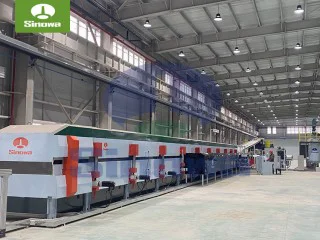
The composite lamination and thermal curing stage is the most critical core link in the entire operation of the industrial sandwich panel machine, directly determining the overall structural firmness, thermal insulation performance, and service life of finished sandwich panels. After the upper and lower formed metal sheets and the processed core materials are accurately aligned and matched according to the set position, they are synchronously sent into the double-belt lamination equipment of the production line. The lamination unit provides stable and uniform mechanical pressure through upper and lower synchronous pressing belts, tightly compounding the metal surface materials and the core materials into a preliminary integrated panel structure. The pressure control in the lamination process is extremely precise, as excessive pressure will cause the core material to be excessively compressed and damaged, reducing the thermal insulation performance of the panel, while insufficient pressure will lead to poor bonding between layers, easy delamination and separation in later use. On the basis of maintaining stable pressing pressure, the lamination equipment is also equipped with a circulating heating and thermal insulation system, which provides a constant temperature curing environment for the composite panel. The proper temperature environment can accelerate the rapid curing and hardening of the adhesive material or foam core material, promote the full integration and bonding between the metal layer and the core material layer, and form a stable and inseparable composite whole. The duration of thermal curing and the temperature value of the heating area are automatically adjusted according to different core material types and panel thickness specifications, ensuring that each type of sandwich panel can achieve the best bonding effect and structural strength after curing, and avoiding quality hidden dangers such as incomplete curing and weak bonding caused by unreasonable temperature and time control.
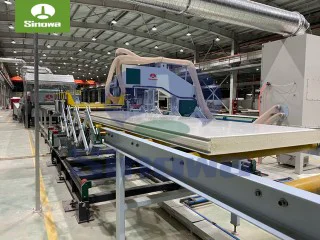
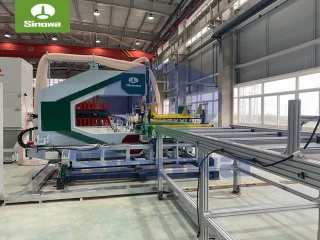
After the composite lamination and thermal curing process is completed, the continuous integrated sandwich panel semi-finished product enters the subsequent trimming, fixed-length cutting and surface finishing processing links of the industrial sandwich panel line. The continuously produced long-strip semi-finished panel first passes through the edge trimming device, which automatically cuts and trims the uneven edges on both sides of the panel to ensure that the overall width of the panel meets the standardized production requirements and the edge sections are flat and neat, facilitating subsequent finished product stacking and on-site assembly and connection. Then, according to the customized length requirements of different customer orders and engineering projects, the automatic fixed-length cutting system performs precise tracking and cutting operations on the continuous panel. The cutting equipment adopts a non-contact or fine cutting mode, which can complete the cutting work quickly and accurately without causing extrusion deformation or surface damage to the panel body, ensuring that the dimensional error of each finished panel is controlled within a very small range. After cutting, the single finished sandwich panel is transported to the cooling and shaping conveyor platform, where the high-temperature panel after thermal curing is naturally cooled and slowly shaped at room temperature. The cooling process can eliminate the internal thermal stress generated during the heating and curing process, prevent the panel from bending, deforming or warping due to rapid temperature change, and further stabilize the overall structural performance and flatness of the finished panel.
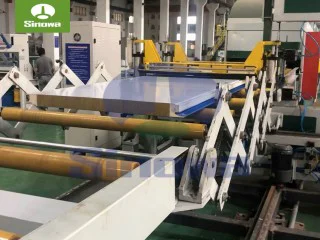
The final stage of the entire production workflow of the industrial sandwich panel manufacturing line is finished product conveying, automatic stacking and discharging storage. The cooled and shaped qualified sandwich panels are automatically transported to the stacking area through the terminal conveyor system of the production line, and the automatic stacking device neatly arranges and stacks the finished panels according to the set stacking quantity and specification standards. The automated stacking operation replaces the traditional manual handling and stacking mode, not only greatly reducing the labor intensity of production workers and saving labor input costs for enterprises but also avoiding surface scratches, panel collision damage and irregular stacking problems that are easy to occur in manual operation. The stacked finished sandwich panels are neatly arranged and easy to transport, store and deliver, which can be directly sent to the warehouse for storage or loaded and shipped to various construction and engineering sites. The entire production process from raw material feeding to finished product stacking is completed in a fully automated closed-loop operation state, with minimal manual intervention only needed for daily equipment operation monitoring, parameter debugging and routine maintenance work, realizing the modern production management mode of high efficiency and low labor consumption.
The comprehensive application advantages of the industrial sandwich panel line in actual industrial production are reflected in multiple dimensions such as production efficiency, product quality stability, production cost control and production flexibility. In terms of production efficiency, the continuous integrated production mode breaks the production bottleneck of traditional discrete processing equipment, realizing uninterrupted 24-hour continuous production operation, with a much higher daily and annual output of sandwich panels than traditional production methods, which can fully meet the large-scale material supply needs of large prefabricated construction projects, cold storage park construction, industrial plant enclosure and other scenarios. In terms of product quality, the whole production process is controlled by a unified automatic control system, all production parameters such as forming pressure, gluing amount, curing temperature, cutting size are precisely set and automatically adjusted, avoiding quality fluctuations caused by manual operation differences, making the thickness, flatness, bonding strength and thermal insulation performance of each batch of finished panels highly consistent, and effectively improving the overall qualification rate of products. In terms of production cost control, the automated production mode reduces the number of on-site production operators, reduces labor expenditure for enterprises, and the precise material conveying and gluing control system effectively reduces raw material waste in the production process, lowering the comprehensive production and operation cost of a single sandwich panel.
In terms of production flexibility, a well-designed industrial sandwich panel machinery has good adaptability and adjustable performance, and can quickly switch production parameters and processing modes according to different market demands and customer customization requirements. It can produce sandwich panels with different thickness specifications, different surface structural profiles and different core material combinations, covering the production needs of thermal insulation panels for cold storage, fireproof partition panels for industrial plants, enclosure panels for prefabricated buildings, and thermal insulation decoration panels for public buildings. This flexible production capability enables production enterprises to quickly respond to market demand changes, enrich product types, expand market business scope, and enhance overall market competitiveness. In addition, the structural design of the industrial sandwich panel line focuses on operational safety and daily maintenance convenience, with reasonable layout of each functional module, equipped with perfect safety protection and fault detection devices, which can timely alarm and automatically stop operation in case of abnormal equipment operation, ensuring the safety of production equipment and on-site operators. At the same time, the modular equipment structure design facilitates daily cleaning, component maintenance and later equipment upgrading and transformation, reducing equipment failure rate and later maintenance and repair costs, and ensuring the long-term stable and reliable operation of the production line.
With the continuous advancement of prefabricated construction industrialization and the continuous improvement of energy-saving and environmental protection requirements in the construction industry worldwide, the development and upgrading of industrial sandwich panel lines are also constantly moving towards higher automation intelligence, more energy-saving and environmentally friendly production processes and more diversified product adaptation. Modern newly upgraded industrial sandwich panel lines are gradually integrating more intelligent sensing and digital monitoring technologies, which can real-timely collect and record various data in the production process, including equipment operating status, production parameter changes, product output data and product quality detection data. Through data analysis and feedback adjustment, the production line can realize self-optimization of operating parameters, further improve production efficiency and product quality, and realize digital and intelligent management of the entire production process. At the same time, in response to the industry's requirements for energy conservation and emission reduction, the new generation of production lines optimizes the heating and power consumption structure of the thermal curing system, adopts more energy-saving heating technologies and power transmission modes, reduces energy consumption and energy waste in the production process, and realizes green and low-carbon production while ensuring production efficiency and product quality.
In practical industrial production and engineering application scenarios, the industrial sandwich panel production machine has become an important production equipment supporting the rapid development of the prefabricated construction industry. The sandwich panels produced by this professional production line have excellent comprehensive performance, including light weight, high structural strength, good thermal insulation and heat preservation effect, excellent fireproof and weather resistance, and convenient and fast on-site installation. These performance advantages make sandwich panels widely used in many fields such as industrial factory buildings, logistics cold storage, prefabricated temporary buildings, public building enclosure walls, interior partition engineering and special environmental thermal insulation engineering. Behind all these excellent product performance and wide application scope, it is inseparable from the precise processing, standardized compounding and strict quality control realized by the industrial sandwich panel line in the production process. Without the support of professional and efficient industrial sandwich panel line production equipment, it is difficult to produce sandwich panel products with stable performance, reliable quality and standardized specifications, and it is also impossible to meet the rapid construction and long-term use needs of various modern construction projects.
In conclusion, the industrial sandwich panel line is not only a simple combination of various mechanical processing equipment, but also a systematic and intelligent integrated production system integrating mechanical transmission, material processing, thermal curing, automatic control and intelligent management. It undertakes the important task of producing core lightweight thermal insulation building materials for the modern construction industry, and plays an irreplaceable key role in promoting the standardized production of prefabricated building components, improving construction efficiency, reducing construction costs and promoting the green and low-carbon development of the construction industry. With the continuous growth of market demand for prefabricated buildings and energy-saving building materials, the technological upgrading and application scope of industrial sandwich panel lines will continue to expand. In the future, this kind of production line will develop in the direction of higher intelligence, better energy-saving effect, stronger production flexibility and more stable operation performance, continuously providing high-quality, high-efficiency and low-cost sandwich panel product support for the global construction and industrial manufacturing fields, and continuously injecting strong power into the high-quality development of the modern construction industry and related supporting manufacturing industries.
https://www.cnsinowa.com/sandwich-panel-machines/industrial-sandwich-panel-line.html