 sandwich panel machine
The core principle of high-quality PU sandwich panel machine design is to maintain the dynamic balance of each production link and ensure the consistency of material processing, foaming reaction, composite molding, and curing shaping throughout the continuous production process. Different from ordinary mechanical processing equipment, PU sandwich panel production involves physical deformation of metal or non-metal surface materials and chemical foaming cross-linking reaction of polyurethane raw materials. The dual characteristics of physical and chemical processing put forward higher requirements for the precision coordination and parameter stability of machine components. In the design process, it is necessary to fully adapt to the reaction characteristics of polyurethane materials, including the viscosity change of liquid raw materials, expansion ratio during foaming, curing time window, and bonding characteristics with different base materials, so as to avoid product defects such as uneven core density, insufficient bonding strength, surface warping, and thickness deviation caused by mismatched machine parameters or unreasonable structural layout.
The overall structural design of high-quality PU sandwich panel production line follows a modular integrated layout logic, dividing the whole production line into multiple independent and interlocking functional units to facilitate equipment debugging, daily maintenance, and later functional upgrading. The whole machine system mainly includes raw material unwinding and leveling unit, surface pretreatment unit, high-precision foaming and injection unit, constant-pressure composite pressing unit, constant-temperature curing and shaping unit, traction conveying unit, fixed-length cutting unit, and centralized electric control unit. Each module is designed with independent parameter adjustment functions and synchronous linkage control logic, ensuring that the operating speed, pressure parameters, temperature conditions, and feeding rhythm of each link maintain dynamic synchronization in continuous production, which is the key to realizing batch stable production of high-quality sandwich panels.
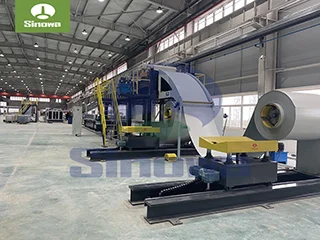
The raw material unwinding and leveling unit is the starting link of the PU sandwich panel line, and its design quality directly affects the flatness and dimensional stability of the subsequent composite panels. High-quality machine design adopts multi-station unwinding structure, which can meet the synchronous feeding requirements of upper and lower surface materials of sandwich panels. The unwinding mechanism is equipped with adaptive tension adjustment components, which can automatically balance the tension of coil materials according to the feeding speed and coil residual capacity, effectively avoiding material deviation, stretching deformation, and wrinkling problems in the feeding process. The subsequent leveling structure adopts multi-group roller progressive leveling design, with high-precision roller body processing and reasonable gap layout, which can eliminate micro-deformation and internal stress of coiled materials, ensure that the surface materials maintain a flat and uniform state before composite molding, and lay a foundation for the consistent thickness and smooth surface of finished panels. In addition, this unit is optimized with material deviation correction structures to realize real-time fine adjustment of material conveying position, avoiding lateral deviation of materials in long-distance continuous operation.
The surface pretreatment unit is a refined design link that improves the bonding performance of sandwich panels, which is often optimized and upgraded in high-end machine design. The surface of metal or composite surface materials will produce oxide layers, dust, and oil stains during storage and transportation, which will seriously reduce the bonding strength between surface materials and PU foam core layers. Therefore, the high-quality machine is equipped with integrated pretreatment functions including surface cleaning and micro-roughening treatment. The cleaning structure adopts non-contact dust removal and low-loss cleaning technology to remove surface attachments without damaging the base material structure. The micro-roughening treatment forms uniform micro-texture on the material surface, which significantly enhances the mechanical biting force between the surface material and PU foam. Some optimized designs are also equipped with constant-temperature preheating structures, which heat the surface materials to the optimal bonding temperature range before foaming injection, effectively improving the reaction activity of polyurethane raw materials and realizing tighter and more durable composite bonding.
The high-precision foaming and injection unit is the core functional module that determines the thermal insulation performance and structural uniformity of PU sandwich panels, and is the key and difficult point of machine design. Polyurethane foaming quality is extremely sensitive to raw material mixing ratio, injection flow rate, pressure stability, and temperature environment. High-quality machine design adopts high-precision proportional mixing system, which can realize accurate matching of different polyurethane raw materials according to production process requirements. The internal flow channel of the injection device is optimized with fluid mechanics simulation to ensure uniform mixing of raw materials and stable output of mixed liquid materials, avoiding local uneven reaction caused by raw material stratification or insufficient mixing. The injection pressure is designed with closed-loop dynamic adjustment function, which can automatically compensate pressure fluctuation caused by material viscosity change and flow rate adjustment, maintaining constant injection pressure in the whole production process. At the same time, the injection nozzle structure is optimized with uniform distribution design, realizing continuous and uniform pouring of foaming materials in the width direction of the panel, ensuring consistent density of the PU core layer in all parts of the panel, and avoiding hollowing, insufficient foaming, and local density deviation defects.
The constant-pressure composite pressing unit undertakes the functions of material lamination, foaming constraint, and preliminary shaping, and its structural stability and pressure uniformity directly determine the flatness and bonding consistency of finished panels. High-quality machines adopt double-belt full-wrapping pressing structure, abandoning the traditional local roller pressing mode. The endless conveyor belt with high wear resistance and flatness is used to wrap the upper and lower surfaces of the composite panel, realizing full-width and full-length uniform pressure constraint on the foaming core layer. The pressure system adopts multi-point balanced pressure distribution design, which can accurately adjust the overall pressing force according to different panel thickness specifications and material characteristics, and maintain stable pressure output in the high-speed operation state. This design can effectively constrain the free expansion of PU foam, make the foam fill the composite space evenly, and ensure the tight fitting between the core layer and the surface materials. In addition, the pressing unit is equipped with parallel calibration structures to ensure the absolute parallelism of the upper and lower pressing surfaces, avoiding panel thickness deviation and warping deformation caused by inconsistent local pressure.
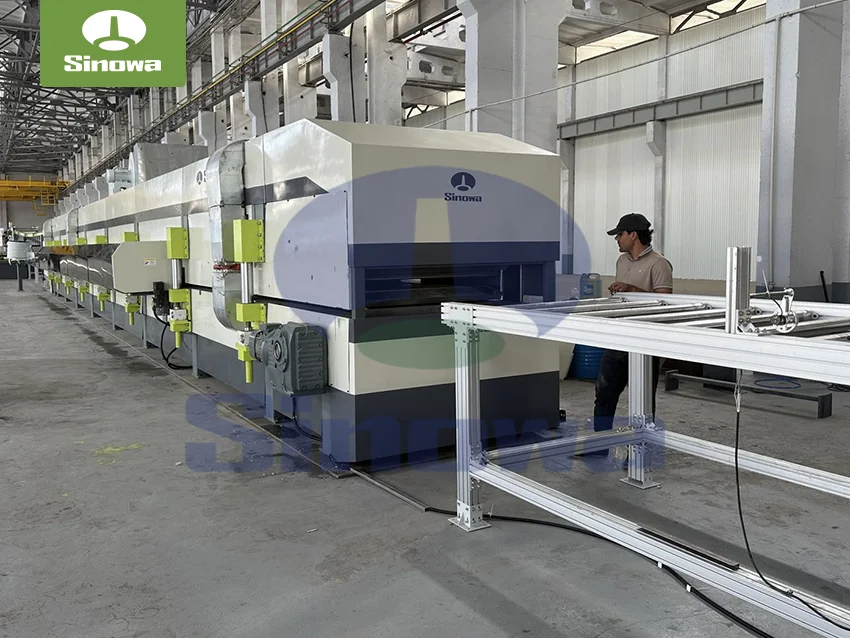
The constant-temperature curing and shaping unit is designed to provide a stable reaction environment for polyurethane foam curing and molding, solving the problem of unstable product quality caused by inconsistent curing conditions in traditional production. Polyurethane foam needs a specific constant temperature environment to complete cross-linking reaction and structural shaping after injection and lamination. Unstable temperature will lead to incomplete local curing, inconsistent foam hardness, and residual internal stress of the panel. High-quality machine design builds a fully enclosed curing tunnel structure, with multi-group temperature sensing elements and circulating temperature adjustment devices arranged inside. The system can realize real-time monitoring and dynamic adjustment of the internal temperature of the tunnel, maintain a constant temperature field in the whole curing area, and ensure that the foaming reaction speed and curing degree of each position of the panel are completely consistent. The length and internal space of the curing tunnel are scientifically matched according to the production speed and panel specifications, ensuring that the PU core layer completes sufficient curing and structural stabilization before leaving the tunnel, eliminating post-production deformation and quality attenuation of the panel.
The traction conveying unit is responsible for the continuous and stable transmission of materials in the whole polyurethane sandwich panel production line, and its design focuses on synchronization, stability, and low damage. High-quality machines adopt variable-frequency synchronous traction technology, with multiple groups of traction structures linked synchronously with the front-end pressing and curing system. The traction speed maintains real-time dynamic matching with the foaming injection speed and pressing speed, avoiding material stretching or stacking deformation caused by speed mismatch. The traction contact part adopts anti-slip and anti-pressure damage design, which can provide stable traction force without causing indentation and deformation on the panel surface. The whole conveying system adopts linear precision layout, with low operational vibration and high structural stability, ensuring long-term continuous stable operation and providing basic guarantee for the consistency of panel dimensional accuracy.
The fixed-length cutting unit realizes precise sizing and cutting of cured sandwich panels, and its design core is high precision and no structural damage. Traditional cutting equipment is prone to problems such as cutting size deviation, section burrs, and core layer delamination, which affect the overall quality of finished panels. High-quality machine design adopts servo-driven fixed-length positioning system, with high-precision encoding positioning technology, which can realize accurate sizing according to customized production requirements, with extremely low dimensional error of finished panels. The cutting tool adopts high-hardness and wear-resistant materials, and the cutting trajectory is optimized through mechanical simulation, realizing fast and smooth one-time cutting. At the same time, the cutting process is equipped with auxiliary pressing and fixing structures to avoid panel vibration and displacement during cutting, prevent core layer delamination and surface material warping at the cutting section, and ensure flat and neat cutting edge of finished panels.
The centralized electric control unit is the brain of the whole machine system, and the advanced control logic design is the core to realize high-quality and efficient production. High-quality machine design adopts integrated programmable control system, integrating parameter setting, real-time monitoring, fault diagnosis, and data storage functions. All production parameters including feeding speed, foaming ratio, injection pressure, curing temperature, pressing pressure, and cutting size can be set and adjusted through the centralized control terminal. The system is equipped with real-time data acquisition and feedback functions, which can monitor the operating state of each module in real time, automatically adjust various process parameters according to the production state, and realize closed-loop automatic control of the whole production process. In addition, the control system is designed with fault early warning and protection logic, which can timely identify abnormal states such as material blockage, parameter deviation, and equipment overload, and execute automatic protection actions to avoid equipment damage and batch product quality problems.
In terms of overall mechanical performance optimization, high-quality PU sandwich panel making machine design fully considers long-term industrial continuous operation scenarios, and carries out targeted optimization on structural rigidity, wear resistance, and stability. The main frame of the equipment adopts high-strength welded structural parts, with finite element stress analysis carried out in the design stage to optimize the structural force distribution, eliminate stress concentration points, and ensure that the equipment does not deform or vibrate abnormally under long-term high-load operation. The key moving parts and friction parts adopt enhanced wear-resistant design, with surface anti-corrosion and wear-resistant treatment, which effectively extends the service life of the equipment and reduces the frequency of later maintenance. The whole machine is designed with vibration reduction and noise reduction structures, which can effectively reduce the vibration and noise generated during high-speed operation, improve the on-site production environment, and ensure the stability of equipment operation accuracy.
Process adaptability design is another important part of high-quality PU sandwich panel production machine development. Modern sandwich panel production needs to meet the diversified demands of different scenarios such as wall panels, roof panels, and special insulation panels, with differences in panel thickness, surface material types, and foam density requirements. High-quality machines adopt flexible adjustable structural design, and each key process parameter can be adjusted in a wide range. The gap of the pressing unit, the temperature of the curing unit, the flow rate of the foaming system, and the operating speed of the conveying system can be adaptively adjusted according to different production specifications, realizing flexible switching of multiple product types on one equipment. At the same time, the machine design reserves functional expansion space, which can be matched with subsequent automatic stacking, packaging, and surface processing auxiliary modules according to production needs, improving the overall automation level and production capacity of the polyurethane sandwich panel line.
Energy saving and environmental protection design is an indispensable part of modern high-quality PU sandwich panel manufacturing machine design. In view of the energy consumption and material waste problems in traditional equipment production, the optimized design realizes energy saving and consumption reduction from multiple dimensions. The heating and temperature control system adopts intelligent temperature adjustment logic, which can automatically adjust heating power according to production load, avoid invalid energy consumption, and improve thermal energy utilization efficiency. The foaming injection system adopts precise quantitative injection technology, which can accurately control the dosage of polyurethane raw materials according to the panel specification, effectively reducing raw material waste and residual materials. At the same time, the equipment is equipped with optimized gas collection and purification structures for the trace volatile substances generated in the foaming process, realizing standardized and environment-friendly production and reducing the impact of production on the surrounding environment.
Ergonomic and maintainability design further improves the comprehensive quality of the equipment. High-quality machine design fully considers the actual operation and maintenance needs of on-site personnel, optimizing the layout of operation positions, observation windows, and maintenance channels. The key debugging parts and vulnerable parts are designed with open and detachable structures, which facilitates daily inspection, component replacement, and equipment debugging, reduces maintenance time and cost, and improves the overall operating efficiency of the polyurethane sandwich panel machine. The operation interface is designed with humanized logic, with intuitive parameter display and simple operation steps, reducing the operation threshold and human error probability, and ensuring the stability and consistency of production quality.
In summary, high-quality PU sandwich panel machinery design is a systematic engineering work that integrates mechanical structure optimization, process technology adaptation, automatic control upgrading, and environmental protection and humanization optimization. It takes product quality stability, production efficiency, equipment durability, and production flexibility as the core goals, realizes the precise matching of mechanical equipment and polyurethane foaming composite process through modular structural layout, high-precision process control, and intelligent linkage adjustment. With the continuous upgrading of the application market of PU sandwich panels, the machine design will continue to develop towards higher precision, higher automation, stronger adaptability, and lower energy consumption, providing more reliable equipment support for the high-quality development of the composite panel manufacturing industry.
https://www.cnsinowa.com/sandwich-panel-machines/high-quality-pu-sandwich-panel-machine-design.html