sandwich panel machine
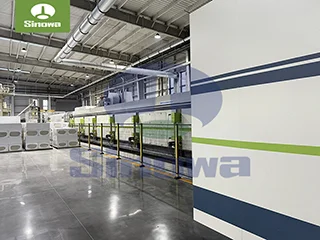
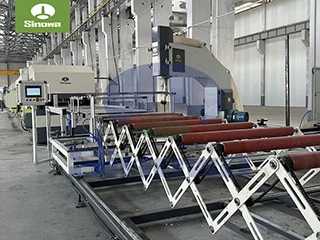
The internal structural composition of an insulation sandwich panel machine follows a logical production sequence, with each functional module closely connected to form an interconnected and coordinated operating system. The front-end part of the equipment is dominated by the raw material feeding and pretreatment units, which undertake the basic preparation work of all raw materials before compounding. For metal surface sheets commonly used in sandwich panels, the feeding unit is equipped with automatic unwinding structures that can steadily release coiled metal sheets. Auxiliary correction structures inside the unit ensure that the sheet maintains a horizontal and straight conveying state during movement, effectively avoiding lateral deviation and wrinkling of raw materials in the subsequent processing links. Meanwhile, the surface pretreatment device matched with the feeding unit carries out dust removal and surface smoothing treatment on the outer layer of the sheets, eliminating tiny impurities and uneven textures generated during the metal coil rolling process. This pretreatment procedure optimizes the adhesion performance between the surface sheet and the intermediate core material, laying a solid foundation for improving the overall structural firmness of finished panels. For lightweight thermal insulation core materials such as rock wool, polyurethane foam, and polystyrene foam, the feeding system adopts a classified conveying structure to realize quantitative and ordered feeding according to different core material densities and morphological characteristics, preventing material accumulation or sparse distribution during the production process.
Following the feeding and pretreatment module is the gluing and composite pressing unit, which is the key functional area that determines the bonding strength and structural uniformity of sandwich panels. The gluing system of the machine adopts an intelligent rolling and spraying combined coating method, which can evenly distribute environmentally friendly adhesive materials on the bonding surfaces of both the outer sheet and the inner core material. The internal flow control structure of the gluing device can adjust the adhesive output per unit area according to the thickness and material characteristics of different raw materials, ensuring that the adhesive layer maintains a uniform thickness without excessive overflow or local missing coating. After the gluing operation is completed, each layer of raw materials is accurately transported to the pressing area for lamination treatment. The pressing structure uses mechanical hydraulic pressure to provide stable and continuous pressing force, and the internal balance control system keeps the pressure consistent across all positions of the panel surface during the pressing process. This balanced pressure environment enables the adhesive to fully penetrate the tiny gaps between materials, eliminating air bubbles and hollow layers inside the composite structure. In addition, the pressing unit is equipped with a temperature adjustment component, which can appropriately raise the ambient temperature within a controllable range to accelerate the curing reaction of the adhesive, shorten the standing time required for material bonding, and further improve the production efficiency of the entire line.
The constant temperature curing and shaping module constitutes the intermediate core operating section of the insulation sandwich panel machine, undertaking the task of stabilizing the initial composite structure of panels. After preliminary pressing and compounding, the semi-finished panels enter the insulated curing channel, where the internal closed space maintains a stable temperature and humidity environment. Different from natural air drying, the intelligent temperature and humidity regulation system inside the curing channel can dynamically adjust environmental parameters based on the thermal expansion coefficients and curing characteristics of diverse core materials. For rigid core materials that require slow shaping, the system maintains a mild constant temperature to avoid structural deformation caused by excessive temperature difference; for foam core materials with fast curing characteristics, it appropriately shortens the curing cycle through moderate temperature rise. During the continuous conveying process in the curing channel, the semi-finished panels remain in a flat and fixed posture under the restriction of limit guide structures, which effectively prevents warping, bending, and other morphological defects in the initial curing stage. The gradual hardening of the adhesive and the stable combination of all material layers are completed in this closed environment, so that the overall mechanical strength and structural stability of the panels reach the preset production standards, creating conditions for subsequent fine processing.
The precision cutting and sizing unit located in the rear section of the equipment is responsible for dividing continuously produced long strip panels into finished products of specified dimensions. This unit is equipped with high-precision sensing and positioning components, which can identify the conveying speed and real-time position of semi-finished panels, and automatically trigger the cutting mechanism to complete fixed-length cutting. The cutting tool adopts high-hardness alloy materials, which can maintain smooth cutting edges when facing composite structures composed of metal sheets and porous thermal insulation materials, without generating burrs, cracks, or material peeling. In addition to basic length cutting, the cutting module also supports edge trimming treatment on both sides of the panels to remove irregular residual edges generated during the continuous composite molding process. The optimized edge structure not only enhances the aesthetic appearance of finished panels but also improves the assembly convenience in subsequent construction and installation links. All cutting parameters can be adjusted according to customized production requirements, realizing flexible switching of panel sizes to meet the dimensional demands of different application scenarios.
The last functional part of the entire production line is the post-processing and automatic stacking module, which includes surface cleaning, quality inspection, and finished product stacking functions. After cutting and shaping, the surface of the panels may generate tiny adhesive residues and processing dust, and the automatic cleaning device uses circulating air blowing and soft wiping structures to remove surface impurities without damaging the protective layer of the outer sheets. The built-in detection system conducts real-time non-destructive inspection on the processed panels, automatically identifying unqualified products with uneven bonding, surface depressions, and dimensional deviations through sensing technology, and isolating defective materials from the qualified product conveying line. Qualified finished panels are steadily transported to the stacking area, where the mechanical grabbing structure adopts a balanced clamping method to complete layered stacking. The stacking height and arrangement interval can be automatically controlled to ensure the neat placement of finished panels, which is convenient for subsequent manual handling and centralized storage. The entire post-processing procedure minimizes manual intervention, reduces the risk of surface damage caused by human contact, and maintains the consistent surface quality of finished panels.
The working principle of the insulation sandwich panel machine is based on the comprehensive application of mechanical transmission principles, material bonding mechanics, and thermodynamic control theories. The entire production process follows a continuous assembly line logic, realizing seamless connection from raw material input to finished product output through the coordinated operation of transmission rollers, servo power structures, and intelligent control components. In terms of material combination, the equipment utilizes physical pressing and chemical curing double effects to strengthen the bonding tightness between heterogeneous materials. The layered composite structure formed by metal outer sheets and porous thermal insulation core materials gives the panels excellent mechanical hardness and thermal insulation performance. During the operation of the equipment, the closed-loop control system collects real-time operating data of each functional module, including conveying speed, pressing pressure, curing temperature, and cutting size. The data is fed back to the central control terminal, which automatically corrects parameter deviations to ensure that each production link operates within a stable numerical range. This intelligent control mode effectively reduces the fluctuation of product quality caused by manual operation errors and improves the overall yield of production.
Different types of insulation sandwich panel machines have obvious pertinence in material adaptation, and the equipment structure will be slightly optimized according to the physical characteristics of different core materials. When processing rock wool and mineral wool inorganic core materials, the feeding and pressing modules are equipped with anti-compression protection structures to avoid fiber crushing and thermal insulation performance degradation caused by excessive pressure on loose fiber materials. The gluing system increases the adhesive penetration time appropriately to enable the adhesive to fully infiltrate the fiber gaps and enhance the internal cohesion of the core material. For polyurethane and polystyrene organic foam core materials, the equipment adjusts the curing temperature and pressing duration, adopting a low-pressure rapid compounding process to prevent high temperature and high pressure from damaging the porous foam structure. In view of the lightweight and brittle characteristics of foam materials, the conveying structure is covered with flexible protective materials to reduce surface friction damage during material transportation. This targeted structural optimization enables a single production line to adapt to the production needs of multiple sandwich panel types, expanding the application scope of the equipment in the building material manufacturing industry.
In actual industrial production applications, the operational advantages of insulation sandwich panel machines are prominently reflected in production efficiency, resource utilization, and product consistency. Compared with traditional intermittent manual panel making equipment, continuous production lines can realize uninterrupted feeding, compounding, and molding, greatly shortening the single-panel production cycle. The integrated structural design reduces the intermediate handling links of semi-finished products, avoids material loss and surface damage caused by multiple transfers, and improves the utilization rate of raw materials. In terms of product quality control, the unified parameter setting mode enables the thickness, density, bonding strength, and thermal conductivity of each batch of finished panels to maintain a small fluctuation range. The standardized panel structure is more conducive to rapid assembly in construction projects, shortening the overall construction cycle of buildings. In addition, the equipment is designed with energy-saving optimization structures, including circulating heat preservation systems and variable-frequency power regulation components, which can automatically adjust energy output according to production load, effectively reducing energy consumption per unit of products and lowering the long-term operating cost of production enterprises.
The daily maintenance and scientific operation management of insulation sandwich panel machines are crucial to extending the service life of the equipment and maintaining stable production efficiency. In terms of daily routine maintenance, the transmission rollers and chain structures inside the equipment need regular lubrication treatment to reduce mechanical wear caused by long-term friction and avoid abnormal noise and conveying jamming during operation. The gluing pipeline and coating roller should be cleaned regularly to prevent adhesive from solidifying and accumulating to block the pipeline and affect the uniformity of subsequent gluing operations. For the temperature sensing components and pressure control sensors distributed in each module, regular calibration and detection are required to ensure the accuracy of real-time monitoring data and avoid product quality problems caused by parameter deviation. In terms of operating specifications, operators need to strictly follow the startup and shutdown procedures of the equipment. Pre-operation inspection of the tightness of connecting parts and the flexibility of movable structures is necessary to eliminate potential safety hazards. When replacing raw materials and adjusting production parameters, gradual parameter modification should be adopted to prevent sudden changes in pressure and temperature from causing structural impact on the equipment.
With the continuous development of the global green building industry, the performance optimization and technological upgrading of insulation sandwich panel machines have become an important development trend in the building material machinery industry. In terms of intelligent upgrading, more advanced sensing and data analysis technologies are being integrated into the equipment control system. The production line can automatically record all data in the production process, generate production analysis reports, and provide data support for enterprises to optimize production processes. In terms of environmental protection improvement, the equipment is gradually equipped with waste gas recovery and residual material collection structures, which can collect and process trace volatile substances generated by adhesives and leftover materials generated by cutting, reducing the impact of production processes on the surrounding environment. In terms of structural optimization, the integrated compact design reduces the floor space of the production line, making it suitable for small and medium-sized production plants with limited space. Meanwhile, the modular disassembly structure simplifies the later maintenance and replacement of vulnerable parts, reducing the maintenance difficulty and time cost of the equipment.
In the industrial layout of building materials manufacturing, insulation sandwich panel machines undertake the important task of promoting the industrialization and standardization of thermal insulation building materials. The diversified production capacity of the equipment meets the material needs of different fields such as industrial construction, civil buildings, and special environmental engineering. The lightweight, heat-insulating, and weather-resistant characteristics of the produced sandwich panels are perfectly compatible with the development concept of modern energy-saving buildings. Driven by market demand, the technical performance of insulation sandwich panel machines will continue to progress toward higher automation, lower energy consumption, and stronger material adaptability. In the future, with the deep integration of intelligent manufacturing technology and building material production industry, this type of mechanical equipment will further break through the limitations of traditional production modes, provide more efficient and environmentally friendly production solutions for the building material industry, and make important contributions to the popularization of green energy-saving buildings and the upgrading of industrial construction standards.
https://www.cnsinowa.com/sandwich-panel-machines/insulation-sandwich-panel-machine.html