sandwich panel line
The overall operational logic of the PU sandwich panel continuous production line is based on the synergistic cooperation of mechanical transmission, automatic sensing, chemical reaction control and thermal forming technology. The basic structure of PU sandwich panels consists of upper and lower surface decorative and protective materials and a polyurethane foam core layer with thermal insulation and support functions. The continuous production process takes full advantage of the instantaneous foaming and curing characteristics of polyurethane materials, matching the continuous conveying speed of surface materials to realize one-time composite molding. In the whole production process, the surface materials are continuously unwound and fed at a constant speed, while the polyurethane raw materials are precisely metered, fully mixed and evenly sprayed on the surface of the lower layer material. With the forward movement of the conveyor system, the polyurethane liquid material undergoes physical foaming and chemical cross-linking reactions gradually, fills the space between the upper and lower surface materials uniformly, and forms a dense and stable foam core structure under the action of constant temperature and pressure. After complete curing and shaping, the integrated composite board is cut into standard sizes according to preset parameters, and finally sorted and output automatically. This integrated production mode eliminates intermediate handling and repeated positioning processes, greatly optimizing the production rhythm and improving the overall production efficiency and product quality stability.
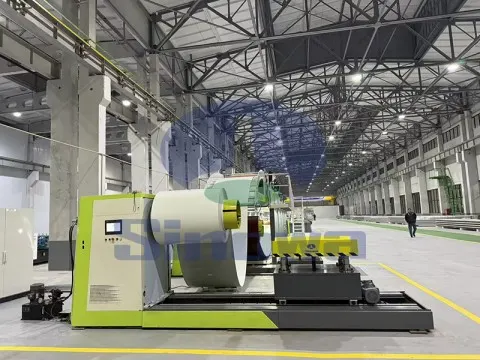
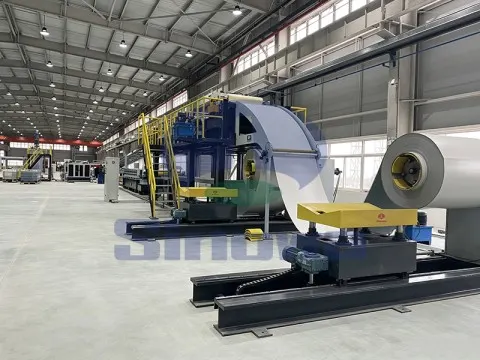
The front-end raw material pretreatment and feeding system is the primary guarantee for the stable operation of the continuous sandwich panel production line, mainly including surface material unwinding, leveling, cleaning and polyurethane raw material conveying and proportioning modules. For the surface materials commonly used in PU sandwich panels, including color steel sheets, aluminum sheets, stainless steel sheets and other metal materials, as well as non-metal decorative sheets, the unwinding module adopts a multi-station continuous unwinding structure, which can realize non-stop material switching and continuous feeding. The built-in tension control device in the unwinding system can dynamically adjust the feeding tension according to the material thickness, hardness and production speed, effectively avoiding material deviation, wrinkling and stretching deformation during high-speed conveying. After unwinding, the surface materials pass through a multi-group roller leveling mechanism, which eliminates the tiny bending and internal stress generated during material coiling, ensuring the flatness of the base material for subsequent composite processing. At the same time, the automatic dust removal and surface cleaning device removes floating dust, impurities and oil stains on the surface of the materials, improving the bonding tightness between the surface materials and the polyurethane foam core layer, and avoiding delamination and hollowing defects of the finished panels in subsequent use.
The polyurethane raw material supply and mixing system is the core functional unit that determines the foaming quality and core layer performance of the sandwich panel. Polyurethane foaming is a complex chemical reaction process involving multiple raw materials, and the proportion accuracy, mixing uniformity and feeding stability of raw materials directly affect the density, thermal insulation performance, mechanical strength and dimensional stability of the foam core. The continuous sandwich panel line is equipped with a high-precision automatic metering and mixing system, which can realize stable conveying and accurate proportioning of multiple groups of raw materials including polyether polyol, isocyanate, foaming agent, catalyst and stabilizer. Different from traditional manual proportioning and intermittent mixing, the online continuous mixing mode enables all raw materials to be transported in a closed pipeline, with real-time monitoring and fine adjustment of flow rate, ensuring that the proportion of each component is always in the optimal reaction range. The high-speed dynamic mixing device inside the system can fully shear and blend the raw materials in an instant, making the reaction components evenly distributed, which lays a foundation for the formation of uniform and fine foam pore structure. In addition, the system is equipped with a constant temperature maintenance device for raw material storage and conveying pipelines, which avoids the fluctuation of raw material viscosity and reaction activity caused by ambient temperature changes, ensures the consistency of foaming reaction state in the whole production process, and thus stabilizes the core layer quality of each batch of panels.
The online spraying and paving process is a key link to realize the composite integration of polyurethane foam and surface materials. After being fully mixed, the polyurethane composite liquid material is transported to the automatic spraying device at the front end of the composite molding section. The spraying device adopts multi-point uniform spraying and linear reciprocating spraying modes, which can cover the entire width of the lower surface material evenly without dead ends. The spraying amount and spraying density can be dynamically adjusted according to the preset panel thickness and density parameters, realizing precise quantitative paving of liquid materials. In the initial stage after spraying, the polyurethane liquid material remains in a fluid state, and gradually undergoes foaming expansion under the action of internal chemical reaction. At this stage, the production line relies on the synchronous conveying of upper and lower double-layer surface materials to limit the free expansion of the foam, so that the foam fills the gap between the upper and lower materials in an orderly manner. The whole foaming and filling process is synchronized with the forward conveying speed of the materials, realizing dynamic integration of foaming and composite molding. This synchronous processing method effectively avoids the problems of uneven foam thickness, local bulging or insufficient filling that are prone to occur in static foaming processes, and ensures the overall flatness and structural uniformity of the composite panel.
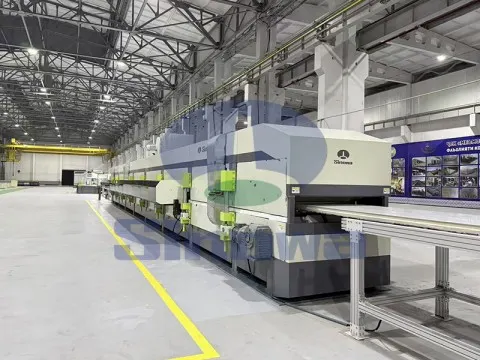
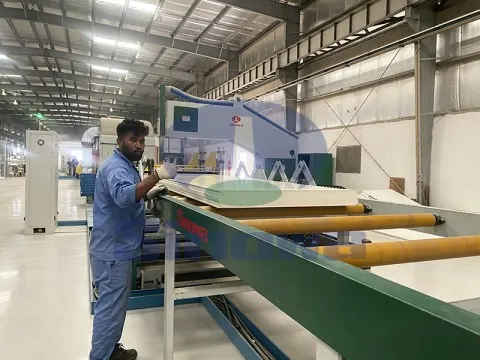
The double-track constant-pressure curing and molding system is the core equipment for shaping the overall structure of PU sandwich panels and stabilizing product performance. After the upper and lower surface materials are closed and compounded with the polyurethane foam core, the semi-finished panels enter the closed constant-temperature curing tunnel along with the track conveyor system. The curing tunnel adopts a multi-section independent temperature control design, which can set different temperature gradients according to the reaction characteristics of polyurethane foam in different stages of foaming, curing and shaping. In the early stage of curing, a moderate temperature environment is maintained to accelerate the foaming reaction and cross-linking solidification of polyurethane, so that the foam forms a stable three-dimensional network structure quickly. In the middle and later stages, the temperature is adjusted appropriately to realize slow curing and stress relief, eliminating the internal stress generated by rapid foaming and molding, and preventing the finished panels from warping and deforming in long-term use. The double-track conveyor system maintains stable and consistent conveying pressure and speed, and the uniform pressure constraint in the tunnel ensures that the bonding interface between the foam core and the surface materials is closely fitted without gaps. The whole curing process realizes seamless connection from foaming to solidification, making the composite structure of the panel more integrated and improving the overall structural strength and bonding firmness of the product.
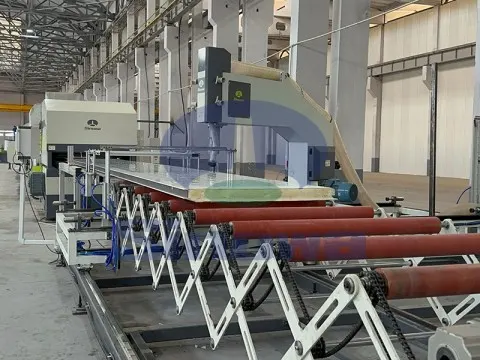
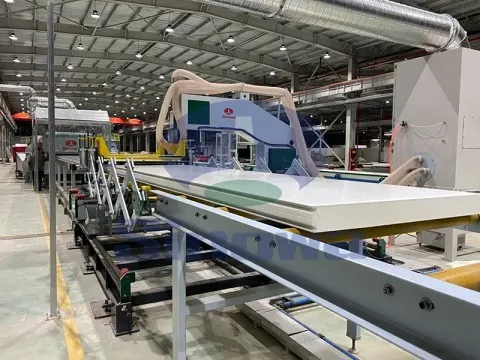
The fixed-length cutting, edge trimming and finishing system undertakes the final shaping and quality optimization work of the finished panels. After continuous curing and shaping, the integrated long-size composite panels are conveyed to the precision cutting unit. The system supports arbitrary setting of cutting length according to customer demand and application scenarios, and realizes high-precision fixed-length cutting through automatic positioning and servo cutting technology. The cutting tool adopts high-hardness and wear-resistant structural design, which can complete smooth cutting of composite materials with different thicknesses without burrs, cracks and material delamination. After cutting, the edge trimming device automatically polishes and trims the two sides of the panels to remove residual foam edges and uneven burrs generated in the molding process, ensuring the neatness and flatness of the panel edges. For panels used in special scenarios such as closed assembly and splicing installation, the system can also complete fine grooving and edge sealing treatment online, optimizing the assembly performance of the finished panels. The whole finishing process is completed automatically online, avoiding secondary damage and pollution caused by manual post-processing, and ensuring the consistency of the appearance size and surface quality of each finished panel.
The automatic output, sorting and stacking system realizes the intelligent finishing of finished products and improves the overall automation level of the continuous PU sandwich panel production line. The finished panels after cutting and trimming are automatically conveyed to the finished product platform through the conveying track. The system is equipped with an automatic identification and sorting function, which can classify panels of different specifications according to production parameters, and automatically complete stacking and arrangement. The stacking process adopts layered and orderly placement to avoid extrusion and collision between panels, protect the surface coating and structural integrity of the products. The integrated setting of the output and stacking system realizes unmanned operation of the final link of production, greatly reduces manual labor investment, and improves the neatness and standardization of finished product storage and transportation. At the same time, the system can record the production quantity, specification parameters and production time of each batch of products in real time, providing accurate data support for production statistics, quality tracking and inventory management.
The remarkable advantages of the PU sandwich panel production line are fully reflected in production efficiency, product quality stability, resource utilization rate and production flexibility. In terms of production efficiency, the continuous non-stop production mode breaks through the bottleneck of low output of traditional intermittent equipment. The synchronous operation of all links from feeding, foaming, molding to cutting and output realizes streamlined and compact production, greatly shortening the single-panel production cycle and realizing large-scale batch production. In terms of product quality, the full-process automatic control realizes precise control of raw material proportioning, foaming temperature, curing time, molding pressure and other key parameters, avoiding the quality fluctuation caused by manual operation errors. The polyurethane foam core produced by continuous foaming has uniform pore distribution, stable density and excellent overall thermal insulation and mechanical properties. The integrated composite molding process makes the bonding force between the core layer and the surface materials more uniform and firm, effectively improving the durability and structural stability of the panels.
In terms of resource utilization, the closed-loop raw material conveying and metering system of the continuous PU sandwich panel line minimizes the residual and waste of polyurethane raw materials, avoids the raw material loss caused by repeated feeding and material changing in intermittent production, and effectively reduces the production cost. The precise foaming control technology makes the foam structure more compact and reasonable, enabling the panels to achieve excellent thermal insulation and light-weight performance with lower raw material consumption, realizing energy saving and consumption reduction in the production process. In terms of production flexibility, the production line can quickly adjust production parameters such as panel thickness, width, length and surface material types through the control system, and can switch production specifications in a short time to meet the diversified customized production needs of different application scenarios. Whether it is thin decorative insulation panels or thick load-bearing thermal insulation panels used in cold chain and industrial workshops, the continuous production line can complete efficient and standardized production, with strong product adaptability.
The PU sandwich panels produced by continuous production lines have excellent comprehensive performance, covering multiple core advantages such as light weight, high strength, thermal insulation, sound insulation, fire retardancy, corrosion resistance and convenient installation. The light-weight characteristic of polyurethane foam core greatly reduces the self-weight of the building envelope structure, reduces the load-bearing pressure of the building main body, and saves engineering construction costs. The excellent low thermal conductivity enables the panels to effectively block heat transfer, providing stable thermal insulation and heat preservation effects for buildings, cold storage warehouses, industrial workshops and other facilities, and reducing the energy consumption of building operation. The dense foam structure and integrated composite structure give the panels good sound absorption and sound insulation performance, which can effectively isolate external noise and create a quiet indoor environment. At the same time, the polyurethane material has good chemical stability, and is not easy to be corroded by humid air, acid and alkali substances, ensuring long-term stable use in complex outdoor and industrial environments.
In terms of application scenarios, the products of continuous PU sandwich panel line has achieved wide coverage in civil construction, industrial manufacturing, cold chain logistics, new energy facilities and other fields. In the construction industry, the panels are widely used in the construction of factory workshops, warehouse buildings, office buildings, roof and wall insulation and decoration of temporary buildings, providing light-weight, energy-saving and efficient enclosure solutions for modern industrial and civil buildings. In the cold chain industry, high-thickness PU sandwich panels are the core materials for the construction of low-temperature cold storage, constant-temperature fresh-keeping warehouses and refrigerated transportation equipment, relying on their ultra-low thermal conductivity to ensure the stable low-temperature environment inside the cold chain facilities and reduce refrigeration energy consumption. In the field of special industrial facilities, the panels can be used for the enclosure and insulation of dust-free workshops, purification workshops, chemical anti-corrosion workshops, with the advantages of flat surface, easy cleaning, anti-corrosion and mildew resistance, meeting the high-standard environmental requirements of special industrial production. In addition, with the development of new energy industry, PU sandwich panels are also applied to the enclosure of photovoltaic power station auxiliary buildings, wind power supporting facilities and energy storage equipment rooms, providing reliable thermal insulation and structural protection for new energy facilities.
The intelligent control and fault self-diagnosis system equipped with the continuous sandwich panel production line further improves the stability and safety of the production process. The whole production process is centrally controlled by the intelligent operating platform, and all production parameters including raw material proportioning, spraying volume, conveying speed, curing temperature and cutting size are displayed in real time and adjustable in real time. The system has built-in parameter memory and automatic optimization functions, which can automatically match the optimal production process parameters according to different product specifications, avoiding repeated debugging and parameter setting, and improving production convenience. At the same time, the real-time monitoring sensors arranged in each link of the production line can track the operating state of the equipment and the production quality state of products in real time. Once abnormal conditions such as equipment jitter, parameter deviation and raw material shortage occur, the system will automatically trigger early warning and perform self-adjustment or emergency shutdown protection to avoid equipment failure and defective product output. The data statistical analysis function of the system can summarize the production efficiency, product qualification rate and equipment operation status in real time, providing data support for production management, process optimization and equipment maintenance.
In terms of daily production and maintenance, the modular structural design of the continuous PU sandwich panel production line brings great convenience to equipment management and operation. The whole production line is composed of multiple independent functional modules with cooperative operation, which can realize independent maintenance and partial debugging of a single module without affecting the normal operation of other modules. The closed pipeline conveying structure reduces the pollution of dust and residual materials to the equipment, and the smooth surface of the conveying and molding mechanism is convenient for daily cleaning and maintenance. The key moving parts and wearing parts are designed with standardized and replaceable structures, which can quickly complete replacement and maintenance when parts are worn and aged, reducing equipment downtime and improving the continuous operation cycle of the production line. Reasonable structural layout and maintenance design effectively reduce the operation and maintenance cost of the equipment and improve the overall economic benefit of production.
With the continuous progress of composite material technology and intelligent manufacturing technology, the PU sandwich panel continuous production line is also developing towards higher intelligence, higher efficiency, more energy saving and stronger customization. The upgraded production line further optimizes the foaming reaction system, adopts more refined multi-component proportioning and micro-pressure foaming technology, making the foam core structure more uniform and delicate, and further improving the thermal insulation performance and mechanical stability of the panels. The intelligent sensing and visual monitoring technology realize full-process quality tracking, which can identify tiny defects such as surface scratches, local hollowing and uneven thickness of panels in real time, and realize online automatic correction, further improving product qualification rate. In terms of energy saving and environmental protection, the new generation of production lines optimizes the heating and heat preservation system, adopts waste heat recovery and cyclic utilization technology, reduces energy consumption in the production process, and optimizes the raw material utilization mode to reduce waste discharge, realizing green and low-carbon production. In terms of customization, the flexible production system can realize online switching of multi-specification and multi-type panels, and complete the production of special-shaped panels and personalized customized panels efficiently, meeting the increasingly diversified market demand.
In the modern composite building material industry, the continuous polyurethane sandwich panel production line has become an indispensable core equipment for industrial upgrading and product iteration. Its full-process automated production mode, stable product quality, efficient production capacity and flexible production characteristics effectively meet the market's demand for high-quality, standardized and diversified PU sandwich panel products. With the continuous improvement of building energy-saving standards, the rapid development of cold chain logistics and new energy industries, and the continuous expansion of the application scope of composite panels, the market demand for high-performance continuous production lines will continue to grow. The continuous innovation and upgrading of production line technology will further promote the technical progress and industrial development of PU sandwich panels, provide more high-quality, energy-saving and durable composite material solutions for modern construction, industrial manufacturing and new energy fields, and inject continuous power into the high-quality development of the composite building material industry.
Sinowa is a professional manufacturer of sandwich panel machine in china, we provide diversified and high-performance sandwich panel production lines, including fully automatic continuous PU sandwich panel line and customized special lines to meet mass production and personalized order demands. These sandwich panel lines support processing multiple foam core materials, such as PU, PIR, mineral wool, rock wool and glass wool, covering different insulation and fireproof standards.
Featuring stable operation, high efficiency, energy saving and easy maintenance, our PU sandwich panel line deliver sandwich panels with excellent thermal insulation, fire resistance, sound insulation and lightweight durability. The finished panels are widely applied in industrial workshops, warehouse roofing and wall cladding, cold storage insulation, serving global construction and industrial insulation markets.
https://www.cnsinowa.com/sandwich-panel-machines/pu-sandwich-panel-continuous-production-line.html