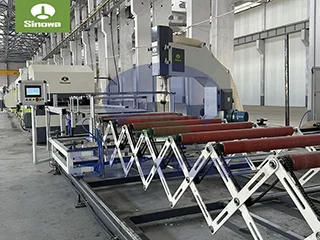
sandwich panel line
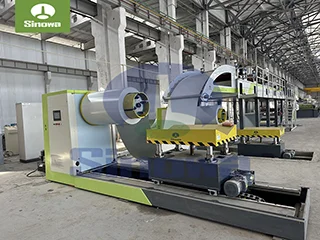
A complete cold room panel production line consists of logically arranged functional modules, each undertaking exclusive processing tasks while maintaining seamless interactive coordination. The overall structural design prioritizes continuous material conveyance, synchronized parameter adjustment, and real-time process monitoring, effectively reducing manual intervention and minimizing human-induced production errors. The front-end section of the production line is dedicated to raw material feeding and preliminary treatment, which serves as the foundational preparation stage for subsequent composite molding. Metal sheet coils, the primary surface materials of cold room panels, are loaded onto uncoiling devices that support continuous and stable material output. Most production configurations adopt multiple uncoiling stations to enable uninterrupted material replacement, avoiding production halts caused by raw material replenishment and improving the overall operational continuity of the line. Equipped with tension control components, these uncoiling devices maintain consistent sheet flatness during unwinding, preventing wrinkles, distortions, or uneven stress distribution that could compromise the surface quality and structural uniformity of finished panels.
Following the uncoiling process, metal sheets enter the surface pretreatment unit, a critical procedure that directly influences the bonding durability between surface sheets and internal thermal insulation core materials. During long-term usage, cold room panels are exposed to alternating temperature changes and humid atmospheric conditions, making interface delamination a common failure risk if surface treatment is inadequate. The pretreatment workflow includes surface cleaning, impurity removal, and physical roughening, which eliminate oil stains, oxide layers, and floating particles on the metal surface. These treatments enhance the microscopic roughness of the sheet surface, creating a stronger mechanical bonding effect with adhesive and foamed materials. In addition to physical processing, uniform coating of intermediate bonding materials is applied to the treated metal surfaces. The coating thickness is strictly regulated through automated dispensing systems to ensure consistent coverage across the entire sheet area; excessive coating may cause material overflow and surface contamination, while insufficient coating leads to weak bonding and reduced service life of composite panels.
The roll forming unit constitutes the core mechanical processing section of the production line, responsible for shaping flat metal sheets into customized structural profiles. This unit is composed of multiple sets of precision rollers arranged in an orderly sequence, with each group of rollers executing specific bending, pressing, and shaping actions. As metal sheets pass through the roller gaps, gradual plastic deformation occurs under continuous mechanical pressure, forming edge grooves, connecting folds, and assembly notches that meet cold room installation requirements. The structural design of the rollers is optimized according to common panel specifications, enabling the production of panels with different thicknesses and cross-sectional shapes without frequent component replacement. High-precision servo transmission systems drive the roller sets, maintaining synchronized operating speed and stable feeding accuracy throughout the forming process. This synchronized operation effectively avoids dimensional deviations such as sheet torsion, edge warping, and uneven bending angles. After roll forming, metal sheets acquire fixed geometric structures, laying a structural foundation for subsequent foaming compounding and on-site assembly. The formed metal shells possess high surface flatness and dimensional uniformity, ensuring seamless splicing between adjacent panels during cold room construction to reduce thermal bridging gaps.
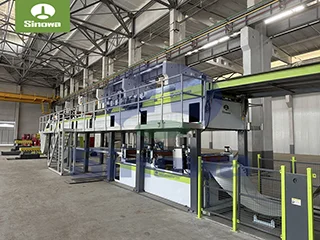
The foaming and compounding module stands as the most technologically sophisticated segment of the entire cold room sandwich panel production line, determining the thermal insulation performance and overall mechanical strength of finished products. Thermal insulation core materials commonly adopt porous polymer foams with low thermal conductivity, which are injected into the closed cavity formed by upper and lower metal sheets. Raw foaming materials are transported to a multi-component feeding system, where different chemical raw materials are proportionally blended under precise flow control. The blending ratio, temperature, and mixing speed of raw materials are dynamically adjusted based on ambient production conditions and panel thickness requirements to ensure uniform foaming reaction efficiency. Once injected into the metal shell cavity, the mixed foaming liquid undergoes rapid chemical expansion, gradually filling the entire internal space and forming a dense and uniform porous structure. During the foaming process, constant pressure and temperature environments are maintained inside the molding chamber to prevent irregular bubble distribution, local hollow areas, or excessive pore gaps. A well-controlled foaming reaction endows the core material with low heat transfer efficiency, high compression resistance, and stable dimensional stability, enabling the panels to resist external pressure deformation and minimize internal heat exchange in low-temperature operating environments.
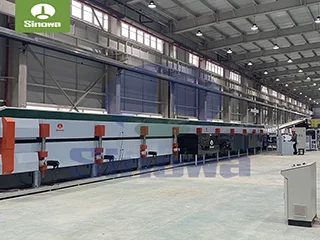
After the completion of foaming and initial curing, semi-finished panels proceed to the constant-temperature curing unit for secondary structural stabilization. The internal molecular structure of the foamed core material requires a specific period of static curing to complete chemical cross-linking reactions, enhancing the bonding tightness between the core material and metal sheets. The curing area maintains a stable temperature range to avoid molecular activity fluctuations caused by extreme temperature differences, which could lead to inconsistent curing degrees. In this stage, residual stress generated during roll forming and foaming is gradually released, effectively reducing the risk of post-production warping and deformation of finished panels. The curing duration is intelligently matched with panel thickness and foaming density; thicker panels with denser core structures require longer curing cycles to achieve optimal structural stability. Reasonable curing treatment significantly improves the weather resistance and aging resistance of cold room panels, allowing them to adapt to long-term operation in harsh environments such as high humidity and extreme temperature differences.
Subsequently, the cured panels enter the cutting and finishing unit for dimensional calibration and surface optimization. Continuous production inevitably produces irregular edges and excess foaming residues at panel ends, which need to be removed through high-precision cutting equipment. Multi-axis cutting components execute fixed-length cutting and edge trimming according to preset dimensional parameters, ensuring that the length, width, and edge flatness of each panel meet unified manufacturing standards. The cutting process maintains smooth and burr-free end surfaces, eliminating sharp edges that may cause assembly inconvenience or surface damage during transportation. In addition to cutting, this unit also undertakes fine processing tasks such as slotting and hole opening, reserving installation interfaces for connecting accessories used in cold room assembly. All processing actions are controlled by digital programs, avoiding dimensional errors caused by manual measurement and operation. The finished panels after finishing feature neat edges, accurate sizes, and consistent surface textures, providing convenient conditions for subsequent stacking, transportation, and on-site installation.
The automated conveying system runs through all functional units of the production line, acting as a vital link to realize continuous material flow. This system adopts combined transmission structures such as conveyor rollers and synchronous belts, with running speeds dynamically matched with the processing rhythm of each unit. Intelligent sensing components are installed at key conveying nodes to monitor material position, moving speed, and processing status in real time. When abnormal conditions such as material jamming and position deviation occur, the system automatically triggers speed adjustment and alarm prompts to prevent equipment collision and material damage. The conveying system also realizes orderly material transfer between adjacent processing units, avoiding manual handling that may cause surface scratches and structural displacement. Reasonable conveying path planning optimizes the space utilization rate of the production workshop, making the entire production process compact and efficient while reducing the floor area occupied by equipment.
Intelligent monitoring and parameter control systems constitute the operational brain of modern cold room panel production lines. A large number of high-sensitivity sensors are distributed in key processing sections including uncoiling, forming, foaming, and curing, collecting real-time data such as equipment operating speed, material temperature, internal pressure, and raw material flow. The collected data is transmitted to a centralized control terminal, where the system analyzes operational parameters through built-in algorithm models. Once detected data deviates from the preset threshold, the terminal automatically adjusts the operating parameters of corresponding equipment to restore a stable production state. For complex foaming processes involving dozens of influencing factors, the intelligent system continuously accumulates production data to optimize the matching relationship between raw material ratios and environmental parameters, weakening the dependence on manual empirical judgment. In addition, the control system records all production data of each batch of panels, facilitating product quality traceability and providing data support for subsequent production process optimization.
Quality inspection is an essential final procedure before finished products leave the production line, covering multi-dimensional performance detection of appearance, size, structure, and physical properties. The appearance inspection link uses visual recognition equipment to identify surface defects such as scratches, depressions, and uneven coatings on metal sheets, while detecting abnormal conditions such as bubbles and cracks in edge bonding areas. Dimensional inspection verifies the length, width, thickness, and assembly groove accuracy of panels to ensure that all products meet unified specification standards. Structural performance detection includes bonding strength testing between core materials and metal sheets, compression resistance testing of composite structures, and overall toughness evaluation. Sampling thermal conductivity tests are conducted on finished panels to verify the thermal insulation capacity of core materials, ensuring that the heat transfer efficiency meets the usage requirements of low-temperature storage spaces. Panels that fail to pass the inspection will be marked and isolated for subsequent reprocessing or scrapping, strictly controlling the qualification rate of outgoing products.
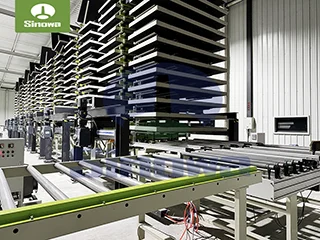
The final packaging and stacking unit realizes standardized storage and transportation protection of qualified panels. Before packaging, the surface of each panel is cleaned to remove residual dust and processing debris, maintaining surface cleanliness. Protective films and wrapping materials are covered on the metal surfaces to prevent friction scratches and collision damage during long-distance transportation and stacking. For panels requiring long-term storage or trans-regional transportation, external auxiliary reinforcement structures are added to enhance compression resistance and shock resistance. Automated stacking equipment arranges finished panels in an orderly manner according to fixed specifications, optimizing stacking density to reduce storage space occupancy. The stacking process maintains uniform stress distribution to avoid permanent deformation of bottom panels caused by excessive pressure. Reasonable packaging and stacking methods effectively extend the storage cycle of finished products and reduce product loss in the logistics link.
The operational efficiency of cold room sandwich panel line is affected by multiple internal and external factors, among which raw material quality stands out as a fundamental influencing condition. The mechanical properties and surface flatness of metal sheets directly determine the appearance quality and structural strength of finished panels; raw foaming materials with stable chemical properties can form uniform and dense porous structures, ensuring long-term stability of thermal insulation performance. In addition, the operating status of mechanical components also plays a crucial role in production efficiency. Regular maintenance and lubrication of rollers, transmission bearings, and cutting blades can reduce equipment wear, maintain processing accuracy, and extend the service life of the entire production line. Ambient production conditions such as temperature and humidity in the workshop also need to be controlled within a reasonable range, as extreme humidity may affect the curing speed of adhesives, and excessive temperature fluctuations may interfere with the chemical reaction stability of foaming materials.
Energy consumption optimization is a key optimization direction for modern cold room panel production lines. In traditional production modes, heating, pressurization, and transmission equipment consume large amounts of energy, resulting in high production costs and resource waste. Advanced production lines adopt energy-saving transmission components and variable-frequency regulation technology to adjust equipment power consumption according to real-time production loads, avoiding invalid energy consumption during no-load operation. Heat generated during the foaming and curing process is recycled and reused through heat exchange structures, providing auxiliary temperature maintenance for constant-temperature workshops. Optimized pipeline layouts for raw material transportation reduce fluid resistance and lower energy consumption of delivery power components. While reducing production costs, energy-saving optimization measures also minimize the carbon emission intensity of the manufacturing process, conforming to the sustainable development trend of the industrial manufacturing industry.
With the continuous upgrading of cold chain industry requirements, cold room panel production lines are evolving toward higher automation, intelligence, and customization. Digital twin technology is gradually applied to production line operation simulation, realizing pre-judgment of equipment failure, dynamic optimization of production schedules, and visual management of the entire production process. Modular equipment design enables flexible disassembly and combination of functional units, adapting to personalized production requirements such as special-shaped panels and customized thickness specifications. In terms of material innovation, production lines are gradually compatible with new environmentally friendly composite materials, reducing the use of chemical components that are harmful to the environment while maintaining excellent thermal insulation and mechanical properties. The intelligent upgrading of production lines also simplifies manual operation procedures, reducing the technical threshold for equipment operation and lowering the labor cost of enterprise production.
In practical industrial applications, cold room panels manufactured by standardized production lines exhibit prominent application advantages in diverse low-temperature scenarios. In food processing and storage fields, these panels build closed low-temperature spaces to inhibit microbial reproduction, extending the fresh-keeping cycle of agricultural products, meat products, and processed foods. In pharmaceutical and biochemical industries, the stable thermal insulation performance of panels ensures constant temperature storage conditions for sensitive medical supplies and experimental reagents. In industrial manufacturing sectors such as chemical raw material storage and electronic component processing, cold room panels provide dry and low-temperature working environments to avoid product deterioration caused by temperature and humidity changes. The unified structural specifications of panels simplify the on-site assembly process of cold rooms, shortening construction cycles and reducing the comprehensive construction cost of temperature-controlled spaces.
In conclusion, cold room panel production lines are systematic industrial manufacturing systems that integrate mechanical transmission, chemical reaction control, intelligent monitoring, and precision processing technologies. Every production link from raw material pretreatment to finished product delivery follows rigorous manufacturing logic, jointly shaping the excellent performance of composite insulation panels. Driven by the booming cold chain economy and continuous technological iteration, such production lines will further optimize structural configurations, improve production efficiency, and expand compatible product categories. In the future industrial layout, cold room panel production lines will continue to serve as an important supporting infrastructure for low-temperature storage industries, providing reliable and high-quality panel products for global cold chain construction, and making continuous contributions to the standardized and intelligent development of the entire cold storage manufacturing field.
https://www.cnsinowa.com/sandwich-panel-machines/cold-room-panel-production-line.html