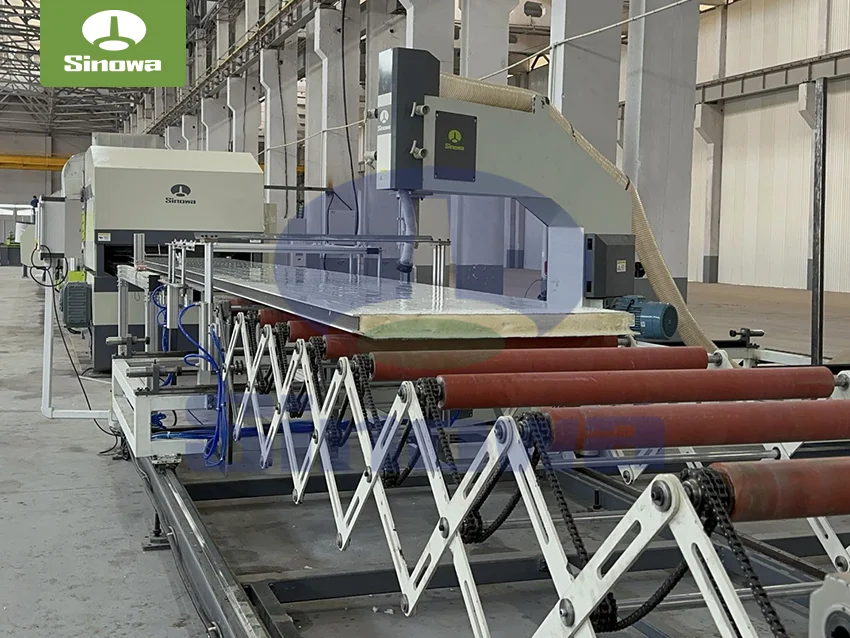
 sandwich panel machine
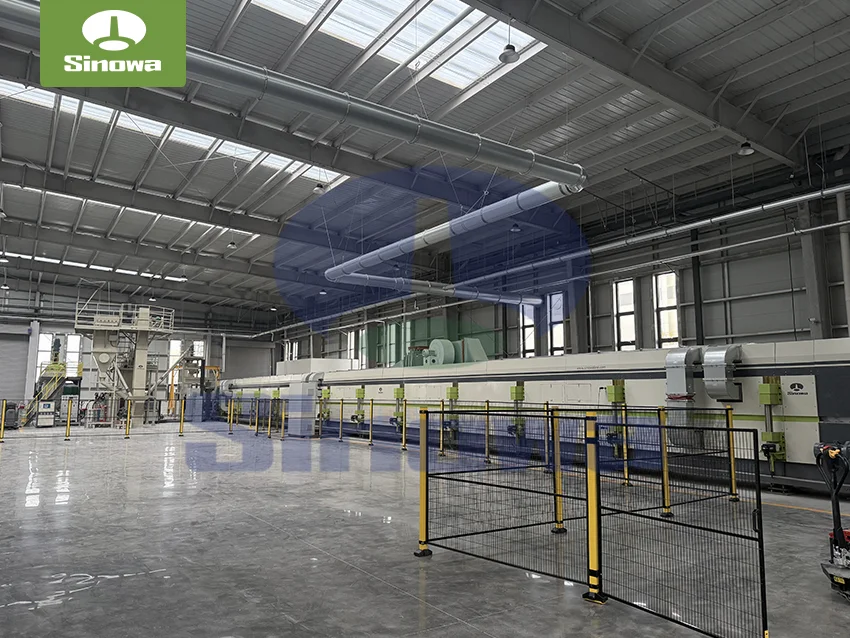
The overall structural design of the sandwich panel machine follows rigorous mechanical logic and continuous production principles, adopting a high-rigidity steel frame structure as the main body to ensure long-term stable operation under continuous load conditions. The entire production line is composed of multiple interconnected functional modules, each undertaking independent processing tasks while maintaining precise rhythm coordination with other units, forming an uninterrupted closed-loop production system. The core functional modules cover raw material unwinding and leveling, surface layer roll forming, core material conveying and arrangement, adhesive coating or foam injection, composite pressing and curing, fixed-length cutting, surface finishing, and automatic stacking, realizing full-process automated operation from raw material input to finished product output. Every structural component is optimized through mechanical simulation and practical debugging, with wear-resistant and high-temperature resistant materials applied to key friction and heating parts, effectively reducing equipment loss and extending the overall service life of the production line.
The raw material processing module acts as the initial starting point of the entire production process, determining the flatness and forming accuracy of subsequent finished products. This module is mainly responsible for the unwinding, tension adjustment, and leveling of upper and lower metal coil materials. Equipped with a hydraulic unwinding structure, the machine can stably support large-volume metal coils and achieve stepless speed regulation of material output. The built-in tension control system can automatically sense the tightness and conveying state of metal sheets in real time, dynamically adjusting the feeding speed to avoid material deviation, stretching, or wrinkling problems caused by uneven tension. After unwinding, the metal sheets will pass through multiple groups of precision leveling rollers, which can eliminate the internal stress and surface unevenness of the original coils, ensuring that the surface materials maintain a flat and uniform state in the subsequent forming and composite processes, which is a key prerequisite for producing high-quality sandwich panels with smooth surfaces and consistent thickness.
Following the raw material pretreatment unit is the surface layer roll forming module, the core unit that shapes the external structure of sandwich panels. This module consists of dozens of groups of high-precision forming rollers arranged in an orderly gradient, which gradually bend and shape flat metal sheets into preset profile structures through continuous rolling pressure. The rolling process adopts progressive forming technology, avoiding one-time excessive bending that may cause metal deformation or surface damage. Different profile shapes, including trapezoidal, corrugated, and flat plate structures, can be realized by adjusting the roller combination and spacing, enabling the equipment to produce wall panels, roof panels, and decorative panels with different structural specifications. All forming rollers are processed with high-precision machining and surface hardening treatment, ensuring long-term rolling accuracy and wear resistance, so that the produced metal surface layers have uniform groove depth, consistent radian, and neat edge lines, perfectly matching the assembly requirements of subsequent building construction.
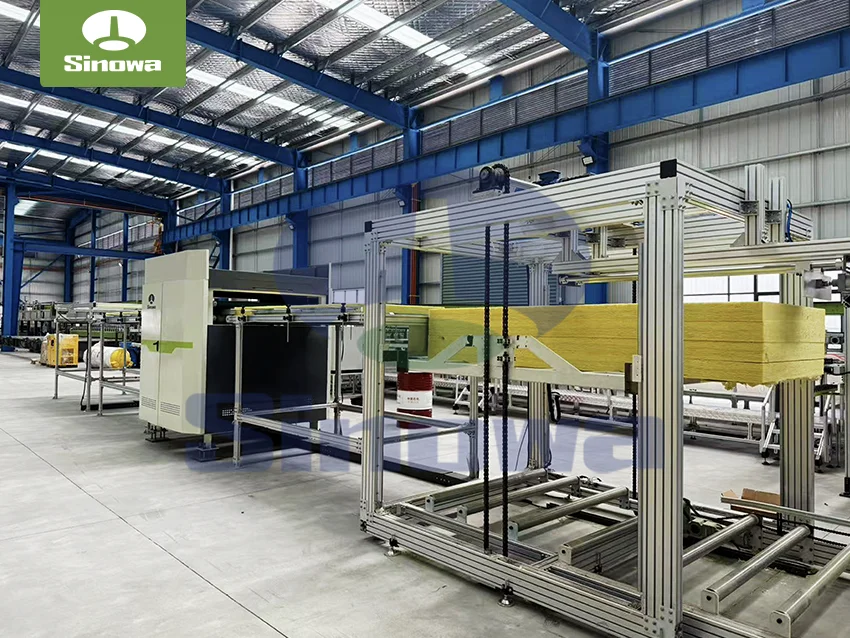
The core material conveying and composite processing unit is the key part that determines the thermal insulation and structural performance of sandwich panels. The sandwich panel equipment is compatible with multiple types of lightweight core materials, including polystyrene foam, rock wool, glass wool, and polyurethane foam, and can complete adaptive conveying and composite processing according to different core material characteristics. For rigid plate core materials, the system adopts automatic material sorting and conveying equipment to arrange core materials neatly and continuously between upper and lower metal surface layers, ensuring no gaps or deviations in the core material arrangement. For liquid foam core materials, the equipment is equipped with a precise proportional mixing and injection system, which can mix different foam raw materials in accurate proportions and evenly inject the mixed liquid between the two layers of metal sheets. The intelligent quantitative control mode ensures uniform foam density and consistent filling thickness, avoiding local hollowing or uneven density of the core material.
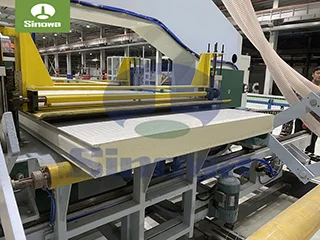
The adhesive coating system works in coordination with the core material laying process to enhance the bonding strength between the metal surface layer and the core material. The high-precision spraying and gluing equipment can uniformly coat the adhesive on the inner surface of the metal sheet in a fixed quantity and fixed width, forming a continuous and dense adhesive layer. The spraying volume and coating range can be adjusted intelligently according to different core material types and panel specifications, effectively avoiding excessive adhesive waste or insufficient bonding caused by uneven coating. The adhesive selected for matching has excellent weather resistance and bonding activity, which can produce stable chemical bonding effects with both metal materials and organic or inorganic core materials, ensuring that the composite structure of the sandwich panel does not suffer from degumming or layering during long-term use.
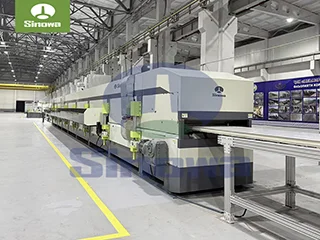
The double-belt pressing and curing system is the core functional unit for realizing the integral forming of sandwich panels, directly determining the compactness and structural stability of finished products. This system adopts upper and lower circulating heat-conducting belts made of high-strength wear-resistant materials, which can provide continuous and uniform pressure and temperature conditions for the composite panels. The gap between the upper and lower belts can be adjusted freely according to the preset panel thickness, covering the production requirements of thin interior partition panels and thick exterior thermal insulation panels. In the closed pressing and curing space, the composite materials are subjected to constant pressure and controllable temperature treatment, which can accelerate the curing reaction of the adhesive and the foam forming process of the core material, making the metal surface layer and the core material closely integrated into a unified whole. The constant-pressure forming technology effectively solves the problems of local loose core material and inconsistent panel flatness in traditional intermittent production, ensuring that each finished panel has uniform overall compactness and stable structural performance.
After the curing and composite forming process, the continuous long-strip sandwich panel will enter the fixed-length cutting and finishing module. The high-precision tracking and cutting system can automatically identify the preset panel length specifications and complete synchronous cutting during the continuous operation of the sandwich panel production line without stopping the machine, realizing uninterrupted continuous production. The cutting tool adopts high-hardness alloy materials, which can complete smooth cutting of composite structures of metal and lightweight core materials, with neat cutting sections, no burrs, and no core material collapse. After cutting, the edge trimming and surface cleaning devices will automatically process the edges and surfaces of the panels to remove residual adhesive and burrs, ensuring the dimensional accuracy and surface flatness of the finished panels. The whole cutting and finishing process is controlled by an intelligent program, with extremely high dimensional tolerance control accuracy, which can fully meet the standardized assembly requirements of prefabricated buildings.
The final link of the production process is automatic stacking and outputting. The finished sandwich panels after cutting and finishing are stably conveyed to the stacking platform through the conveying system, and the automatic stacking device completes orderly stacking according to the set stacking height and arrangement mode. This automatic output mode replaces manual carrying and stacking, not only greatly improving production efficiency but also avoiding panel surface scratches, deformation, and placement irregularities caused by manual operation. The stacked finished panels have neat overall arrangement and stable stacking state, which is convenient for subsequent packaging, transportation, and storage, and effectively improves the overall standardization level of product delivery.
Compared with traditional manual and semi-automatic sandwich panel production equipment, the fully integrated sandwich panel forming line has prominent technical and production advantages in multiple dimensions. First of all, it realizes full-process continuous automated production, with all links from raw material feeding to finished product stacking controlled by an intelligent system, minimizing manual intervention. This automated production mode not only greatly reduces labor input and operational error rates but also ensures the consistency of product quality between batches, avoiding the performance differences of finished products caused by manual operation differences. Secondly, the equipment has strong production flexibility and can quickly switch production specifications according to market demand. By simply adjusting equipment parameters and roller configurations, it can produce sandwich panels with different thicknesses, profiles, and core material types, meeting the diversified production needs of building material manufacturers.
In terms of product performance guarantee, the constant-pressure and constant-temperature curing process of the forming machine makes the internal structure of the sandwich panel more stable, with excellent overall bonding performance and structural strength. The integrally formed composite structure has good wind resistance, pressure resistance, and impact resistance, while the uniform core material density ensures stable and excellent thermal insulation, heat preservation, and sound insulation effects of the panel. The finished panels produced by this equipment have the characteristics of light weight, high strength, weather resistance, and corrosion resistance, which can adapt to complex outdoor and indoor use environments and have a long service life. In addition, the optimized mechanical structure design effectively reduces the energy consumption of unit production, with low operation noise and stable equipment operation, realizing energy-saving and environmentally friendly production while ensuring high efficiency.
Sandwich panels produced by professional forming machines have extremely wide application scenarios in the modern construction field. In industrial construction, these panels are widely used in the enclosure structures of factory buildings, warehouses, and logistics parks, relying on their light weight and rapid assembly characteristics to shorten the construction cycle of industrial buildings and reduce the overall building load. In commercial and civil buildings, they serve as partition walls, roof decorations, and thermal insulation structures of shopping malls, office buildings, and residential prefabricated houses, balancing aesthetic performance and functional practicability. In special engineering fields such as cold storage, constant-temperature workshops, and clean rooms, the excellent thermal insulation and airtight performance of the panels can effectively maintain indoor temperature stability, reduce energy consumption of temperature regulation equipment, and meet the high-standard environmental control requirements of special spaces.
With the continuous upgrading of prefabricated building concepts and the increasingly strict requirements for building energy conservation and environmental protection, the market requirements for sandwich panel forming machines are also constantly improving. Modern sandwich panel line design is gradually developing towards higher intelligence, higher precision, and stronger integration. The upgraded intelligent control system can realize real-time monitoring and data analysis of the entire production process, automatically early warning of equipment operation faults and production parameter deviations, realizing full-process traceability of production quality. At the same time, the modular equipment design makes the maintenance and upgrading of the production line more convenient, effectively reducing the later operation and maintenance costs for enterprises.
In terms of production environmental protection, the new generation of sandwich panel forming machinery optimizes the foam injection and adhesive coating process, effectively reducing the volatilization of harmful substances and material waste during the production process, realizing green and low-carbon production. The efficient forming technology improves the yield of finished products, reduces the generation of defective products, and further improves the resource utilization rate of raw materials. While meeting the market's demand for high-performance building materials, the equipment also conforms to the development trend of the global construction industry's energy conservation and emission reduction, providing strong equipment support for the sustainable development of the building material manufacturing industry.
In summary, the sandwich panel forming machine, as an efficient, stable, and versatile professional building material production equipment, integrates advanced mechanical manufacturing technology, intelligent control technology, and new material composite forming technology. Its perfect continuous production process and excellent product forming performance lay a solid foundation for the standardized and large-scale production of sandwich panels. With the continuous development of prefabricated construction and green building industries, this type of sandwich panel production machinery will continue to carry out technological innovation and structural optimization, continuously adapt to the diversified and high-end market demand, and play an increasingly important role in promoting the upgrading and high-quality development of the global building material manufacturing industry.
https://www.cnsinowa.com/sandwich-panel-machines/sandwich-panel-forming-machine.html