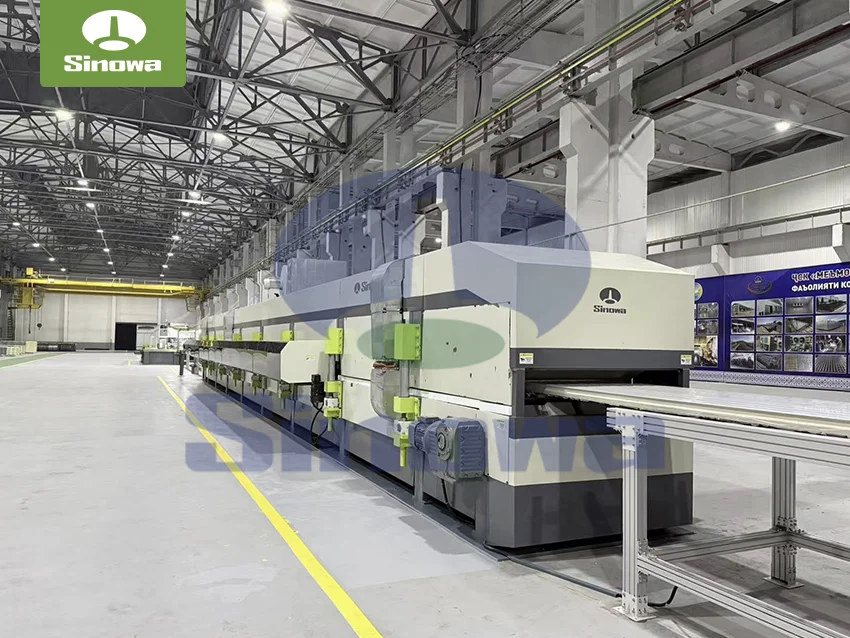
 sandwich panel machine
The overall structural design of clean room PU sandwich panel machine is fully oriented to purification panel production characteristics, adopting modular integrated layout to ensure stable long-term operation and convenient daily maintenance without redundant mechanical structures that may produce dust or residual debris during operation. The whole polyurethane sandwich panel production line can be divided into six core functional modules operating in synchronous linkage, including sheet metal feeding and pretreatment module, continuous roll forming module, automatic surface film laminating module, high-precision PU foaming and pouring module, constant temperature double-belt laminating and curing module, as well as intelligent fixed-length cutting and finished product stacking module. All transmission components of the machine adopt closed protective design, which avoids metal friction debris falling into the panel production area during high-speed operation, effectively preventing internal impurity pollution of finished panels and meeting the basic dust-free production requirement for clean room panel manufacturing. In terms of mechanical rigidity, the main frame of the production line is made of thickened welded steel structures with stress relief treatment, which eliminates structural deformation caused by long-term continuous operation, temperature changes and cyclic mechanical pressure. Stable mechanical operation foundation ensures consistent panel flatness, uniform overall thickness and consistent bonding strength of each batch of finished products, which is the primary guarantee for the dimensional uniformity required for modular clean room assembly.
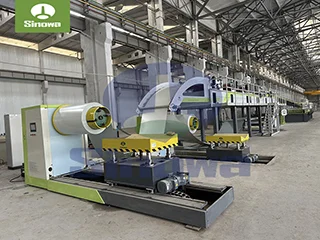
The front-end sheet metal processing part of the sandwich panel machine undertakes the pretreatment and profiling work of upper and lower metal surface sheets, which is the foundation to ensure the smooth and non-dusting surface of clean room panels. Raw metal coils are automatically released by hydraulic uncoiling devices with constant tension control function, avoiding uneven sheet surface or tensile deformation caused by unstable feeding speed. After uncoiling, metal sheets will go through multi-pass leveling processes to eliminate subtle surface wrinkles and uneven stress generated during coil storage and transportation, because any tiny surface unevenness will lead to dead corners in clean room walls and ceilings, accumulating fine dust and affecting indoor air purification effect. Different from ordinary sandwich panel machine, this equipment is equipped with fine surface cleaning units before roll forming, which removes tiny metal dust, oil stains and oxide residues attached to sheet surfaces through contact-free air blowing and static elimination technology. Complete surface purification treatment significantly improves the bonding adhesion between metal sheets and PU foam core materials, and also avoids internal impurities between composite layers that may cause panel delamination after long-term use. Subsequently, the cleaned metal sheets enter the continuous roll forming unit with multi-group precision forming rollers. The roller profiles are customized according to the splicing groove structure of clean room panels, enabling one-time forming of male and female splicing edges on both sides of panels. The integrated forming splicing structure realizes seamless assembly between panels during on-site clean room installation, greatly improving the overall airtightness of the enclosure system and reducing air leakage points that may damage indoor purification environments.
Before entering the composite laminating process, the polyurethane sandwich panel machine is equipped with an automatic protective film laminating system, a unique functional configuration optimized for clean room panel production. The transparent protective film is automatically attached to both outer surfaces of formed metal sheets under constant pressure, which prevents surface scratches, paint peeling and dust adhesion during subsequent foaming, pressing, cutting, transportation and installation processes. Clean room panels have extremely high requirements for surface integrity, as any surface damage will breed bacteria and accumulate dust in long-term indoor use. The automatic film laminating module realizes synchronous speed matching with sheet metal transmission, ensuring no film wrinkling, deviation or bubbling, and the film fits closely with metal surfaces without gaps. This fully automated process replaces manual film pasting in traditional sandwich panel production line, eliminates manual operation errors, improves overall production efficiency, and maintains consistent surface protection effects for all finished panels.
The PU high-pressure foaming and pouring module is the core functional unit that determines the thermal insulation, mechanical strength and internal compactness of clean room sandwich panels, and this part has achieved the most critical technical optimization compared with conventional sandwich panel production machine. Clean room panels require PU foam core materials to have ultra-high closed-cell rate, uniform internal bubble structure, no hollow gaps and stable overall density, because incomplete foaming and uneven bubble distribution will lead to reduced panel thermal insulation performance, local structural weakness and moisture penetration risks in humid purification environments. The sandwich panel machinery adopts closed-loop intelligent batching control system for two-component PU raw materials, which dynamically adjusts the mixing ratio, flow rate and pouring volume of polyol and isocyanate in real time according to production speed and preset panel thickness parameters. The high-pressure mixing head realizes instantaneous and full mixing of two liquid raw materials without material stratification or incomplete reaction. Meanwhile, the linear reciprocating pouring structure enables liquid PU materials to be evenly distributed on the surface of lower metal sheets in transverse direction, avoiding local material accumulation or missing pouring. The whole foaming process is carried out in a relatively closed space inside the machine, which controls the free expansion range of PU foam and reduces the generation of foam debris, further ensuring the internal cleanliness of finished panels suitable for purification scenarios.
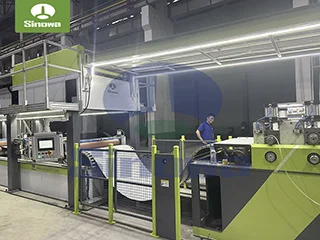
After even PU material pouring, the semi-finished panels enter the constant temperature double-belt laminating and curing module, which is responsible for completing composite bonding, foam curing and overall shaping of upper metal sheet, PU foam core and lower metal sheet. This module adopts upper and lower circulating steel belt synchronous pressing structure, which provides continuous and uniform surface pressure for composite panels throughout the curing process, different from intermittent roller pressing of ordinary machines that causes uneven surface pressure. The internal temperature of the laminating oven is divided into multiple independent temperature control zones according to the forward moving direction of panels, realizing gradient heating from low temperature to medium temperature and then constant temperature curing. Reasonable gradient temperature setting avoids rapid foaming expansion caused by excessive instantaneous high temperature, prevents panel surface bulging and internal foam cracking, and promotes complete chemical reaction of PU raw materials to form dense and stable foam core structure. The matching of running speed, pressing pressure and curing temperature is intelligently linked by the central control system of the whole machine, so that parameters can be automatically adjusted synchronously once the production speed or panel thickness is modified. After sufficient constant temperature curing, the composite panels form an integrated structure with tight bonding between metal sheets and foam core, without delamination, degumming or internal stress. The finished panels feature excellent compressive resistance and bending resistance, which can bear conventional external load during ceiling and wall installation without structural deformation, adapting to long-term stable use in clean room environments.
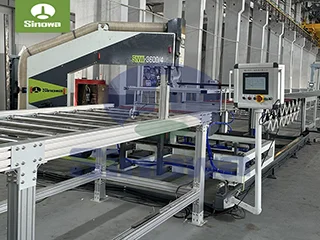
The post-processing part of the sandwich panel line includes intelligent fixed-length cutting, edge trimming and automatic stacking processes, all of which adopt dust-reducing structural design adapting to clean room panel production standards. The flying saw cutting device completes fixed-length cutting of continuous long panels according to customized size requirements, and the cutting tool is equipped with integrated dust collection equipment to collect tiny metal and foam debris generated during cutting in real time, so that no debris remains on panel surfaces. The edge trimming unit precisely polishes panel side edges to remove burrs and uneven residual foam, ensuring flat and neat panel end faces for tight seamless splicing during on-site installation. Finally, finished qualified panels are automatically stacked by mechanical arms layer by layer with fixed spacing, avoiding surface friction and collision damage caused by manual stacking. The whole post-processing process realizes full unmanned operation, reduces manual contact with finished panels, and effectively prevents secondary pollution brought by human operation, which is particularly critical for panels used in high-cleanliness working environments.
In actual industrial production applications, this specialized PU sandwich panel line shows prominent advantages in production stability, finished product qualification rate and production flexibility compared with general panel production equipment. Firstly, the full-link intelligent control system realizes one-click parameter setting and automatic operation of the whole line. Operators only need to input panel thickness, width, length and foam density parameters on the human-machine interactive interface, and the equipment can automatically match the operating parameters of all front and rear modules without repeated manual debugging, lowering the threshold of equipment operation and reducing human error risks. Secondly, the equipment has strong production adaptability, supporting flexible switching of multiple conventional specifications of clean room panels, including different thicknesses of foam core materials and different groove splicing structures, meeting the diversified panel production needs of pharmaceutical clean workshops, electronic dust-free workshops, medical operating rooms and food sterile processing workshops. Thirdly, optimized energy-saving design is adopted for the heating system and power transmission system of the whole PU sandwich panel production line, which reduces ineffective power consumption during long-term continuous production, helping panel manufacturers lower overall production operation costs while maintaining stable production quality.
Daily standardized operation and scientific regular maintenance are essential to maintain long-term efficient and stable operation of clean room PU sandwich panel making machine. Daily maintenance work focuses on checking the synchronization of transmission belts, the cleanliness of PU mixing heads and the sealing performance of the laminating oven. Residual cured PU materials attached to mixing heads need to be cleaned regularly to ensure stable raw material mixing effect and avoid abnormal foaming caused by blocked material channels. The sealing strips of the laminating oven need regular inspection and replacement to maintain stable internal curing temperature and prevent heat loss. Periodic maintenance includes regular lubrication of transmission bearings, calibration of pressing pressure sensors and temperature sensors, and overall inspection of electrical control circuits. Timely maintenance can avoid unexpected equipment shutdown failures, extend the overall service life of the sandwich panel manufacturing line, and more importantly, ensure the long-term consistent production quality of clean room panels, avoiding batch quality fluctuations caused by equipment aging and parameter deviation.
From the perspective of downstream industrial development, the upgrading of global clean engineering standards continues to put forward higher requirements for the performance of purification enclosure panels, which further drives the iterative optimization of supporting PU sandwich panel production machine. Future development directions of such equipment will focus on three core dimensions: higher intelligent automatic production level, lower whole-line dust generation performance, and more flexible multi-functional composite production capability. With the deep integration of industrial Internet technology, subsequent equipment will realize remote real-time monitoring of operating parameters, automatic early warning of equipment abnormal faults and remote parameter debugging, realizing unattended intelligent production for longer working hours. Meanwhile, further closed optimization of all mechanical moving parts will be carried out to minimize dust generation in the whole production process, achieving higher-grade dust-free panel production. In addition, the equipment will be upgraded to support compound production of functional panels with anti-static and fire-retardant modified PU core materials, matching the personalized purification needs of special industries such as semiconductor manufacturing and laboratory precision testing.
In conclusion, clean room PU sandwich panel manufacturing machine is a kind of professional customized automated production equipment tailored for the clean engineering industry, covering mechanical manufacturing, polyurethane chemical foaming, constant temperature automatic control and intelligent transmission technology. Every structural optimization and parameter adjustment of the equipment is closely focused on the core use demands of clean room panels: dust-free surface, seamless assembly, stable thermal insulation, firm composite structure and long-term durability. As the global high-end manufacturing and biomedical industries continue to develop steadily, the market demand for high-performance clean room panels will keep rising, and this specialized panel production machine will remain indispensable core sandwich panel equipment in the clean engineering supply chain. Continuous technological upgrading and process optimization of the equipment will further promote the improvement of overall construction quality and operation stability of modern clean rooms, providing reliable hardware support for the safe and efficient operation of high-precision industrial production and medical service scenarios worldwide.
https://www.cnsinowa.com/sandwich-panel-machines/clean-room-pu-sandwich-panel-machine.html