 sandwich panel machine
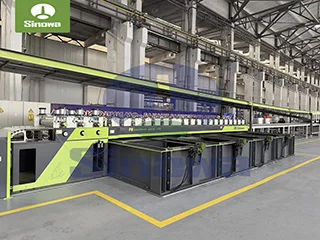
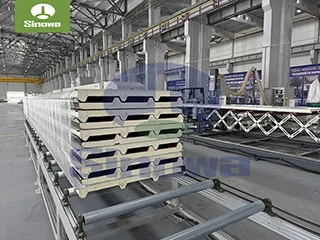
A mature PU sandwich panel machine supplier focuses on the integrated research and development, manufacturing and iterative upgrading of panel production equipment, committing to providing complete production line solutions for different production scale demands. Unlike single mechanical equipment manufacturers, professional suppliers take the entire panel production process as the core starting point, covering raw material pretreatment, automatic feeding, precise foaming, continuous pressing, fixed-size cutting and finished product conveying. Every functional module in the production line is logically connected and mutually coordinated, realizing uninterrupted continuous production of PU sandwich panels. This integrated production mode not only simplifies the production operation procedures of manufacturers but also effectively reduces manual intervention errors, ensuring the consistency of batch-produced panels in thickness, density and surface flatness.
The core mechanical structure of PU sandwich panel production machine involves multiple sophisticated functional units, and each component has been scientifically optimized by professional suppliers according to production mechanics and material reaction principles. The raw material metering and mixing unit is the core part that determines the foaming quality of polyurethane materials. This unit is equipped with independent power drive components to control the delivery speed and proportion of different chemical raw materials. During the operation, various raw materials required for foaming are transported to the high-speed mixing structure in strict accordance with the preset mixing ratio, and complete uniform mixing in a short time to ensure the stability of the foaming reaction. Reasonable structural design can avoid raw material stratification and uneven mixing, preventing defects such as local hollowing and inconsistent density inside the finished sandwich panels.
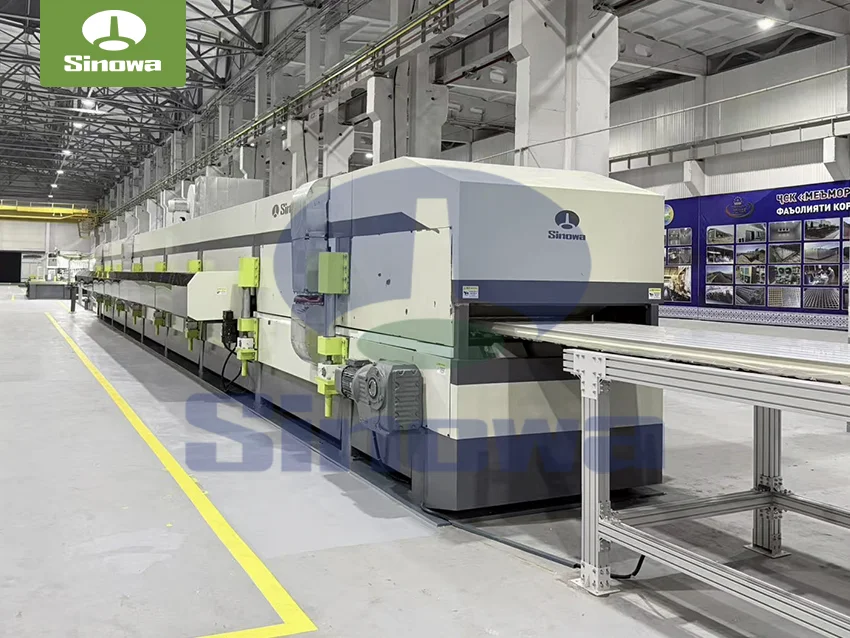
Following the metering and mixing unit is the reciprocating material distribution structure, which evenly coats the mixed polyurethane raw materials on the surface of the base plate. The movement track and running speed of the material distribution device can be adaptively adjusted according to the production specifications of different panels. This adjustable working mode enables the equipment to meet the production demands of panels with different thicknesses and widths, improving the overall flexibility of the production line. After the material distribution process, the base plate coated with polyurethane raw materials enters the double-belt molding unit. This unit maintains a stable temperature and pressure environment inside, providing sufficient conditions for the foaming and curing of polyurethane materials. Under the dual action of constant temperature and fixed pressure, the foaming materials expand steadily and complete solidification molding between the upper and lower base plates, forming a compact and uniform sandwich structure.
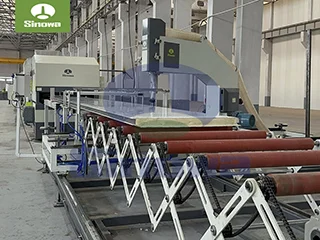
In the post-processing stage of panel production, the production line is equipped with trimming and cutting structures to achieve precise sizing of finished panels. During the continuous molding process, the edges of the panels will have irregular excess parts due to the continuous feeding of raw materials. The automatic trimming device can cut off the redundant edges efficiently to ensure that the overall dimensions of each panel meet the production standards. The fixed-length cutting module can set cutting parameters according to the customized demands of customers, realizing automatic cutting of panels of different lengths. All trimming and cutting procedures are completed by mechanical automation, which not only improves the cutting accuracy but also avoids material waste caused by manual cutting, effectively optimizing the material utilization rate in the production process.
Excellent polyurethane sandwich panel machine suppliers always adhere to user-oriented design concepts and continuously optimize the humanized operation performance of equipment. The modern production line is equipped with an intuitive centralized control system, which integrates all operation parameters including running speed, temperature control, raw material ratio and cutting size on the same control interface. Operators can complete parameter adjustment, equipment start-stop and operating state monitoring through simple operation steps. In addition, the equipment is embedded with an intelligent monitoring system, which can track the operating state of key components in real time. Once abnormal conditions such as unstable raw material supply and excessive temperature fluctuation occur, the system will send out prompt signals and make adaptive adjustments to avoid equipment failure and unqualified product batches. This intelligent control mode lowers the operation threshold of the equipment and reduces the professional skill requirements for operators.
In terms of equipment material selection and structural durability, reliable suppliers strictly control the production quality of mechanical components. The main frame of the production line is made of high-strength metal materials with excellent compression resistance and deformation resistance, which can maintain stable structural performance during long-term continuous operation. The transmission parts and moving contact components are processed with anti-wear and anti-corrosion technologies to adapt to the complex production environment with chemical raw materials and temperature changes. The optimized structural durability enables the equipment to maintain stable operating efficiency for a long time, reduce the frequency of component replacement and maintenance, and effectively lower the daily operation and maintenance costs for panel production enterprises.
Different application scenarios put forward diverse performance requirements for PU sandwich panels, which also urges machine suppliers to continuously expand the application adaptability of equipment. Well-developed production lines can be compatible with multiple types of base plate materials, including metal color steel plates, aluminum alloy plates and non-metal composite plates. By adjusting the clamping pressure and conveying speed of the feeding structure, the equipment can complete composite processing of different base plates without damaging the surface structure of raw materials. At the same time, the foaming density and expansion ratio of polyurethane interlayers can be flexibly adjusted to produce panels with different thermal insulation strength and bearing capacity, meeting the usage demands of cold storage buildings, industrial workshops, clean workshops and temporary construction facilities.
Apart from equipment manufacturing, comprehensive after-sales service capability is an important symbol to distinguish high-quality PU sandwich panel machine suppliers. A complete service system runs through the whole cycle of equipment selection, installation, commissioning, production operation and later maintenance. In the early stage of cooperation, professional technical teams will conduct demand analysis according to the production scale, product positioning and factory layout of customers, and provide targeted production line configuration schemes to avoid resource waste caused by unreasonable equipment matching. During the equipment installation stage, suppliers arrange professional engineers to complete on-site assembly and debugging work to ensure that all functional modules can operate in coordination and reach the preset production efficiency standards.
In the daily production process, suppliers provide long-term technical guidance and operator training services to help production personnel proficiently master equipment operation specifications, daily maintenance methods and simple fault elimination skills. For vulnerable parts in the production line, suppliers can provide standardized spare parts supply channels to ensure that customers can complete parts replacement in a short time when equipment is worn and aged, shortening the production downtime. In addition, professional suppliers also support personalized equipment transformation and upgrading services. With the continuous update of panel production processes and market demand changes, they can optimize and upgrade the original production line structures to expand production functions and extend the service life of old equipment.
From the perspective of industrial development, the technological iteration of PU sandwich panel making machine is closely linked to the energy-saving and environmental protection development trend of the construction industry. Excellent suppliers keep exploring green production technologies and optimize the raw material mixing and foaming process to reduce the volatilization of harmful substances in the production process. The improved heating and temperature control system adopts efficient heat circulation structures to reduce energy consumption during equipment operation and realize energy-saving production. At the same time, the production line is equipped with waste recycling devices to collect edge waste generated in the cutting process, which can be reused after crushing treatment, realizing resource recycling and reducing the generation of production waste.
In the international market, the market competitiveness of PU sandwich panel machine suppliers depends on the comprehensive balance of equipment performance, structural stability and service quality. With the continuous acceleration of global infrastructure construction, the market demand for insulated building panels in various regions is constantly increasing, which drives the cross-border circulation of panel production equipment. Suppliers with independent research and development capabilities can adjust equipment parameters according to the regional climatic characteristics and building standards of different countries, making the equipment adapt to diverse production environments. Whether it is a low-temperature and high-humidity region or a high-temperature and arid region, the optimized equipment can maintain stable foaming reaction efficiency and panel molding quality.
For panel manufacturing enterprises, selecting a suitable PU sandwich panel machine supplier is equivalent to establishing a long-term stable production guarantee mechanism. High-quality equipment can effectively improve the yield of finished panels, reduce the defective rate caused by equipment instability, and help enterprises save raw material and labor costs in long-term production. Moreover, the production line with intelligent upgrading space can keep pace with the market development trend, continuously produce high-quality panels that meet the latest construction standards, and enhance the market competitiveness of enterprise products. In contrast, backward equipment with simple structure and single function is prone to frequent failures in the production process, resulting in production stagnation and product quality fluctuations, which brings invisible economic losses to production enterprises.
In the future, with the continuous progress of industrial automation and intelligent manufacturing technology, PU sandwich panel manufacturing machine will develop towards higher automation integration, more precise intelligent control and lower energy consumption. Professional suppliers will continue to increase investment in technological research and development, introduce advanced sensing technology, automatic calibration technology and digital management systems, and further optimize the production logic of the production line. The upgraded equipment will realize fully unmanned automatic production in more links, from raw material feeding to finished product stacking, and the production efficiency and product precision will be further improved. At the same time, suppliers will pay more attention to the customized development of equipment, launch targeted production lines for special-purpose panels such as fire-resistant panels and antibacterial panels, and enrich the product diversity of the panel manufacturing industry.
In conclusion, PU sandwich panel machine suppliers are important promoters of the industrial upgrading of building insulation materials. Relying on professional mechanical design capability, mature production and manufacturing technology and perfect after-sales service system, they provide reliable equipment support for the global panel manufacturing industry. In the context of the booming construction industry and increasingly stringent building energy-saving standards, the cooperation between panel production enterprises and high-quality suppliers can realize the simultaneous improvement of production efficiency and product quality. With the continuous innovation of mechanical technology and the continuous optimization of service modes, PU sandwich panel machine suppliers will continue to inject stable power into the high-quality development of the modern building materials industry, and jointly promote the popularization and application of efficient, energy-saving and environmentally friendly sandwich panel materials in more industrial and construction fields.
https://www.cnsinowa.com/sandwich-panel-machines/pu-sandwich-panel-machine-supplier.html