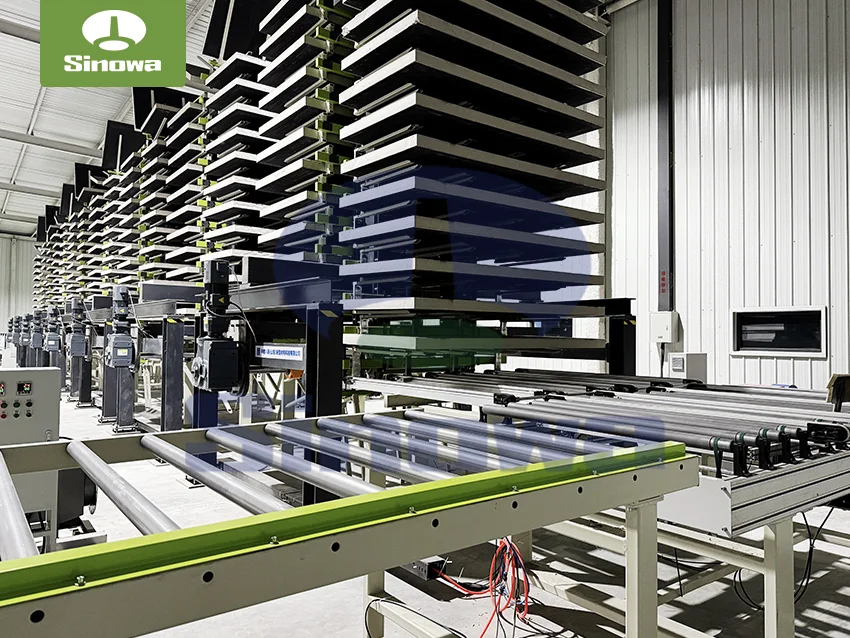
 sandwich panel line
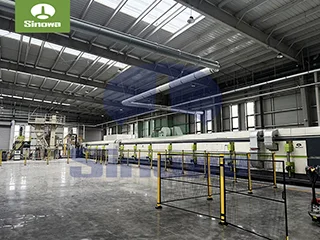
The entire operational logic of the roof PU sandwich panel line centers on precise material matching, controlled chemical foaming reaction, and uniform mechanical composite molding, ensuring that every finished roof panel maintains consistent structural stability, thermal insulation performance, and surface flatness. Unlike general sandwich panel production equipment optimized for wall panels, roof panel production lines feature targeted structural and parameter adjustments to adapt to the unique usage characteristics of roof building components, including enhanced surface profiling accuracy, optimized foaming density control for load-bearing requirements, and improved lamination pressure stability to resist outdoor environmental erosion. The systematic design eliminates the inefficiency and quality inconsistency of semi-manual or segmented production modes, enabling large-scale batch production of roof panels that meet the rigorous physical performance demands of outdoor building environments.
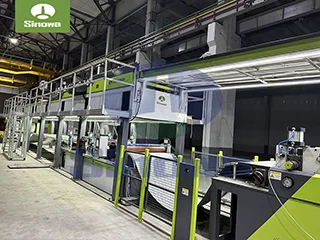
The production workflow of the roof PU sandwich panel production line starts with the feeding and preprocessing of metal surface materials, which form the outer protective layer of the finished roof panels. Metal coils are steadily unwound through automated unwinding units, with built-in tension control structures ensuring continuous and smooth material feeding without deviation, wrinkling, or stretching. This tension regulation function is essential for roof panel production, as even minor surface deformation or dimensional deviation will affect the overall waterproof and wind-resistant performance of the roof after installation. After unwinding, the metal sheets pass through multi-stage leveling and surface cleaning structures to eliminate tiny surface impurities, oil stains, and uneven textures, creating a clean and flat base for subsequent bonding with the polyurethane foam core. Some production configurations also include surface preheating processes, which moderately raise the temperature of metal sheets to optimize the molecular activity of the surface layer, laying a solid foundation for tighter adhesion between the metal layer and the foam core in the later composite stage.
Following surface preprocessing, the metal sheets enter the roll forming stage, a key process that distinguishes roof panel production from ordinary wall panel manufacturing. The roll forming unit is equipped with precision arranged forming roller groups, which gradually bend and press the flat metal sheets into professional roof-specific profiles through multiple progressive molding steps. The structural design of the roller groups is optimized according to the structural needs of roof panels, with reasonable groove and rib structures formed on the panel surface to enhance the overall rigidity, drainage performance, and lap joint tightness of the roof panels. The continuous roll forming process realizes one-time molding of panel profiles, avoiding the structural defects caused by secondary processing. During operation, the mechanical transmission system maintains stable operating speed and uniform pressing force, ensuring that the curvature, groove depth, and overall dimensional accuracy of each roof panel profile remain highly consistent, which is crucial for ensuring seamless assembly and effective rainwater drainage of the overall roof system in later construction.
After the upper and lower metal surface layers are shaped, the production process enters the core link of polyurethane foaming and pouring, which directly determines the thermal insulation, shock resistance, and structural stability of the roof panels. The PU sandwich panel machine adopts a precise proportional metering and high-pressure mixing system to process the two-component polyurethane raw materials. The raw material conveying device accurately transports the liquid polyurethane components to the mixing structure according to the optimal reaction ratio, where high-speed stirring achieves uniform fusion of raw materials and triggers a controlled chemical reaction. The fully mixed liquid polyurethane material is evenly and quantitatively poured onto the surface of the lower profiled metal sheet through a precise pouring port. The entire pouring process features uniform feeding and no local accumulation or shortage of materials, which ensures that the thickness and density of the foam core layer of each roof panel are distributed evenly.
Different from indoor wall panels, roof panels need to withstand long-term outdoor temperature changes, wind loads, and structural pressure, so the foaming parameter setting of the polyurethane sandwich panel production line is specially optimized for outdoor working conditions. The system controls the foaming reaction speed and expansion range accurately, enabling the polyurethane material to expand stably and form a fine and uniform cellular structure. This dense foam core structure endows the roof panels with excellent thermal insulation performance to block external high temperature and cold air transmission, while providing sufficient compressive strength and toughness to resist slight external impact and structural extrusion. In addition, the controllable foaming process effectively avoids common defects such as hollow cores, bubble cavities, and uneven core density that easily occur in traditional production processes, greatly improving the overall yield and service life of finished roof panels.
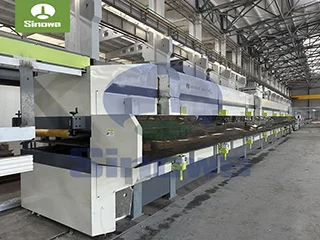
Subsequent to the completion of polyurethane pouring, the semi-finished panels enter the double-track lamination and composite curing stage, the core process for forming the integrated structure of roof sandwich panels. The polyurethane sandwich panel line adopts a stable belt-type lamination structure, which drives the upper and lower metal sheets to fit tightly with the intermediate foaming core layer through synchronous conveying. The lamination system maintains continuous and uniform mechanical pressure throughout the operation process, ensuring that the expanded polyurethane foam is fully bonded with the inner surface of the metal sheets without delamination or dislocation. The closed lamination space provides a stable temperature and pressure environment for the curing reaction of polyurethane materials, promoting the rapid molding and solidification of the foam core and forming an integrated composite structure with the metal layers on both sides.
The lamination speed and pressure parameters of the equipment are adjustable within a reasonable range, which can be flexibly matched according to different roof panel thickness specifications and raw material characteristics. This flexible adjustment capability enables the polyurethane sandwich panel machine to adapt to diversified production needs, covering multiple thickness options required for different building roof insulation and load-bearing standards. During the continuous lamination and curing process, the linear conveying structure ensures that the panels move forward stably at a constant speed, avoiding structural deformation caused by uneven force or speed fluctuation. After a complete curing cycle, the polyurethane core layer completely loses fluidity and forms a rigid and stable whole with the metal surface layers, realizing the integration of heat insulation, waterproof base, and structural bearing.
Once the composite curing process is finished, the continuous long-size integrated panels enter the fixed-length cutting stage. The automated cutting unit of the roof sandwich panel production line adopts precise positioning and synchronous cutting technology, which can complete fixed-size cutting according to customized length requirements without stopping the continuous production line. The cutting tool features high hardness and precision machining performance, ensuring smooth and flat cutting sections without burrs, metal edge warping, or core layer collapse. The synchronous tracking cutting mode realizes seamless connection between continuous production and fixed-length molding, effectively improving production efficiency while guaranteeing the dimensional accuracy of finished roof panels. The cut finished panels maintain complete structural integrity, with neat edges and consistent overall specifications, fully meeting the standardized assembly requirements of modern roof engineering.
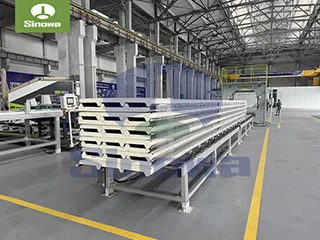
The final stage of the production process includes automatic conveying, sorting, and stacking of finished roof panels. The finished panel conveying system stably transports the cut qualified panels to the stacking area, and the automated stacking device neatly arranges the panels according to uniform specifications, avoiding surface scratches, extrusion deformation, and messy stacking caused by manual handling. The whole post-processing process is highly automated, reducing manual intervention links, lowering the risk of artificial damage to finished products, and improving the neatness and uniformity of finished product storage. The stacked finished roof panels have stable structures and uniform specifications, which are convenient for subsequent packaging, transportation, and on-site construction and installation.
The outstanding advantages of the dedicated roof PU sandwich panel manufacturing line are fully reflected in its systematic optimization for roof application scenarios and continuous production efficiency. In terms of product performance control, the whole-process automated parameter control system realizes precise control of every key link from metal forming, foaming proportion, lamination pressure to curing time, effectively ensuring the consistency of thermal insulation performance, structural strength, and dimensional accuracy of each batch of roof panels. The unique roof profile forming design enables the finished panels to have good drainage and lap sealing performance, which can effectively prevent rainwater penetration and solve the common water leakage problem of building roofs in rainy and humid environments. At the same time, the high-density fine cellular foam core structure gives the panels excellent thermal insulation and heat preservation effects, which can significantly reduce the energy consumption of building temperature regulation and meet the energy-saving and environmental protection requirements of modern green buildings.
In terms of production efficiency and operational stability, the integrated continuous production mode of the equipment eliminates the intermittent waiting time of segmented production. The online splicing and continuous feeding design of the metal coil material ensures that the PU sandwich panel making machine can operate stably for a long time without frequent shutdowns for material replacement, greatly improving the overall production continuity and output capacity. The mechanical transmission and control system adopts mature and stable structural design, with low failure rate and convenient daily maintenance, which can maintain efficient and stable operation for a long time in high-intensity industrial production environments. The highly automated operation mode also reduces the dependence on manual operation skills, realizes standardized and standardized production, and effectively reduces the quality fluctuation caused by human factors.
In terms of application adaptability, the roof PU sandwich panel production machinery can flexibly adjust production parameters to manufacture roof panels suitable for different architectural environments and functional needs. It can adapt to the production of roof panels for large-span industrial workshops, logistics warehouses, commercial buildings, stadiums, and other public facilities, as well as lightweight roof materials for low-rise civil buildings. The produced panels have excellent weather resistance, can resist long-term ultraviolet radiation, temperature difference alternation, and wind and rain erosion, and maintain stable structural performance and appearance flatness in various complex outdoor environments. In addition, the lightweight characteristics of PU sandwich panels reduce the overall load of building roofs, which is conducive to optimizing the structural design of buildings and reducing construction and structural costs.
With the continuous development of the construction industry towards greenization, lightweight, and high efficiency, the market demand for high-performance roof insulation and decorative integrated panels is constantly expanding. As special equipment for mass production of roof PU sandwich panels, the continuous sandwich panel production line has become an indispensable core equipment in the modern building material manufacturing industry. Its automated, efficient, and standardized production mode not only improves the production efficiency and product quality of roof panels but also promotes the upgrading of the overall manufacturing level of building envelope materials. In the future, with the continuous optimization of industrial manufacturing technology, roof sandwich panel line will further develop towards higher automation intelligence, more precise parameter control, and more diversified product adaptation, providing more high-quality and reliable material support for the construction of modern energy-saving and environmentally friendly buildings.
https://www.cnsinowa.com/sandwich-panel-machines/pu-sandwich-panel-line-for-roof.html