 sandwich panel line
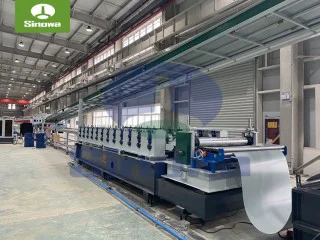
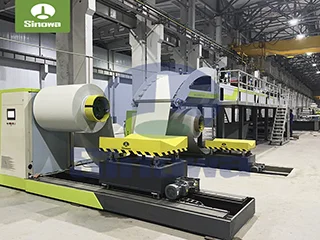
The entire operational workflow of a professional sandwich panel line begins with the stable and orderly raw material feeding and preliminary processing stage, which lays a solid foundation for all subsequent forming and composite processing procedures. At the initial stage, metal coil materials used for the upper and lower outer protective layers of sandwich panels are steadily loaded onto dedicated uncoiling devices, which are designed with hydraulic stabilization and automatic tension adjustment functions to ensure continuous, smooth, and wrinkle-free unwinding of metal sheets without surface deformation, edge warping, or tensile damage. These uncoiling units are precisely calibrated to control the feeding speed and tension of metal coils in real time, matching the operational pace of the entire production line to avoid material accumulation or feeding interruption that may cause production stagnation or product quality defects. After unwinding, the flat metal sheets are conveyed into leveling and preprocessing stations, where multiple sets of precision leveling rollers eliminate internal mechanical stress generated during coil winding and storage, correcting minor surface irregularities and ensuring the flatness and smoothness of metal substrates before subsequent roll forming. This preliminary leveling process is critical because any subtle unevenness or residual stress on the metal surface will be amplified in subsequent forming and composite pressing stages, leading to finished panel surface distortion, inconsistent thickness, and poor bonding fit between outer sheets and core materials. Following leveling, the metal sheets enter the multi-pass progressive roll forming unit, the core mechanical component responsible for shaping flat metal substrates into customized profile structures that meet different installation and structural load-bearing requirements. Equipped with multiple groups of high-precision forming rollers arranged in progressive sequence, this unit gradually bends, presses, and shapes the flat metal sheets step by step, avoiding one-time excessive extrusion that may cause metal cracking or surface coating damage. Each roller position and forming angle is precisely adjusted and fixed to ensure that the formed metal profiles have consistent edge dimensions, groove depth, and overall structural symmetry, enabling seamless assembly and tight splicing of panels during on-site construction later on.
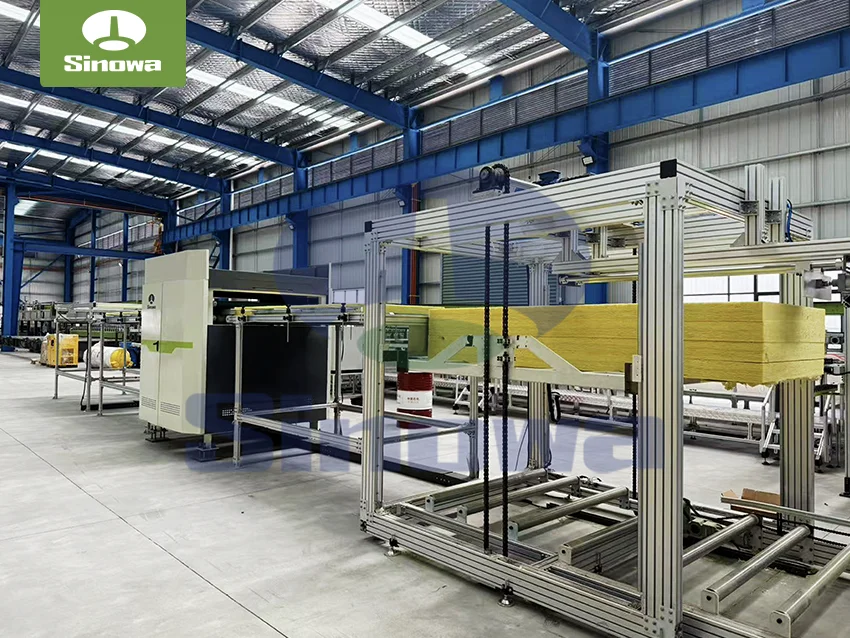
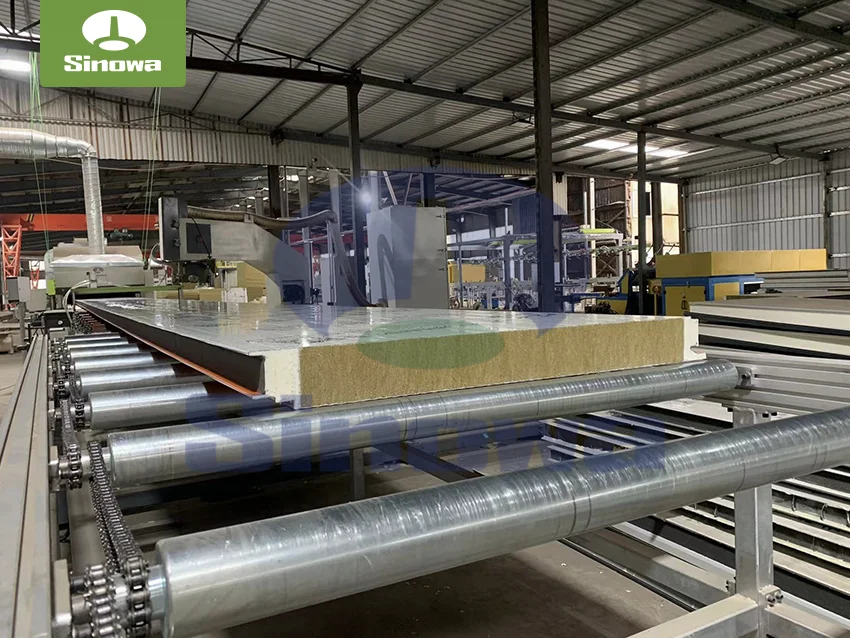
While the outer metal layers undergo roll forming and preliminary shaping, the professional sandwich panel line operates synchronous core material preparation and conveying processes to ensure perfect coordination with metal sheet processing rhythm and precise alignment in the subsequent composite bonding stage. Common core materials matched with the production line include various lightweight insulating and flame-retardant filling materials, each with unique physical characteristics that require targeted pretreatment and conveying configuration to maintain structural integrity and uniform distribution inside the sandwich panels. The core material processing area of the production line is designed with dedicated automatic cutting, shaping, and arranging equipment, which cuts bulk core materials into standard fixed-width and fixed-thickness specifications according to production preset parameters, trimming irregular edges and removing defective parts to ensure every core material block has neat edges and consistent overall dimensions. Uniform core material arrangement is essential because uneven core material distribution or inconsistent thickness will directly lead to uneven thermal insulation performance of finished panels, local structural hollowing, and insufficient overall compression resistance. After pretreatment, the core materials are automatically and stably conveyed to the composite lamination area through a special conveying system, with precise positioning devices ensuring that the core materials are accurately aligned with the upper and lower formed metal sheets, avoiding offset or misalignment during the subsequent bonding and pressing process. For production lines adopting foaming core materials, the independent high-precision foaming and mixing system operates in sync with the main production line, accurately proportioning raw material components through precise metering and uniform mixing, and injecting foaming materials evenly between the upper and lower metal layers in a controlled manner. The foaming process is strictly regulated by real-time temperature and flow control modules to ensure stable foaming reaction speed, uniform foam density, and consistent expansion effect, preventing local over-foaming or under-foaming that would affect the overall structural compactness and thermal insulation performance of the panels.
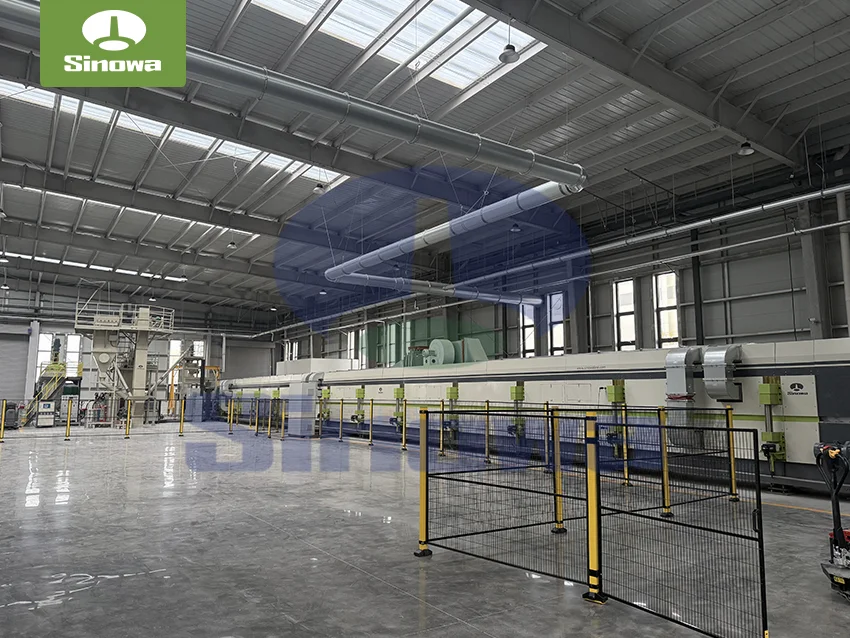
Adhesive application and high-pressure composite pressing constitute the most critical core link in the entire professional sandwich panel line production process, directly determining the bonding firmness, structural stability, and long-term service life of finished sandwich panels. Before the upper and lower metal sheets are combined with the core material, the automatic gluing system of the production line evenly coats high-performance adhesive materials on the inner surfaces of the formed metal sheets and the contact surfaces of the core materials. The gluing system adopts precision spraying or roller coating modes according to different material characteristics and production process requirements, achieving uniform adhesive coverage without excessive glue accumulation, missing coating, or glue sagging. The amount and uniformity of adhesive application are strictly controlled by automated regulation systems, as too little glue will result in weak bonding and easy delamination of panels during use, while too much glue will cause glue overflow, increased production costs, and prolonged curing time affecting production efficiency. After the completion of adhesive coating and accurate alignment of metal sheets and core materials, the preliminarily combined semi-finished panels are sent to the high-pressure composite pressing and thermal curing integrated unit. Inside this unit, the panels are subjected to continuous and uniform high-pressure compression under stable temperature environment, which effectively discharges air gaps between the outer layers and the core material, makes the adhesive fully infiltrate the contact surfaces of all materials, and promotes the rapid and stable curing reaction of the adhesive. The pressure and temperature parameters inside the pressing unit are dynamically adjusted according to different outer layer materials, core material types, and adhesive characteristics, maintaining the optimal curing environment to ensure the formation of a strong and durable integrated bonding structure between all layers. This composite pressing and curing process not only enhances the overall structural rigidity and compression resistance of the sandwich panels but also effectively improves the sealing performance and weather resistance of the panels, preventing delamination, cracking, and water seepage problems that may occur in long-term outdoor and complex working environments.
After the completion of composite pressing and preliminary curing, the continuous integrated sandwich panel semi-finished products enter the trimming, precision cutting, and secondary shaping stages of the professional sandwich panel line to meet standardized finished product dimensional specifications and appearance quality requirements. The continuous long-strip panels first pass through the edge trimming and side sealing device, which trims excess edge materials and residual overflowing adhesive on both sides of the panels, and performs edge sealing treatment on the panel sides to enhance the edge structural tightness and anti-collision performance of finished panels, while ensuring neat and consistent panel edge dimensions. Subsequently, the panels are transported to the automatic fixed-length cutting unit, which executes high-precision fixed-length cutting according to preset production size parameters. The cutting equipment adopts stable and efficient cutting modes to ensure smooth and flat cutting sections without burrs, edge collapse, or material deformation, maintaining the overall structural integrity and appearance flatness of the panels after cutting. The precision of fixed-length cutting is particularly important for subsequent on-site installation, as consistent panel length and neat cutting sections ensure accurate docking and splicing between panels, reducing on-site secondary processing workload and improving overall construction efficiency. After cutting, the finished single panels are sent to the cooling and final shaping area through the conveying system, where the panels are naturally cooled to normal temperature to complete the subsequent curing of the adhesive and stabilize the overall structural shape of the panels, avoiding panel deformation or structural shrinkage caused by rapid temperature change after high-pressure hot pressing.
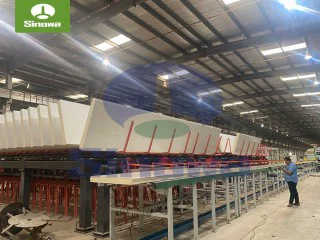
Quality inspection, automatic stacking, and finished product conveying are the final supporting links of a professional sandwich panel line, ensuring that all qualified finished panels are efficiently sorted, neatly stored, and smoothly transported out of the production line for subsequent storage and delivery. In the online quality inspection area, the production line is equipped with visual inspection and dimensional detection modules, which automatically detect the surface flatness, bonding integrity, dimensional accuracy, and surface appearance quality of each finished panel in real time. The inspection system quickly identifies unqualified products with surface scratches, bonding delamination, dimensional deviation, or edge defects, and automatically separates unqualified panels from qualified product conveying routes to avoid defective products entering the finished product stacking link. Qualified finished panels are then automatically transported to the stacking system, which neatly stacks the panels according to fixed quantity and standardized stacking specifications through mechanical handling devices, ensuring stable stacking without extrusion damage or surface friction and scratch between panels. The automatic stacking operation replaces traditional manual stacking, effectively improving production efficiency, reducing labor intensity, and avoiding panel damage and safety hazards caused by manual handling errors. After stacking is completed, the neatly arranged finished panel stacks are transported out of the production line through the finished product conveying device, facilitating subsequent centralized storage, loading, and transportation, and completing the entire closed-loop automated production process of sandwich panels from raw material feeding to finished product output.
The advantages of a professional sandwich panel line in industrial production and practical application are reflected in high production automation, stable product quality continuity, flexible production adaptability, and long-term operational cost optimization, bringing comprehensive value to panel manufacturing enterprises and downstream engineering construction projects. In terms of production automation, the entire line realizes integrated automated operation from raw material feeding, processing, forming, composite pressing, cutting to stacking, with minimal manual intervention required in the daily production process, effectively reducing the impact of manual operation errors on product quality and production efficiency, and achieving continuous and uninterrupted large-scale batch production. In terms of product quality stability, all processing links of the production line adopt precise mechanical control and parameterized operation modes, ensuring that the structural performance, dimensional specifications, and appearance quality of each batch of produced sandwich panels remain highly consistent, avoiding quality fluctuations common in semi-automatic or manual production modes. In terms of production flexibility, the professional sandwich panel line can quickly adjust production parameters and process configurations according to different market demand changes and customer customization requirements, switching production of sandwich panels with different core materials, different thickness specifications, different surface profile shapes, and different application scenarios, meeting the diversified and personalized production needs of the market. In terms of long-term operational cost control, the high-efficiency automated production mode reduces labor input costs, the precise material control system reduces raw material waste, and the stable mechanical operation reduces equipment failure rates and maintenance costs, enabling manufacturing enterprises to maintain stable production capacity and product quality while optimizing overall production economic benefits.
With the continuous development of modern construction industrialization and modular building technology, the market demand for high-quality, high-stability, and multi-functional sandwich panels continues to grow, which also puts forward higher requirements for the performance, automation level, and production flexibility of professional sandwich panel lines. Modern professional sandwich panel lines are constantly upgraded and optimized in structural design, intelligent control, and energy-saving operation, adopting more advanced synchronous control technology, intelligent parameter adjustment systems, and energy-efficient mechanical structures to further improve production efficiency, reduce energy consumption per unit of production, and enhance the overall stability and service life of the equipment. While maintaining efficient production operations, the upgraded production lines also pay more attention to production process optimization and environmental protection production requirements, reducing waste discharge and energy consumption during the production process, and realizing green and sustainable production while ensuring product output and quality. Whether used for producing sandwich panels for industrial plant workshops, cold storage insulation structures, modular housing buildings, or special enclosure structures for public infrastructure, a well-configured professional sandwich panel line can always provide reliable production technical support, continuously output high-quality composite sandwich panels that adapt to diverse application environments, and promote the standardized and high-quality development of the entire sandwich panel manufacturing and modern construction industry.
https://www.cnsinowa.com/sandwich-panel-machines/professional-sandwich-panel-line.html