sandwich panel line
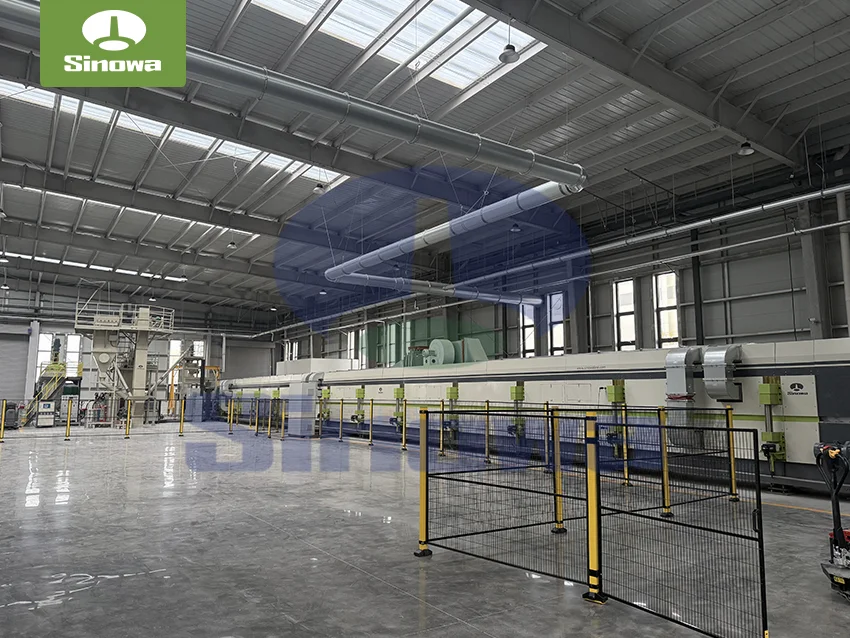
The overall structural design of the mechanism sandwich panel production line follows the principle of continuous streamline operation, with each functional module arranged in a linear and orderly manner according to the production process sequence, ensuring smooth and uninterrupted material transmission and processing. The front-end part of the production line is mainly responsible for raw material storage, feeding and pretreatment, which is the foundation to ensure the uniformity and stability of subsequent panel processing. The metal coil raw materials used for panel surface layers are placed on automatic unwinding devices, which can realize stable and uniform discharging of coiled metal materials through hydraulic power and mechanical damping adjustment. In the discharging process, the matching leveling roller group will carry out multi-pass flattening treatment on the metal sheet, effectively eliminating the bending deformation, surface wrinkles and uneven stress generated during the coiling and storage of metal materials. This pretreatment process can greatly improve the flatness of the surface material, avoid structural defects such as uneven thickness and local warping of the finished panel caused by unqualified surface materials, and lay a good foundation for subsequent composite bonding and molding.
After the completion of leveling and pretreatment, the flat metal sheet will be automatically conveyed to the roll forming module, which is a key unit that determines the structural shape and dimensional accuracy of the sandwich panel. The roll forming system is composed of multiple groups of upper and lower paired forming rollers, and the roller profiles are precisely designed according to the different structural requirements of the panel. When the metal sheet passes through the gap between the forming rollers at a constant speed, it will be gradually pressed and bent into the preset groove structure, edge folding shape and overall profile. The whole forming process adopts gradual pressure processing, which avoids the damage and internal stress concentration of metal materials caused by one-time strong bending. The running speed and forming pressure of the roller group can be adaptively adjusted according to the thickness and material characteristics of different metal sheets, ensuring that the formed surface sheet has accurate dimensional tolerance, smooth surface and stable structural shape, and meeting the diverse shape requirements of sandwich panels for different application scenarios.
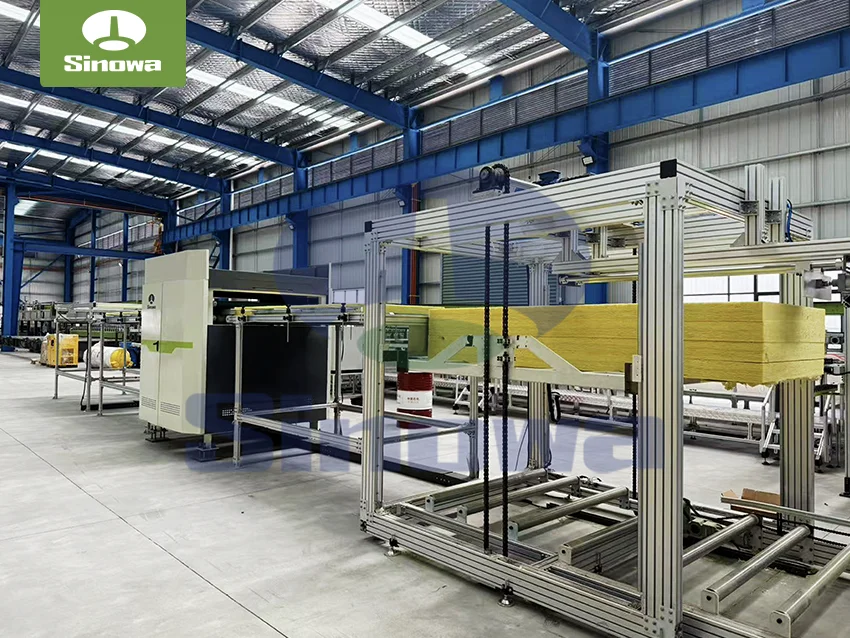
While the surface metal sheet is undergoing roll forming and transmission, the core material conveying and positioning system of the sandwich panel line operates synchronously to realize the accurate matching of surface material and core material. Common core materials for sandwich panels include lightweight foam materials and inorganic thermal insulation materials, all of which have the characteristics of low density, good thermal insulation performance and certain compressive strength. The core material is transported to the composite station through a special conveying mechanism, and the automatic positioning device can correct the deviation of the core material in the transmission process to ensure that the core material is completely aligned with the upper and lower metal surface sheets in width and position. This synchronous feeding and positioning technology avoids the problems of core material deviation and edge leakage in the composite process, ensures the overall structural uniformity of the sandwich panel, and guarantees the consistent thermal insulation and mechanical properties of each part of the panel.
Gluing and composite bonding is the core process of the entire mechanism sandwich panel manufacturing line, which directly determines the bonding strength, structural stability and service life of the finished panel. The production line is equipped with a high-precision automatic gluing system, which can evenly coat the surface of the metal sheet and the contact surface of the core material with adhesive according to the preset process parameters. The gluing process adopts quantitative spraying and roller coating integrated design, which can accurately control the glue application amount and coating uniformity. Excessively thick glue layer will cause material waste and increase the overall weight of the panel, while insufficient glue amount will lead to insufficient bonding force, resulting in degumming and delamination of the panel in subsequent use. The automatic gluing system realizes fine control of the gluing process, ensuring that the adhesive forms a uniform and dense bonding layer between the surface material and the core material, maximizing the bonding effect while saving production materials.
After the completion of gluing and material alignment, the composite assembly of upper and lower surface materials and core materials is completed, and then the integrated plate body enters the continuous pressure curing system for molding treatment. The pressure curing unit is composed of multi-group pressure roller groups and constant temperature auxiliary devices, which can provide stable and uniform pressing force and appropriate curing temperature for the composite plate body. In the closed pressure curing channel, the adhesive undergoes rapid physical and chemical reaction under the dual action of constant pressure and constant temperature, realizing fast curing and firm bonding between layers. The continuous pressure mode ensures that every position of the plate body is evenly stressed, effectively eliminating the gap between the surface material and the core material, making the overall structure of the panel more compact and integrated. Compared with the intermittent pressing mode of traditional equipment, the continuous pressure curing process avoids inconsistent bonding strength caused by uneven pressure and different curing time, and greatly improves the structural consistency of batch products.
The running speed, curing temperature and pressing pressure of the pressure curing system can be dynamically adjusted according to the types of core materials and adhesives. For different core materials with different density and pore structure, the sandwich panel machine can match the most suitable curing process parameters to ensure the best bonding effect. For porous lightweight core materials, low-pressure and slow curing parameters are adopted to avoid core material compression and deformation; for dense inorganic core materials, moderate pressure and temperature parameters are used to accelerate adhesive curing and improve production efficiency. This flexible parameter adjustment mode enables the production line to adapt to the processing and production of various types of sandwich panels, realizing multi-purpose use of one line and expanding the production scope and application flexibility of the equipment.
After the plate body is completely cured and shaped, it is transmitted to the precision cutting and finishing unit along the streamline. This unit is responsible for cutting the continuous long plate body into finished panels of standard fixed length, and completing edge trimming and finishing treatment. The cutting system adopts automatic tracking and fixed-length cutting technology, which can accurately identify the transmission speed and position of the plate body, and complete instant cutting in the moving state of the plate body without stopping the production line. This non-stop cutting mode effectively avoids production downtime caused by fixed-length cutting, ensures the continuity of the entire production process, and greatly improves the overall production efficiency. The cutting tool has high hardness and precision, which can ensure that the cutting section of the panel is flat and smooth without burrs, cracks and edge collapse defects, and the dimensional error of the finished panel is controlled within a tiny range, meeting the high-precision size requirements of engineering applications.
The edge finishing process after cutting can trim the tiny burrs and uneven edges generated during cutting, and properly polish the edge position of the panel to improve the overall appearance quality and assembly performance of the product. The neatly finished panel has consistent edge specification, which is more convenient for on-site splicing and installation in engineering construction, and can effectively avoid assembly gaps and structural instability caused by irregular panel edges. After finishing, the sandwich panel machinery is equipped with an automatic quality inspection station, which conducts real-time detection of the dimensional accuracy, surface flatness, bonding tightness and surface appearance of the finished panel. Unqualified products will be automatically identified and sorted out, while qualified products will be transmitted to the final stacking and packaging station.
The automatic stacking system neatly stacks the qualified finished panels according to the specified quantity and specification, and the stacking height and arrangement mode can be adjusted according to the product characteristics and transportation requirements. The stacked panels are packaged by the automatic packaging device, which can effectively protect the panel surface from scratches, dirt and collision damage during transportation and storage, and maintain the intact appearance and structural performance of the products. The whole process from feeding to packaging is completed by mechanical automatic operation, with minimal manual intervention, which not only reduces the labor intensity of operators, but also avoids product quality fluctuations caused by human operation errors.
The core advantage of the mechanism sandwich panel production machine lies in its high degree of automation, stable production performance and good product consistency. The entire production process is controlled by a unified program system, which can realize synchronous linkage operation of all functional modules. The system can monitor the operating state, process parameters and production data of each unit in real time, and automatically adjust the operating parameters according to the production state to ensure that the production process is always in the optimal state. In the batch production process, the thickness, size, bonding strength and surface quality of each batch of panels maintain high consistency, which solves the problem of uneven product quality in traditional manual and semi-mechanized production.
In terms of production efficiency, the continuous streamline operation mode of the mechanism production line makes the production cycle of a single panel greatly shortened, and the continuous production capacity is far higher than that of traditional intermittent production equipment. The sandwich panel equipment can realize long-term uninterrupted continuous production, effectively reducing the downtime loss in the production process. At the same time, the integrated mechanical operation simplifies the production process, reduces the intermediate handling and waiting links of semi-finished products, and further improves the overall production efficiency. For large-scale engineering supporting production and mass customized order production, this efficient production mode can effectively shorten the production cycle, improve order delivery efficiency, and create greater production benefits for manufacturing enterprises.
In terms of production cost control, the mechanized and automated production mode optimizes the utilization rate of raw materials. The precise gluing system and fixed-length cutting device avoid the waste of adhesive, metal sheet and core materials caused by manual operation errors. The stable and standardized production process greatly reduces the rate of defective products, reduces the production loss caused by unqualified products, and effectively reduces the comprehensive production cost. In addition, the high degree of automation of the equipment reduces the number of on-site operators, reduces labor input and management costs, and further improves the economic benefits of production and operation.
In terms of product performance improvement, the sandwich panels produced by the mechanism production line have more stable and reliable comprehensive performance. The uniform pressure curing process makes the bonding between layers tighter and more uniform, the overall structural strength of the panel is higher, and the anti-peeling and anti-compression performance are significantly improved. The precise roll forming and cutting process ensure the accurate size and regular shape of the panel, which is more conducive to standardized installation and assembly. At the same time, the continuous production process avoids the structural defects such as internal bubbles and gaps easily generated in intermittent production, making the thermal insulation, sound insulation and fire resistance of the panel more stable and uniform, and better adapting to the harsh use environment of industrial buildings, cold storage facilities and outdoor temporary buildings.
With the continuous upgrading of industrial manufacturing technology, the mechanism sandwich panel manufacturing line is also developing towards higher automation, intelligence and diversification. Modern production lines are equipped with more intelligent monitoring and early warning functions, which can automatically identify equipment operating faults and process abnormalities, and send prompt information in time, facilitating equipment maintenance and process adjustment. At the same time, the equipment compatibility is continuously improved, which can adapt to the production of sandwich panels with different core materials, different thicknesses and different surface specifications, meeting the increasingly diversified market demand. In addition, the optimized mechanical structure design reduces the operating energy consumption of the equipment, realizes energy-saving and environmental protection production, and conforms to the development trend of green manufacturing in the modern industry.
In practical industrial application, the mechanism sandwich panel production machinery has become the mainstream supporting equipment in the sandwich panel manufacturing industry. Its standardized and efficient production mode promotes the standardized development of the entire sandwich panel product industry, provides high-quality and high-consistency composite panel products for the construction and manufacturing fields, and plays an important role in improving the construction efficiency of modern buildings, reducing construction costs and optimizing building energy-saving performance. With the continuous expansion of the application scope of sandwich panels in new building engineering, prefabricated building construction and special industrial facilities, the market demand for high-performance mechanism sandwich panel production lines is also constantly increasing, and the equipment manufacturing technology will continue to be innovated and upgraded to adapt to the continuous development of the downstream industry.
https://www.cnsinowa.com/sandwich-panel-machines/mechanism-sandwich-panel-production-line.html