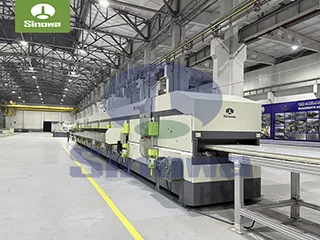
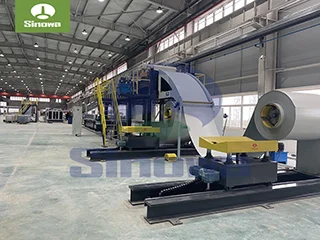
sandwich panel line
The structural composition of PU sandwich panels produced for modular house construction is a carefully engineered system that balances strength, light weight, and ease of handling—three critical factors for modular components. Each panel consists of three primary layers: an inner facing layer, a polyurethane foam core, and an outer facing layer, all bonded together through a high-pressure lamination process in the production line to form a single, integrated composite material. The facing layers, which serve as the structural backbone of the panel, are typically made from materials selected for their durability, rigidity, and compatibility with modular construction requirements. Common options for facing layers include galvanized steel, galvalume steel, pre-painted steel, or fiber-reinforced polymer, each chosen based on the specific needs of the modular project, such as environmental conditions, aesthetic preferences, and structural load requirements. These facing layers are processed in the production line through a series of steps, including uncoiling, leveling, and pre-treatment, to ensure a smooth, uniform surface that bonds effectively with the PU foam core. The pre-treatment process, which may involve cleaning, degreasing, or chemical priming, removes any contaminants or imperfections that could compromise the adhesion between the facing layers and the core, ensuring long-term structural stability. The polyurethane foam core, which is the middle layer of the panel, is formed through a chemical reaction between polyol, isocyanate, foaming agents, and catalysts, all precisely measured and mixed in the production line to achieve the desired density and performance characteristics. The foam is injected between the two facing layers in a controlled manner, expanding to fill the entire space and bonding tightly to both surfaces as it cures, creating a seamless bond that eliminates gaps and enhances the overall structural integrity of the panel. The thickness of the foam core can be adjusted within the production line to meet specific thermal insulation and structural requirements, typically ranging from a few centimeters to over 15 centimeters, depending on the climate zone where the modular home will be installed and the desired energy efficiency standards.
The structural performance of PU sandwich panels produced for modular house construction is one of their most notable advantages, making them suitable for use as walls, roofs, floors, and even load-bearing components in some modular designs. The composite structure of the panels leverages the strengths of each layer to deliver a material that is both lightweight and highly rigid, with excellent load-bearing capacity, impact resistance, and dimensional stability. The facing layers provide tensile and compressive strength, allowing the panels to withstand the structural loads imposed by the building’s weight, wind, snow, and other environmental factors, while the PU foam core acts as a rigid support that distributes loads evenly across the panel, reducing stress concentrations and minimizing the risk of deformation. In modular construction, where panels must be transported from the factory to the site and lifted into place, the lightweight nature of PU sandwich panels is a significant benefit, as it reduces the need for heavy lifting equipment and simplifies handling, while their high strength ensures that they can withstand the rigors of transportation and installation without damage. Additionally, PU sandwich panels exhibit excellent dimensional stability, meaning they are resistant to warping, shrinking, or expanding when exposed to changes in temperature or humidity—common issues with traditional building materials that can lead to gaps, cracks, and reduced structural integrity over time. This dimensional stability is critical for modular homes, as the prefabricated components must fit together precisely during assembly to ensure a tight, weatherproof seal and maintain the overall structural integrity of the building. The production line plays a key role in ensuring consistent structural performance across all panels, as it controls every aspect of the manufacturing process, from the thickness and quality of the facing layers to the density and curing of the foam core, ensuring that each panel meets the same high standards of strength and durability.
In addition to their exceptional structural performance, PU sandwich panels produced for modular house construction offer superior thermal insulation properties, which are essential for creating energy-efficient homes that are comfortable year-round while reducing energy consumption and utility costs. The polyurethane foam core is a closed-cell insulation material, meaning it consists of millions of tiny, sealed cells filled with gas, which traps air and prevents heat transfer through conduction, convection, and radiation—the three primary mechanisms of heat loss. This closed-cell structure gives PU foam one of the highest thermal resistance values (R-values) among common insulation materials, making it highly effective at keeping modular homes warm in cold climates and cool in hot climates. The production line ensures that the foam core is manufactured with a consistent density, typically between 40 and 85 kg/m³, which directly impacts its thermal insulation performance; a higher density foam core generally offers better thermal resistance, though it may also increase the weight of the panel slightly. The seamless bond between the foam core and the facing layers eliminates thermal bridges—areas where heat can easily transfer through the material—which are common in traditional construction and can significantly reduce the effectiveness of insulation. By eliminating thermal bridges, PU sandwich panels help maintain a consistent indoor temperature, reducing the need for heating and cooling systems and lowering energy bills for the homeowners. This thermal efficiency is not only beneficial for the environment, as it reduces carbon emissions associated with energy production, but also for the long-term affordability of modular homes, making them a more sustainable and cost-effective housing option.
Another key performance characteristic of PU sandwich panels produced for modular house construction is their excellent sound insulation capabilities, which contribute to a more comfortable and peaceful indoor environment. The polyurethane foam core, with its closed-cell structure, is highly effective at absorbing and dampening sound waves, reducing the transmission of both airborne noise (such as traffic, wind, or voices from outside the home) and impact noise (such as footsteps or furniture movement from upper floors). The facing layers also play a role in sound insulation, as their rigidity helps to block high-frequency sound waves, while the foam core absorbs low-frequency sound waves, creating a comprehensive sound barrier. This is particularly important for modular homes, which are often constructed with multiple units adjacent to each other, as it helps to minimize noise transfer between units and ensure privacy for each homeowner. Additionally, the sound insulation properties of PU sandwich panels can help to reduce the need for additional soundproofing materials, simplifying the construction process and reducing material costs. The production line ensures that the foam core is evenly distributed and free from gaps or voids, which could compromise sound insulation performance, as even small gaps can allow sound waves to pass through and reduce the effectiveness of the panel.
PU sandwich panels produced for modular house construction also exhibit excellent moisture resistance and durability, making them suitable for use in a wide range of environmental conditions, from humid coastal areas to cold, snowy regions. The closed-cell structure of the polyurethane foam core prevents water vapor from penetrating the panel, as the sealed cells do not absorb moisture, reducing the risk of mold, mildew, and rot—common issues with traditional building materials that can compromise structural integrity and indoor air quality. The facing layers, particularly those made from galvanized or pre-painted steel, are treated to resist corrosion, rust, and damage from UV radiation, ensuring that the panels maintain their performance and appearance over time. The production line’s lamination process creates a seamless bond between the facing layers and the foam core, eliminating gaps where moisture could enter, further enhancing the panel’s moisture resistance. This durability means that PU sandwich panels have a long service life, reducing the need for maintenance and replacement, and making modular homes a more sustainable and cost-effective housing option. Additionally, the panels are resistant to pests, such as termites, which can cause significant damage to traditional wooden structures, further enhancing the long-term durability of modular homes.
There are several types of PU sandwich panels produced by specialized lines, each designed to meet specific requirements of modular house construction, based on factors such as application (wall, roof, floor), environmental conditions, structural needs, and aesthetic preferences. The primary classification of PU sandwich panels is based on the type of facing material used, as this has a significant impact on the panel’s performance, durability, and appearance. One common type is the steel-faced PU sandwich panel, which uses galvanized steel, galvalume steel, or pre-painted steel as the facing layers. Steel-faced panels are highly durable, rigid, and resistant to corrosion and impact, making them suitable for use as exterior walls, roofs, and load-bearing components in modular homes. They are available in a wide range of colors and finishes, thanks to pre-painted steel facing layers, allowing for customization to match various architectural styles. Another type is the fiber-reinforced polymer (FRP)-faced PU sandwich panel, which uses FRP as the facing material. FRP-faced panels are lightweight, corrosion-resistant, and have excellent chemical resistance, making them suitable for use in harsh environmental conditions, such as coastal areas with high salt content in the air or industrial regions with high pollution levels. They are also non-conductive, making them a good choice for modular homes in areas prone to lightning strikes.
Another classification of PU sandwich panels is based on their application in modular homes, with specific panels designed for walls, roofs, and floors. Wall panels are typically thinner than roof or floor panels, with a focus on thermal insulation, sound insulation, and aesthetic appeal. They may have a smooth or textured outer facing layer, depending on the desired appearance, and can be designed to include openings for windows and doors, which are pre-cut in the production line to ensure precision and simplify installation. Roof panels are thicker than wall panels, with a higher density foam core to provide additional thermal insulation and structural support for snow loads. They are also designed with a slope or ribbed structure to facilitate water runoff, preventing water pooling and leaks. Roof panels may also have a weather-resistant coating on the outer facing layer to protect against UV radiation, rain, and wind. Floor panels are engineered to withstand heavy loads, such as furniture, appliances, and human traffic, and therefore have a thicker and more rigid facing layer, often made from high-strength steel or plywood. They may also include additional reinforcement, such as steel ribs or mesh, embedded in the foam core to enhance their load-bearing capacity. The production line can be adjusted to produce each type of panel, with customizable thickness, width, length, and facing material, ensuring that the panels meet the specific needs of each modular construction project.
In addition to these primary types, there are also specialized PU sandwich panels designed for specific applications in modular house construction, such as fire-resistant panels, soundproof panels, and energy-efficient panels. Fire-resistant PU sandwich panels are manufactured with a fire-retardant foam core and fire-resistant facing layers, which help to slow the spread of fire and reduce smoke production in the event of a fire, enhancing the safety of modular homes. These panels are particularly important for modular homes in areas with strict fire safety regulations, or for homeowners who prioritize fire safety. Soundproof PU sandwich panels have a thicker foam core with a higher density, combined with specialized facing layers designed to absorb and block sound waves, making them ideal for use in modular homes located in noisy areas, such as near highways or airports, or for homes where privacy between rooms is a priority. Energy-efficient PU sandwich panels are designed with an ultra-high R-value, achieved through a combination of a thick, high-density foam core and reflective facing layers, which help to minimize heat transfer and reduce energy consumption even further. These panels are ideal for modular homes in extreme climate zones, where heating and cooling costs are typically high, and can help homeowners achieve significant energy savings over the life of the home. The production line is capable of producing all these specialized panels, with adjustments to the foam core density, facing material, and manufacturing process to meet the specific performance requirements of each type.
The usage of PU sandwich panel lines in modular house construction is extensive and varied, covering every aspect of modular home manufacturing, from the production of basic building components to the creation of customized, high-performance homes tailored to specific needs and preferences. One of the primary uses of PU sandwich panel lines is the production of wall panels for modular homes, which serve as the primary enclosure system, providing thermal insulation, sound insulation, moisture resistance, and structural support. Wall panels produced by the line are prefabricated to the exact dimensions required for the modular home, with pre-cut openings for windows, doors, and electrical outlets, which eliminates the need for on-site cutting and reduces installation time. These wall panels are lightweight and easy to handle, allowing for quick assembly on-site, with panels joined together using specialized fasteners or interlocking systems to create a tight, weatherproof seal. The use of PU sandwich wall panels also allows for greater design flexibility, as they can be produced in a wide range of colors, finishes, and textures, enabling homeowners to customize the exterior and interior appearance of their modular home.
Another important use of PU sandwich panel lines in modular house construction is the production of roof panels, which are critical for protecting the home from the elements, such as rain, snow, wind, and UV radiation. Roof panels produced by the line are designed to be lightweight yet highly durable, with excellent load-bearing capacity to support snow loads and wind suction. They are also engineered to provide superior thermal insulation, reducing heat loss through the roof and lowering energy costs. Roof panels may be produced with a ribbed or corrugated surface to facilitate water runoff, and can be customized to fit various roof designs, including gable, hip, and flat roofs. The prefabricated nature of these roof panels allows for quick installation on-site, with panels joined together to form a seamless, waterproof roof surface, eliminating the need for traditional roofing materials such as shingles or tiles, which are more time-consuming to install and require more maintenance.
PU sandwich panel lines are also used to produce floor panels for modular homes, which provide a stable, durable, and comfortable flooring surface. Floor panels are engineered to withstand heavy loads, with a rigid facing layer and a high-density foam core that provides both structural support and thermal insulation. These panels are prefabricated with a smooth upper surface, which can be finished with a variety of flooring materials, such as hardwood, laminate, vinyl, or carpet, depending on the homeowner’s preferences. The thermal insulation properties of floor panels help to keep the home warm in cold climates, reducing heat loss through the floor and improving overall energy efficiency. Additionally, floor panels produced by the line are resistant to moisture and mold, ensuring a healthy indoor environment and long-term durability.
Beyond the production of basic wall, roof, and floor panels, PU sandwich panel lines are also used to produce specialized components for modular homes, such as partition walls, ceiling panels, and exterior cladding. Partition walls are used to divide the interior space of the modular home into rooms, and are produced with a focus on sound insulation and lightweight construction, making them easy to install and reconfigure if needed. Ceiling panels are designed to provide thermal insulation and sound absorption, while also enhancing the aesthetic appeal of the interior space, and can be produced in a variety of styles and finishes. Exterior cladding panels are used to cover the exterior of the modular home, providing an additional layer of protection against the elements, while also enhancing the home’s appearance. These cladding panels are available in a wide range of materials, colors, and textures, allowing homeowners to customize the look of their home to match their personal style and the surrounding environment.
The use of PU sandwich panel lines in modular house construction also extends to the production of modular units for specialized applications, such as affordable housing, disaster relief housing, temporary housing, vacation homes, and commercial modular buildings. For affordable housing projects, PU sandwich panels are an ideal choice due to their low cost, high efficiency, and long durability, allowing for the construction of high-quality homes at a lower price point than traditional construction methods. Disaster relief housing requires quick deployment and durability, and PU sandwich panels produced by the line can be manufactured and assembled rapidly, providing safe and comfortable shelter for those displaced by natural disasters. Temporary housing, such as construction site offices or temporary classrooms, benefits from the lightweight and portable nature of PU sandwich panels, which can be easily transported and assembled, and then disassembled and reused when no longer needed. Vacation homes, which are often located in remote or environmentally sensitive areas, benefit from the eco-friendly and energy-efficient properties of PU sandwich panels, as well as their ability to be customized to fit the unique design requirements of vacation properties. Commercial modular buildings, such as offices, retail stores, and warehouses, leverage the structural strength and versatility of PU sandwich panels to create functional, durable, and energy-efficient spaces that can be tailored to the specific needs of the business.
Another important use of PU sandwich panel lines in modular house construction is the ability to produce customized panels that meet the unique requirements of each project. The production line is highly flexible, allowing for adjustments to panel thickness, width, length, foam core density, facing material, and finish, ensuring that the panels fit perfectly with the modular home’s design. This customization capability allows architects and designers to create modular homes with unique shapes, sizes, and configurations, breaking away from the traditional “boxy” modular home design and offering greater aesthetic appeal. For example, the production line can produce curved panels for homes with rounded walls or roofs, or panels with custom cutouts for unique window or door designs. Additionally, the line can produce panels with different thermal insulation levels, allowing for customization based on the climate zone where the home will be installed—thicker, higher-density panels for cold climates and thinner, lighter panels for hot climates. This flexibility makes PU sandwich panel lines an essential tool for modular house construction, as they enable the production of homes that are both functional and aesthetically pleasing, while meeting the specific needs of homeowners and project requirements.
The integration of PU sandwich panel lines into modular house construction also offers significant environmental benefits, making modular homes a more sustainable housing option compared to traditional construction methods. The production line is designed to minimize waste, as it uses precise cutting and measuring techniques to ensure that materials are used efficiently, reducing the amount of scrap material generated during manufacturing. Additionally, the polyurethane foam core used in the panels is often made from recycled materials, further reducing the environmental impact of production. PU sandwich panels are also energy-efficient, as their superior thermal insulation properties reduce the need for heating and cooling systems, lowering energy consumption and carbon emissions. Furthermore, modular construction using PU sandwich panels generates less on-site waste than traditional construction, as most of the manufacturing process takes place in a controlled factory environment, where waste can be easily collected and recycled. The durability and long service life of PU sandwich panels also reduce the need for maintenance and replacement, further reducing the environmental impact over the life of the home. Finally, many PU sandwich panels are recyclable at the end of their service life, allowing for the materials to be reused in other applications, creating a circular economy and reducing landfill waste.
In conclusion, PU sandwich panel lines play a critical role in modern modular house construction, providing a reliable, efficient, and versatile method for producing high-performance building materials that define the structural integrity, thermal performance, and overall functionality of modular homes. The structural composition of PU sandwich panels, with their lightweight polyurethane foam core and durable facing layers, delivers exceptional strength, dimensional stability, and durability, making them suitable for use as walls, roofs, floors, and specialized components in modular homes. The performance characteristics of these panels, including superior thermal insulation, sound insulation, moisture resistance, and fire resistance, ensure that modular homes are comfortable, safe, energy-efficient, and sustainable. The variety of panel types available, from steel-faced to FRP-faced panels, and from wall to roof to floor panels, allows for customization to meet the specific needs of each modular construction project, while the flexibility of the production line enables the creation of unique, aesthetically pleasing designs. The extensive purpose of PU sandwich panel lines in modular house construction, from affordable housing to disaster relief housing, from vacation homes to commercial buildings, highlights their versatility and importance in the modern construction industry. As the demand for sustainable, efficient, and affordable housing continues to grow, the role of PU sandwich panel lines in modular house construction will only become more prominent, driving innovation and advancing the future of building design and manufacturing.
https://www.cnsinowa.com/sandwich-panel-machines/pu-sandwich-panel-line-for-modular-house-construction.html