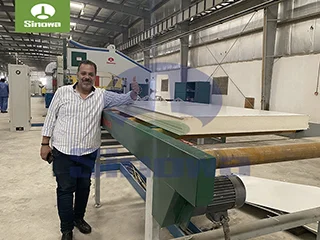
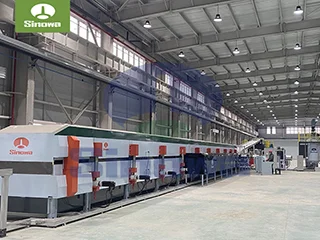
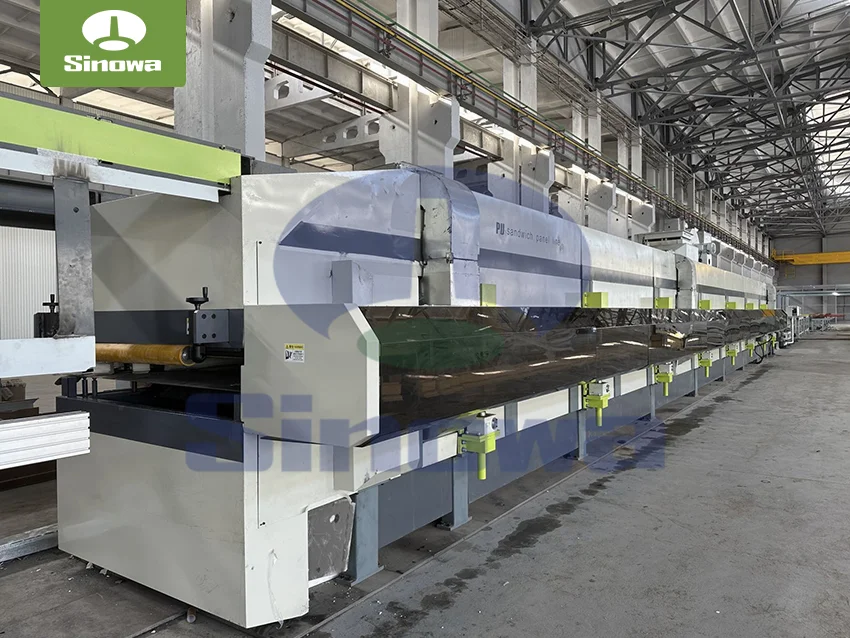
 sandwich panel line
Before exploring the production line itself, it is essential to understand the unique attributes of PU and PIR sandwich panels that make them so valuable. Both panels consist of two outer facing sheets (commonly steel, aluminum, or fiberglass) bonded to a core of PU or PIR foam. While PU foam offers excellent thermal insulation and flexibility, PIR foam—formed through the polyaddition reaction of polyols and isocyanates with a trimerization catalyst—boasts superior fire resistance, higher temperature stability, and enhanced dimensional stability, making it ideal for applications with stringent safety requirements. The outer facing sheets, meanwhile, not only provide structural support but also protect the foam core from mechanical damage, moisture, and UV radiation. A high-quality surface finish on these facing sheets is critical not only for aesthetic purposes but also for boosting corrosion resistance and extending the panel’s service life. Traditional production processes often separated the pre-painting of facing sheets from panel lamination, leading to inefficiencies, quality inconsistencies, and increased logistics costs. The integration of a pre-painting machine into the PU PIR sandwich panel production line addresses these pain points, creating a seamless, one-stop manufacturing process.
The PU PIR sandwich panel line with a pre-painting machine is a sophisticated integrated system comprising multiple interconnected modules, each designed to perform a specific function in the production chain—from raw material preparation and surface pre-treatment to painting, foam lamination, curing, cutting, and finished product handling. Unlike conventional lines that rely on pre-painted coil materials sourced from external suppliers, this integrated line brings the pre-painting process in-house, enabling full control over the quality, color, and thickness of the paint layer. The core modules of the production line include the coil handling and unwinding system, surface pre-treatment module, pre-painting machine, drying/curing oven for paint, PU/PIR foam mixing and pouring system, composite lamination unit, foam curing system, traction device, automatic cutting system, and finished product conveying and stacking system. Each module is equipped with precision control systems, advanced sensors, and servo-driven mechanisms to ensure synchronization, accuracy, and stability throughout the production process.
The coil handling and unwinding system marks the starting point of the production line, responsible for feeding raw facing material coils (typically steel or aluminum) into the process smoothly and stably. This system features automatic coil loading devices and tension control mechanisms that adjust the tension of the coil in real time to prevent wrinkling, stretching, or deviation of the material. The tension control is particularly critical for the subsequent pre-painting process, as uneven material tension can lead to uneven paint application. Additionally, the system is designed to accommodate coils of different widths and weights, enhancing the line’s versatility.
Following unwinding, the facing material enters the surface pre-treatment module—a vital step for ensuring strong adhesion between the metal surface and the paint layer. This module typically includes processes such as degreasing, chemical conversion coating, and water rinsing. Degreasing removes oil, dust, and other contaminants from the metal surface using alkaline cleaners, while chemical conversion coating (often a phosphate or chromate-free treatment) creates a thin, porous layer that improves paint adhesion and corrosion resistance. The water rinsing process removes residual chemicals, ensuring a clean surface for painting. All steps in the pre-treatment module are fully automated, with precise control of chemical concentrations, temperature, and processing time to ensure consistent treatment quality across the entire width and length of the facing material. This level of control is difficult to achieve with off-site pre-painting, where variations in treatment parameters can lead to poor paint adhesion and premature coating failure.
The pre-painting machine is the centerpiece of the integrated line, responsible for applying a uniform, high-quality paint coating to the pre-treated facing material. Modern pre-painting machines typically use either roller coating or curtain coating technology, each offering distinct advantages. Roller coating is ideal for achieving consistent film thickness (ranging from 10 to 50 microns) and is suitable for a wide range of paint types, including polyester, polyurethane, and PVDF (polyvinylidene fluoride) coatings. The roller coating process uses precision-adjustable rollers to apply paint evenly across the material surface, with excess paint recycled to minimize waste. Curtain coating, on the other hand, is used for high-gloss or specialty finishes, where a continuous curtain of paint flows over the moving material to create a smooth, blemish-free surface. The pre-painting machine is equipped with automatic paint mixing and feeding systems that ensure consistent color and viscosity, eliminating color variations that can occur with batch processing in external facilities. Additionally, the machine allows for single or double-sided painting, depending on the application requirements, and can accommodate custom color formulations to meet customer needs.
After painting, the facing material is conveyed to the paint drying/curing oven, where the paint layer is dried and cured to form a hard, durable finish. The oven typically uses a combination of infrared heating and hot air circulation to ensure uniform temperature distribution, with precise control of temperature and residence time. For solvent-based paints, the oven is equipped with a ventilation system to remove volatile organic compounds (VOCs) in compliance with environmental regulations. For water-based paints, the oven uses a two-stage process: first, evaporating the water at a lower temperature, then curing the paint at a higher temperature to achieve optimal hardness and adhesion. The curing parameters are tailored to the type of paint and the thickness of the coating, ensuring that the final finish is resistant to scratches, UV radiation, and corrosion. The integration of the paint curing oven with the rest of the line ensures that the painted facing material moves directly to the lamination process without intermediate handling, reducing the risk of surface contamination or damage.
Once the painted facing material is cured, it proceeds to the PU/PIR foam mixing and pouring system—the core of the sandwich panel production process. This system consists of raw material storage tanks, precision metering pumps, high-pressure mixers, and pouring nozzles. The raw materials for PU or PIR foam (polyols, isocyanates, catalysts, and blowing agents) are stored in insulated tanks to maintain their optimal temperature for reaction. Metering pumps deliver the raw materials in a precise ratio to the high-pressure mixer, where they are mixed uniformly in milliseconds. The choice between PU and PIR foam is determined by the application requirements: PIR foam is selected for applications requiring superior fire resistance, while PU foam is preferred for its higher thermal insulation efficiency and flexibility. The mixed foam is then poured onto the painted facing material (the lower skin of the sandwich panel) through a programmable pouring nozzle that adjusts the flow rate according to the desired panel thickness and production speed. The entire mixing and pouring process is controlled by a computerized system that monitors and adjusts parameters in real time, ensuring the uniformity of the foam core’s density and structure.
Following foam pouring, the upper painted facing material (pre-treated and painted in the same line) is fed into the composite lamination unit, where it is bonded to the foam core. The lamination unit uses a series of precision rollers to apply uniform pressure to the composite structure, ensuring that the upper and lower painted skins are tightly bonded to the foam core without air gaps or delamination. The pressure and speed of the rollers are adjustable to accommodate different panel thicknesses (ranging from 50mm to 250mm) and material types. This step is critical for ensuring the structural integrity of the sandwich panel, as any gaps or weak bonds can compromise the panel’s strength and thermal performance.
The composite panel then enters the foam curing system, where the PU or PIR foam undergoes a chemical reaction to solidify and form a stable core. The curing system is typically a long, insulated tunnel equipped with temperature and humidity control devices. For PU foam, the curing process is exothermic, requiring controlled cooling to prevent overheating and ensure uniform curing. For PIR foam, which has a slower curing rate, the system uses gentle heating to accelerate the trimerization reaction while maintaining the foam’s fire-resistant properties. The curing time and temperature are precisely controlled according to the foam type and production speed, ensuring that the foam core achieves its optimal mechanical and thermal insulation properties. The closed design of the curing system minimizes energy loss and maintains a stable environment, further enhancing product consistency.
The traction device is responsible for moving the cured composite panel through the subsequent processes at a constant speed, synchronized with the rest of the production line. The device uses high-friction rubber rollers or conveyor belts to prevent slipping, ensuring accurate conveying of the panel. The traction speed is adjustable, allowing the line to accommodate different production rates and panel specifications.
The automatic cutting system is another key component of the production line, enabling precise and efficient cutting of the continuous composite panel into finished products of specified lengths and widths. The system includes a length-measuring encoder that monitors the panel’s movement in real time, sending signals to the control system when the preset length is reached. A high-speed transverse cutting unit (equipped with a circular saw or shear blade) then performs a clean, precise cut, with cutting accuracy typically within ±1mm. For applications requiring multiple widths, a longitudinal cutting unit can be added to split the panel into narrower sections. The cutting process is fully automated, reducing material waste and improving production efficiency. Safety features such as protective guards and emergency stop buttons are integrated into the system to ensure operator safety.
Finally, the finished product conveying and stacking system transports the cut panels to the storage area and stacks them automatically. This system uses conveyor belts and robotic arms to handle the panels gently, avoiding damage to the painted surface. The stacking height and pattern are adjustable, ensuring neat, stable stacking that maximizes storage space. This automated handling eliminates the need for manual lifting, reducing labor intensity and the risk of workplace injuries.
The PU PIR sandwich panel line with a pre-painting machine offers a host of technical advantages over traditional, fragmented production processes, making it the preferred choice for large-scale manufacturers. One of the most significant benefits is enhanced production efficiency. By integrating the pre-painting process into the panel lamination line, manufacturers eliminate the need for external pre-painting services, reducing logistics time and costs associated with transporting raw and pre-painted coils. The seamless, automated workflow also reduces production cycle times, with modern lines capable of achieving speeds of 3 to 12 meters per minute—significantly higher than lines that rely on off-site pre-painting. This increased efficiency enables manufacturers to meet large order volumes more quickly, improving their market responsiveness.
Superior and consistent product quality is another major advantage. By bringing the pre-painting process in-house, manufacturers gain full control over every step of the surface treatment and painting process, eliminating quality variations caused by external suppliers. The precision control systems in the pre-painting machine and paint curing oven ensure uniform paint thickness, consistent color, and strong adhesion, resulting in a finish that is both aesthetically pleasing and durable. Additionally, the integration of all processes ensures that the painted facing materials are handled minimally, reducing the risk of surface scratches, dents, or contamination. The precise control of foam mixing, pouring, and curing also ensures that the sandwich panels have uniform core density, strong layer bonding, and consistent thermal and structural performance—critical for meeting the stringent requirements of modern construction and industrial applications.
Cost reduction is a third key benefit of the integrated line. While the initial investment in the line is higher than that of a traditional line without pre-painting capabilities, the long-term cost savings are substantial. Eliminating external pre-painting services reduces material and logistics costs, while the automated workflow reduces labor costs. The precise control of paint application and foam pouring also minimizes material waste—paint waste is reduced by up to 30% compared to manual painting, and foam waste is minimized by accurate pouring systems. Additionally, the energy-efficient design of the curing ovens and traction devices reduces energy consumption, further lowering production costs. Over time, these savings translate into a lower per-unit cost for the finished panels, improving manufacturers’ profitability.
Versatility is another notable feature of the integrated line. The line can be easily adjusted to produce a wide range of PU and PIR sandwich panels with different specifications: varying panel thicknesses, widths, and lengths; single or double-sided painted finishes; and different paint types and colors. The pre-painting machine can accommodate custom color formulations, allowing manufacturers to meet the unique aesthetic requirements of different customers and applications. Additionally, the line can handle different facing materials, including steel, aluminum, and fiberglass, further expanding its application range. This versatility enables manufacturers to adapt quickly to changing market demands, reducing the risk of overproduction of specific panel types.
Environmental friendliness is also a key advantage of modern integrated lines. The pre-painting machine is equipped with paint recycling systems that minimize waste, while the paint curing oven features advanced ventilation and VOC treatment systems that reduce harmful emissions. The use of water-based paints—facilitated by the line’s precise curing control—further reduces environmental impact. Additionally, the energy-efficient design of the line reduces overall energy consumption, lowering carbon emissions. These features make the integrated line compliant with global environmental regulations, helping manufacturers meet their sustainability goals.
The integrated PU PIR sandwich panel line with a pre-painting machine serves a wide range of application sectors, driven by the superior performance and aesthetic appeal of the panels it produces. In the construction industry, the panels are used for the exterior and interior walls, roofs, and partitions of commercial buildings (such as shopping malls, office buildings, and hotels), industrial warehouses, and prefabricated housing. The high thermal insulation performance of PU and PIR foam helps reduce energy consumption for heating and cooling, making the panels ideal for green building projects. The durable, corrosion-resistant painted finish ensures that the panels maintain their aesthetic appeal and structural integrity in harsh outdoor environments.
In the cold chain logistics industry, the panels are essential for the construction of cold storage warehouses, refrigerated trucks, and containerized cold rooms. The exceptional thermal insulation properties of PU and PIR foam—with thermal conductivity values as low as 0.022 W/(m·K)—ensure that the internal temperature of the cold storage facility is maintained stably, reducing energy consumption and protecting perishable goods such as food, pharmaceuticals, and chemicals. The moisture-resistant painted finish prevents condensation and corrosion, extending the service life of the cold storage facility.
In the industrial sector, the panels are used for equipment enclosures, sound insulation walls, and thermal insulation layers for industrial pipelines and tanks. The high mechanical strength of the panels makes them suitable for use in harsh industrial environments, while the sound insulation properties help reduce noise pollution. The corrosion-resistant painted finish protects the panels from chemical vapors and industrial contaminants, ensuring long-term reliability.
In the transportation industry, the panels are used in the production of caravans, railway carriages, and ship interiors. The lightweight properties of the panels help reduce the overall weight of the vehicle, improving fuel efficiency and load capacity. The durable painted finish ensures that the panels can withstand the rigors of transportation, including vibration, moisture, and UV radiation.
Looking ahead, the integrated PU PIR sandwich panel line with a pre-painting machine is poised for further technological advancements, driven by the growing demand for sustainable, high-performance building materials and the ongoing trend toward industrial automation and intelligence. One key development trend is the integration of smart technologies, such as artificial intelligence (AI) and the Internet of Things (IoT). By equipping the line with advanced sensors and connecting it to an IoT platform, manufacturers can monitor every aspect of the production process in real time—from paint thickness and foam density to temperature and pressure in the curing ovens. AI algorithms can analyze this data to optimize production parameters automatically, predict equipment failures before they occur, and improve product quality. For example, AI can adjust the paint flow rate in real time to compensate for variations in the speed of the facing material, ensuring uniform coating thickness.
Another trend is the further improvement of energy efficiency and sustainability. Manufacturers are increasingly focusing on reducing the carbon footprint of their production processes, and future lines will feature even more energy-efficient components—such as heat recovery systems that capture waste heat from the curing ovens and reuse it to heat the paint drying system. The use of bio-based polyols in PU and PIR foam production will become more widespread, reducing reliance on fossil fuels and lowering carbon emissions. Additionally, the development of zero-VOC paints will further enhance the environmental friendliness of the pre-painting process.
The trend toward customization will also drive innovations in the integrated line. As customers demand more personalized panel solutions—such as custom colors, textures, and sizes—future lines will be designed to handle faster changeovers between different panel specifications. The pre-painting machine will feature quick-change paint tanks and roller systems that allow for rapid color changes, reducing downtime. Additionally, advanced cutting systems—such as laser cutting—will enable more complex cutting shapes, expanding the application range of the panels.
Modular design will also become more prevalent in future lines. Modular lines allow manufacturers to select and combine different functional modules (such as pre-painting, lamination, and cutting) according to their specific production needs, reducing initial investment costs and improving flexibility. Small and medium-sized manufacturers, in particular, will benefit from modular lines, as they can start with a basic configuration and add modules as their business grows.
In conclusion, the PU PIR sandwich panel line with a pre-painting machine represents a significant advancement in the manufacturing of high-performance sandwich panels. By integrating the pre-painting process into the core panel production line, it eliminates inefficiencies, improves product quality, reduces costs, and enhances versatility—addressing the key challenges faced by manufacturers in the modern market. The line’s ability to produce panels with superior thermal performance, structural reliability, and aesthetic appeal makes it indispensable in a wide range of applications, from construction and cold chain logistics to industry and transportation. As smart technologies, sustainability requirements, and customization demands continue to evolve, the integrated line will undergo further innovations, playing an increasingly important role in promoting the sustainable development of the sandwich panel industry and meeting the evolving needs of modern manufacturing.
https://www.cnsinowa.com/sandwich-panel-machines/pu-pir-sandwich-panel-line-with-pre-painting-machine.html