 sandwich panel machine
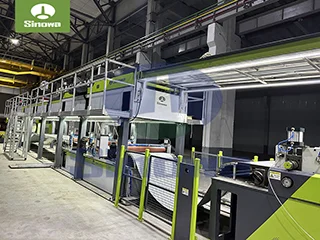
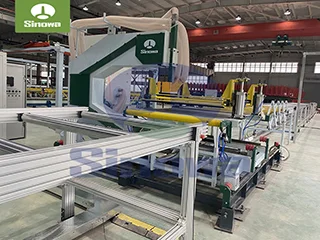
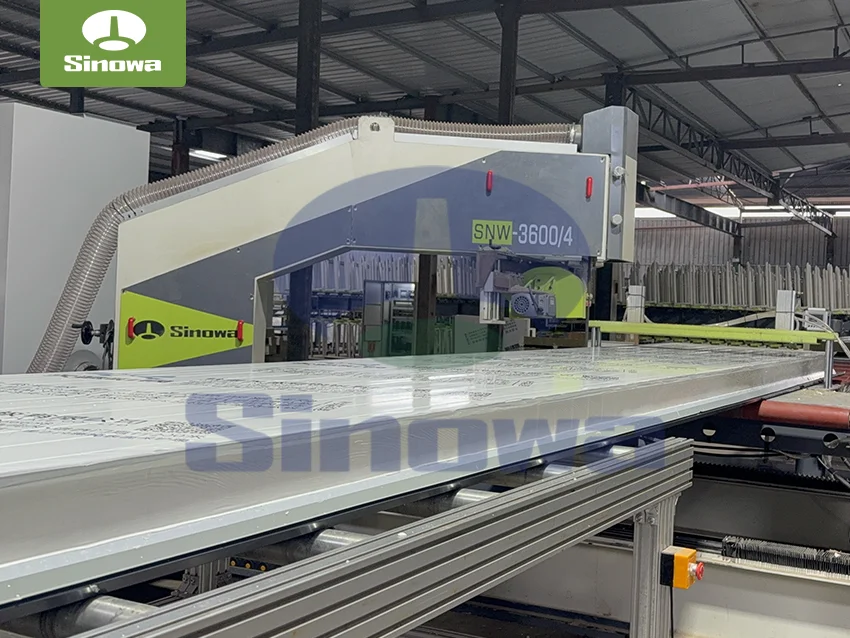
The overall mechanical structure and modular design logic of polyurethane sandwich panel machine determine its production stability, operational flexibility and compatibility with diversified raw materials. The whole production line adopts integrated modular mechanical layout without redundant transmission structures, and all functional modules are linked synchronously through unified intelligent control signals to realize seamless connection of each production procedure. The front-end feeding module consists of double-station unwinding units for upper and lower metal surface plates and automatic correction and preheating devices. Metal coil materials including color-coated steel plates, galvanized steel plates and aluminum alloy plates are placed on unwinding equipment, and constant tension control systems keep the surface plates fed stably without deviation, wrinkling or stretching deformation in the high-speed moving process. The built-in roller preheating device uniformly raises the surface plate temperature to a fixed process range before composite molding, which activates the surface molecular activity of metal plates, eliminates surface moisture and micro impurities generated during coil storage, and fundamentally improves the bonding adhesion between metal surface plates, polyurethane edge banding layers and intermediate fibrous core materials. Following the surface plate feeding module is the core core material laying and arranging module, which adopts servo-controlled synchronous conveying rollers to realize quantitative, flat and dense laying of rock wool or glass wool core materials. The equipment is equipped with automatic core material sorting and compacting structures to avoid loose core material arrangement, local gaps and uneven thickness during continuous production, ensuring consistent overall thickness and uniform internal structure of each finished sandwich panel. The most critical functional unit of the whole production line is the high-pressure polyurethane edge banding foaming module independently configured for edge sealing processing. Different from overall large-area pouring foaming equipment, this module is equipped with two sets of symmetric mobile high-pressure mixing nozzles, which accurately inject proportioned liquid polyurethane raw materials only along the two longitudinal side edges of the fibrous core material. The liquid polyurethane mixture completes rapid physical foaming and chemical curing reaction within seconds after contacting air and preheated metal plates, forming compact closed-cell polyurethane edge sealing strips that fit closely with core material sections and metal surface plates. After finishing edge banding foaming, the semi-finished panel enters the double-belt continuous composite pressing module, which is the key structure to realize overall integrated molding of sandwich panels. The upper and lower circulating steel belts maintain constant and uniform pressure and curing temperature throughout the whole pressing section, avoiding local degumming, surface depression and inconsistent bonding strength caused by uneven pressure in traditional roller pressing equipment. After full curing and shaping, the continuous integrated panel is sent to the servo fixed-length cutting module for precise transverse cutting according to customized dimensional requirements, and finally transported to the automatic stacking module for orderly arrangement and centralized output of finished products. All mechanical modules operate synchronously under centralized intelligent control, realizing fully unmanned continuous production from raw material input to finished panel output, greatly reducing manual intervention and human-caused product defects.
The complete continuous production workflow operated by edge banding polyurethane sandwich panel line can be divided into six interlocked and uninterrupted stages, and each process link is precisely matched in speed, temperature and pressure to ensure consistent product quality in mass production. The first stage is surface plate unwinding and deviation correction. In this process, dual unwinding machines release upper and lower metal surface coils synchronously, and real-time photoelectric deviation sensors monitor the running track of plates. Once tiny deviation is detected, the system will automatically fine-tune the feeding angle within milliseconds to keep the upper and lower plates completely aligned in the follow-up composite process. The second stage is surface plate preheating and surface activation. Moderate and uniform preheating eliminates condensed water on metal surfaces caused by ambient temperature changes, and enhances the combination force between metal surfaces and polyurethane materials, solving the common problem of edge degumming of panels in low-temperature production environments. The third stage is automatic core material paving and shaping. Bulk fibrous core materials are arranged into continuous integral core layers with fixed width and thickness through shaping equipment, and loose fiber burrs on both sides of core materials are trimmed synchronously to create neat section surfaces for subsequent polyurethane edge banding. The fourth stage is targeted high-pressure polyurethane edge banding foaming, the core technological link that distinguishes this equipment from ordinary sandwich panel machine. Two sets of high-pressure metering pumps accurately convey polyol and isocyanate raw materials according to fixed reaction ratios, and the two components are fully mixed in high-speed mixing heads to generate homogeneous reactive liquid polyurethane. The movable nozzles run synchronously with the production line speed, stably pouring liquid polyurethane along two side edges of the core layer. The polyurethane expands rapidly and fills all fiber gaps on core material sections, forming seamless waterproof and airtight edge sealing structures after curing. Unlike manual edge sealing or post-process edge repairing in traditional production methods, online synchronous edge banding completed in the continuous molding process achieves integrated combination of edge sealing strips and panel main body without secondary bonding gaps. The fifth stage is constant-pressure heating composite curing. The assembled whole panel with edge banding layers enters the long-distance double-belt pressing section, where stable pressure and constant temperature environment promote synchronous curing of middle core material composite interface and side polyurethane edge banding layers. The integrated structure formed in this process effectively avoids delamination between edge banding layers and panel main bodies in long-term use. The sixth stage is fixed-length cutting, finished product cooling and automatic stacking. Servo flying saw cutting equipment synchronizes cutting speed with production line operating speed to ensure smooth and burr-free cutting sections without damaging the cured polyurethane edge banding structures. After cutting, panels pass through natural air cooling channels to release internal curing stress, and automatic stackers classify and stack finished panels according to specifications, facilitating subsequent packaging, transportation and warehouse management. The whole closed-loop production process requires no manual auxiliary processing, and each parameter can be adjusted remotely according to different raw material characteristics and panel application scenarios.
Compared with conventional sandwich panel production machine without edge banding functions, polyurethane edge banding sandwich panel machine brings multi-dimensional performance upgrades to finished panels and comprehensive production efficiency improvements to manufacturing enterprises through targeted edge sealing technology and optimized mechanical design. In terms of finished panel performance optimization, the most prominent improvement lies in waterproof and moisture-proof capability. Fibrous core materials such as rock wool and glass wool have porous open-cell structures, and exposed side sections are easy to absorb rainwater and humid air in outdoor environments. Water accumulation inside core materials will not only reduce thermal insulation and fire resistance performance of panels, but also cause internal corrosion of metal surface plates and accelerate overall panel aging. The compact closed-cell polyurethane edge banding layer completely wraps exposed fiber sections, blocking all moisture penetration channels fundamentally, and the water absorption rate of panel edges is reduced to nearly zero. Secondly, the edge structural strength and impact resistance of panels are significantly enhanced. Pure fibrous core edges are fragile and prone to collapse, fiber shedding and edge deformation during transportation, installation and on-site cutting. Rigid polyurethane foam edge banding layers provide stable rigid support for panel sides, reducing edge damage rate in transportation by more than half. In addition, the overall airtightness of building enclosure systems assembled by these panels is greatly improved. For cold storage, pharmaceutical clean rooms and electronic dust-free workshops with strict airtightness requirements, seamless polyurethane edge banding avoids air convection leakage from panel splicing gaps, effectively reducing cooling and ventilation energy consumption of indoor operating equipment. In terms of production efficiency and production cost control for manufacturers, the integrated online edge banding function cancels independent secondary edge sealing processes required in traditional production lines, shortening the overall production flow and reducing supporting workshop space and auxiliary equipment investment. The full servo transmission system replaces traditional hydraulic transmission structures, avoiding hydraulic oil leakage failures and frequent maintenance work of hydraulic components in long-term operation, reducing daily equipment maintenance workload and long-term operation cost. Meanwhile, the intelligent linkage control system realizes automatic early warning of material shortage, temperature abnormality and transmission deviation, reducing defective product rate in continuous production and lowering raw material waste loss. In terms of production compatibility, the equipment supports flexible adjustment of panel overall thickness, edge banding width and polyurethane foaming density, adapting to production needs of wall panels, roof panels, cold storage special panels and clean room enclosure panels with different specifications, realizing multi-purpose production of one equipment and improving capital utilization rate of production workshops.
Panels produced by polyurethane edge banding sandwich panel machinery cover diversified high-standard application scenarios in modern construction and industrial manufacturing fields, perfectly matching the upgrading demands of different industries for building enclosure materials. The first major application scenario is external wall and roof enclosure systems of large industrial plants. Modern industrial factories have high requirements for fire prevention, thermal insulation and outdoor weather resistance of building envelopes. Rock wool core materials provide stable fireproof performance meeting building fire protection design requirements, while polyurethane edge banding layers solve the problem of rainwater infiltration at panel splicing joints in long-term outdoor wind and rain exposure, extending the service life of factory building exterior wall and roof systems. The second core application is cold chain logistics cold storage and constant-temperature warehouse construction. Low-temperature internal operating environment and large temperature difference between indoor and outdoor easily cause condensation water accumulation inside ordinary sandwich panels. Integrated polyurethane edge banding thoroughly blocks condensation penetration paths, maintains stable thermal insulation performance of core layers for a long time, and reduces the operating power consumption of cold storage refrigeration units. The third typical application is high-purity clean rooms in pharmaceutical production, electronic semiconductor manufacturing and medical laboratory industries. Such scenarios require strict dust isolation, air leakage prevention and moisture control for enclosure wall panels. Seamless polyurethane edge banding eliminates fiber shedding gaps of core materials, prevents tiny fiber particles from escaping into indoor clean spaces, and maintains indoor air cleanliness stably. Besides these mainstream scenarios, the panels are also widely used in modular integrated buildings, temporary disaster-resistant buildings, ventilation duct insulation structures and agricultural constant-temperature breeding workshops. With the global promotion of energy-saving building policies and the rapid expansion of prefabricated building markets, the market demand for high-stability edge-banded sandwich panels continues to grow steadily, further driving the popularization and technical iteration of this edge banding sandwich panel production equipment.
Reasonable daily operation specification and standardized regular maintenance are critical to maintaining long-term stable operating efficiency and prolonging the service life of edge banding polyurethane sandwich panel production line. In daily startup operation, operators need to conduct no-load pre-operation inspection of all transmission modules and temperature control systems first, check the residual volume and pipeline smoothness of polyurethane raw material supply systems, and calibrate the parallelism of upper and lower circulating steel belts of the composite pressing module. Formal production can only be started after all operating parameters reach preset process thresholds. During continuous production, the intelligent control system automatically collects real-time data including feeding speed, foaming temperature, mixing ratio, pressing pressure and cutting dimension, and forms operating data curves for operators to view at any time. The system will automatically alarm and trigger emergency shutdown protection once abnormal parameters appear, preventing large-area defective products and mechanical collision failures. For daily maintenance work, regular cleaning of residual polyurethane foam attachments on foaming nozzles and circulating steel belts is required every day after shutdown, to avoid hardened residual foam affecting subsequent panel surface flatness and edge banding accuracy. Weekly maintenance focuses on checking the synchronization of servo motors and the sensitivity of photoelectric deviation correction sensors, ensuring consistent linkage speed of each module. Quarterly deep maintenance includes detection of raw material delivery pipelines, replacement of vulnerable sealing parts, and overall calibration of pressing pressure and temperature systems. Scientific maintenance mode avoids sudden equipment shutdown failures in peak production periods, ensures continuous and stable production capacity of the production line, and reduces overall equipment operation risks for manufacturing enterprises.
Looking ahead to the future development trend of polyurethane edge banding sandwich panel making machine, the equipment will evolve towards digital intelligent upgrading, green low-carbon production and higher production flexibility, adapting to the iterative upgrading needs of the global construction material industry. Firstly, digital twin technology will be gradually applied to the whole production line. A virtual digital model consistent with the physical production line will be built in the control terminal, realizing real-time simulation of production status, advance prediction of vulnerable part wear and intelligent optimization of production parameters without stopping production. This predictive maintenance mode will further reduce equipment failure rate and manual debugging difficulty. Secondly, supporting polyurethane foaming systems will continue to upgrade towards environmental protection. New low-carbon and low-global-warming-potential foaming additives will replace traditional foaming auxiliary materials, reducing carbon emission in panel production process and matching global industrial carbon neutrality goals. Thirdly, the equipment will develop towards higher integration and flexible rapid switching of production specifications. Subsequent optimized models will realize one-click switching of different panel widths and edge banding sizes without manual mold replacement, further improving production flexibility for small-batch and multi-specification customized orders. In addition, combined with automatic online quality detection technology, the production line will add visual surface detection and edge bonding strength automatic scanning modules, realizing full-process automatic quality inspection from raw material input to finished product output, completely realizing unmanned full-process intelligent production.
In conclusion, polyurethane edge banding sandwich panel manufacturing machine fills the long-standing technical gap of poor edge performance of traditional fibrous core sandwich panels in the composite building material manufacturing industry. Through integrated online polyurethane edge banding technology and full-process automated continuous production design, it solves multiple industry pain points including easy water seepage at panel edges, weak edge structural strength, poor overall airtightness and low production efficiency caused by secondary edge sealing. Driven by the booming prefabricated construction industry and increasingly stringent building energy-saving and environmental protection standards worldwide, this equipment has become indispensable core production equipment for high-end insulated sandwich panel manufacturers. With continuous technological innovation in intelligent control, green foaming materials and digital production management, polyurethane edge banding sandwich panel machine will further promote the upgrading of global composite building material manufacturing technology, provide more high-performance, durable and energy-saving sandwich panel products for modern prefabricated buildings, cold storage engineering and clean room construction projects, and continuously contribute to the high-quality and low-carbon development of the global construction industry.
https://www.cnsinowa.com/sandwich-panel-machines/polyurethane-edge-banding-sandwich-panel-machine.html