 sandwich panel machine
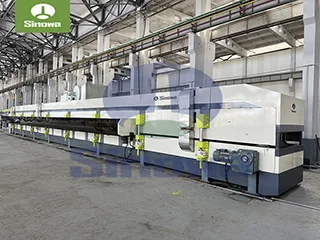
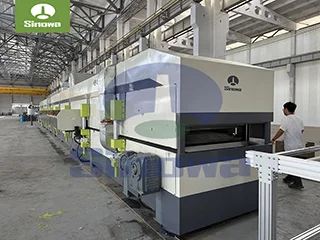
Different from single-function processing machinery, the exterior wall polyurethane sandwich panel machine is a complete linked production assembly composed of multiple interconnected functional modules, each operating in synchronous coordination to form a closed-loop production flow without manual material transfer between processes. The whole production system can be divided into seven core functional units according to production sequence: automatic unwinding and tension control unit, surface plate surface pretreatment unit, continuous roll forming unit, high-precision polyurethane raw material mixing and foaming injection unit, constant-temperature double-belt laminating and curing unit, servo-driven fixed-length cutting unit, and automatic cooling, conveying and stacking unit. All functional modules are centrally controlled by a unified integrated programmable control system, which realizes synchronous speed matching, real-time parameter adjustment and automatic fault early warning across the entire line. Unlike intermittent production equipment that requires repeated start-stop and manual material clamping, this continuous production structure maintains consistent running speed and stable working parameters throughout the manufacturing process, which fundamentally guarantees the overall dimensional uniformity, internal structural compactness and long-term bonding stability of finished exterior wall panels tailored for outdoor building wall environments. Every structural design and parameter setting of the whole machine is optimized targeting the special service conditions of building exterior walls, including long-term ultraviolet radiation exposure, large temperature difference alternation between day and night, strong outdoor wind pressure and rainwater erosion, so that the produced panels can maintain stable physical and chemical performance without deformation, foaming core shrinkage or interface delamination after long-term outdoor service.
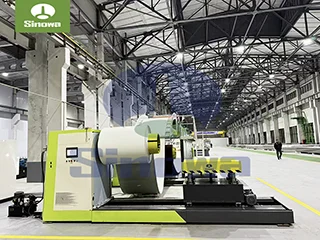
The initial production link starts from the automatic unwinding and tension control unit, which undertakes stable feeding of upper and lower surface base materials for exterior wall sandwich panels. Commonly adopted surface materials include metal color-coated plates with anti-corrosion and anti-ultraviolet coatings and other non-metallic durable decorative substrates suitable for building exterior walls. This unit is equipped with dual-station unwinding supports to realize alternate feeding of two raw material coils, avoiding production halt caused by coil replacement and improving overall continuous production capacity. The built-in closed-loop tension regulation system monitors the real-time stretching state of surface plates through high-sensitivity sensors during the whole feeding process, and dynamically adjusts the unwinding resistance in real time. This design effectively eliminates common defects such as surface plate wrinkling, local stretching deformation and offset feeding that frequently occur in ordinary unwinding equipment, ensuring that upper and lower surface plates keep parallel feeding tracks and consistent tension values before entering subsequent forming procedures. Stable feeding foundation is particularly critical for exterior wall panels, because any subtle surface plate deviation in the early stage will be amplified in the later lamination and curing process, resulting in unqualified flatness of finished wall panels and inability to meet the flatness requirements of building exterior wall overall decoration and assembly construction.
After stable unwinding, surface plates are automatically transported to the surface pretreatment unit, a easily overlooked but indispensable process that directly determines the permanent bonding performance between metal surface plates and polyurethane foam insulation cores. In actual outdoor exterior wall working environments, panel delamination failure mostly originates from insufficient surface adhesion caused by incomplete surface treatment of base plates rather than quality problems of polyurethane foam materials. The pretreatment process mainly includes automatic oil stain removal, surface dust cleaning and micro surface activation treatment. Oil stains and residual protective coatings generated during metal coil manufacturing will form isolation layers between surface plates and foam materials; thorough removal of these impurities ensures direct contact between fresh metal surfaces and polyurethane reaction materials. The surface activation treatment further improves the surface energy of the plate surface, enhancing the mechanical bite force between the rigid foam core and the plate interface during polyurethane foaming expansion and curing. Compared with sandwich panel production line that cancel pretreatment processes to shorten production time, machines equipped with complete pretreatment units can extend the effective bonding service life of exterior wall panels by more than double, adapting to harsh outdoor climatic environments with large seasonal temperature differences and long-term humid weather conditions, and reducing later maintenance and replacement costs of building exterior wall enclosure systems.
Subsequently, processed flat surface plates enter the continuous roll forming unit designed exclusively for exterior wall panel structural characteristics. Different from roof sandwich panels that require high-corrugation structural design for waterproofing and pressure resistance, exterior wall panels prioritize overall flatness, vertical assembly accuracy and concealed splicing groove structures to realize seamless assembly of on-site wall systems and optimize building facade aesthetics. The roll forming unit adopts multi-group precision roller sets arranged in gradual bending sequences, which slowly shapes flat plates into customized exterior wall profiles through multiple low-amplitude extrusion processes, avoiding plate surface cracking and coating damage caused by one-time violent bending. All roller gaps support stepless electric adjustment, enabling the machine to quickly switch between different plate thicknesses, groove depths and edge sealing specifications without replacing integral roller molds. This flexible adjustment capability allows one single production machine to manufacture multiple types of exterior wall panels for different building scenarios, including conventional flat exterior wall panels, sound-insulation enhanced wall panels and wind-pressure reinforced wall panels, greatly improving equipment utilization rate and meeting the diversified personalized needs of modern architectural exterior wall design without adding extra production equipment.
The polyurethane raw material mixing and foaming injection unit is the core functional component that decides the thermal insulation performance, compressive strength and internal compactness of finished exterior wall panels, serving as the heart of the entire sandwich panel line. Polyurethane rigid foam is formed by irreversible chemical cross-linking reaction between two main liquid raw materials matched with auxiliary additives including catalysts, foaming agents and flame retardant components. This unit adopts high-precision independent metering pumps to separately convey polyol and isocyanate raw materials, with flow control accuracy reaching ultra-high standards to ensure strict and stable proportion matching of reaction materials in real time. Stable raw material ratio avoids two common defective problems in panel production: insufficient foaming reaction leading to loose internal foam structure and reduced thermal insulation effect, and excessive reaction concentration causing local foam over-expansion, internal stress accumulation and later panel warping deformation. After precise metering, raw materials are fully stirred and homogenized through a high-pressure mixing head, and the well-mixed liquid polyurethane materials are evenly sprayed onto the lower surface plate moving forward at a constant speed through a linear scanning injection mode. The linear scanning injection structure realizes full coverage of the plate width without missing areas or material accumulation, ensuring consistent foam density across all positions of the panel cross-section. This uniform foaming design is essential for exterior wall panels, as uniform foam structure guarantees consistent overall thermal insulation performance of the whole wall, avoiding local cold bridge points that cause indoor heat loss, wall surface condensation and mold growth in actual building operation.
Following foam injection, upper and lower formed surface plates wrapped with uncured polyurethane foam enter the constant-temperature double-belt laminating and curing unit, which completes foam expansion, integral compounding and full curing molding of sandwich panels. The double-belt structure clamps the upper and lower plates synchronously from both sides, providing stable and uniform horizontal pressure throughout the curing process to limit free excessive expansion of polyurethane foam and maintain fixed panel thickness consistent with design standards. The internal circulating constant-temperature heating system maintains a stable curing temperature environment inside the closed laminating section, matching the optimal reaction temperature required for polyurethane chemical cross-linking. Moderate and constant temperature accelerates curing efficiency while preventing high-temperature damage to the anti-corrosion and decorative coatings on exterior wall surface plates. The effective length of the laminating section is scientifically calculated according to sandwich panel manufacturing line operating speed and foam curing reaction cycle, ensuring that polyurethane foam completes full cross-linking reaction before exiting the laminating unit, with no residual uncured liquid components inside the panel. Meanwhile, the unit is equipped with micro-pressure balance adjustment devices on both sides to compensate subtle pressure differences generated during high-speed continuous operation, ensuring that the upper and lower surfaces of finished panels remain completely flat without unilateral indentation or bulge defects. Panels after integrated lamination and curing have formed an integral composite structure, with foam cores closely bonded to surface plates to form an indivisible whole, possessing complete structural strength and thermal insulation performance required for exterior wall installation.
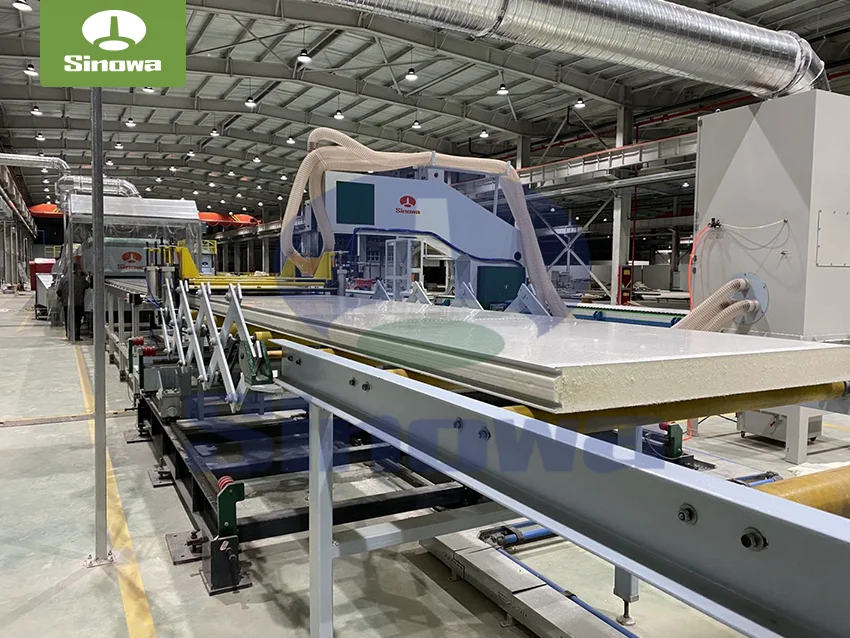
After integral curing and molding, continuous long-strip sandwich panels are transported to the servo fixed-length cutting unit for segmented cutting according to actual construction drawing size requirements. This unit adopts photoelectric tracking and servo synchronous cutting technology, which synchronizes cutting tool operating speed with panel conveying speed to realize dynamic flying cutting without stopping the polyurethane sandwich panel line. This non-stop cutting mode maintains continuous operation of the whole production line and avoids production efficiency loss caused by frequent start and stop. The cutting system supports free setting of arbitrary finished panel lengths, and the dimensional error of cutting length is controlled within an extremely small range to meet the high-precision assembly requirements of prefabricated building exterior walls. Meanwhile, the cutting mechanism is equipped with edge trimming functions to process uneven burrs and residual foam materials on panel side edges, ensuring neat panel splicing ports for seamless butt joint during on-site building assembly. All cutting waste materials are automatically collected by a matching dust and debris recovery device, which keeps the production environment clean and realizes centralized recovery and harmless treatment of production waste materials, fitting the green manufacturing development requirements of modern building material production factories.
The final production procedure includes natural air cooling and automatic stacking output. High-temperature panels discharged from the laminating unit will generate tiny internal stress due to temperature difference; the independent cooling section gradually reduces panel temperature to ambient temperature through natural air convection without forced rapid cooling, eliminating panel bending and warping caused by temperature stress release. Cooled qualified finished panels are automatically sorted, flipped and stacked by mechanical arms without manual handling, reducing artificial surface scratching and collision damage to exterior wall decorative surfaces. The whole production process from raw material coil feeding to finished panel stacking is fully automated, with only a small number of operators required to monitor operating parameters on the central control touch screen, which greatly reduces labor input on the PU sandwich panel production line and eliminates quality fluctuations caused by manual operation errors.
Compared with production equipment for ordinary indoor partition sandwich panels, exterior wall PU sandwich panel machine has targeted structural optimization aiming at outdoor harsh working conditions in multiple dimensions. First, the overall mechanical frame of the whole machine adopts enhanced anti-deformation structural design, adapting to long-term continuous high-load operation without frame deformation, ensuring long-term stable operation accuracy of the PU sandwich panel line. Second, the foaming system is optimized for outdoor temperature resistance, enabling produced foam cores to maintain stable insulation performance under extreme high temperature and extreme low temperature environments without thermal performance attenuation. Third, the lamination pressure and curing temperature parameters are upgraded to improve interface bonding toughness, so panels can resist repeated expansion and contraction caused by outdoor temperature alternation without interface delamination. These targeted upgrades make equipment specially oriented to exterior wall engineering scenarios, rather than universal panel production lines that cannot adapt to outdoor weather changes.
From the perspective of downstream building application value, panels manufactured by this professional machine effectively solve multiple bottlenecks of traditional exterior wall construction. In terms of energy saving, the closed-cell polyurethane foam core has extremely low thermal conductivity, which can greatly reduce indoor and outdoor heat exchange, lowering the long-term heating and refrigeration energy consumption of buildings. In terms of construction efficiency, prefabricated integrated panels can be directly assembled on site without secondary insulation plastering, waterproof coating and other multi-process operations, shortening the overall exterior wall construction cycle by nearly half. In terms of durability, integrated composite structures avoid hollowing and peeling risks common in traditional on-site pasted insulation layers, extending the overall service life of building exterior walls. In terms of comprehensive economic benefits, centralized factory integrated production reduces material waste compared with scattered on-site construction, and automated machine production lowers unit manufacturing cost of panels, bringing dual cost advantages for building material manufacturers and construction project contractors.
Looking ahead to the future development trend of such production machinery, polyurethane exterior wall sandwich panel machinery will further evolve towards intelligent linkage, energy-saving production and flexible customized manufacturing. The introduction of real-time data collection and cloud monitoring modules will enable the equipment to automatically collect production data including raw material consumption, curing temperature, operating speed and product qualification rate throughout the day, realize self-analysis of production status and automatic parameter optimization, and reduce manual intervention in parameter debugging. In terms of energy conservation, waste heat generated during the foam curing process will be recycled and reused for preheating surface plates and raw material storage tanks, reducing overall energy consumption of the polyurethane sandwich panel production line. In terms of flexible production, the machine will realize one-key switching of multiple panel specifications and profiles, supporting rapid production of special-shaped exterior wall panels matching curved building facades and personalized building exterior wall modeling requirements. In addition, matched with the iterative upgrading of new environmentally friendly polyurethane raw materials, the foaming and mixing system of the machine will also be synchronously optimized to adapt to new low-carbon and low-volatile reaction materials, further promoting the green and low-carbon development of the whole building material manufacturing chain.
In summary, the polyurethane exterior wall sandwich panel production machine is a key intelligent manufacturing device connecting mechanical manufacturing technology and green building industry development. It realizes standardized, high-efficiency and stable batch production of high-performance exterior wall insulation sandwich panels through coordinated operation of multiple precision functional modules, fills the quality gap of on-site traditional exterior wall construction, and provides reliable equipment support for the popularization of prefabricated energy-saving buildings worldwide. With the global construction industry continuously raising standards for building energy conservation, carbon emission reduction and building envelope durability, the market demand for high-precision, high-stability and low-energy-consumption polyurethane exterior wall sandwich panel machine will keep growing continuously. Continuous technological iteration and structural optimization of such equipment will further promote the upgrading of the entire exterior wall building material industry, accelerate the popularization of low-carbon prefabricated buildings, and contribute to the sustainable development of the global construction field.
https://www.cnsinowa.com/sandwich-panel-machines/polyurethane-exterior-wall-sandwich-panel-machine.html