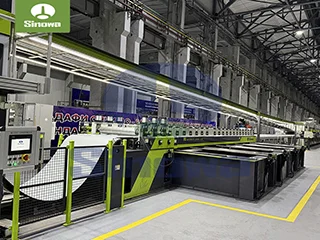
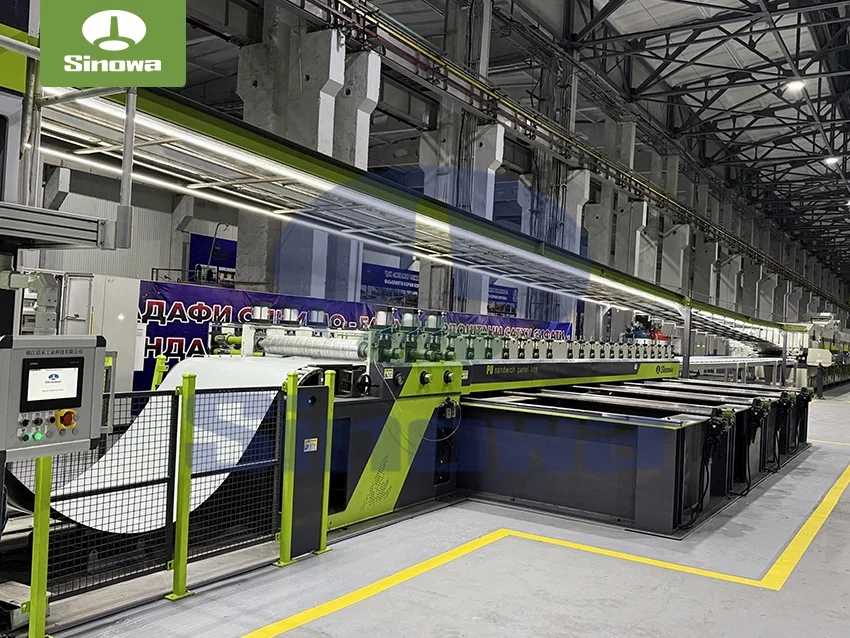
 sandwich panel line
The overall operational logic of the insulated PU sandwich panel line centers on synchronized coordination of multiple functional modules, with every production step precisely calibrated to ensure consistent panel quality and structural stability. The entire production process starts with the feeding and pretreatment of surface base materials, which are commonly rigid, durable substrates capable of resisting external environmental erosion and mechanical pressure. Coiled base materials are steadily released through automatic uncoiling units, eliminating manual feeding errors and material waste. After uncoiling, the materials pass through precision leveling and trimming structures to remove surface wrinkles, edge burrs, and irregular deformations, ensuring the flatness and uniform width of the upper and lower surface layers. This pretreatment stage is essential, as flawed base material flatness or uneven edges will directly affect the lamination tightness and overall structural uniformity of the finished panels, potentially leading to hidden risks such as local thermal bridging and structural looseness in subsequent usage.
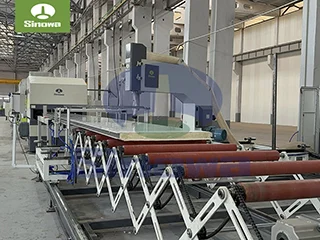
Following base material pretreatment, the system enters the core foaming and material compounding stage that defines the insulation performance of PU sandwich panels. Polyurethane foam, the core thermal insulation layer of the panels, is formed through a controlled chemical reaction between two primary liquid raw materials. The PU sandwich panel machine is equipped with high-precision metering and conveying devices that transport different raw material components to a high-speed mixing head at stable and accurate ratios. Uniform mixing of raw materials is critical to forming a high-quality closed-cell foam structure; insufficient mixing leads to uneven foam density, while excessive mixing disrupts the foaming reaction balance, both compromising thermal insulation and structural strength. After thorough mixing, the liquid composite material is evenly poured and coated on the surface of the lower base material through a reciprocating spreading mechanism, forming a continuous liquid foam layer with consistent thickness and coverage.
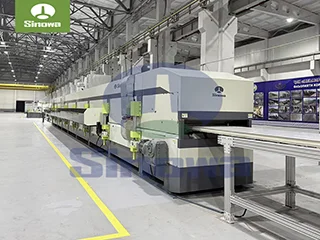
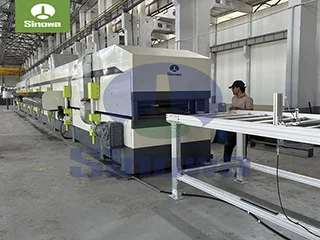
Subsequently, the upper and lower base materials with the intermediate foam layer enter the constant-temperature lamination and curing unit, the key link for shaping integrated sandwich panels. This unit adopts a double-belt transmission structure with independent temperature control systems on both upper and lower sides, creating a stable constant-temperature curing environment. As the composite materials advance steadily with the transmission system, the liquid polyurethane foam undergoes continuous foaming, expansion, and solidification reactions under fixed temperature and pressure conditions. The closed-cell structure gradually forms and stabilizes during this process, endowing the panel with excellent thermal insulation, sound insulation, and pressure resistance. The synchronized operation of transmission speed, curing temperature, and lamination pressure is the core of PU sandwich panel production line precision control. Stable pressure ensures tight bonding between the foam core and surface layers without delamination, while constant and appropriate temperature guarantees complete chemical reaction of the foam materials and uniform cell structure distribution across the entire panel. Unstable parameters in this stage will cause inconsistent core layer density, local hollowing, or weak bonding between layers, severely reducing the service life and performance stability of finished panels.
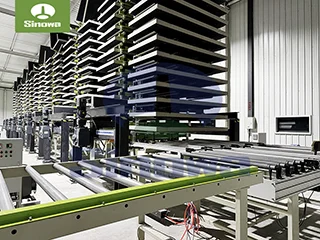
After completing curing and shaping, the continuous integrated panel enters the post-processing stage of the polyurethane sandwich panel production line, covering fixed-length cutting, edge finishing, surface inspection, and automatic stacking. The high-precision cutting device tracks the operating speed of the production line in real time, implementing dynamic fixed-length cutting to ensure consistent dimensions of each finished panel and meet diverse size requirements for different application scenarios. The edge finishing mechanism trims irregular edges generated during lamination and curing, optimizing panel flatness and assembly accuracy for on-site construction. The subsequent surface inspection process eliminates defective products with surface scratches, layer delamination, and uneven thickness, ensuring that all delivered finished panels meet uniform quality standards. Finally, qualified panels are automatically stacked and arranged neatly by the stacking device, simplifying subsequent packaging, transportation, and warehouse management, and greatly improving overall production efficiency.
The inherent technical advantages of the insulated polyurethane sandwich panel line are fully reflected in product performance consistency and production stability. The closed-cell polyurethane foam core produced by the continuous production process features extremely low thermal conductivity, effectively blocking heat conduction and convection, and delivering superior thermal insulation performance compared with traditional insulation materials. The automated continuous production mode eliminates quality fluctuations caused by manual operation in intermittent production, achieving precise control over foam density, panel thickness, and bonding tightness for each product. The uniformly distributed closed-cell structure also endows the panels with excellent moisture resistance and air tightness, preventing moisture penetration that could lead to insulation performance attenuation and mold growth, thus maintaining long-term stable thermal insulation effects in humid and variable temperature environments.
In terms of structural performance, the polyurethane sandwich panel machine precise lamination process enables seamless integration between the rigid surface layer and the flexible foam core. The composite structure formed by the two layers complements each other’s advantages: the surface layer provides strong mechanical support, resisting external impact, bending, and atmospheric erosion, while the foam core bears buffer and insulation functions. This structural design makes the finished panels lightweight yet high-strength, effectively reducing the self-weight of building envelopes and lowering the load-bearing pressure on building structures. Compared with traditional brick and concrete insulation structures, panels produced by this insulated sandwich panel production line significantly reduce overall building weight, simplify foundation and structural design, and shorten construction cycles. Meanwhile, the integrated forming process avoids the quality problems of inconsistent bonding and easy peeling caused by on-site manual compounding of insulation layers and decorative layers.
From the perspective of production efficiency and resource utilization, the automated design of the insulated PU sandwich panel making machine optimizes the entire production workflow and minimizes human intervention. The highly synchronized modular operation realizes seamless connection between each production link, eliminating waiting intervals and material loss in segmented production. The precise raw material metering system accurately controls the dosage of each component, avoiding raw material waste caused by excessive feeding in traditional processes. The stable and continuous production state not only improves unit-time output but also reduces the rate of defective products, effectively lowering comprehensive production costs. In addition, the optimized foaming reaction process reduces the generation of redundant by-products during production, making the entire production process more environmentally friendly and in line with the sustainable development requirements of the modern building materials industry.
The application scenarios of panels produced by the insulated PU sandwich panel manufacturing line cover multiple fields of modern construction and industrial manufacturing, with prominent targeted advantages in different environments. In cold storage and low-temperature logistics buildings, the excellent thermal insulation performance of PU panels effectively isolates internal and external temperature differences, reduces cold air loss, lowers the long-term operation load of temperature control equipment, and maintains stable low-temperature storage environments. In industrial plant construction, the lightweight and rapid assembly characteristics of the panels adapt to the fast construction needs of large-span industrial buildings, while their sound insulation and heat insulation effects improve the working environment inside plants. In temporary modular buildings, mobile workshops, and emergency construction facilities, the standardized and unified finished panels support rapid splicing and assembly, greatly shortening project construction cycles.
Moreover, these panels also show unique application value in high-temperature workshops, clean workshops, and commercial building exterior walls. In high-temperature industrial environments, the efficient thermal insulation layer can block external heat radiation, stabilize indoor working temperature, and improve production comfort and equipment operation stability. In clean workshop scenarios, the smooth and flat surface of the panels is not easy to accumulate dust, easy to clean and maintain, and meets the high cleanliness requirements of precision manufacturing, pharmaceutical production, and electronic processing industries. In commercial building exterior wall decoration and insulation integration projects, the panels take into account decorative aesthetics and functional insulation, realizing integrated construction of building exterior wall insulation and decoration, simplifying construction procedures, and improving overall project quality.
With the continuous advancement of industrial automation and building energy-saving technologies, the insulated sandwich panel line is also undergoing continuous technical iteration and functional optimization. Modern production lines are gradually adopting more intelligent parameter adjustment systems, which can automatically adjust production parameters such as foaming ratio, lamination pressure, and curing temperature according to different raw material characteristics and product specifications, realizing adaptive production of diversified products. The upgraded transmission and control systems improve the running stability of the equipment, reduce equipment failure rates and maintenance costs, and extend the continuous working cycle of the insulation board production line. At the same time, the optimized structural design of the production line reduces equipment energy consumption during operation, further improving the energy-saving level of the entire production process and realizing dual energy-saving benefits of production manufacturing and terminal product application.
In the context of the global emphasis on building energy conservation and green construction, the market demand for high-efficiency insulation building materials continues to grow, driving the continuous improvement of the technical level of continuous PU sandwich panel production line. The standardized and automated production mode supported by this production line solves the problems of low efficiency, inconsistent quality, and high resource consumption in traditional insulation panel production. The finished products’ excellent thermal insulation, structural stability, environmental adaptability, and convenient construction characteristics make them an important mainstream material for modern green building envelopes. In the future, with the further development of intelligent manufacturing and environmental protection technologies, the insulated PU sandwich panel machinery will evolve toward higher automation intelligence, lower energy consumption, and stronger product diversification adaptability, providing more reliable technical support for the upgrading of the global building energy-saving material industry and the development of green low-carbon buildings.
https://www.cnsinowa.com/sandwich-panel-machines/insulated-pu-sandwich-panel-line.html