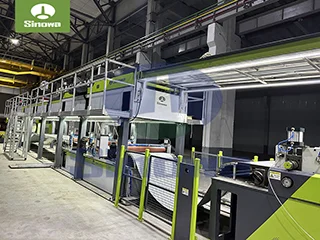
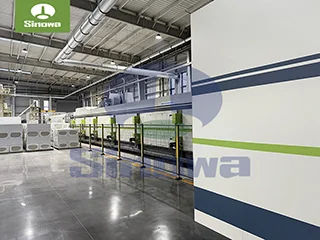
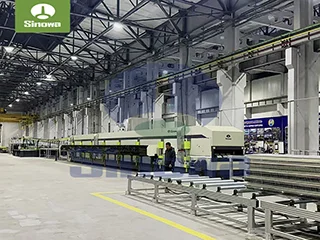
sandwich panel line
Features of Easy Maintainable PU Sandwich Panel Production Line
Modular design: The Easy Maintainable PU Sandwich Panel Production Line adopts a modular design concept, decomposing the production line into multiple independent functional modules. This design not only facilitates the installation and debugging of equipment, but also enables quick identification of problematic modules during maintenance, reducing downtime and improving production efficiency.
Intelligent monitoring: integrating advanced sensors and monitoring systems to monitor the operation status and key parameters of the production line in real time. Once a malfunction or abnormality occurs, the system will immediately issue an alarm and provide troubleshooting guidance, enabling maintenance personnel to respond quickly and solve the problem.
Easy to clean materials: Use materials that are easy to clean to make production line equipment, reducing cleaning difficulty and time. At the same time, design reasonable cleaning channels and tool storage areas to ensure the smooth progress of cleaning work.
Standardized components: The Easy Maintainable PU Sandwich Panel Production Line uses standardized components to facilitate the procurement and replacement of spare parts. This not only reduces maintenance costs, but also improves the universality and interchangeability of the equipment.
Advantages of an Easy Maintainable PU Sandwich Panel Production Line
Improve production efficiency: By reducing downtime and maintenance time, the production line can maintain continuous and stable operation, thereby improving production efficiency.
Cost reduction: The easy to maintain design reduces maintenance difficulty and costs, reducing production losses caused by equipment failures.
Improving product quality: A stable production line helps maintain consistency in product quality and increase customer satisfaction.
Enhance market competitiveness: Easy Maintainable PU Sandwich Panel Production Lines enable enterprises to quickly respond to market changes, flexibly adjust production plans, and enhance market competitiveness.
Innovative design for achieving efficient operation
Automation and Intelligence Upgrade: Introducing automation and intelligence technologies such as robots, automatic conveying systems, and intelligent scheduling systems to achieve automated production and intelligent management of production lines. This can not only improve production efficiency, but also reduce the risks and costs of manual intervention.
Continuous optimization and improvement: Establish a continuous improvement mechanism and regularly evaluate and optimize the production line. By collecting and analyzing production data, identifying potential problems and proposing improvement measures, the performance and stability of the production line are continuously improved.
Training and maintenance team building: Strengthen the training and technical support of maintenance personnel, improve their professional skills and troubleshooting abilities. At the same time, establish a comprehensive maintenance team to ensure timely and effective handling of daily maintenance and emergency repair work on the production line.
In the modern manufacturing landscape for construction and industrial insulation materials, polyurethane sandwich panels have emerged as one of the most essential and widely applied building components, valued for their excellent thermal insulation performance, structural rigidity, weather resistance, and versatile adaptability across residential buildings, industrial workshops, cold storage facilities, and commercial architectural projects. The production efficiency, product consistency, and long-term operational stability of PU sandwich panels are fundamentally determined by the overall performance and daily operational reliability of the supporting production line, while maintainability has gradually become a core indicator that production enterprises prioritize alongside basic production capacity and product forming precision. Traditional PU sandwich panel production lines often feature complex integrated structural layouts, densely arranged internal mechanical components, closed pipeline systems, and overly complicated electrical control wiring, which not only lead to tedious daily inspection work but also cause prolonged downtime once minor mechanical wear, pipeline blockage, or electrical connection failures occur. Excessive time and labor costs spent on routine upkeep and fault troubleshooting seriously hinder continuous production scheduling, reduce overall operational efficiency, and indirectly increase the comprehensive production cost of finished sandwich panels for manufacturers. An easy maintainable PU sandwich panel production line is professionally designed and optimized to solve the pain points of difficult daily maintenance, complex fault repair, and high post-operation upkeep costs of conventional production equipment, focusing on modular structural layout, standardized component configuration, open and accessible mechanical and pipeline arrangement, intuitive intelligent monitoring feedback, and simplified daily maintenance operation procedures, enabling production operators and maintenance technicians to complete daily inspection, regular lubrication, component replacement, fault detection and rapid repair work in the shortest possible time, ensuring that the entire production line maintains stable and efficient long-term operation with minimal downtime and human resource investment.
The overall design concept of an easy maintainable PU sandwich panel production line runs through every link from raw material feeding and surface material pretreatment to roll forming, PU foam mixing and pouring, continuous lamination and curing, fixed-length cutting, finished product cooling, automatic stacking and final discharging, with all functional units following the core principle of convenient daily management and simple later maintenance. Unlike traditional production lines that integrate multiple functional structures into a single closed mechanical frame, this optimized production equipment adopts an independent modular partition design for each production functional area, dividing the entire continuous production process into relatively independent and interconnected working modules including uncoiling and feeding module, surface film covering and edge trimming module, roll forming processing module, raw material preheating module, PU high-pressure foaming and mixing pouring module, double-belt continuous lamination and constant-temperature curing module, fixed-length precise cutting module, finished product conveying and cooling module, and automatic stacking and discharging module. Each independent module is arranged with reasonable spacing and reserved sufficient operating and maintenance space around the equipment body, avoiding the problem of dense component arrangement and overlapping structural layouts that make it difficult for maintenance personnel to approach key parts for inspection and repair. Every connecting part between adjacent modules adopts quick connection and butt joint structures instead of traditional fixed welding or complicated bolt fastening structures, which not only ensures the overall synchronization and coordinated operation of the entire production line during formal production but also allows independent disassembly, single-module debugging, separate maintenance and component replacement of any individual module without affecting the normal use of other functional modules, greatly improving the flexibility of daily equipment management and the convenience of later equipment upgrading and transformation.
The raw material feeding and uncoiling part, as the starting link of the entire PU sandwich panel production process, undertakes the task of stably conveying metal surface coils and other base materials into the subsequent processing links, and the easy maintenance optimization design of this part is mainly reflected in the simplification of the tension adjustment structure and the convenience of roller replacement and daily cleaning. The uncoiling device is equipped with a mechanical tension automatic balancing structure with purely mechanical linkage adjustment, avoiding the use of a large number of complex electronic sensing components that are prone to frequent failure and difficult maintenance in traditional tension control systems. The mechanical tension structure has fewer vulnerable parts, and all key stress-bearing and transmission components are exposed in an open layout, making it convenient for maintenance personnel to regularly check the wear degree of transmission gears, tension springs and rotating bearings during daily inspections, and complete regular lubrication and dust removal work without disassembling multiple layers of protective casings. All material supporting rollers and guiding rollers in the feeding section adopt standardized universal shaft core and bearing seat configuration, realizing quick disassembly and assembly of a single roller without professional tools and complicated disassembly steps. In the daily production process, surface materials will inevitably produce tiny metal debris and dust during feeding and preliminary guiding, which easily accumulate on the surface of the rollers and affect the flatness of subsequent material conveying; the open structural design allows operators to clean the surface of each roller thoroughly in a short time before and after daily production, avoiding long-term accumulation of dirt leading to material deviation and roller wear and tear. At the same time, all protective baffles of the feeding module adopt quick-release buckle fixation instead of traditional screw fixing, which can be opened and closed in one step during maintenance, greatly shortening the preparation time for daily inspection and fault maintenance.
The surface material pretreatment and roll forming module is a key link to shape the outer contour and structural size of the PU sandwich panel surface layer, and the maintainability optimization of this part focuses on the simplification of the roll group transmission system and the convenience of forming roller gap adjustment and wear replacement. The roll forming system is composed of multiple groups of forming rollers arranged in sequence, and the transmission between each group of forming rollers adopts a centralized and split combined transmission structure, with each independent roll group equipped with an independent separate transmission unit. This design avoids the problem that the failure of a single transmission part in the traditional integrated transmission system leads to the shutdown of the entire forming link and difficult fault troubleshooting. Each transmission unit is arranged on the outer side of the forming equipment frame with an exposed layout, and all transmission chains, gears and driving motors are in a visible and accessible state, enabling maintenance personnel to quickly locate abnormal noise, transmission jamming and other common faults in the production process at the first time. The gap adjustment structure of the forming rollers adopts a manual mechanical locking adjustment device with clear scale marking, abandoning the complex automatic hydraulic adjustment system that is prone to oil leakage and circuit failure; operators can accurately adjust the gap between the forming rollers according to the production specifications of different sandwich panels through simple manual operation, and the locking structure is stable and reliable with low failure rate. All forming rollers are made of wear-resistant materials with surface anti-corrosion treatment, and the standardized installation structure allows worn rollers to be replaced quickly without professional debugging technology, effectively reducing the time cost of equipment shutdown maintenance caused by roller wear and deformation. In addition, the edge trimming and film covering auxiliary devices matched with the pretreatment link also adopt a modular integrated design, with simple internal structure and few vulnerable parts, and the daily cleaning and blade replacement work of the trimming device can be completed by a single operator in a short time.
The PU raw material preheating, high-pressure mixing and foaming pouring module is the core functional part that determines the bonding strength and thermal insulation performance of the PU sandwich panel core layer, and this part is the key optimization focus of the easy maintainable production line, targeting the problems of complex pipeline layout, easy blockage of mixing parts, difficult cleaning of residual raw materials and difficult temperature control system maintenance in traditional foaming systems. The entire PU raw material conveying pipeline adopts a standardized modular pipeline combination design, with all pipeline joints adopting quick-plug quick-release connectors instead of traditional welded fixed pipelines. This design enables maintenance personnel to quickly disassemble and separate each pipeline section during daily maintenance, thoroughly clean residual polyurethane raw materials that are easy to solidify and block in the pipeline, and avoid pipeline blockage caused by long-term accumulation of residual materials affecting the normal proportioning and conveying of raw materials. The high-pressure mixing head, as the core component of raw material mixing and reaction, adopts a split detachable structural design, and the internal mixing cavity and stirring components can be quickly disassembled and cleaned without the need for professional disassembly tools and complicated operation steps, effectively solving the problem that the mixing head of traditional equipment is integrally sealed and difficult to clean, resulting in uneven raw material mixing and unstable foaming effect after long-term use. The raw material preheating and temperature control system adopts an independent single-point temperature control layout, with each temperature detection point and heating component arranged independently and equipped with independent fault prompt and display functions. Once individual temperature control components fail, the system can accurately feedback the specific fault location, avoiding the need for overall inspection and troubleshooting of the entire temperature control system as in traditional integrated temperature control equipment. All electrical wiring of the foaming module is arranged in separate wiring grooves with clear marking classification, and the wiring grooves adopt an openable protective design, making it convenient for maintenance personnel to regularly check the aging of lines and loose wiring joints, and complete line maintenance and replacement work in a targeted manner.
The double-belt continuous lamination and constant-temperature curing module undertakes the key process of bonding the upper and lower surface materials with the PU foam core layer and completing foam curing and shaping, and the maintainability optimization of this part is mainly reflected in the convenient maintenance of the conveyor belt system and the simple adjustment of the curing temperature and pressure system. The upper and lower circulating conveyor belts of the double-belt laminator are the main bearing and pressure-bearing components of panel lamination and curing, and the tensioning and deviation correction structure of the conveyor belt adopts a purely mechanical automatic deviation correction design with a simple structure and few vulnerable parts, avoiding the frequent failure of electronic deviation correction components in traditional equipment. The tensioning device of the conveyor belt is arranged on the outer side of the equipment with an exposed design, allowing maintenance personnel to regularly check the tightness and wear degree of the conveyor belt during daily production, and complete tension adjustment and belt replacement work quickly. The internal constant-temperature curing area adopts an open heat preservation structural design, with the heat preservation baffle fixed by quick-release structures, which can be quickly opened when internal maintenance is needed to check the heating components and internal heat conduction status of the curing area. The lamination pressure adjustment adopts a mechanical constant-pressure locking structure, which can maintain stable lamination pressure during long-term production without frequent hydraulic system debugging and maintenance, reducing the failure probability of the pressure system and the workload of daily pressure parameter calibration. All rotating rollers and supporting components inside the lamination and curing module are equipped with standardized lubrication ports, and the lubrication work can be completed through simple oil injection operation without disassembling a large number of equipment structures, ensuring the flexible operation of mechanical components and prolonging the service life of key parts.
The fixed-length cutting, finished product conveying, cooling and automatic stacking module is the final processing link of PU sandwich panel production, and the easy maintenance design of this part focuses on the stable operation of the cutting system and the simplification of the stacking mechanical structure maintenance. The fixed-length cutting system adopts a mechanical cutting structure with stable operation and low failure rate, abandoning the complex high-precision numerical control cutting structure with many electronic accessories in traditional equipment; the cutting tool and transmission component layout is open and intuitive, and the tool replacement and cutting edge grinding work can be completed quickly. The cutting waste recycling device is arranged on the side of the cutting equipment with an independent modular design, making it convenient for regular cleaning of waste materials and avoiding waste accumulation affecting the normal operation of the cutting equipment. The finished product conveying and cooling conveyor adopts a simple roller conveyor structure, with all conveyor rollers and transmission parts adopting standardized general accessories, which are easy to purchase and replace in the later stage, reducing the difficulty and cost of accessory replacement after component wear. The automatic stacking device adopts a mechanical linkage stacking structure with few driving components, avoiding the complex multi-axis servo control structure with high maintenance difficulty in traditional stacking equipment; the mechanical limit and positioning components of the stacking device are clearly arranged, making it convenient for daily inspection and adjustment, ensuring the stable stacking of finished panels without offset and falling, and reducing the failure rate of the finished product finishing link.
In addition to the structural optimization of each functional module, the intelligent control system configuration of the easy maintainable PU sandwich panel production line also fully considers the needs of convenient daily operation and simple fault maintenance. The entire production line adopts a centralized integrated control mode with an intuitive and simple operation interface, abandoning the complicated and cumbersome control logic and numerous hidden parameter settings of traditional production equipment. All production operation parameters, equipment operating status, real-time working temperature, operating speed and other key information are displayed centrally on the control terminal, and any abnormal operation and component failure of each module will be accurately prompted with clear fault location and simple fault cause description, enabling maintenance personnel to quickly judge the fault type and formulate targeted maintenance and repair plans without complicated professional technical debugging. The control system also has a one-click reset and one-click maintenance mode function; when the equipment needs daily maintenance and regular inspection, the maintenance mode can be activated with one key, the equipment will automatically stop the production operation state and enter a safe maintenance state, all mechanical transmission components will be locked safely, effectively avoiding safety hazards during maintenance work. At the same time, the control system is equipped with a regular maintenance reminder function, which automatically records the operating hours of each key component of the equipment, and automatically sends reminder prompts when reaching the set maintenance cycle, guiding operators and maintenance personnel to complete regular lubrication, component inspection and aging part replacement work on time, realizing preventive maintenance of the equipment, reducing the occurrence probability of sudden equipment failures, and further reducing the workload of emergency fault maintenance.
The long-term application value of an easy maintainable PU sandwich panel production line in actual production is extremely prominent, especially for medium and large-scale sandwich panel manufacturing enterprises that pursue continuous and stable production and control comprehensive operating costs. In actual industrial production, the downtime caused by equipment maintenance and fault repair is the most important factor affecting production output and delivery cycle; traditional production lines often need to shut down for several hours or even more than one day for a simple component replacement and pipeline cleaning work, resulting in production schedule delays and increased idle loss of production capacity. The easy maintainable optimized production line greatly shortens the time required for all daily maintenance and fault repair work through modular design, standardized component configuration, open structural layout and intuitive control and prompt system, minimizing equipment downtime and ensuring the continuity and stability of production work. At the same time, the simplified maintenance operation procedures and low failure rate design reduce the professional skill requirements for maintenance personnel; enterprises do not need to be equipped with a large number of professional senior maintenance technicians, and ordinary trained operators can complete most of the daily maintenance and simple fault repair work, effectively reducing the labor cost of enterprise equipment management. In addition, standardized and universal accessories and components are convenient for later replacement and procurement, avoiding the problem of difficult procurement and high replacement cost of special customized parts of traditional production lines, reducing the long-term equipment operation and maintenance costs of enterprises.
With the continuous upgrading of the construction industry's requirements for the quality and output of PU sandwich panels, production enterprises not only pay attention to the production efficiency and product quality of production equipment, but also pay more and more attention to the long-term operational stability and low-cost maintenance performance of the equipment. An easy maintainable PU sandwich panel production line perfectly balances high-efficiency continuous production, stable product quality and convenient later maintenance, solves various maintenance pain points of traditional production equipment through humanized and practical structural optimization and functional design, adapts to the actual production management needs of different scale sandwich panel production enterprises. Whether it is daily routine production operation, regular equipment maintenance and upkeep, or sudden fault repair and later equipment upgrading and transformation, this optimized production line can show excellent convenience and practicability, help production enterprises reduce comprehensive operating costs, improve production operational efficiency, maintain stable product quality output, and lay a solid equipment foundation for enterprises to gain stable competitive advantages in the increasingly fierce market competition. In the future, with the continuous development of manufacturing technology, the easy maintainable design concept of PU sandwich panel production lines will be further deepened and optimized, continuously adapting to the changing production needs of the construction insulation material industry, and promoting the standardized, efficient and low-cost sustainable development of the entire PU sandwich panel manufacturing industry.
https://www.cnsinowa.com/sandwich-panel-machines/easy-maintainable-pu-sandwich-panel-production-line.html