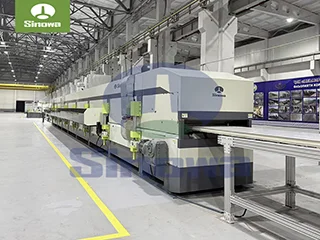
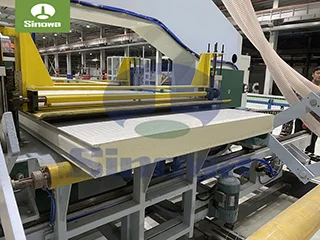
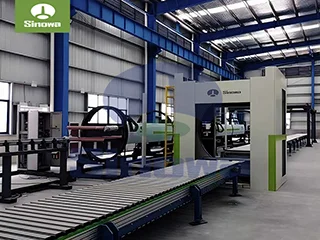
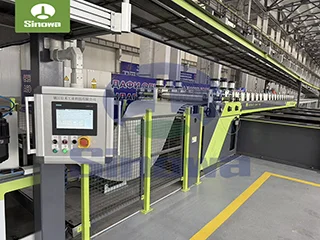
sandwich panel line
To fully understand the core value of color steel PU sandwich panel line and its manufactured products, it is essential to first clarify the basic structural composition formed by the standardized production process of the production line, which is the fundamental premise for analyzing subsequent structural performance classification and practical application expansion. All finished color steel PU sandwich panels produced by formal continuous production lines adopt a typical three-layer composite sandwich structure with an integrated integral molding design, without any loose assembly components or secondary bonding links in the whole structure. The upper and outer layers of the panel are high-quality color-coated steel substrates with uniform thickness and smooth surface texture, which undergo professional surface pretreatment and continuous roll forming processing on the production line. The color steel surface plates not only undertake the external protection function of the entire sandwich panel structure, resisting external natural weather erosion, surface impact friction and daily structural external force extrusion, but also serve as the main stress-bearing framework of the composite panel, dispersing and transferring various static and dynamic loads generated during building use to the building’s main keel structure. The middle core layer of the panel is high-density rigid polyurethane foam formed by continuous foaming and one-time curing on the production line. The PU foam core material forms a fine and closed-cell porous structure inside during the automatic foaming and compounding process of the polyurethane sandwich panel production line, which not only achieves excellent thermal insulation and heat preservation effects, but also closely bonds with the inner surface of the upper and lower color steel plates through the micro-adhesion generated in the foaming and curing stage, forming an inseparable integrated composite whole. There is no gap or delamination between the color steel surface layer and the PU foam core layer, and the integrated composite structure effectively avoids the common problems of structural separation, local hollowing and performance attenuation that are prone to occur in traditional manually assembled composite panels after long-term use. The overall structural thickness of the sandwich panel can be flexibly adjusted according to the parameter setting of the production line, and the matching density of the PU foam core material and the tensile strength of the color steel surface plate can also be finely tuned in the production process, so as to produce sandwich panels with different structural hardness, bearing strength, thermal insulation performance and deformation resistance, forming a rich product spectrum of structural performance types.
Based on the differences in structural bearing design, internal core material density configuration, surface steel plate structural reinforcement form and overall structural deformation resistance produced by the color steel PU sandwich panel production line, the finished products can be divided into multiple core structural performance types, each with unique structural mechanical characteristics and targeted application orientation. The first basic type is the light-duty conventional structural color steel PU sandwich panel, which is the most common and widely produced conventional product on the production line, mainly configured with standard-density PU foam core and thin-gauge color steel surface plates. This type of panel is designed with a lightweight structural optimization concept, focusing on reducing the self-weight of the building enclosure structure on the premise of meeting basic structural stability and conventional wind and pressure resistance requirements. The internal PU foam core of the light-duty conventional structural panel adopts standard closed-cell density configuration, which has low overall structural hardness and moderate compressive bearing capacity, and can bear the conventional dead weight load of the panel itself and small external wind load and rain and snow load in daily use. The surface color steel plate has no special reinforcement rib structure, maintaining a flat and smooth overall appearance, with good surface flatness and neat decorative effect. The biggest structural feature of this type of panel is the balance between light weight and basic structural stability, convenient for rapid handling, transportation and on-site installation, and the overall structural load on the building’s main steel structure or concrete frame is extremely low, which does not require additional reinforcement of the building’s main bearing structure, effectively reducing the overall construction cost and construction cycle of the project. Although its single-point bearing capacity and extreme deformation resistance are relatively general, it can fully meet the structural use requirements of conventional low-load enclosure buildings, and is the most cost-effective basic structural type in the entire product series.
The second important structural performance type is the heavy-duty reinforced structural color steel PU sandwich panel, which is produced by adjusting the core material foaming density parameters of the color steel PU sandwich panel machine, increasing the thickness of the surface color steel plate, and adding integrated rolling reinforcement ribs on the surface steel plate during the roll forming process. Different from the light-duty conventional type, this reinforced structural panel focuses on improving the overall mechanical bearing performance, structural impact resistance and long-term anti-fatigue deformation ability of the composite panel. The PU foam core of the heavy-duty reinforced structural panel adopts high-density reinforced foaming configuration, the internal closed-cell structure is more compact and uniform, the compressive strength and shear resistance of the core material are significantly improved, and it can withstand larger external pressure load, concentrated impact load and long-term alternating load without permanent deformation or structural collapse. The surface color steel plate adopts thickened substrate design, and the production line processes continuous integrated reinforcing ribs on the plate surface through professional rolling process, which greatly enhances the overall rigidity and bending resistance of the single steel plate, avoids local bending and sagging deformation of the panel under long-term heavy load, and effectively improves the overall structural stability of the panel under extreme weather conditions such as strong wind, heavy snow and heavy rain. The bonding strength between the thickened color steel plate and the high-density PU core material is also further enhanced through the optimized composite curing process of the polyurethane sandwich panel line, ensuring that no delamination or cracking occurs between the structural layers even under long-term high-load stress. This type of panel has excellent comprehensive structural performance, high overall structural strength and strong environmental impact resistance, and is suitable for building enclosure parts that need to bear large external loads and require long-term stable structural operation without frequent maintenance.
The third differentiated structural performance type is the low-temperature resistant stable structural color steel PU sandwich panel, which is a special customized structural panel produced by the color steel PU sandwich panel line through special formula adjustment of PU core material and low-temperature resistant treatment of the bonding composite process. The structural design core of this type of panel is not to pursue ultra-high bearing strength, but to focus on maintaining the stability of the overall composite structure and the non-attenuation of structural performance under long-term low-temperature and ultra-low temperature operating environments. In conventional low-temperature environments, ordinary composite materials are prone to structural problems such as core material brittle cracking, bonding layer failure and steel plate thermal expansion and contraction deformation due to temperature changes, which affect the overall structural safety and service life of the building. The low-temperature resistant stable structural sandwich panel produced by the professional production line adopts a special low-temperature resistant PU foam core formula, which will not become brittle, cracked or structurally loose in long-term low-temperature working conditions, and can always maintain good structural toughness and internal structural integrity. The composite bonding process adopted by the polyurethane sandwich panel machine can ensure that the bonding interface between the color steel plate and the PU core material maintains stable bonding force under extreme temperature difference changes, without structural delamination or interface peeling caused by thermal expansion and contraction of different materials. The overall structural dimensional stability of the panel is excellent, and the dimensional change rate caused by temperature fluctuation is extremely low, which can ensure that the panel enclosure structure always maintains a tight sealing state and stable structural connection performance in low-temperature storage and constant-temperature refrigeration buildings. This structural type focuses on the low-temperature environmental adaptability and structural dimensional stability under extreme temperature conditions, and is a special structural panel tailored for low-temperature industrial and storage buildings.
The fourth practical structural performance type is the sound insulation and shock absorption integrated structural color steel PU sandwich panel, which is optimized and produced by the color steel PU sandwich panel manufacturing line through adjusting the internal cell structure of the PU core material and adopting a multi-layer composite mute structural design. The structural design of this type of panel takes sound insulation, noise reduction and vibration shock absorption as the core structural performance indicators, while maintaining basic structural bearing and wind resistance performance. The PU foam core material of the panel adopts a gradient closed-cell and semi-open-cell mixed structural design formed by special foaming process on the production line. The special internal pore structure can effectively absorb and isolate the transmission of external air-borne noise and building structural vibration, weaken the resonance effect generated by external vibration on the panel structure, and reduce the noise and vibration transmission inside and outside the building. The connection structure between the surface color steel plate and the PU core material adopts a buffer composite design, which can effectively buffer and disperse the external vibration impact, avoid the amplification of vibration noise caused by the rigid connection of the structure, and achieve dual effects of structural shock absorption and sound insulation and noise reduction. The overall structural rigidity of the panel is moderate, the bearing capacity meets the conventional enclosure needs, and the additional sound insulation and shock absorption structural performance is outstanding, which can create a quiet and stable internal building environment. This structural type balances basic structural use and special acoustic and vibration control functions, and is suitable for buildings with high requirements for internal noise control and external vibration isolation.
Relying on the above multiple structural performance types produced by the color steel PU sandwich panel line, color steel PU sandwich panels have been widely used in various construction fields, covering industrial production, logistics storage, public facilities, temporary construction, special environmental engineering and many other scenarios, and the matching of different structural performance types and application scenarios can maximize the structural advantages and functional value of the panels. In the field of industrial factory building construction, heavy-duty reinforced structural color steel PU sandwich panels are mostly used for the roof and external wall enclosure structures of large-span industrial workshops, manufacturing factories and industrial production workshops. Large-span industrial factory buildings have high requirements for the structural bearing capacity of enclosure panels, and need to withstand long-term wind and snow loads, as well as minor vibration impacts generated by internal production equipment operation. The heavy-duty reinforced structural panels have high structural strength and bending resistance, which can adapt to the large-span laying design of factory roofs and walls, will not deform and damage under long-term external loads and equipment vibration, and their good thermal insulation performance can also effectively control the internal temperature of the factory building, reduce the energy consumption of production workshop temperature regulation, and create a stable production environment for industrial production activities. At the same time, the integrated structural design of the panels is convenient for rapid construction and installation, shortening the construction cycle of industrial factory buildings and improving the construction efficiency of industrial projects.
In the field of cold storage and low-temperature refrigeration storage construction, low-temperature resistant stable structural color steel PU sandwich panels have become the exclusive core building materials, widely used in the enclosure walls, roofs and internal partition structures of various low-temperature cold storage, constant-temperature fresh-keeping warehouses and ultra-low temperature storage facilities. These low-temperature storage buildings need to maintain a stable low-temperature internal environment for a long time, and have extremely high requirements for the low-temperature structural stability and thermal insulation performance of enclosure materials. The low-temperature resistant stable structural panels will not have structural performance attenuation or structural damage in long-term low-temperature environments, and the excellent closed-cell thermal insulation structure of the PU core material can effectively isolate internal and external heat transfer, reduce the cooling energy consumption of cold storage equipment, and maintain the long-term stable low-temperature state inside the cold storage. The good dimensional stability and sealing performance of the panel structure can also avoid cold air leakage and external hot air infiltration caused by structural deformation, ensure the safe storage of internal stored goods, and extend the service life of the cold storage building structure. Whether it is a small-scale civil fresh-keeping cold storage or a large-scale industrial ultra-low temperature storage facility, this type of structural panel can meet the long-term stable operation needs of low-temperature buildings.
In the field of prefabricated temporary buildings and simple enclosure facilities, light-duty conventional structural color steel PU sandwich panels are the most widely used, applied to prefabricated temporary dormitories, construction site temporary office rooms, simple storage sheds, temporary isolation facilities and mobile activity rooms. These temporary buildings have low requirements for super-high structural bearing capacity, but have high requirements for light self-weight, convenient transportation and installation, low construction cost and short construction cycle. The light-duty conventional structural panels are light in overall weight, simple in structure, easy to cut and assemble on site, and can be quickly built into various temporary building enclosure structures. The basic structural stability and wind and rain resistance of the panels can meet the daily use safety requirements of temporary buildings, and the good thermal insulation performance can also improve the internal living and working comfort of temporary facilities. After the temporary use demand is completed, the panels can also be disassembled, transported and reused, with high material utilization rate and good economic and practical value, fully adapting to the temporary and reusable construction characteristics of prefabricated temporary buildings.
In the field of public buildings and cultural and sports facilities with high noise control requirements, sound insulation and shock absorption integrated structural color steel PU sandwich panels are mainly used for the wall and roof enclosure of stadiums, exhibition halls, indoor activity centers, office buildings and urban public service facilities. These public buildings have large internal space and dense personnel flow, and need to maintain a quiet and comfortable internal environment, while avoiding the impact of external traffic noise and urban environmental noise on the internal space. The sound insulation and shock absorption integrated structural panels can effectively isolate external noise transmission, weaken structural vibration resonance, reduce internal and external noise interference, and create a quiet and comfortable activity and office environment for the building interior. At the same time, the panels maintain good basic structural performance and decorative appearance, which can meet the structural safety and aesthetic decoration needs of public buildings, and achieve the dual goals of structural safety and comfortable use environment.
In addition to the above main application scenarios, various structural performance types of color steel PU sandwich panels produced by color steel PU sandwich panel lines are also widely used in purification workshop enclosure, agricultural greenhouse thermal insulation structure, logistics warehouse storage enclosure, communication equipment shelter protection structure and other special fields. Different structural performance types of panels can be selected according to the structural stress characteristics, environmental use conditions and functional demand goals of different projects, realizing the precise matching of material structural performance and engineering application needs. With the continuous upgrading of color steel PU sandwich panel production machine technology and the continuous optimization of panel structural performance design, the structural types and application fields of color steel PU sandwich panels will be further expanded, continuing to provide efficient, durable and energy-saving composite structural material support for the high-quality development of modern construction engineering and prefabricated building industry.
https://www.cnsinowa.com/sandwich-panel-machines/color-steel-pu-sandwich-panel-line.html