What Raw Materials Are Required For The PUR Sandwich Panel Production Line Operation
Sep 29, 2026
The stable operation of a PUR sandwich panel production line relies on a complete set of core and auxiliary raw materials with stable quality. These materials mainly include surface facing substrates, polyurethane foam core ingredients, and various functional auxiliaries, each undertaking unique structural and functional roles to ensure finished panel performance and production continuity.
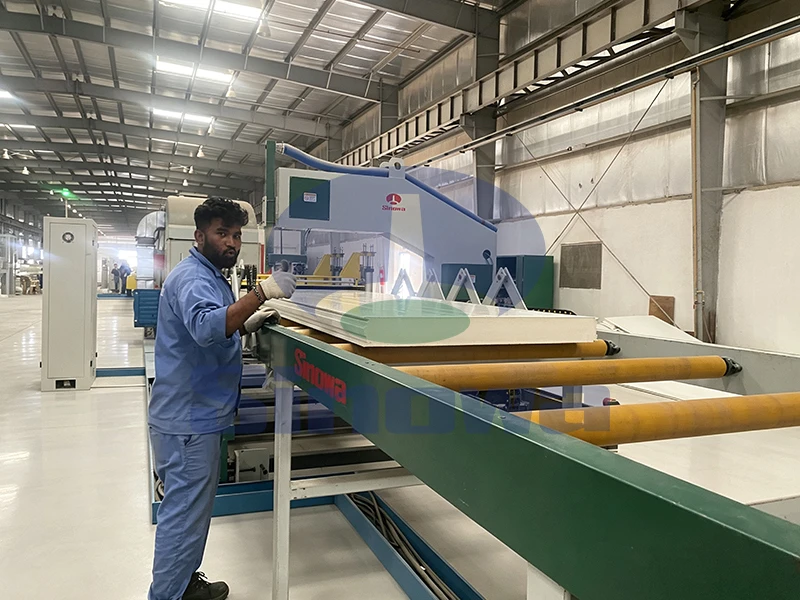
Surface facing materials are the outermost protective and structural layers of PUR sandwich panels, serving as the primary barrier against external physical damage and environmental erosion, and they also determine the panel’s overall rigidity and appearance. The most widely used facing materials are various metal coil materials, including pre-coated steel coils, galvanized steel coils, and aluminum coils, which feature excellent flatness, tensile strength, and surface adhesion. These metal coils are processed with uniform surface treatments to enhance their compatibility with foam core materials and resist daily wear and tear. In addition to metal materials, non-metallic facing options such as aluminum foil, kraft paper, and non-woven fabric are also applied in specific production scenarios, catering to lightweight and low-demand application environments. All facing materials need to maintain complete surface integrity before feeding, without scratches, wrinkles, or corrosion, as defective surfaces will directly affect the bonding effect and service life of finished panels. During production, these coiled facing materials are continuously uncoiled, leveled, and trimmed by professional equipment, providing a stable outer layer foundation for subsequent foam compounding and curing processes.
Polyurethane core chemical raw materials are the core components that form the thermal insulation layer of PUR sandwich panels, directly determining the thermal insulation performance, structural stability, and density of the finished core layer. The two most fundamental raw materials are polyether polyol and isocyanate, which undergo chemical cross-linking reactions under precise proportioning to form dense and uniform polyurethane foam structures. Polyether polyol provides the basic skeleton for foam formation and endows the foam with good flexibility and toughness, while isocyanate acts as the curing component to promote foaming and molding. To optimize the foaming effect and core layer quality, multiple auxiliary chemical materials must be added in the production process. Foaming agents control the expansion ratio of the polyurethane mixture, adjusting the core layer density to achieve lightweight and heat insulation balance. Catalysts accurately regulate the reaction speed of polyether polyol and isocyanate, avoiding excessive foaming, premature curing or insufficient reaction. Stabilizers are used to maintain the uniformity of the foam mixture, prevent bubble merging and collapse during foaming, and ensure the core layer forms a fine and consistent cellular structure. All chemical core materials require stable temperature and sealed storage to avoid viscosity changes and component failure caused by temperature fluctuations and moisture absorption.
Adhesive materials are indispensable for realizing composite integration between the surface facing and PUR foam core, playing a decisive role in the overall structural firmness of sandwich panels. Different from ordinary adhesives, the special adhesives for PUR sandwich panels have excellent compatibility with both metal/non-metal facing materials and polyurethane foam, achieving seamless bonding without delamination or cracking. In the continuous production process, the adhesive is evenly coated on the inner surface of the facing materials through automatic spraying equipment, forming a uniform adhesive layer. This adhesive layer can tightly bond the flexible foam core and rigid surface layers into a whole after hot pressing and curing, effectively resisting external tension, shear force and temperature deformation stress. High-quality adhesives can maintain stable bonding performance in long-term variable temperature environments, avoiding separation between layers caused by thermal expansion and contraction. The dosage and coating uniformity of adhesives need precise equipment control; excessive dosage will cause adhesive overflow and affect panel appearance, while insufficient dosage will lead to weak bonding and reduce the overall structural strength of the panel.
Edge sealing and auxiliary functional materials are key supporting materials to optimize the overall performance and finished product quality of PUR sandwich panels, making up for the structural defects of the panel edges and improving the overall durability. Edge sealants are the most important auxiliary material, which are applied to the cut edges of sandwich panels to fill tiny gaps between the facing layer and the foam core. This effectively blocks external moisture, dust and air from penetrating into the core layer, preventing foam aging, mildew and performance attenuation caused by long-term moisture erosion. In addition, protective films are widely used in the production process, covering the outer surface of finished panels to avoid surface scratches, paint peeling and contamination during transportation, stacking and installation. Some production processes also use auxiliary filling materials to reinforce the panel edges, improving the edge flatness and installation adaptability of the panels. These auxiliary materials do not change the main structure of PUR sandwich panels, but they greatly improve the product’s environmental adaptability and service life, and are essential standardized materials for formal continuous production lines.
Auxiliary processing materials for production assistance ensure the smooth and efficient operation of the entire production line and stabilize the consistency of batch products. Cleaning agents are regularly used to clean the mixing system, spraying equipment and molding templates of the production line, removing residual polyurethane raw materials and cured impurities to prevent equipment blockage and avoid impurity defects on the surface and inside of subsequent panels. Lubricants are applied to the transmission parts, leveling rollers and molding equipment of the production line to reduce mechanical friction, ensure stable operation of coiled material conveying and molding processes, and avoid panel deformation caused by equipment jitter. In addition, isolation materials are used in the molding and curing stage to prevent the semi-finished foam composite panels from adhering to the equipment surface, ensuring smooth demolding and complete panel surface. These auxiliary processing materials do not constitute the final product structure, but they maintain the operational stability of production equipment, reduce product defective rates, and support long-term continuous and standardized production of the line.
The matching and quality control of all raw materials jointly determine the comprehensive quality of PUR sandwich panels and the operational efficiency of the production line. The coordination between surface facing materials, foam core chemical materials, bonding materials and various auxiliary materials forms a complete production material system. Only by ensuring stable quality, accurate proportioning and standardized use of each raw material can the production line continuously manufacture sandwich panels with uniform structure, stable performance and long service life. Reasonable raw material selection and scientific material management are the basic prerequisites for giving full play to the production capacity of the PUR sandwich panel production line and optimizing finished product quality.
Gallery
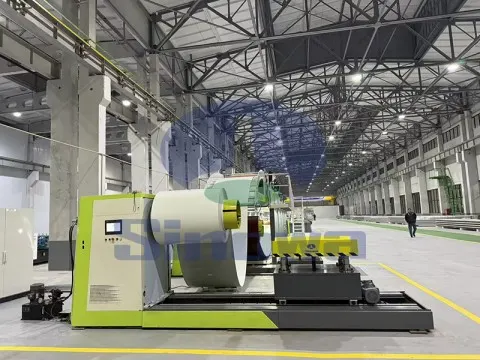
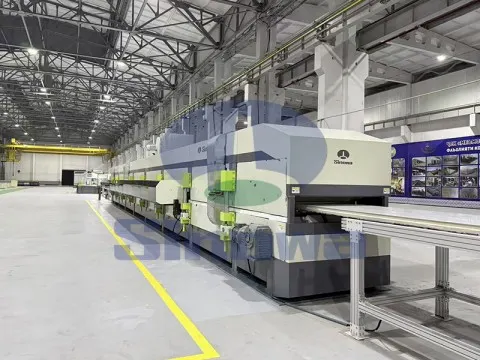
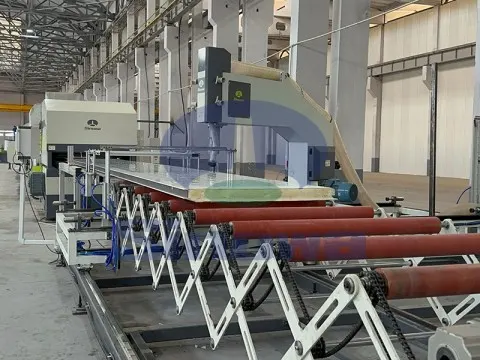
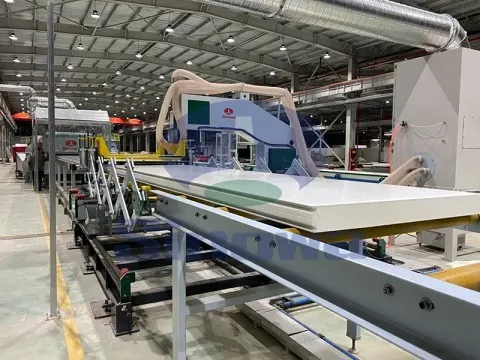
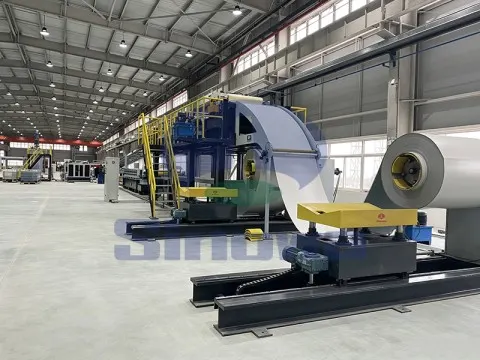
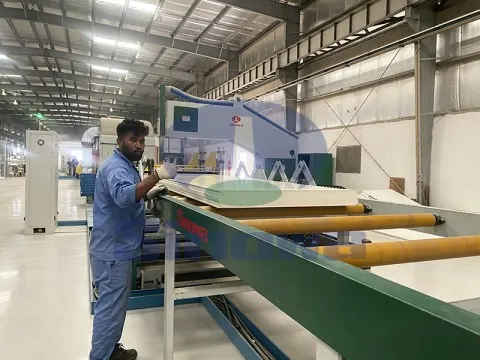
Sinowa is a professional manufacturer of sandwich panel machine in china, we provide diversified and high-performance sandwich panel production lines, including fully automatic continuous PU sandwich panel line and customized special lines to meet mass production and personalized order demands. These sandwich panel lines support processing multiple foam core materials, such as PU, PIR, mineral wool, rock wool and glass wool, covering different insulation and fireproof standards.
Featuring stable operation, high efficiency, energy saving and easy maintenance, our PU sandwich panel line deliver sandwich panels with excellent thermal insulation, fire resistance, sound insulation and lightweight durability. The finished panels are widely applied in industrial workshops, warehouse roofing and wall cladding, cold storage insulation, serving global construction and industrial insulation markets.
Main Products
-

Continuous PU Sandwich Panel Production Line
This continuous PU sandwich panel production line is an integrated automatic equipment. It covers uncoiling, forming, foaming, curing and cutting processes. With automatic raw material proportioning and precise temperature & pressure control, PIR sandwich panel production line continuously composites panels with double skins. Polyurethane sandwich panel production line stably produces steel and aluminum sandwich panels. Featuring high automation, the line makes fireproof and thermal-insulation panels for building enclosure and cold storage. -

Rock Wool Sandwich Panel Production Line
Continuous rockwool sandwich panel production line is an automatic integrated production equipment, consisting of uncoiling, forming, gluing and compounding, heating curing, fixed-length cutting, automatic stacking and other modules. The mineral wool sandwich panel production line continuously conveys color steel plates and rock wool core materials to automatically complete lamination and curing, which can produce fireproof and thermal insulation sandwich panels. Featuring high automation degree and stable operation, this production line is suitable for mass production of panels used for building walls, roofs and other scenarios. -

Phenolic Insulation Board Production Line
This integrated automatic production line continuously manufactures PU and phenolic insulation boards. The insulation board production line covers raw material proportioning, high-pressure foaming, laminating, curing and fixed-length cutting. Featuring high automation and stable molding, the insulation panel production line supports various surface materials. PU boards offer excellent thermal insulation, while phenolic boards have superior fire resistance. These products are widely used in construction, cold chain, ventilation ducts and other thermal insulation fields.
Other FAQs
- Price Composition Of Complete PU Sandwich Panel Production Line
- Does The Continuous PU Sandwich Panel Manufacturing Line Support Automatic Stacking And Packing
- Can PIR Sandwich Panel Production Line Produce Prefabricated Container House Roof Panels
- Why Is The Foaming Expansion Rate Unstable On The PU Foam Production Line
- How Does A PUF Sandwich Panel Production Line Cut Panels To Fixed Lengths
- Automatic Error Correction Function Of Polyurethane Sandwich Panel Production Line
- Workshop Space Layout Requirement For PU Sandwich Panel Production Line
- Operator Professional Training Content For PU Sandwich Panel Line
- Energy Consumption Standard Of Automatic PU Sandwich Panel Production Equipment
- What Safety Protection Measures Are Needed For A Polyurethane Sandwich Panel Manufacturing Line
Related Articles
- Sandwich Panel Production Line
- PU Sandwich Panel Machine With Rigid Foam Core
- PIR Sandwich Panel Line Supplier From China
- Wall Insulation Board Production Line
- PU Sandwich Panel Making Line For Composite Panels
- PIR Sandwich Panel Making Line For Fire-Proof Partition Panels
- Color Steel Foam Core Sandwich Panel Line
- High-tech PU Sandwich Panel Machine Factory
- PU Sandwich Panel Production Machine For Low Strength Composite Panels
- PIR Sandwich Panel Production Machinery With Hydraulic Drive System