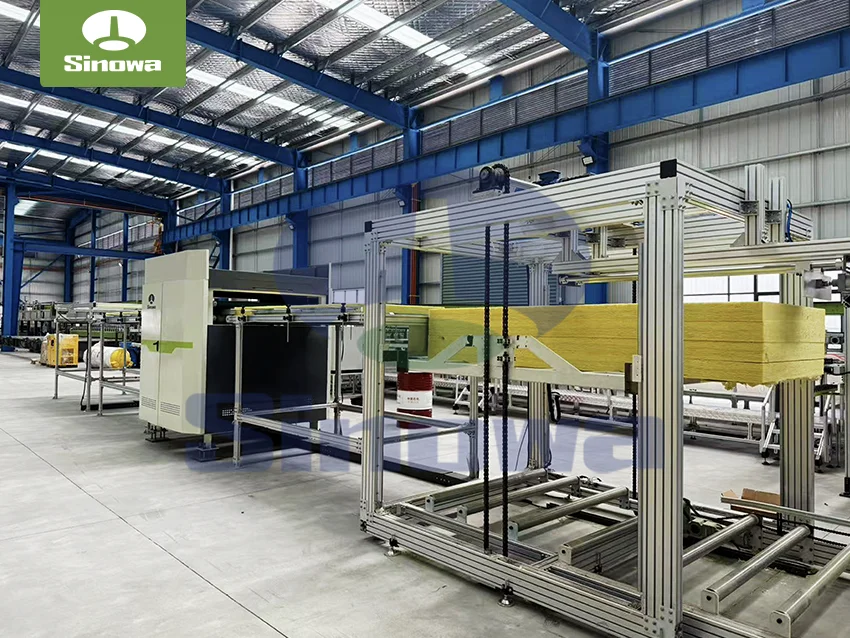
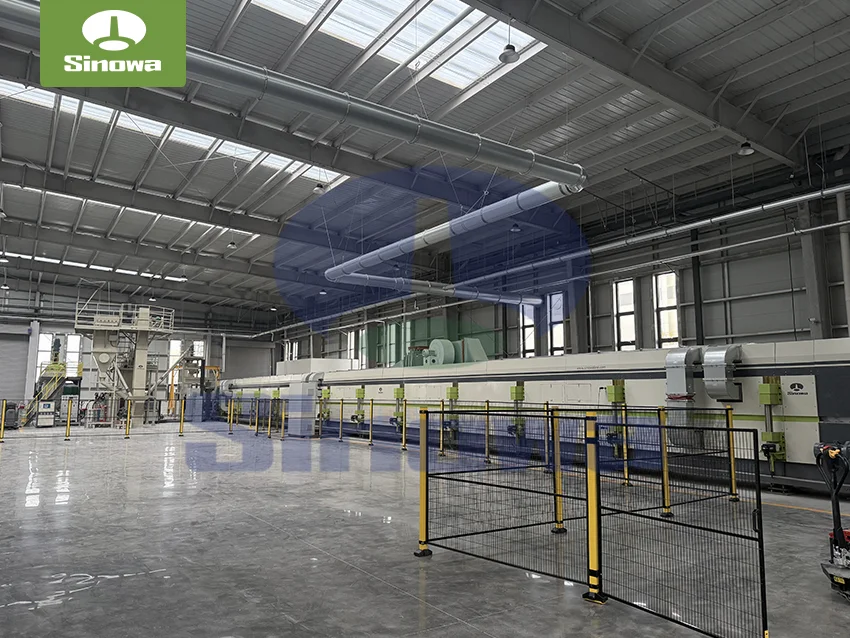
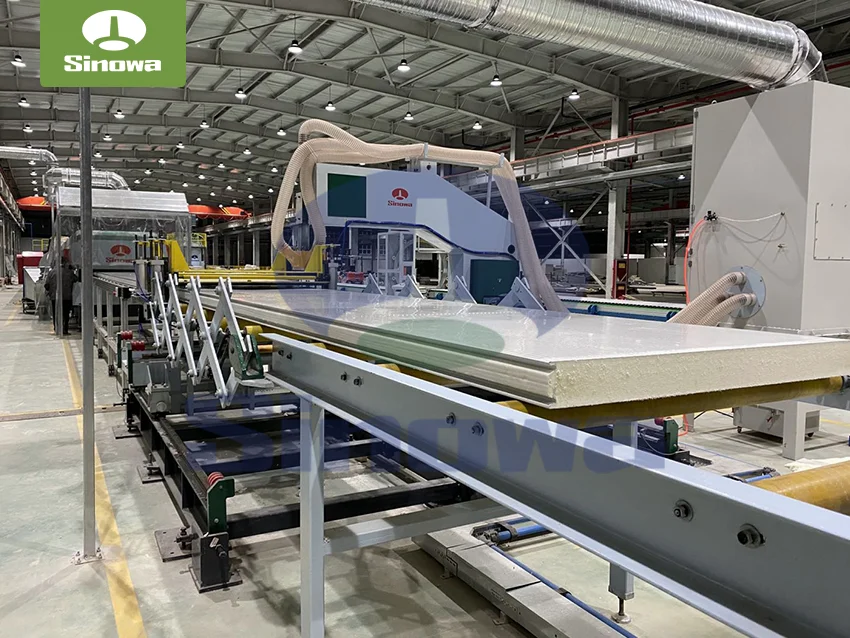
 sandwich panel machine
The emergence and popularization of polyurethane sandwich panel machines are closely tied to the superior physical and chemical properties of polyurethane materials. Polyurethane foaming materials feature low thermal conductivity, excellent heat insulation performance, lightweight texture, high structural bonding strength, and outstanding corrosion resistance, which endow finished sandwich panels with comprehensive advantages that traditional building boards cannot match. In the early stages of composite panel development, the production of polyurethane sandwich panels relied on semi-automatic intermittent processing equipment, which suffered from low production efficiency, unstable material foaming uniformity, inconsistent product dimensional accuracy, and high manual intervention costs. With the continuous progress of mechanical automation and chemical foaming technology, fully automated continuous polyurethane sandwich panel machines have gradually replaced backward intermittent production equipment. The optimized mechanical structure and intelligent control logic of modern production lines effectively solve the pain points of traditional production modes, such as uneven raw material mixing, insufficient foaming density control, and low molding precision, laying a solid equipment foundation for the large-scale and standardized production of polyurethane sandwich panels.
A complete polyurethane sandwich panel production line consists of multiple interconnected functional modules, each undertaking independent production tasks while maintaining precise collaborative operation to ensure the continuity and stability of the overall production process. The main structural components include a raw material storage and conveying system, a high-precision metering and mixing system, an automatic fabric spreading system, a double-belt molding system, a surface trimming and shaping mechanism, a fixed-length cutting device, an intelligent control system, and a finished product conveying and stacking auxiliary structure. Every structural module is designed based on the physical characteristics of polyurethane raw materials and the molding requirements of sandwich panels, with mechanical parameters adjustable within a reasonable range to adapt to production demands of panels with different thicknesses, surface materials, and foaming densities. The internal structure of the equipment focuses on sealing and thermal insulation design, which can effectively isolate external temperature and humidity interference, ensuring that the chemical foaming reaction of polyurethane raw materials proceeds under relatively stable environmental conditions.
The raw material storage and conveying system serves as the starting link of the entire production line, mainly responsible for the sealed storage and stable transportation of polyurethane chemical raw materials and surface base materials. The chemical raw materials required for polyurethane foaming are mainly composed of polyether polyol and isocyanate, supplemented by auxiliary additives such as foaming agents, catalysts, and stabilizers. These raw materials are stored in independent sealed tanks inside the system, with constant temperature maintenance structures installed on the tank walls to keep the raw materials within the optimal activity temperature range. Since the viscosity and chemical activity of polyurethane raw materials are highly sensitive to temperature changes, the constant temperature design can effectively avoid raw material deterioration, viscosity fluctuation, and uneven subsequent mixing caused by ambient temperature differences. In terms of base material conveying, this system is equipped with automatic unwinding and flattening components, which can continuously convey coiled metal sheets, color steel plates, or other flexible base materials to the composite processing position. The flattening mechanism eliminates surface wrinkles and bending deformation of the base materials, ensuring the flatness of the outer layer of finished sandwich panels.
The metering and mixing system is the core functional component that determines the foaming quality of polyurethane materials, directly affecting the thermal insulation performance and structural stability of finished panels. This system adopts an independent power drive structure, with frequency conversion motors separately controlling high-precision metering pumps for different raw materials. During the production process, each metering pump accurately adjusts the output flow of raw materials according to preset process parameters, strictly controlling the mixing ratio of polyether polyol, isocyanate, and various auxiliary additives. Reasonable raw material ratio is the key to completing the cross-linking foaming reaction; any deviation in the proportion will lead to problems such as excessive bubble pores, insufficient curing strength, or reduced thermal insulation performance of the polyurethane foam layer. After precise metering, multiple raw materials are transported to a high-speed mixing head, where they undergo intense physical stirring and uniform mixing. The internal structure of the mixing head adopts a streamlined anti-residue design, which can reduce raw material adhesion while improving mixing efficiency, ensuring that all components are fully fused to form a homogeneous mixed liquid material.
Following the mixing process, the homogeneous polyurethane mixed liquid is transported to the automatic fabric spreading system. This system is equipped with a movable spreading nozzle, which performs reciprocating linear motion at a stable horizontal speed to evenly coat the mixed liquid on the surface of the lower base material. The motion trajectory and coating thickness of the spreading nozzle can be adjusted through the intelligent control terminal to adapt to production requirements of sandwich panels with different core layer thicknesses. Compared with fixed-point pouring structures, the reciprocating spreading design effectively avoids material accumulation and local thinning, making the distribution of polyurethane raw materials on the base material more uniform. This uniform laying mode provides a good foundation for the subsequent foaming and curing reaction, enabling the internal bubble structure of the foam layer to maintain consistent density and uniform pore size, thereby optimizing the overall mechanical and thermal insulation properties of the finished product.
The double-belt molding system is the key equipment for the composite molding and curing of polyurethane sandwich panels, undertaking the core tasks of material pressing, heating, foaming, and shaping. After the base material coated with polyurethane mixed liquid enters the double-belt structure, the upper and lower parallel circulating belts clamp the base material to maintain a fixed molding thickness. The internal circulation track of the double belt is equipped with an adjustable heating component, which heats the composite material at a constant temperature to trigger and accelerate the chemical cross-linking reaction of polyurethane raw materials. Within the closed heating space, the mixed liquid undergoes rapid foaming expansion, and the internal molecular structure undergoes cross-linking and solidification, gradually forming a dense and stable foam core layer. The pressure generated by the clamping of the upper and lower belts eliminates gaps between the foam layer and the upper and lower base materials, realizing tight bonding between the core material and the surface base materials. The temperature of the heating system is precisely controlled within a reasonable interval; excessively high temperature will cause excessive foaming and bubble rupture, while excessively low temperature will lead to incomplete curing and prolonged molding cycle.
After completing foaming and curing in the double-belt molding system, the initially formed sandwich panels enter the trimming and cutting stage. The trimming mechanism installed on both sides of the production line accurately polishes and cuts the edges of the semi-finished panels to remove irregular excess materials generated during the molding process, ensuring that the width of each panel maintains consistent dimensional accuracy. The mechanical trimming structure adopts a high-speed rotating cutting tool with wear-resistant materials, which can efficiently process various rigid base materials without generating excessive burrs or surface scratches. Subsequently, the fixed-length cutting device uses a high-precision sensing module to identify the conveying position of the panels, automatically completing fixed-distance cutting according to the preset panel length parameters. The entire cutting process maintains a stable conveying speed to avoid structural deformation of the panels caused by sudden speed changes. After cutting, the flatness and dimensional tolerance of the panel sections are strictly controlled to meet the assembly and installation requirements of subsequent engineering projects.
The intelligent control system acts as the central control brain of the entire polyurethane sandwich panel machine, responsible for the coordinated operation of all functional modules and real-time monitoring of production parameters. This system adopts an integrated human-computer interaction interface, which can visually display key operating data such as raw material flow, mixing frequency, heating temperature, conveying speed, and cutting dimensions during the production process. Operators can modify production parameters through the touch control terminal to switch production specifications of panels, realizing flexible production of diversified products. In addition to manual parameter adjustment, the control system is equipped with an automatic monitoring and early warning function. When abnormal conditions such as raw material supply interruption, temperature fluctuation exceeding the threshold, or mechanical jamming occur during operation, the system will automatically trigger an alarm signal and perform safe shutdown actions to reduce equipment failure losses and avoid defective product output. The data storage function can record long-term production operation data, providing data support for subsequent production optimization and equipment maintenance.
In actual industrial production, the operational logic of polyurethane sandwich panel machines follows a standardized and coherent production flow, realizing seamless connection from raw material input to finished product output. Before formal production starts, operators need to complete pre-production preparation work, including inspecting the tightness of raw material storage tanks, cleaning residual materials in the mixing pipeline, checking the operating flexibility of mechanical transmission components, and debugging the temperature control system to preheat the equipment to the optimal operating temperature. After the preparation work is completed, the equipment starts continuous operation in accordance with the set program. The base materials are continuously unwound and flattened and then sent to the spreading station; the polyurethane raw materials are accurately proportioned and mixed and then evenly coated on the base materials. The composite materials are pressed, heated, foamed, and cured in the double-belt system to form integrated sandwich panels. Finally, the finished panels are processed by edge trimming and fixed-length cutting, and the processed qualified products are transported to the stacking area through the conveying mechanism for centralized collection and packaging.
The excellent production performance of modern polyurethane sandwich panel machines is reflected in multiple dimensions such as production efficiency, product stability, material utilization rate, and operational controllability. In terms of production efficiency, the continuous assembly line production mode eliminates the idle waiting time of intermittent equipment, realizing uninterrupted processing of raw materials. The stable conveying speed and optimized structural layout enable the equipment to maintain a high hourly output under the premise of ensuring product quality, which is several times the production capacity of traditional semi-automatic equipment. In terms of product quality stability, the intelligent metering system and constant temperature foaming environment effectively suppress the interference of human factors and external environmental changes on product quality. The density uniformity, thickness error, and bonding firmness of batch-produced sandwich panels are maintained within a low tolerance range, reducing the rate of defective products in industrial production.
In terms of material utilization, the optimized structural design of the equipment minimizes raw material waste in all production links. The closed raw material conveying pipeline reduces volatile loss and residual adhesion of chemical raw materials; the precise metering control avoids raw material waste caused by excessive proportioning; the automated trimming and cutting mechanism can uniformly recycle excess edge materials, realizing secondary utilization of partial waste materials. This efficient material utilization mode not only reduces raw material consumption costs for production enterprises but also conforms to the resource conservation requirements of modern green manufacturing. In terms of operational controllability, the equipment has a wide adjustable range of process parameters, which can adapt to the production needs of sandwich panels with different base material types, core layer thicknesses, and foaming densities. It can meet the differentiated application requirements of construction, cold chain, industrial manufacturing, and other fields, with strong production flexibility.
To maintain the long-term stable operating state of polyurethane sandwich panel machines, standardized daily operation and scientific maintenance management are essential. In terms of daily operation management, operators need to receive professional pre-job training to master parameter adjustment methods, abnormal judgment logic, and safe operating specifications. During the equipment operation period, the operating status of key components should be regularly observed, focusing on checking whether the raw material supply pipeline is leaking, whether the temperature control system has abnormal fluctuations, and whether the transmission parts have abnormal noise or vibration. After the daily production work is completed, the residual raw materials inside the mixing head and spreading pipeline must be thoroughly cleaned to prevent chemical raw materials from solidifying and adhering to the pipeline wall, which would cause pipeline blockage and affect subsequent production efficiency.
In terms of regular equipment maintenance, different maintenance cycles are formulated according to the wear degree of mechanical components. The transmission bearings, gears, and sliding guide rails inside the equipment need to be regularly filled with high-performance lubricating oil to reduce mechanical friction loss and delay component aging. The sealing rings of raw material storage tanks and conveying pipelines are vulnerable to chemical corrosion and need to be inspected and replaced regularly to ensure the airtightness of the raw material transportation system. The heating components and temperature sensing probes should be calibrated periodically to avoid temperature detection errors affecting the foaming quality of polyurethane materials. In addition, the dust and debris accumulated on the surface of the equipment and inside the heat dissipation structure should be cleaned regularly to ensure the normal heat dissipation of the equipment and prevent equipment aging caused by long-term high-temperature operation.
Reasonable environmental control of the production workshop also has an important impact on the operating efficiency of polyurethane sandwich panel machines and product quality. The chemical foaming reaction of polyurethane raw materials is sensitive to ambient humidity; excessive air humidity will cause the raw materials to absorb moisture and produce undesirable side reactions, affecting the internal pore structure of the foam layer. Therefore, the production workshop needs to be equipped with dehumidification and ventilation equipment to maintain the ambient humidity within the stable reaction range. At the same time, the workshop temperature should be kept relatively constant to avoid excessive temperature difference between day and night from interfering with the constant temperature control system of the equipment. A clean and dust-free production environment can reduce the probability of impurities adhering to the surface of the base materials, ensuring the surface flatness and appearance quality of finished sandwich panels.
Polyurethane sandwich panels produced by automated production lines have comprehensive performance advantages, thus being widely used in multiple industrial fields. In the industrial building sector, such panels serve as enclosure materials for factory buildings, warehouses, and temporary construction facilities. Their lightweight characteristics reduce the bearing load of building structures, while excellent thermal insulation performance lowers the energy consumption of indoor temperature regulation. The good weather resistance and corrosion resistance enable the panels to maintain stable structural performance in harsh outdoor environments for a long time, reducing building maintenance costs. In the cold chain logistics industry, polyurethane sandwich panels are processed into cold storage wall panels, roof panels, and insulation compartments for refrigerated vehicles. The ultra-low thermal conductivity effectively isolates internal and external heat exchange, maintaining a low-temperature storage environment for goods and reducing the operating energy consumption of refrigeration equipment.
In the field of special engineering construction, polyurethane sandwich panels can be used for the enclosure of purification workshops, dust-free workshops, and medical isolation facilities. The smooth and seamless surface of the panels is not easy to accumulate dust and bacteria, facilitating daily cleaning and disinfection work. Meanwhile, the panels have good sound insulation and shock absorption performance, which can reduce the interference of external noise on the internal working environment. In addition, with the continuous upgrading of new energy and environmental protection industries, polyurethane sandwich panels are gradually applied to the exterior insulation structure of energy storage power stations and the protective enclosure of photovoltaic supporting facilities, providing stable temperature control and structural protection for special industrial equipment.
Driven by industrial upgrading and technological iteration, polyurethane sandwich panel machines are continuously evolving in the direction of intelligent optimization, energy conservation and environmental protection, and high-precision integration. In terms of intelligent upgrading, the equipment is gradually combined with internet data transmission technology to realize remote monitoring, parameter remote adjustment, and fault intelligent diagnosis of production lines. The production data generated during the operation of the equipment can be uploaded to the terminal data platform for big data analysis, helping enterprises optimize production processes, improve raw material matching ratios, and formulate more scientific production schedules. The intelligent sensing components are continuously upgraded, enabling real-time identification and automatic correction of tiny deviations in the production process to further improve product dimensional accuracy.
In terms of energy conservation and environmental protection optimization, modern polyurethane sandwich panel machines adopt optimized heating circulation structures to reduce heat loss during the heating process and improve energy utilization efficiency. The raw material conveying system strengthens the sealing design to reduce the volatilization of harmful gases during raw material transportation and mixing. The equipment is equipped with a centralized waste collection device to uniformly process edge waste generated during production, realizing resource recycling and reducing industrial solid waste emissions. In addition, the equipment structure adopts low-energy consumption transmission components, which effectively reduces the comprehensive energy consumption of unit products and meets the green production standards of modern manufacturing industries.
In terms of structural integration and diversification, the new generation of polyurethane sandwich panel machines breaks through the limitation of single product production. By replacing simple functional modules and adjusting process parameters, the same production line can complete the processing of multi-type composite panels such as metal surface panels, non-metal insulation panels, and decorative composite panels. The integrated compact structural design reduces the floor space of the production line, lowering the site construction cost for production enterprises. The modular disassembly and assembly structure facilitates equipment transportation, installation, and later maintenance, improving the overall flexibility of equipment application.
Despite the mature application of polyurethane sandwich panel machines in the industrial field, the equipment still faces some technical bottlenecks and development challenges in the production and operation process. In high-precision production scenarios requiring ultra-thick and ultra-thin special panels, the foaming uniformity and structural flatness of the core layer are easily affected by the conveying speed and heating gradient, requiring further optimization of the temperature control logic and mechanical clamping structure. In terms of raw material adaptability, some special modified polyurethane raw materials have high viscosity and fast reaction speed, which put forward higher requirements for the mixing efficiency and conveying smoothness of the equipment. In addition, the long-term continuous high-load operation of the equipment will cause gradual wear of precision components such as metering pumps and mixing heads, increasing the later maintenance cost of the equipment.
In view of the current development bottlenecks, the future optimization direction of polyurethane sandwich panel machines will focus on material adaptation upgrading, precision control iteration, and intelligent maintenance innovation. For special modified raw materials, the internal structure of the mixing system will be optimized to improve the shear mixing capacity of high-viscosity raw materials and expand the adaptation range of raw material types. The temperature control system will adopt multi-stage gradient heating technology to realize refined temperature adjustment in different molding stages, ensuring the foaming quality of special-specification panels. In terms of intelligent maintenance, the equipment will be embedded with component wear monitoring sensors to real-time track the aging degree of key parts, realizing predictive maintenance and reducing unexpected shutdown losses caused by component failure.
From the perspective of the entire industrial chain, polyurethane sandwich panel machines, as core processing equipment in the composite material industry, play a vital supporting role in the development of upstream raw material processing and downstream engineering application industries. The technological upgrading of equipment drives the optimization of polyurethane raw material formulas, prompting chemical material enterprises to develop more environmentally friendly, low-energy-consuming, and high-stability composite raw materials. The improvement of equipment production capacity and product quality lowers the application cost of high-performance sandwich panels, expands the popularization scope of energy-saving insulation materials in the construction and industrial fields, and further promotes the transformation of the building industry towards energy conservation and environmental protection. With the continuous acceleration of global industrial modernization and green building processes, the market demand for high-performance polyurethane sandwich panels will continue to grow, which in turn drives the continuous technological innovation and performance upgrading of supporting production equipment.
In conclusion, the polyurethane sandwich panel machine is a highly automated and integrated composite material production equipment with complex mechanical structures and precise control logic. It realizes efficient, stable, and standardized production of polyurethane sandwich panels through the collaborative operation of multiple functional modules such as raw material conveying, precise mixing, automatic spreading, constant temperature molding, and fixed-length cutting. The reasonable operation specifications and scientific maintenance methods ensure the long-term stable performance of the equipment, and the produced panels have excellent thermal insulation, structural stability, and environmental adaptability, covering multiple application fields such as industrial construction, cold chain logistics, and special engineering. Driven by intelligent manufacturing and green industrial development concepts, polyurethane sandwich panel machines will continue to make breakthroughs in precision control, energy conservation and emission reduction, and diversified production. In the future, this type of equipment will maintain an irreplaceable core position in the composite material manufacturing industry, continuously providing high-quality material guarantee for the upgrading of modern construction and industrial facilities, and contributing to the sustainable development of the global energy-saving building industry.
https://www.cnsinowa.com/sandwich-panel-machines/polyurethane-sandwich-panel-machine.html