 sandwich panel machine
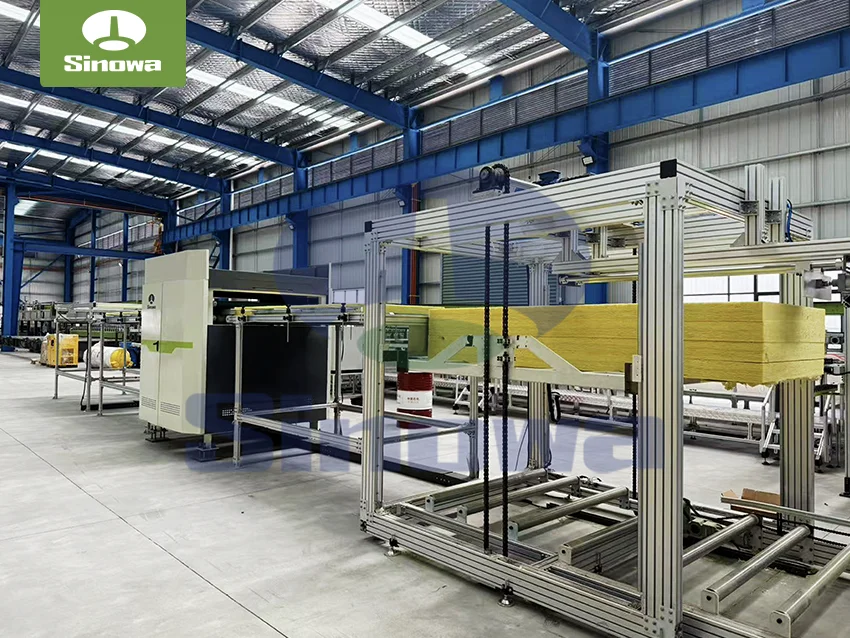
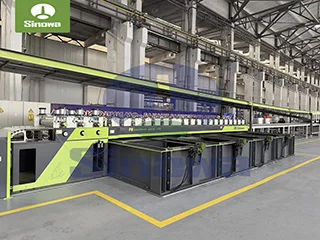
The overall structural composition of PU sandwich panels plant covers the full process flow from raw material feeding to finished product output, with each functional unit undertaking independent processing tasks while maintaining precise pace synchronization. The front-end part of the equipment is mainly responsible for the pretreatment of surface base materials, which are mostly metal sheet coils with good flatness and structural stability. The coil materials are first sent to the uncoiling and leveling unit, where the coiled raw materials are slowly and evenly released through a mechanical uncoiling structure, eliminating the bending deformation and internal stress generated during coil storage and transportation. The subsequent leveling mechanism adopts multi-group roller pressing structures to perform fine calibration on the surface materials, ensuring the flatness of the base materials and laying a foundation for subsequent composite lamination and foam bonding. After leveling, the surface materials enter the roll forming unit, where continuous rolling and bending processing are carried out through multiple groups of precision roller sets. By setting different rolling profiles, the equipment can process surface materials into various structural shapes suitable for wall panels, roof panels, and special-shaped enclosure panels, realizing flexible adjustment of product specifications.
Following the surface material pretreatment process, the polyurethane sandwich panel production line enters the core foam preparation and pouring stage, which is the core link determining the thermal insulation performance and structural stability of polyurethane sandwich panels. The polyurethane foaming system of the equipment relies on a high-precision metering and mixing device to process two-component liquid raw materials. The independent metering pumps accurately deliver polyol and isocyanate raw materials according to the scientific proportion required for foaming reaction, avoiding performance differences caused by raw material ratio deviation. The two kinds of liquid raw materials are fully mixed through a high-pressure mixing head, generating uniform and stable reaction mixed liquid. The whole mixing process is carried out in a closed environment, which not only ensures the sufficiency of chemical reaction but also avoids material waste and environmental pollution caused by liquid splashing. The mixed polyurethane liquid is evenly and quantitatively poured on the surface of the lower layer base material that has completed profiling and pretreatment, forming a uniform liquid material layer waiting for foaming and expansion.
In order to optimize the foaming and bonding effect, the PU sandwich panel production line is equipped with an independent preheating unit before the lamination process. The preheating system adopts uniform heating modes to raise the temperature of the surface base material and the poured polyurethane liquid to the optimal reaction temperature range. Appropriate preheating can effectively accelerate the initiation of polyurethane chemical reaction, make the foam expansion more uniform, and enhance the bonding force between the polyurethane core material and the surface base material. It also avoids the problems of incomplete foaming, hollow core, and insufficient bonding strength caused by low ambient temperature or uneven material temperature. After preheating, the upper and lower layer surface materials with polyurethane liquid core material are synchronously sent to the double-track lamination and curing unit, which is the key functional area for panel composite molding.
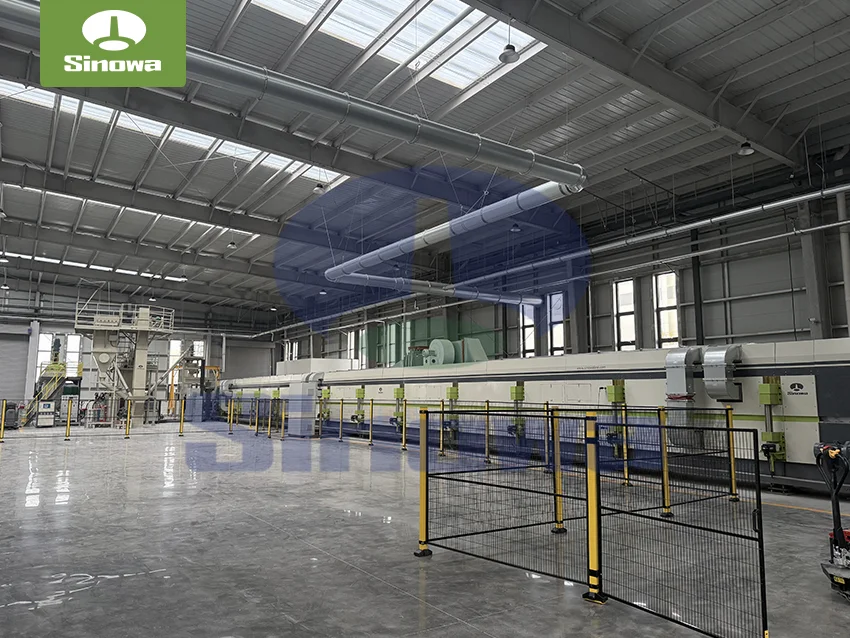
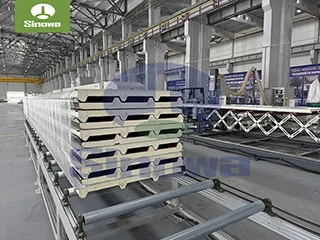
The lamination unit adopts a closed double-chain plate pressing structure, which can provide stable and uniform pressing force in the horizontal and vertical directions. During the operation of the equipment, the upper and lower conveyor chain plates clamp the composite plate body and drive it to move forward at a constant speed. In the closed pressing space, the polyurethane liquid undergoes continuous chemical foaming reaction, gradually expanding, gelling, and solidifying to form a dense and uniform foam core layer. The internal temperature of the lamination unit is kept constant through the circulating heating system, which continuously provides temperature conditions required for foam curing. With the slow advancement of the plate body in the lamination area, the polyurethane foam completes the whole process from liquid expansion to solidification and shaping, and is tightly compounded with the upper and lower surface materials to form an integrated sandwich plate structure. The constant-speed transmission design ensures that the foaming time and pressing force of each part of the plate body are consistent, effectively avoiding product quality problems such as uneven core density, inconsistent plate thickness, and local degumming.
After completing the high-temperature curing and composite molding process, the plate body enters the cooling and shaping area of the equipment. The cooling unit adopts a combination of air cooling and contact cooling structures to slowly reduce the temperature of the molded plate body. The graded cooling mode can effectively release the internal stress generated during the high-temperature foaming and pressing process of the plate body, prevent secondary expansion and deformation of the polyurethane core material after leaving the high-temperature environment, and ensure the dimensional stability and structural flatness of the finished panel. The length of the cooling area and the cooling speed can be adjusted according to different plate thicknesses and raw material formulas, adapting to the production requirements of various specifications of polyurethane sandwich panels. Only after sufficient cooling and complete shaping can the plate body maintain stable structural performance in subsequent processing and long-term use.
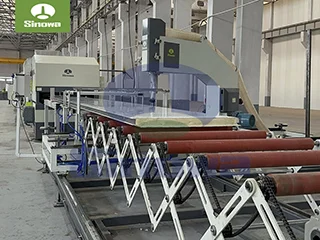
The rear-end processing unit of the sandwich panel machine includes automatic trimming and fixed-length cutting mechanisms, which realize the final shaping of finished products. The continuous molded plate body first passes through the trimming device, which accurately cuts off the redundant foam and edge materials on both sides of the plate body to ensure the neat and consistent width of the panel. The trimming process can remove unqualified edge areas with insufficient foaming and weak bonding, improving the overall yield and appearance quality of products. Subsequently, the plate body is transported to the cutting station, and the high-precision cutting system automatically identifies the set length parameters and performs fixed-length cutting on the continuous plate body. The cutting mechanism maintains a stable operating speed synchronized with the front-end production line, realizing non-stop continuous cutting, which greatly improves production efficiency compared with intermittent cutting equipment. The cut single finished panels are flat in section and free of burrs, meeting the direct use requirements of subsequent construction and installation.
In terms of operational performance, PU sandwich panel production machine has excellent continuous production capacity and operational stability. The whole production line realizes automated operation from raw material feeding to finished product output, with fewer manual intervention links, which not only reduces the labor intensity of operators but also avoids product quality fluctuations caused by manual operation errors. The transmission system of the equipment adopts synchronous control technology, and the operating speed of each functional unit is precisely matched, ensuring the smooth connection of each production link and no material accumulation or production pause in the whole process. The adjustable operating speed of the equipment can adapt to different production volume demands, realizing flexible switching between mass high-speed production and small-batch customized production.
The PU sandwich panel equipment structural design fully considers the durability and maintainability of industrial operation. The main load-bearing and transmission components are made of high-strength structural materials, which can withstand long-term continuous mechanical operation and pressure load, with strong wear resistance and deformation resistance. The modular unit design enables independent maintenance and replacement of each functional module, without affecting the overall operation of the production line, reducing equipment maintenance time and production downtime. The internal fluid pipeline and metering system of the foaming unit are equipped with anti-blocking and cleaning structures, which can effectively avoid raw material residue and pipeline blockage caused by long-term operation, ensuring the long-term stable operation of the foaming system and the consistency of foaming quality.
In terms of product quality control, the polyurethane sandwich panels plant realizes precise control of multiple core parameters in the production process. The raw material metering system can maintain a high-precision proportioning state for a long time, ensuring that the chemical reaction degree of polyurethane foam of each batch of products is consistent, thus stabilizing the core density and thermal insulation performance of the panel. The constant temperature control system of the lamination and curing unit controls the internal temperature fluctuation range within a small limit, avoiding the performance difference of foam core materials caused by temperature changes. The pressing force control system can adaptively adjust the pressure according to different plate thicknesses, ensuring that the bonding tightness between the core material and the surface material reaches the optimal state, and improving the overall structural strength and peel resistance of the sandwich panel.
Compared with traditional intermittent polyurethane sandwich panel production equipment, continuous production equipment has obvious advantages in production efficiency and product uniformity. Intermittent production requires independent material distribution, foaming, pressing, and cutting for each panel, with long single-cycle time and large product performance differences between batches. The continuous production line realizes uninterrupted integrated molding, with each production link operating cyclically and synchronously, greatly improving production efficiency. At the same time, the unified parameter setting and synchronous operation mode make the thickness, density, bonding strength, and thermal insulation performance of all finished panels highly consistent, which is more suitable for large-scale engineering supporting use.
The equipment also has good product compatibility and scalability. By adjusting the rolling parameters of the forming unit, the pressing stroke of the lamination unit, and the raw material formula proportion, it can produce polyurethane sandwich panels with different thicknesses, widths, and surface profiles. It can adapt to the production of different types of panels required for building exterior wall insulation, roof waterproof insulation, cold storage constant temperature insulation, and factory enclosure facilities. In addition, the modular structure of the equipment can be expanded with functional units according to production demands, such as adding surface film covering, embossing, and automatic stacking functions, realizing the expansion of production functions and meeting the diversified production demands of different users.
In the actual industrial production process, the stable operation of PU sandwich panel plant is closely related to standardized operation and daily maintenance. Scientific equipment operation procedures can ensure that each parameter is adjusted within the optimal range, avoid equipment overload operation and parameter mismatch, and reduce the occurrence of defective products. Regular cleaning, lubrication, and calibration maintenance of transmission components, metering systems, and temperature control systems can effectively extend the service life of the equipment, maintain the precision of production parameters, and ensure the long-term stable output of high-quality products. As the core equipment of the composite insulation material industry, PU sandwich panel production machinery continuously promotes the standardized and efficient development of the industry with its mature structural design, stable operational performance, and flexible production capacity, and provides reliable equipment support for the popularization and application of energy-saving insulation composite materials in the construction and industrial fields.
https://www.cnsinowa.com/sandwich-panel-machines/pu-sandwich-panels-plant.html