sandwich panel machine
The core value of PU sandwich panel manufacturing machinery lies in its ability to integrate multiple complex processes into a continuous and automated production line, realizing the precise control of each link from raw material input to finished product output. Unlike traditional manual or semi-automatic production methods, modern PU sandwich panel manufacturing machine can effectively ensure the consistency of product quality, reduce material waste and improve production efficiency. The working principle of this kind of machinery is based on the scientific matching of material physics and chemical reactions, through the precise coordination of mechanical structure, electrical control and fluid transmission, to complete the composite molding of the three-layer structure of PU sandwich panels (two outer panels and one middle PU core layer). Each component of the production line is closely linked, forming a closed-loop production system that covers raw material pretreatment, core material foaming, panel composite, curing and shaping, and finished product cutting.
The raw material pretreatment process is the first link in the production of PU sandwich panels, and the corresponding equipment in the manufacturing machinery plays a vital role in ensuring the subsequent composite quality. For the outer panel materials (usually galvanized steel sheets, aluminum sheets or fiber cement boards), the production line is equipped with uncoiling, leveling and cutting equipment. The uncoiling machine can stably unfold the coiled panel materials, and through the cooperation of guiding devices, ensure that the panels enter the subsequent process smoothly without deviation. The leveling equipment uses multi-roller leveling technology to eliminate the internal stress of the panels caused by rolling and transportation, making the panel surface flat and smooth, which lays a foundation for the uniform bonding between the panels and the core layer. The cutting equipment can accurately cut the panels according to the preset size requirements, realizing the flexible production of different specifications of wall panels. For the raw materials of the PU core layer, the pretreatment equipment mainly includes material storage tanks, conveying pipelines and metering devices. These devices need to maintain a stable temperature and pressure environment to ensure that the polyol and isocyanate, the main raw materials of PU, are in a good fluid state before mixing, and avoid the problem of foaming failure caused by material crystallization or impurities.
The core layer foaming and panel composite process is the key link in the production of PU sandwich panels, and it is also the embodiment of the technical core of the PU sandwich panel line. The high-pressure foaming machine in the production line is responsible for the precise mixing and injection of PU raw materials. This equipment can accurately control the ratio of polyol and isocyanate according to the production requirements, and through the high-speed rotation of the mixing head, the two materials are fully mixed to form a uniform foaming mixture. The foaming mixture is then evenly injected between the two pre-treated outer panels through the injection device. At this stage, the conveying and positioning equipment in the production line will accurately control the moving speed of the outer panels and the injection amount of the foaming mixture to ensure that the foaming mixture can fully fill the space between the two panels without gaps or excessive accumulation. With the progress of technology, the foaming system of modern PU sandwich panel manufacturing machinery has been upgraded to an intelligent control mode, which can automatically adjust the foaming parameters according to the ambient temperature, humidity and panel thickness, ensuring the stability of the foaming effect.
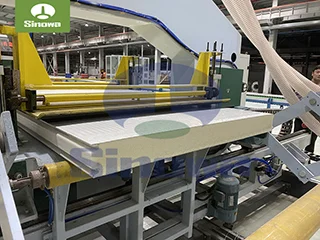
After the injection of the foaming mixture, the composite panel enters the curing and shaping process. The corresponding equipment in the PU sandwich panel machine is mainly a continuous laminating machine and a curing tunnel. The laminating machine applies a uniform pressure to the composite panel through the upper and lower pressure rollers, which not only promotes the close bonding between the PU core layer and the outer panels, but also ensures the flatness of the panel surface. The pressure value can be flexibly adjusted according to the type of panel and the thickness of the core layer to avoid the problem of poor bonding or panel deformation caused by excessive or insufficient pressure. The curing tunnel provides a stable temperature and humidity environment for the composite panel. Through the control of hot air circulation, the PU core layer is fully foamed and cured. The length of the curing tunnel and the temperature setting are determined according to the foaming speed of the PU material and the production line speed. Generally, the temperature inside the curing tunnel is maintained between 40℃ and 60℃, which can ensure that the PU core layer achieves the required density and strength within the specified time. During the curing process, the production line is also equipped with online monitoring equipment to real-time detect the foaming state of the core layer and the bonding situation between the layers, and timely feedback abnormal information to the control system.
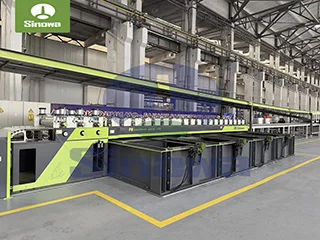
The finished product cutting and post-processing process is the last link in the production of PU sandwich panels, and the corresponding equipment in the manufacturing machinery is mainly responsible for improving the dimensional accuracy and appearance quality of the products. The automatic cutting machine in the production line uses high-precision cutting tools (such as circular saws or band saws) to cut the cured composite panels according to the preset length and width. The cutting machine is equipped with a positioning and tracking system, which can automatically adjust the cutting position according to the movement speed of the production line, ensuring the cutting accuracy. After cutting, the edge trimming equipment will trim the burrs and irregular edges of the panels to make the edges smooth and flat, which is convenient for the installation and splicing of the wall panels. Some advanced production lines are also equipped with automatic grooving and punching equipment, which can process the installation grooves and fixing holes on the panels according to the installation requirements, further improving the installation efficiency of the products. Finally, the finished products are conveyed to the stacking area through the conveying line, and the automatic stacking equipment will stack the panels neatly according to the specified quantity and specifications, which is convenient for storage and transportation.
Modern PU sandwich panel production line has obvious technical advantages, which are mainly reflected in the aspects of automation, intelligence, flexibility and environmental protection. In terms of automation, the entire production line can realize unmanned operation from raw material input to finished product stacking, greatly reducing the demand for manual labor and avoiding the influence of human factors on product quality. The electrical control system of the machinery adopts advanced programmable logic controller (PLC) and human-machine interface (HMI), which can realize the centralized control and real-time monitoring of the production process. Operators can set production parameters, view production data and handle fault alarms through the HMI, which improves the convenience of production management. In terms of intelligence, the production line is equipped with a variety of sensors and detection equipment, which can real-time collect parameters such as material temperature, pressure, foaming speed and panel thickness during the production process. Through the analysis and processing of the control system, the production parameters are automatically adjusted to ensure the stability of product quality. Some high-end production lines also integrate big data and Internet of Things (IoT) technologies, which can realize remote monitoring and fault diagnosis of the production line, and provide data support for production optimization.
In terms of flexibility, modern PU sandwich panel manufacturing machinery can meet the production needs of different types and specifications of wall panels. By adjusting the production parameters and replacing the corresponding molds and cutting tools, the production line can produce PU sandwich panels with different panel materials, core layer thicknesses and sizes. For example, it can switch between metal panels and non-metal panels, and adjust the thickness of the PU core layer between 50mm and 150mm according to the thermal insulation requirements. This flexible production capacity enables manufacturers to quickly respond to the needs of different construction projects and improve market competitiveness. In terms of environmental protection, the manufacturing machinery adopts a series of energy-saving and emission-reduction technologies. For example, the heating system of the curing tunnel uses energy-saving heating elements and heat recovery devices, which can effectively reduce energy consumption. The foaming system adopts a closed-loop design to avoid the leakage of harmful gases and protect the working environment. In addition, the production line can use industrial by-products (such as fly ash and slag) as auxiliary materials, realizing the recycling of resources and conforming to the concept of green development.
The application of polyurethane sandwich panel production line covers a variety of construction fields, and the wall panels produced by it are widely used in industrial and civil buildings. In industrial buildings, such as workshops and logistics warehouses, PU sandwich wall panels have the characteristics of lightweight and high-strength, which can reduce the load of the building structure and reduce the cost of the foundation. At the same time, their excellent thermal insulation performance can reduce the energy consumption of workshop heating and cooling, improving the working environment. In commercial buildings, such as shopping malls and office buildings, PU sandwich wall panels can be processed into various appearance styles, meeting the requirements of architectural aesthetics. Their quick installation characteristics can also shorten the construction period and reduce the impact of construction on commercial operations. In prefabricated residences, PU sandwich wall panels are an important component of the prefabricated building system. The standardized production of the manufacturing machinery ensures the quality stability of the wall panels, and the quick installation characteristics can greatly improve the construction efficiency of residences. In addition, PU sandwich wall panels produced by this machinery are also used in special fields such as cold storage, greenhouses and sound insulation walls of expressways, relying on their excellent comprehensive performance.
With the continuous development of the construction industry and the continuous improvement of environmental protection and energy-saving requirements, polyurethane sandwich panel line is also facing new development trends. On the one hand, the intelligence level of the machinery will be further improved. With the application of artificial intelligence technology, the production line will have the ability of self-learning and adaptive adjustment, which can automatically optimize production parameters according to the characteristics of raw materials and production environment, and further improve production efficiency and product quality. On the other hand, the machinery will develop towards multi-functional integration. In the future, the production line will not only realize the production of PU sandwich panels, but also integrate the production functions of other types of sandwich panels (such as rock wool sandwich panels and EPS sandwich panels), realizing the flexible switching of multiple products on one line. At the same time, the machinery will pay more attention to environmental protection and energy saving. More advanced energy-saving technologies and environmentally friendly materials will be applied to the production line, reducing energy consumption and environmental pollution. In addition, the modular design of the machinery will become a trend, which can facilitate manufacturers to adjust the production line configuration according to their own needs, reducing the investment cost of equipment.
In the process of using polyurethane sandwich panel machine, daily maintenance and regular inspection are essential to ensure the stable operation of the equipment and the quality of the products. The maintenance work mainly includes the lubrication of mechanical parts, the cleaning of equipment surfaces and pipelines, and the inspection of electrical components. For example, the pressure rollers, bearings and other moving parts of the laminating machine need to be regularly lubricated to reduce friction and wear; the mixing head of the foaming machine needs to be cleaned regularly to avoid material accumulation and blockage; the sensors and detection equipment need to be regularly calibrated to ensure the accuracy of detection data. Regular inspection work mainly includes the inspection of the mechanical structure, electrical system and fluid system of the equipment. For example, check whether the frame and rollers of the equipment are deformed or damaged, whether the electrical connections are loose or short-circuited, and whether the pipelines and valves have leakage problems. Timely discovery and solution of equipment faults can avoid the impact of production interruption on the production schedule and reduce economic losses.
In conclusion, PU sandwich panel production machinery is an important support for the development of the modern prefabricated construction industry. Its advanced technological level and efficient production capacity have promoted the upgrading and development of wall panel products. With the continuous progress of technology and the continuous expansion of application fields, PU sandwich panel manufacturing machinery will continue to realize technological innovation and functional improvement, providing more efficient, energy-saving and environmentally friendly production solutions for the construction industry. For manufacturers, choosing suitable PU sandwich panel manufacturing machinery and doing a good job in equipment operation and maintenance are the keys to improving product quality, reducing production costs and enhancing market competitiveness. At the same time, the development of this kind of machinery will also contribute to the realization of the goals of green construction and sustainable development, promoting the healthy and orderly development of the construction industry.
https://www.cnsinowa.com/sandwich-panel-machines/pu-sandwich-panel-manufacturing-machinery-for-wall-panel-production.html