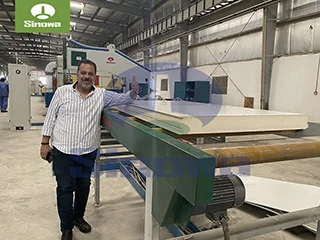
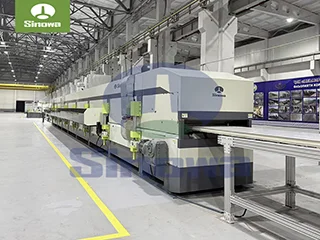
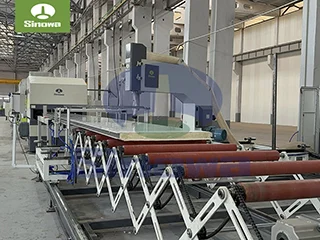
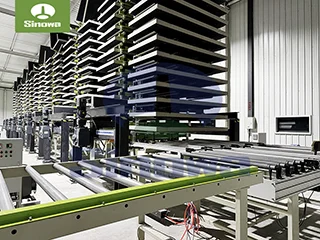
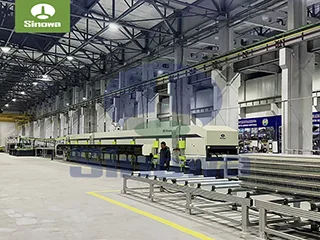
 sandwich panel machine
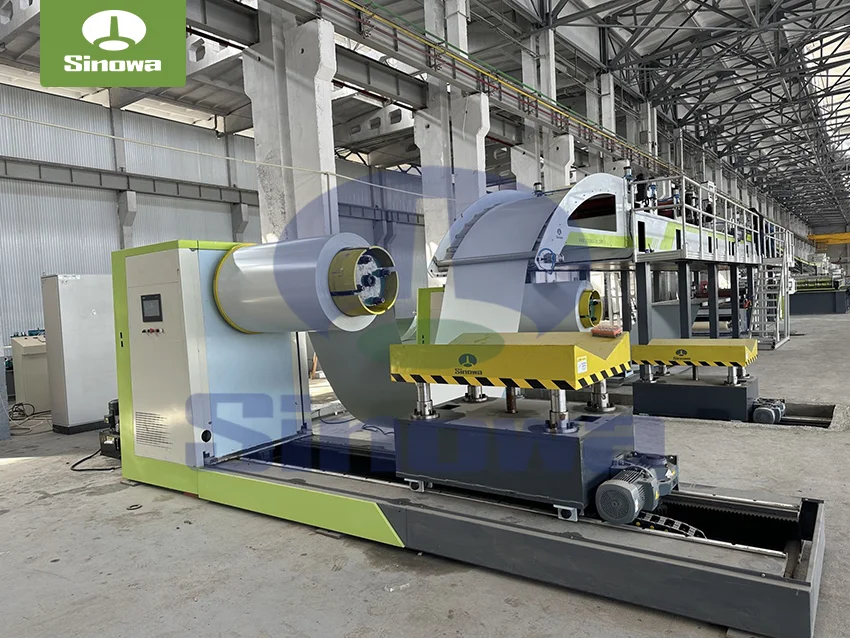
PU sandwich panel line for roof production is a complex integrated system composed of multiple functional modules, each playing a crucial role in transforming raw materials into finished roof panels. The core components of this equipment are carefully designed to work in harmony, ensuring that each process step is executed with high precision. One of the fundamental components is the uncoiling system, which is responsible for handling the coiled surface materials typically used in roof panels, such as color steel sheets, aluminum foil, or other metal substrates. These coiled materials need to be uncoiled smoothly and stably to avoid surface damage or material waste. The uncoiling system is often equipped with double uncoilers to enable continuous production without interruptions when one coil is exhausted, thereby improving overall production efficiency. Additionally, guide and correction mechanisms are integrated into the uncoiling system to ensure that the surface materials are fed into the subsequent processes in a straight and aligned manner, which is essential for maintaining the uniformity of the final product.
Following the uncoiling process, the surface materials undergo preprocessing, which is a critical step for enhancing the bonding strength between the surface layers and the PU core. Preprocessing equipment typically includes cleaning devices to remove dust, oil, or other contaminants from the surface of the materials, as these impurities can significantly affect the adhesion performance. For metal surface materials, preheating devices are often used to raise the surface temperature to an optimal level, which promotes better adhesion with the PU foam and accelerates the curing process. Some advanced production lines also incorporate corona treatment equipment, which modifies the surface properties of the materials to further improve their wettability and bonding capacity. This preprocessing stage is particularly important for roof panels, as it ensures the long-term durability and structural integrity of the panels, which are exposed to various environmental factors such as wind, rain, and temperature fluctuations.
The foaming and mixing system is the heart of PU sandwich panel machine, as it is responsible for producing the high-quality PU foam core that provides the panel's thermal insulation and structural properties. This system consists of material storage tanks, metering pumps, mixers, and foaming nozzles. The raw materials for PU foam, mainly polyol and isocyanate, along with various additives such as catalysts, blowing agents, and flame retardants, are stored in separate tanks. Metering pumps with high precision are used to deliver these raw materials in strict proportions to the mixer. The accuracy of the metering pumps is crucial, as any deviation in the mixing ratio can affect the physical properties of the PU foam, such as its density, strength, and thermal conductivity. For roof panel production, environmentally friendly blowing agents such as pentane are commonly used, which require specialized storage and delivery systems to ensure safe and efficient operation.
The mixing process is carried out in a high-pressure mixer, where the raw materials are thoroughly mixed to form a homogeneous mixture. The mixer utilizes high-speed rotation to ensure that the components are well blended, and the mixing chamber is designed to minimize material residue and facilitate easy cleaning. The foaming nozzle then distributes the mixed raw materials evenly onto the lower surface material. In continuous production lines, the foaming nozzle is mounted on a moving carriage that traverses the width of the material, ensuring uniform distribution of the foam mixture. For roof panels with specific thickness requirements, the foaming system can be adjusted to control the amount of foam dispensed, allowing for flexibility in product specifications.
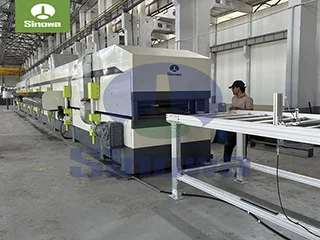
After the foam mixture is applied, the composite process begins, where the upper surface material is combined with the lower surface material and the foam core. This process is carried out in a lamination system, which typically consists of a double-belt conveyor or a roller press. The lower surface material with the foam mixture is fed into the lamination system, and the upper surface material is simultaneously introduced from above. The two surface materials and the foam core are then pressed together under controlled temperature and pressure conditions. The double-belt conveyor provides a continuous and uniform pressure across the entire surface of the panel, ensuring that the foam core is properly bonded to the surface materials and that the panel maintains a flat and smooth appearance. The temperature in the lamination system is carefully controlled to accelerate the foaming and curing of the PU foam. The duration of the lamination process is determined by the curing characteristics of the foam, which varies depending on the type of raw materials and additives used.
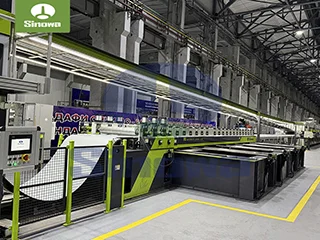
Once the composite panel exits the lamination system, it enters the cooling and shaping stage. This stage is essential for stabilizing the structure of the panel and ensuring its dimensional accuracy. Cooling systems typically use air cooling or water cooling methods to reduce the temperature of the panel rapidly. Air cooling systems use fans to blow cool air over the surface of the panel, while water cooling systems use chilled rollers or water sprays to transfer heat from the panel. The cooling process must be controlled carefully to avoid thermal stress, which can cause warping or cracking of the panel. After cooling, the panel is fed into a cutting system, which trims the panel to the required length and width. The cutting system consists of longitudinal and transverse saws that can be adjusted according to the product specifications. Advanced cutting systems use computer numerical control (CNC) technology to ensure high precision cutting, which is particularly important for roof panels that need to fit together perfectly during installation.
In addition to the core production modules, PU sandwich panel production line for roof production also includes auxiliary systems such as material handling, quality control, and packaging systems. Material handling systems, including conveyors and automated stackers, are used to transport raw materials and finished products between different stages of the production line, reducing manual labor and improving efficiency. Quality control systems are integrated into the production line to monitor various parameters such as the thickness of the panel, the density of the foam core, and the bonding strength between the layers. These systems use sensors and monitoring devices to detect any defects or deviations from the required specifications, allowing for real-time adjustments to the production process. Packaging systems are used to protect the finished roof panels during storage and transportation. The panels are typically wrapped in protective film and stacked on pallets, with edge protectors used to prevent damage to the corners of the panels.
The operational efficiency and performance of continuous PU sandwich panel line is influenced by several key factors, including the level of automation, the precision of the components, and the flexibility of the system. Modern production lines are increasingly adopting high levels of automation, with integrated control systems that allow for centralized monitoring and management of the entire production process. These control systems use advanced software to coordinate the operation of each module, ensuring that all processes are synchronized and that production parameters are maintained within the required ranges. The use of automation not only improves production efficiency but also reduces the risk of human error, leading to higher product quality and consistency. Additionally, automated systems can be equipped with remote monitoring and diagnostic functions, allowing for timely maintenance and troubleshooting, which minimizes downtime and improves the overall reliability of the equipment.
Flexibility is another important characteristic of modern PU sandwich panel equipment. Roof panels come in a variety of specifications, including different thicknesses, widths, and surface finishes, to meet the diverse requirements of different construction projects. Advanced production lines are designed with modular components that can be easily adjusted or replaced to accommodate different product specifications. For example, the foaming system can be adjusted to produce foam cores of varying densities, and the cutting system can be programmed to cut panels of different lengths and widths. This flexibility allows manufacturers to quickly respond to changes in market demand and to produce customized products for specific customers.
The technical advantages of polyurethane sandwich panel production line for roof production are numerous. One of the most significant advantages is the high production efficiency. Continuous production lines can achieve high output rates, with some advanced systems capable of producing up to several thousand square meters of panels per hour. This high efficiency allows manufacturers to meet large-scale orders in a timely manner, reducing production lead times and improving customer satisfaction. Another key advantage is the consistent product quality. The use of precision components and automated control systems ensures that each panel meets the required specifications, with uniform thickness, density, and bonding strength. This consistency is essential for roof panels, as it ensures that the panels perform reliably in terms of thermal insulation, structural stability, and durability.
Energy efficiency is also a major consideration in the design of modern PU sandwich panel production equipment. Many production lines are equipped with energy-saving features such as high-efficiency motors, heat recovery systems, and insulated chambers. These features help to reduce energy consumption, lowering production costs and minimizing the environmental impact of the manufacturing process. For example, heat recovery systems can capture and reuse the heat generated during the curing process, reducing the need for additional heating and saving energy. Additionally, the use of environmentally friendly blowing agents and low-VOC (volatile organic compound) raw materials helps to reduce the environmental footprint of the production process, aligning with the global trend towards sustainable construction.
The application of polyurethane sandwich panel line for roof production is widespread across various construction sectors, including industrial buildings, commercial facilities, public infrastructure, and residential buildings. Industrial buildings such as factories and warehouses often require large roof areas with excellent thermal insulation properties to reduce energy consumption for heating and cooling. PU roof panels produced by advanced manufacturing equipment are ideal for these applications, as they provide superior thermal insulation and can be installed quickly, reducing construction time. Commercial facilities such as shopping malls and exhibition centers also benefit from the use of PU roof panels, which offer a combination of aesthetic appeal, thermal performance, and structural stability. Public infrastructure projects, including airports, railway stations, and stadiums, often require high-performance roof materials that can withstand harsh environmental conditions, and PU sandwich panels produced by specialized equipment meet these requirements.
Looking towards the future, the development of polyurethane sandwich panel machine for roof production is expected to focus on several key areas. One of the main trends is the further integration of smart technologies, such as the Internet of Things, artificial intelligence, and big data analytics. IoT sensors can be installed throughout the production line to collect real-time data on various parameters, such as temperature, pressure, and material flow. This data can be analyzed using AI and big data algorithms to optimize the production process, predict potential equipment failures, and improve overall efficiency. For example, AI algorithms can adjust the mixing ratio of raw materials based on real-time data to ensure the optimal performance of the PU foam, while predictive maintenance can help to identify and address equipment issues before they lead to downtime.
Another important trend is the development of more environmentally friendly and sustainable manufacturing processes. This includes the use of bio-based raw materials for PU foam production, which reduces reliance on fossil fuels and lowers the carbon footprint of the panels. Additionally, equipment manufacturers are focusing on improving the energy efficiency of their systems and reducing waste generation. For example, advanced cutting systems can minimize material waste by optimizing the cutting patterns, and recycling systems can be integrated into the production line to reuse scrap materials. The development of low-emission production processes is also a priority, with the aim of reducing the release of VOCs and other harmful substances into the environment.
The trend towards customization and flexibility is also expected to continue, with manufacturers developing equipment that can produce a wider range of roof panel configurations to meet the specific needs of different projects. This includes the ability to produce panels with varying core densities, surface finishes, and edge profiles, as well as panels with integrated features such as solar panels or waterproofing membranes. Additionally, the development of modular and portable production equipment is enabling manufacturers to set up production facilities closer to construction sites, reducing transportation costs and carbon emissions associated with the delivery of finished panels.
In conclusion, PU sandwich panel manufacturing equipment for roof panel production is a sophisticated and integral part of the modern construction industry. Its core components, including the uncoiling system, preprocessing equipment, foaming and mixing system, lamination system, and cutting system, work together to produce high-quality roof panels with exceptional thermal insulation, structural stability, and durability. The technical advantages of this equipment, such as high production efficiency, consistent product quality, and energy efficiency, make it an essential tool for meeting the growing demand for sustainable and high-performance building materials. As the construction industry continues to evolve, the future of PU sandwich panel production machinery lies in the integration of smart technologies, the development of more environmentally friendly processes, and the enhancement of customization and flexibility. These advancements will not only improve the efficiency and performance of the equipment but also contribute to the development of a more sustainable and resilient built environment.
https://www.cnsinowa.com/sandwich-panel-machines/pu-sandwich-panel-manufacturing-equipment-for-roof-panel-production.html