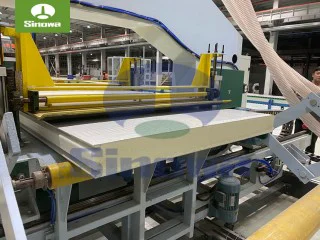
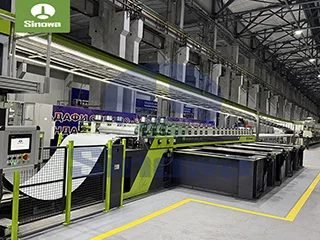
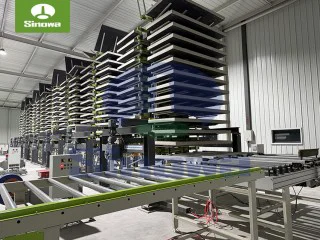
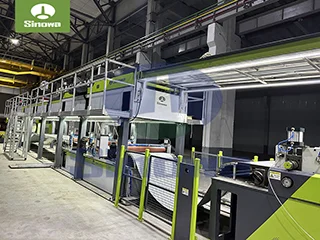
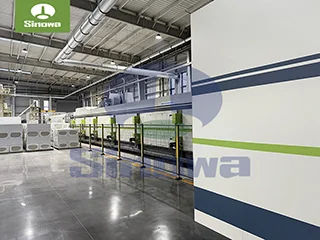
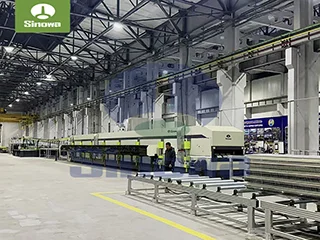
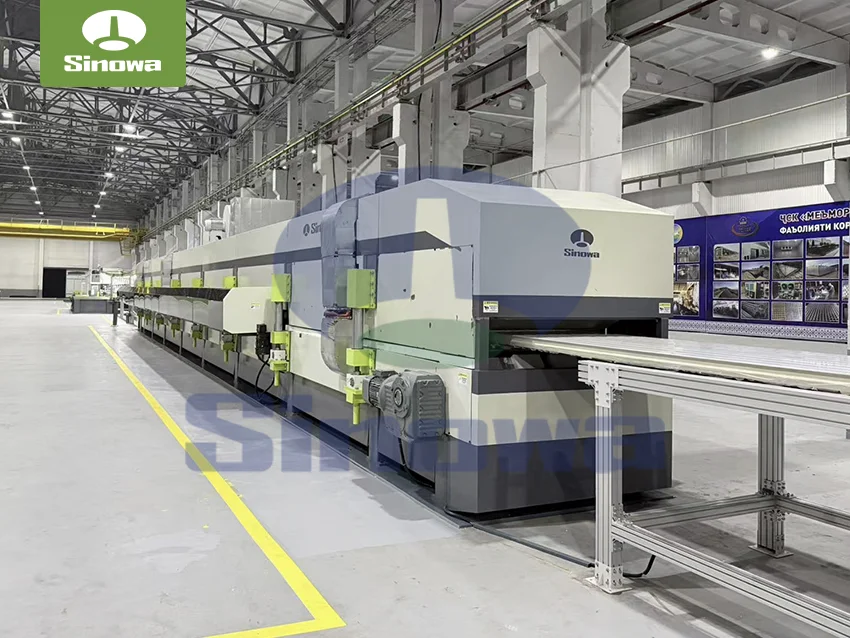
 sandwich panel machine
The foundation of high-quality PU sandwich panels for clean rooms lies in the careful selection and preparation of raw materials. Unlike standard construction materials, the components used in these panels must not only meet structural and thermal requirements but also minimize the risk of particle emission and chemical outgassing, which could compromise the clean room's controlled environment. The primary components of a PU sandwich panel include the facing materials, the polyurethane core, and the adhesive or foaming agents used to bond the layers. Facing materials typically include galvanized steel, aluminum-zinc coated steel, or stainless steel sheets, chosen for their durability, corrosion resistance, and smooth surface finish that is easy to clean and less prone to particle accumulation. These metal sheets are often pre-treated with a special coating, such as solvent-free PVDF fluorocarbon paint, which enhances chemical resistance and prevents the release of volatile organic compounds (VOCs) into the clean room atmosphere. The thickness of the facing sheets is carefully selected based on the structural requirements of the clean room, with a minimum thickness of 0.5mm commonly used to ensure rigidity and prevent deformation.
The polyurethane core, the heart of the sandwich panel, is formulated to provide superior thermal insulation while maintaining structural stability. Polyurethane foam is an ideal core material due to its closed-cell structure, which offers extremely low thermal conductivity (typically between 0.022-0.027 W/(m·K)), significantly reducing heat transfer between the interior and exterior of the clean room. This thermal efficiency is crucial for maintaining consistent temperature levels within the clean room, which is essential for processes such as pharmaceutical manufacturing and semiconductor production. The foam is also engineered to have a uniform density distribution, usually between 40±2 kg/m³, to ensure consistent mechanical performance across the entire panel. In addition, the foaming agents used in the polyurethane formulation are carefully selected to be low-emission and environmentally friendly, avoiding substances that could outgas and contaminate the clean room air. For clean room applications, the polyurethane core is often produced using non-fluorinated foaming technologies to meet strict environmental and health standards.
The production process of PU sandwich panels for clean rooms is a highly automated and controlled sequence of operations, designed to ensure precision, consistency, and minimal contamination. The process typically begins with the preparation of the facing materials. Large coils of metal sheets are loaded onto uncoiling machines, which feed the sheets into a series of roller forming machines. These machines shape the metal sheets into the desired profile, which may include corrugations or ribs to enhance structural strength. The forming process is carefully calibrated to ensure uniform dimensions and a smooth surface finish, as any irregularities could create pockets where particles can accumulate. After forming, the metal sheets are cut to the required length using precision cutting technologies such as laser cutting or water jet cutting. These methods are preferred over traditional grinding or sawing because they produce minimal dust and debris, reducing the risk of contamination. The cut edges are then subjected to deburring and passivation treatments to remove any sharp edges or burrs that could shed particles.
Following the preparation of the facing materials, the next step is the application of the polyurethane core. This process can be carried out using either continuous or discontinuous production lines, depending on the volume and specifications of the panels. Continuous PU sandwich panel line is more commonly used for large-scale manufacturing, offering higher efficiency and consistent quality. In a continuous production line, the lower facing sheet is fed onto a conveyor belt, which moves it through a series of stations. First, the surface of the lower sheet is preheated to a precise temperature, typically between 120-150℃, to optimize the adhesion of the polyurethane foam. The preheating process is carefully controlled to avoid overheating, which could damage the coating or cause the release of harmful VOCs.
Next, the polyurethane foam mixture is applied to the preheated lower facing sheet. The foam is produced by mixing polyisocyanate and polyether or polyester polyol in precise proportions, along with foaming agents, catalysts, and other additives. This mixture is injected onto the lower sheet using a high-pressure foaming machine, which ensures uniform distribution of the foam. The foaming machine is equipped with advanced mixing technology to ensure that the components are thoroughly blended, resulting in a homogeneous foam structure. As the foam is applied, it begins to expand rapidly, filling the space between the lower facing sheet and the upper facing sheet, which is fed into the line simultaneously. The upper facing sheet is carefully aligned with the lower sheet to ensure proper bonding and uniform panel thickness.
Once the foam is applied and the upper facing sheet is in place, the assembled panel moves into a double-belt lamination press. This press applies uniform pressure and temperature to the panel, facilitating the curing of the polyurethane foam. The pressure and temperature settings are critical to ensuring strong adhesion between the foam core and the facing sheets, as well as the proper formation of the closed-cell structure in the foam. The curing process typically takes several minutes, depending on the thickness of the panel and the formulation of the foam. After curing, the panel moves through a cooling zone, where it is cooled to room temperature using forced air or water cooling systems. This cooling process helps to stabilize the panel's dimensions and prevent warping or deformation.
After cooling, the panels undergo a series of finishing operations. These include edge trimming to ensure precise dimensions, as well as any necessary slotting or punching for installation purposes. Slots may be cut into the ends of the panels to facilitate overlapping and joining, while holes may be punched for the installation of fixtures or ventilation systems. These finishing operations are carried out using precision machinery to ensure accuracy and minimal dust generation. The panels are then subjected to a thorough cleaning process, using ionized air blowers to remove any dust or debris that may have accumulated during production.
Quality control is an integral part of the production process in a PU sandwich panel machine for clean room applications. Every stage of production is monitored and tested to ensure that the panels meet the strict requirements of clean room environments. Raw material testing is carried out to verify the quality of the metal sheets, polyurethane components, and adhesives. This includes testing for chemical composition, surface finish, thermal conductivity, and VOC emissions. During production, in-process testing is performed to check the dimensions, thickness, and flatness of the panels. The adhesion strength between the foam core and the facing sheets is also tested regularly, with samples taken at random intervals and subjected to pull tests to ensure that the bond strength meets or exceeds the required standards (typically ≥ 0.1 MPa).
Finished panels undergo a comprehensive set of tests before being released for shipment. One of the key tests is the particle emission test, where a sample panel is wiped with a cleanroom-compatible cloth, and the number of particles larger than 0.5μm on the cloth is counted. The acceptable limit for such particles is typically less than 50 per square meter. Another important test is the VOC emission test, which measures the total volatile organic compounds released by the panel over a 72-hour period. The results must be below 0.1 mg/m³ to ensure that the panels do not contaminate the clean room air. Additionally, the panels are tested for thermal conductivity, compressive strength (≥ 150 kPa), and fire performance. The fire performance test ensures that the panels meet the required fire rating, typically B1 or higher, to enhance the safety of the clean room facility.
The production environment in a continuous PU sandwich panel line for clean room applications is also subject to strict control measures to prevent contamination. The production workshop is designed to meet ISO 8 level (Class 100,000) clean room standards, with high-efficiency particulate air (HEPA) filters installed in the ventilation system to remove airborne particles. The air exchange rate is maintained at a minimum of 20 times per hour to ensure a constant supply of clean air. Workers in the production area are required to wear antistatic cleanroom clothing, including coveralls, gloves, masks, and hairnets, to prevent the shedding of particles and fibers. All tools and equipment used in the production process are regularly cleaned and disinfected with isopropyl alcohol (IPA) to remove any contaminants. The workshop is also maintained at a controlled temperature and humidity to prevent condensation and ensure optimal production conditions.
The packaging and transportation of the finished PU sandwich panels are also critical to maintaining their quality and preventing contamination. The panels are wrapped in antistatic polyethylene (PE) film to protect them from dust, moisture, and scratches during transportation. Corner protectors made of expanded polyethylene (EPE) foam are attached to the edges of the panels to prevent damage. The wrapped panels are then placed in wooden crates containing desiccants to control humidity, ensuring that the relative humidity inside the crate remains below 30%. During transportation, the panels are loaded and unloaded using equipment with dust covers, and the transport vehicles are cleaned and disinfected to meet ISO 8 level clean standards. This comprehensive packaging and transportation process ensures that the panels arrive at the clean room construction site in pristine condition, free from contamination.
PU sandwich panels produced in these specialized plants offer numerous advantages for clean room applications. Their exceptional thermal insulation properties help to maintain consistent temperature and humidity levels within the clean room, reducing energy consumption and ensuring optimal conditions for sensitive processes. The closed-cell structure of the polyurethane core also provides excellent sound insulation, creating a quiet working environment that is essential for precision manufacturing. Additionally, the panels are lightweight yet structurally strong, with a high compressive strength that allows them to be used in both wall and ceiling applications. Their lightweight nature also simplifies installation, reducing construction time and labor costs.
Another key advantage of PU sandwich panels for clean rooms is their superior contamination control capabilities. The smooth, non-porous surface of the metal facing sheets is easy to clean and disinfect, minimizing the accumulation of particles and microorganisms. The panels are also resistant to a wide range of chemicals, making them suitable for use in pharmaceutical and chemical processing facilities where harsh cleaning agents may be used. The low VOC emission properties of the panels ensure that they do not contribute to air contamination, helping to maintain the high air purity standards required in clean rooms.
In addition to their performance advantages, PU sandwich panels are also highly versatile. They can be customized to meet the specific requirements of different clean room applications, including varying thicknesses (ranging from 50mm to 250mm), lengths (up to 23 meters), and widths. The panels can also be produced with different facing materials, such as stainless steel for corrosive environments or coated steel for aesthetic purposes. This versatility makes them suitable for a wide range of clean room types, from small laboratory clean rooms to large-scale semiconductor manufacturing facilities.
The long-term durability of PU sandwich panels is another important factor that contributes to their popularity in clean room applications. The panels are resistant to moisture, corrosion, and UV radiation, ensuring that they maintain their performance and appearance over time. With proper installation and maintenance, PU sandwich panels can have a service life of 10-30 years, providing a cost-effective solution for clean room construction. Their durability also reduces the need for frequent replacement, minimizing downtime and maintenance costs for clean room operators.
As the demand for clean rooms continues to grow across various industries, the role of PU sandwich panel production line becomes increasingly important. These plants are constantly evolving to incorporate new technologies and materials that enhance the performance and sustainability of the panels. For example, the development of bio-based polyurethane materials is reducing the environmental impact of the panels, while the integration of sensors into the panels allows for real-time monitoring of thermal performance and contamination levels. Additionally, advancements in production technology, such as the use of artificial intelligence and automation, are improving the efficiency and precision of the manufacturing process, ensuring consistent quality and reducing the risk of human error.
In conclusion, polyurethane sandwich panel production line play a critical role in the construction of clean room environments by producing high-quality panels that meet the strict requirements of air purity, thermal control, and contamination prevention. The production process is a sophisticated combination of raw material selection, precision manufacturing, and rigorous quality control, all carried out in a controlled environment to minimize contamination. The resulting PU sandwich panels offer exceptional thermal insulation, structural strength, and contamination control capabilities, making them an ideal choice for a wide range of clean room applications. As industries continue to demand higher standards for clean room performance, PU sandwich panel making plants will continue to innovate, developing new technologies and materials to meet these evolving needs. The ongoing advancement of these plants and the panels they produce is essential for supporting the growth of industries that rely on clean room environments, ensuring the safety, quality, and efficiency of their processes.
https://www.cnsinowa.com/sandwich-panel-machines/pu-sandwich-panel-making-plant-for-clean-room-panel-production.html