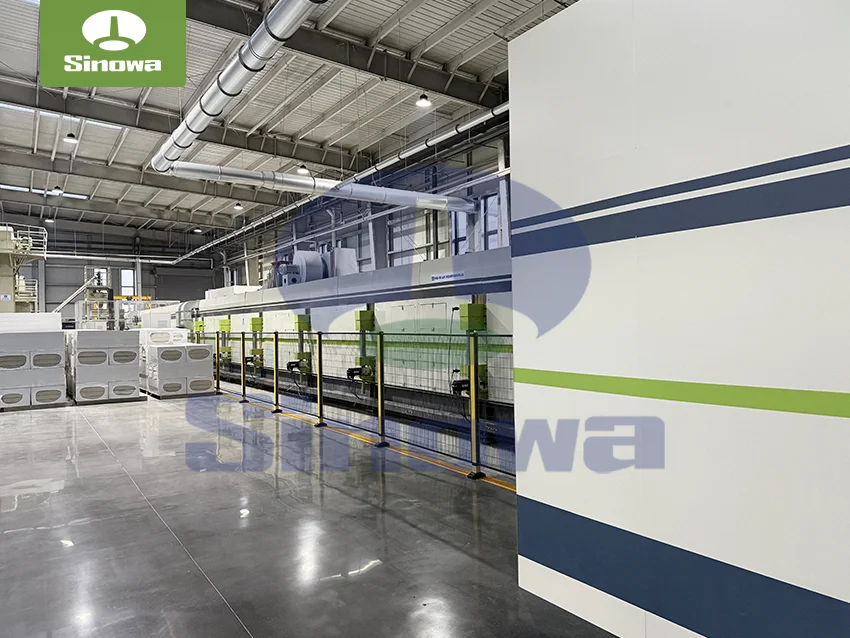
 sandwich panel machine
The entire operating logic of the exterior wall PU sandwich panel machine is based on the perfect coordination of mechanical motion and chemical foaming reaction, with each production link closely connected and mutually restricted to ensure the overall quality of finished products. The production process starts with the pretreatment of the surface raw materials of the panel outer skins. Metal coil materials used for exterior wall panels often carry surface dust, oil stains and subtle oxide layers formed during storage and transportation, which will seriously affect the bonding firmness between the outer skin and the PU foam core layer if not removed. The equipment is equipped with a professional surface pretreatment module, which thoroughly cleans and activates the surface of the coil materials through physical and mild processing methods. This treatment process effectively eliminates surface impurities, improves the surface adhesion of the outer skin materials, and lays a solid foundation for the long-term structural stability and anti-delamination performance of the finished sandwich panels, avoiding quality problems such as local hollowing and peeling of panels in subsequent building use.
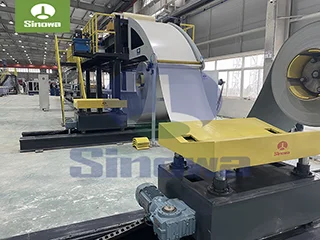
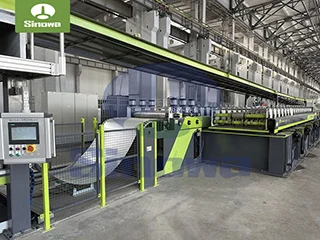
After the surface pretreatment of the outer skin materials is completed, the coil materials are continuously and stably conveyed to the roll forming module through the automatic feeding system. This module is composed of multiple groups of precision rolling and bending structures, which gradually press and bend the flat metal coil according to the preset exterior wall panel profile parameters. Through segmented rolling and precise mechanical positioning, the PU sandwich panel line can shape flat raw materials into standard plate structures with specific edge folding and locking structures required for exterior wall installation. The whole forming process is stable and continuous, avoiding the dimensional deviation and surface deformation easily caused by manual or simple mechanical processing. The optimized roller structure and transmission design ensure that the thickness and flatness of the formed outer skin materials remain uniform, and the edge processing is neat and smooth, which not only improves the overall appearance of the finished panels but also ensures the sealing and assembly accuracy of subsequent on-site building installation.
The foam mixing and pouring unit is the core functional component of the entire exterior wall polyurethane sandwich panel machine, which directly determines the thermal insulation performance, structural compactness and mechanical strength of the finished panels. This unit relies on high-precision metering and high-pressure mixing systems to deliver the two core raw materials of polyurethane foam, polyol and isocyanate, to the mixing head in strict proportion. The high-pressure impact mixing technology enables the two liquid raw materials to fully fuse and react instantaneously, forming a uniform and fine foam mixed liquid. The mixed liquid is evenly poured on the surface of the lower formed outer skin through the swinging pouring structure of the equipment. The intelligent pouring control system can adjust the pouring density, flow rate and coverage range according to the preset panel thickness and performance requirements, ensuring that the foam raw materials are fully covered and evenly distributed on the plate surface without local accumulation or missing pouring. This precise pouring mode is the key to ensuring the consistent thickness and uniform thermal insulation performance of the PU core layer of the sandwich panels.
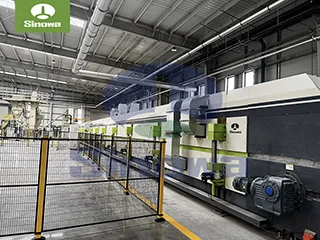
After the foam pouring operation is completed, the upper formed outer skin is synchronously covered on the surface of the foam layer through the synchronous pressing structure of the equipment, forming a complete sandwich composite structure integrating upper and lower metal outer skins and intermediate PU foam core layer. Subsequently, the composite plate body is stably conveyed to the double-track laminating and curing system for molding and solidification treatment. The double-track laminating structure is composed of upper and lower parallel circulating conveyor belts, which can apply uniform and stable pressure to the composite plate body from top to bottom. The constant temperature heating system matched with the laminating equipment maintains a stable temperature environment in the curing area, providing optimal reaction conditions for the foaming expansion and solidification molding of the PU core layer. In the closed and constant temperature molding space, the foam continues to expand and fill the gap between the two outer skins, and closely bonds with the metal surface after complete solidification, forming an integrated composite structure with strong overall adhesion.
The curing and molding time is automatically adjusted by the equipment according to the thickness specification of the produced panels and the environmental temperature of the production workshop. Reasonable curing time can ensure that the PU foam core layer achieves the best compactness and structural rigidity, avoiding quality defects such as insufficient foaming, loose internal structure or excessive foaming and surface bulging. In the laminating and curing stage, the equipment’s synchronous transmission system ensures that the moving speed of the upper and lower conveyor belts is completely consistent, preventing the relative displacement of the upper and lower outer skins during the pressing and curing process, which effectively guarantees the dimensional accuracy and structural regularity of the finished panels. After sufficient curing and solidification, the preliminary molded sandwich panels have stable structural performance, including excellent overall rigidity, good surface flatness and reliable internal bonding strength.
The final stage of the production process is fixed-length cutting and finishing processing. The fully cured continuous plate body is stably conveyed to the automatic cutting module along the production line. The high-precision cutting system can identify the preset plate length parameters and complete fixed-length cutting in a fast and stable manner. The cutting tool adopts optimized structural design, which can ensure that the cutting section of the panel is flat and smooth without burrs, edge warping and dimensional errors. After cutting, the equipment is equipped with a simple finishing and sorting mechanism to complete preliminary inspection and arrangement of the finished panels, removing individual defective products with surface defects or structural abnormalities, and ensuring that the output finished products meet the production standards of building exterior wall materials. The whole production process from feeding, forming, pouring, laminating, curing to cutting is completed on one continuous production line, realizing uninterrupted automated production and greatly improving production efficiency.
The superior performance of the exterior wall PU sandwich panel making machine is reflected in its excellent production stability and product performance optimization capability. The PU foam core layer produced by this equipment has uniform and fine internal pores, low thermal conductivity and excellent thermal insulation and heat preservation effects, which can effectively block the heat exchange between the interior and exterior of the building, reduce the energy consumption of building heating and cooling, and meet the green energy-saving requirements of modern architectural design. At the same time, the integrated composite structure formed by mechanical pressing and thermal curing has strong overall structural stability, with good compression resistance, bending resistance and impact resistance. The finished exterior wall panels can adapt to complex outdoor environments such as strong wind, rain erosion and temperature difference changes, and maintain stable use performance for a long time.
In terms of production adaptability, this type of equipment has flexible adjustment performance and can meet the production needs of exterior wall panels with different thicknesses, specifications and profile shapes. By adjusting the operating parameters of the rolling forming system, pouring flow rate and laminating pressure, the equipment can switch production specifications quickly without complicated mechanical replacement and debugging, effectively improving the versatility of the production line and reducing the production cost of multi-specification panel processing. The intelligent control system equipped with the equipment can realize real-time monitoring and automatic adjustment of key parameters such as production speed, mixing ratio, curing temperature and pressing pressure. When minor parameter fluctuations occur in the production process, the system can complete self-correction in time to ensure the consistency of each batch of finished products and reduce the rate of defective products.
Compared with traditional intermittent production equipment, the continuous production mode of the exterior wall PU sandwich panel manufacturing machine greatly shortens the production cycle of single panels and realizes continuous mass production. The highly automated operation mode reduces manual intervention links in the production process, not only reduces the labor intensity of operators but also avoids product quality fluctuations caused by human operation errors. The optimized mechanical structure design reduces the friction loss and operating failure rate of equipment operation, improves the overall stability and service life of the production line, and can maintain long-term stable high-efficiency operation in high-intensity industrial production scenarios.
In the field of modern architectural engineering, the popularization of exterior wall PU sandwich panels has brought important changes to building exterior wall construction. As the core production equipment, the continuous optimization of the performance of the exterior wall PU sandwich panel production machine directly promotes the improvement of the comprehensive quality of building exterior wall materials. The finished panels produced by the equipment have the dual advantages of decorative performance and functional performance, with flat and beautiful surfaces, diverse and adjustable styles, and good weather resistance and anti-aging performance. They are widely used in the exterior wall decoration and thermal insulation projects of industrial plants, public buildings, commercial buildings and prefabricated buildings.
With the continuous development of the construction industry towards greening, prefabrication and high efficiency, the market has put forward higher requirements for the performance, precision and intelligence of exterior wall sandwich panel production equipment. The current exterior wall PU sandwich panel machinery is constantly upgraded in terms of energy saving and consumption reduction, intelligent control and production precision optimization. The optimized heating and curing system can effectively reduce energy consumption in the production process and realize green and low-carbon production. The upgraded metering and mixing system further improves the proportioning accuracy of foam raw materials, making the internal structure of the panel core layer more uniform and stable. The intelligent monitoring system can record production data in real time, facilitate production management and quality traceability, and provide reliable technical support for standardized and large-scale production of enterprises.
In practical industrial application, the operation stability and production flexibility of the exterior wall PU sandwich panel production machinery determine the production benefits and product competitiveness of building material manufacturing enterprises. The equipment integrates multiple independent processing procedures into one continuous production line, realizing seamless connection of each link, greatly improving production efficiency and batch production capacity. At the same time, the stable processing quality ensures that the finished panels have consistent thermal insulation performance, structural strength and dimensional accuracy, which can meet the strict construction standards of modern architectural exterior engineering. Whether it is large-scale standardized panel production or small-batch customized specification processing, the equipment can maintain good operating adaptability and production stability.
In conclusion, the exterior wall PU sandwich panel production line is an indispensable key equipment in the production system of modern energy-saving building exterior wall materials. Through the integrated design of mechanical transmission, chemical foaming, constant temperature curing and automatic cutting, it realizes efficient, stable and standardized production of PU sandwich panels for exterior walls. Its excellent production performance and flexible application adaptability not only meet the market demand for high-quality building thermal insulation and decorative panels but also promote the technological progress and industrial upgrading of the building material manufacturing industry. With the continuous innovation of mechanical manufacturing technology and the continuous improvement of building energy-saving standards, this type of sandwich panel equipment will continue to iterate and optimize, providing more efficient, energy-saving and intelligent technical solutions for the production of green building exterior wall materials and making important contributions to the high-quality development of the modern construction industry.
https://www.cnsinowa.com/sandwich-panel-machines/exterior-wall-pu-sandwich-panel-machine.html