 sandwich panel line
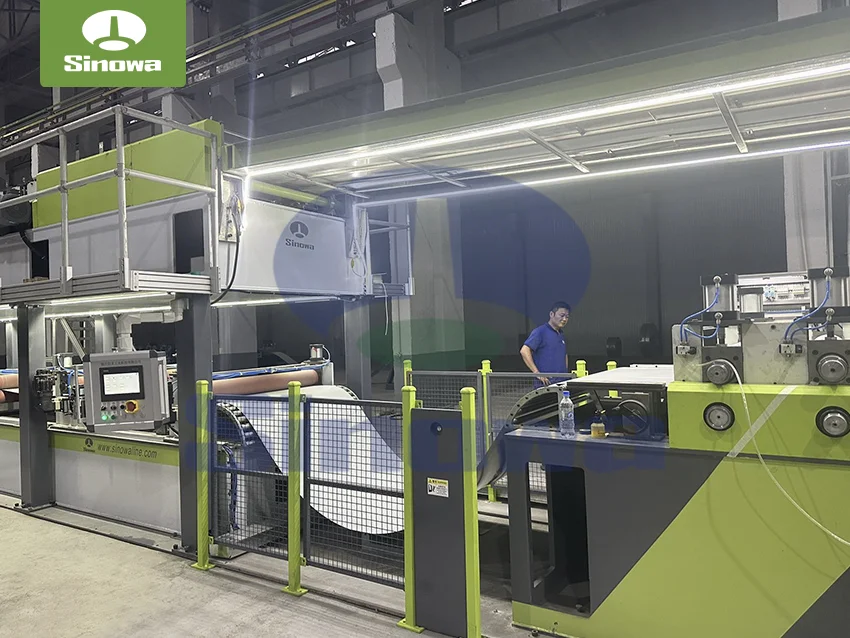
The entire operational logic of the steel structure PU sandwich panel line is built on synchronized mechanical motion and precise chemical reaction control, ensuring every produced panel maintains consistent structural integrity and functional performance. The production process initiates with the raw material feeding and pre-forming stage, where coiled steel sheets, serving as the upper and lower protective facings of the sandwich panel, are steadily released from automatic decoiling units. These coiled metal materials undergo continuous flattening and tension adjustment to eliminate surface wrinkles, uneven stress, and dimensional deviations that may form during coil storage and transportation. This preliminary leveling process is critical as it lays a foundation for the flatness and overall uniformity of the final panel product, preventing subsequent foaming and lamination defects caused by irregular metal surfaces. After leveling, the steel sheets enter the roll forming module, where multiple sets of precision roller groups gradually shape the flat metal plates into customized profiles with specific edge structures and surface textures. The roller groups are scientifically arranged in progressive forming sequences, avoiding excessive one-time extrusion that could damage the metal surface or cause structural deformation, while accommodating different panel width and thickness specifications to meet varied construction requirements.
Following metal sheet forming, the production workflow transitions to the core foaming and material compounding stage, the most technically sophisticated segment of the entire polyurethane sandwich panel production line. Polyurethane raw materials, including polyols, isocyanates, and auxiliary chemical components, are transported through a fully automatic metering and conveying system that precisely regulates material ratios and flow rates. This quantitative feeding mechanism ensures the stability of the polyurethane foam formula, which directly determines the density, thermal insulation performance, and bonding strength of the panel core layer. The proportioned raw materials are delivered to a high-speed mixing chamber where intense homogeneous mixing occurs under controlled pressure, blending all components into a uniform liquid mixture without local concentration differences or impurity agglomeration. The well-mixed polyurethane liquid is then evenly sprayed and coated between the upper and lower pre-formed steel sheets through a reciprocating pouring system, which moves horizontally at a stable speed to ensure full coverage of the entire panel width and avoid blank areas or uneven coating thickness.
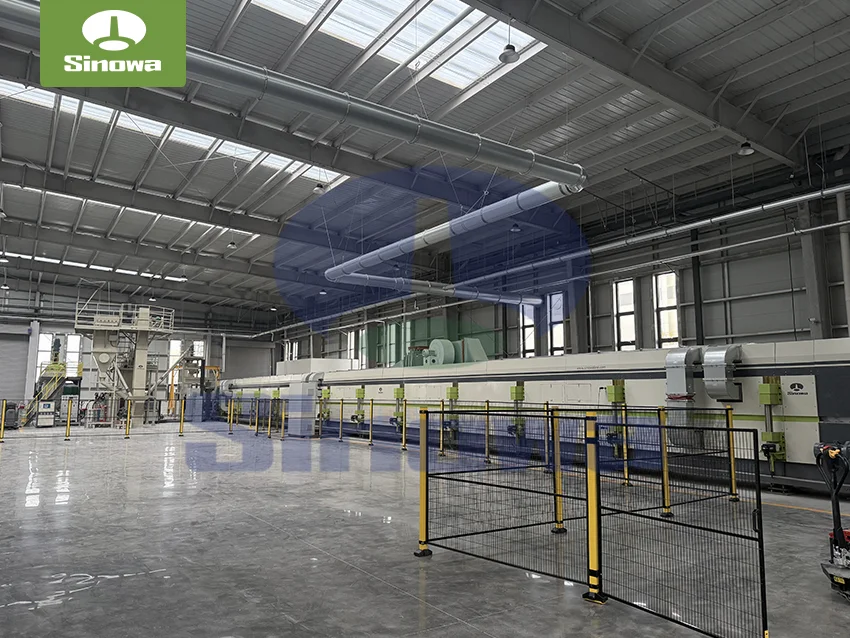
Immediately after polyurethane injection, the semi-finished panel assembly enters the double-belt pressing and curing system, the core module that shapes the panel’s overall structure and solidifies its performance. This system consists of upper and lower parallel circulating conveyor belts that apply continuous and uniform pressure across the entire surface of the composite panel. The stable pressure environment restricts the free expansion of polyurethane foam, guiding the foam to fill the entire cavity between the two metal sheets evenly and form a dense, pore-uniform core layer. Meanwhile, the enclosed thermal control environment inside the pressing section provides consistent temperature conditions for polyurethane polymerization and curing reactions. As the foam undergoes expansion, polymerization, and solidification, it forms a permanent and tight bonding interface with the inner surfaces of the steel sheets, integrating the metal protective layer and the polyurethane thermal insulation core into an indivisible composite structure. This integrated forming process effectively avoids the delamination, hollowing, and uneven core density problems that often occur in traditional intermittent production methods, greatly improving the overall structural firmness and service stability of the sandwich panel.
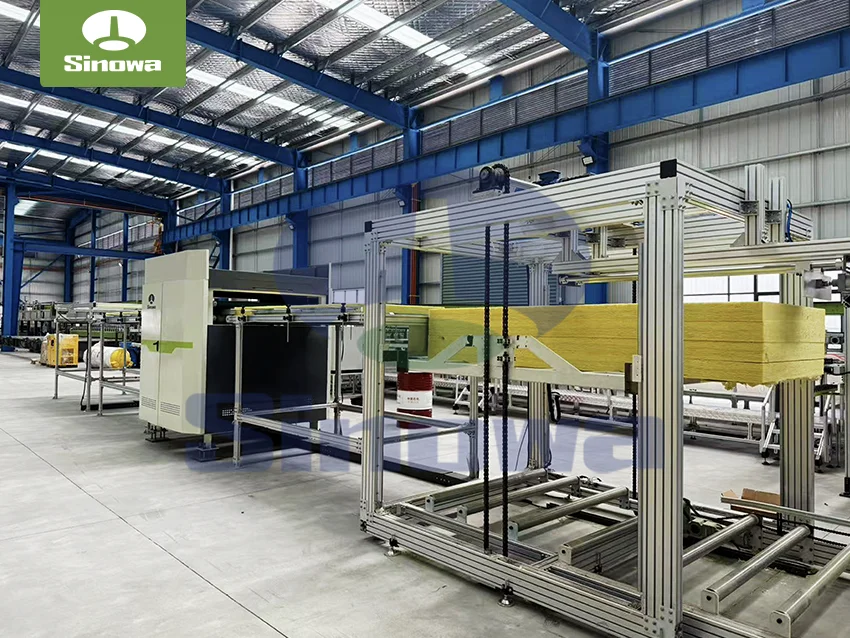
After completing thermal curing and structural shaping, the continuous long panel proceeds to the fixed-length cutting and finishing stage. The automated cutting unit adopts high-precision sensing and positioning technology to identify preset panel length parameters and perform stable, neat cutting operations. The cutting process is burr-free and flat, ensuring the end faces of each panel are smooth and regular, which facilitates seamless assembly and splicing during on-site construction. Subsequent finishing processes include edge trimming, surface cleaning, and quality inspection of panel appearance and flatness, removing minor residual materials generated during production and screening out individual products with surface defects or dimensional deviations. Qualified finished panels are then transported to the automatic stacking platform, where orderly stacking and arrangement are completed through mechanical transmission, realizing standardized collection of finished products and laying a foundation for convenient transportation and storage.
The systematic design of the steel structure PU sandwich panel production line endows it with unparalleled technical advantages compared with traditional panel production equipment, mainly reflected in production continuity, product performance consistency, and operational efficiency. Different from batch production equipment that requires repeated material loading, mold closing, and mold opening, this continuous sandwich panel production line realizes uninterrupted feeding, forming, foaming, curing, and cutting, with all production procedures closely connected without intermediate waiting time. This highly compact production mode greatly improves unit time output and shortens the production cycle of single panels, making it highly suitable for large-scale batch order production in engineering projects. In terms of product quality control, the full-process automated regulation mode eliminates the instability caused by manual operation. From raw material ratio adjustment and foaming pressure control to curing temperature setting and cutting size positioning, all key parameters are maintained in precise and controllable ranges, ensuring that the density, thickness, thermal insulation performance, and structural strength of each batch of panels remain highly consistent.
In terms of product functional performance, the sandwich panels produced by this professional polyurethane sandwich panel machine exhibit excellent comprehensive properties that adapt to complex construction environments. The dense and closed-cell structure of the polyurethane core layer provides outstanding thermal insulation and heat preservation performance, effectively blocking heat transfer between indoor and outdoor spaces. This characteristic significantly reduces the energy consumption of building temperature regulation, making the panels a preferred material for energy-saving building renovations and new green construction projects. At the same time, the integrated composite structure of metal sheet and polyurethane core gives the panel light weight and high structural rigidity. Compared with traditional concrete and brick wall materials, PU sandwich panels greatly reduce the self-weight of building structures, which can lower the load-bearing requirements of building foundations and main structures, thereby reducing overall construction difficulty and engineering costs. In addition, the metal outer layer has good weather resistance, anti-corrosion, and anti-aging capabilities, while the polyurethane core layer maintains stable physical and chemical properties under long-term use, enabling the panels to adapt to high-temperature, low-temperature, humid, and other harsh outdoor environments with a long service life.
The operational flexibility of the steel structure PU sandwich panel machine further expands its application scope in the construction industry. By adjusting the operating parameters of each module, the line can produce sandwich panels with different thickness specifications, surface profiles, and core layer densities, meeting the differentiated needs of different construction scenarios. For industrial factory buildings, logistics warehouses, and large-span public buildings, thickened high-strength panels can be produced to meet the requirements of thermal insulation, wind resistance, and structural stability of large-space buildings. For temporary construction facilities, residential prefabricated buildings, and small commercial spaces, lightweight and thin-specification panels can be customized to realize rapid assembly and convenient disassembly. Moreover, the polyurethane sandwich panel line can adapt to different surface treatment styles of steel sheets, producing panels with diverse surface textures to match different architectural design styles, taking into account both practical performance and architectural aesthetics.
From the perspective of industrial production and sustainable development, the steel structure continuous PU sandwich panel line conforms to the development trend of modern construction industrialization and green manufacturing. The automated centralized control mode reduces manual intervention throughout the production process, effectively lowering labor input and operational error rates, and improving the overall intelligence level of panel manufacturing. The precise formula control and closed foaming process optimize the utilization rate of polyurethane raw materials, reducing raw material waste and avoiding unnecessary resource consumption. Meanwhile, the produced PU sandwich panels are recyclable and reusable, and their lightweight characteristics can reduce building material waste during construction and later demolition, which is in line with the core concept of energy conservation and emission reduction in the construction industry. With the continuous advancement of construction technology and the increasing demand for prefabricated buildings globally, this continuous PU sandwich panel production line has become an important support for the standardized and industrialized development of the sandwich panel industry.
In practical industrial operation, the stable coordination of each component of the production line is the key to ensuring long-term efficient operation. The transmission system maintains stable operating speed and synchronous coordination of each production link, avoiding production jitter and process interruption caused by speed mismatch. The thermal circulation system of the curing module realizes uniform heat distribution in the working area, ensuring that each position of the panel undergoes sufficient and consistent curing reactions. The intelligent monitoring system can track the operating status of each module in real time, capture abnormal data in the production process, and provide early warning of potential equipment failures and process deviations, which facilitates timely maintenance and parameter adjustment by operators, ensures continuous and stable production operation, and reduces production downtime and defective product rate.
In conclusion, the steel structure PU sandwich panel manufacturing line is a highly integrated, efficient, and intelligent professional manufacturing system. It organically combines mechanical engineering, chemical foaming technology, and automatic control technology to achieve efficient and standardized production of high-performance steel structure PU sandwich panels. Its excellent production efficiency, stable product quality, and flexible production adaptability make it widely applicable in prefabricated buildings, industrial construction, energy-saving architectural engineering, and other fields. As the global construction industry continues to advance toward prefabrication, greening, and high efficiency, the technical advantages and application value of the steel structure PU sandwich panel production machinery will be further highlighted, providing reliable core material support for the upgrading and innovative development of modern construction engineering.
https://www.cnsinowa.com/sandwich-panel-machines/steel-structure-pu-sandwich-panel-line.html