sandwich panel line
The core appeal of an automatic polyurethane sandwich panel manufacturing line with simple operation lies in its ability to streamline the production process while minimizing human intervention and operational complexity. Unlike traditional manual or semi-automatic production methods, which are prone to inconsistencies, labor-intensive, and limited in output, these fully automatic lines integrate a series of coordinated processes into a seamless workflow. From the initial feeding of raw materials to the final stacking of finished panels, every stage is controlled by intuitive systems that reduce the learning curve for operators and ensure consistent product quality. This simplicity does not come at the expense of performance; on the contrary, modern lines are engineered to deliver high efficiency, flexibility in product specifications, and adherence to strict quality standards, making them a valuable asset for manufacturers aiming to enhance productivity and competitiveness.
To understand the operational simplicity and functionality of these manufacturing lines, it is essential to examine their core components and working principles. A typical automatic polyurethane sandwich panel manufacturing line consists of several integrated units, each designed to perform a specific function in the production chain. These units include decoilers for unrolling metal coil facings, roll forming machines for shaping the metal sheets into desired profiles, foam mixing and injection systems for preparing and depositing the polyurethane core, curing belts for allowing the foam to expand and solidify, cutting systems for trimming panels to precise lengths, and stacking or packaging units for handling the finished products. What sets these lines apart in terms of simplicity is the centralized control system that governs all these units, allowing operators to monitor and adjust the entire production process through a single, user-friendly interface.
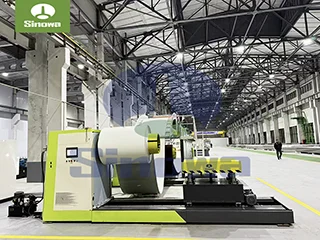
The decoiling unit, which marks the starting point of the production process, is designed for easy loading and operation. Metal coils, typically made of galvanized steel, galvalume, or aluminum, are placed on the decoiler, which automatically unrolls and feeds the metal sheets into the subsequent roll forming section. The decoiling process is equipped with tension control mechanisms that prevent the metal sheets from wrinkling or tearing, ensuring a smooth and consistent feed. This automation eliminates the need for manual handling of heavy coils, reducing physical labor and the risk of errors. Operators only need to load the coils onto the decoiler and set basic parameters such as feed speed, which can be done through the central control panel with minimal training.
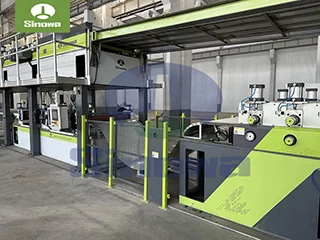
Following decoiling, the metal sheets move to the roll forming unit, where they are shaped into specific profiles that enhance the structural integrity of the final sandwich panels. The roll forming process involves passing the metal sheets through a series of tandem rolling stands, each equipped with precision rollers that gradually bend the sheets into the desired shape. The automatic roll forming system is designed to accommodate a wide range of profile designs and panel dimensions, with parameter adjustments that can be made quickly through the control interface. This flexibility allows manufacturers to switch between different product specifications with minimal downtime, a key advantage in responding to diverse customer demands. The simplicity of adjusting these parameters—often through pre-programmed settings or digital inputs—eliminates the need for manual reconfiguration of machinery, reducing the potential for errors and speeding up production changeovers.
The heart of the manufacturing line is the polyurethane foam mixing and injection system, which is responsible for creating the insulating core that gives sandwich panels their distinctive properties. Polyurethane foam is produced by mixing two main components—polyol and isocyanate—along with additives such as blowing agents and catalysts, which control the foam's density, expansion rate, and curing time. The automatic mixing system precisely measures and combines these components in the correct ratios, ensuring consistent foam quality batch after batch. This precision is critical, as variations in the mixing ratio can affect the foam's thermal insulation performance, structural strength, and durability. The injection unit then deposits the mixed foam between the two profiled metal sheets, which are moving in parallel through the production line. The entire mixing and injection process is automated and monitored in real-time by the central control system, which adjusts flow rates and mixing parameters as needed to maintain optimal foam quality. Operators are not required to manually measure or mix components, significantly reducing the risk of human error and simplifying the production process.
After the foam is injected, the composite structure moves into the curing section, where the polyurethane foam expands and solidifies. This section typically consists of a double-belt laminator that applies uniform pressure to the panel as it moves through a controlled environment, ensuring that the foam bonds securely to the metal facings and forms a consistent core density. The curing process is temperature and time-controlled, with the automatic system maintaining the ideal conditions for foam expansion and solidification. The length of the curing section and the speed of the conveyor belt are synchronized to ensure that the foam is fully cured before the panel moves to the next stage. This automation eliminates the need for manual monitoring of curing conditions, a task that is both time-consuming and prone to error in semi-automatic systems. The result is a sandwich panel with a uniform foam core that delivers reliable thermal insulation and structural performance.
Once the foam is fully cured, the continuous panel is fed into the cutting unit, where it is trimmed to the desired length. The cutting system, which typically uses a precision band saw or circular saw, is synchronized with the conveyor belt speed to ensure accurate cuts. Operators can input the desired panel length into the central control system, and the cutting unit will automatically adjust to make precise, clean cuts without damaging the panel edges. This eliminates the need for manual measurement and cutting, which are not only labor-intensive but also lead to inconsistencies in panel dimensions. The cutting unit is also equipped with safety features that automatically stop the process if an obstruction is detected, enhancing operational safety while maintaining simplicity.
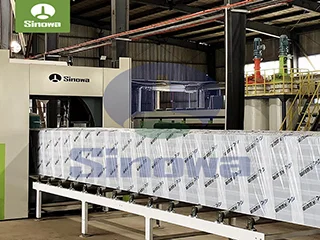
The final stage of the production process involves stacking and packaging the finished panels. The automatic stacking unit uses conveyors and robotic arms to move the cut panels to a designated stacking area, where they are arranged neatly according to preset parameters. Some lines also include automatic packaging systems that wrap the stacked panels in protective film to prevent damage during storage and transportation. This automation reduces the need for manual handling of finished panels, which can be large and heavy, minimizing the risk of injury and improving overall production efficiency. Operators only need to monitor the stacking and packaging process, with the system alerting them to any issues such as jams or incomplete packaging.
The centralized control system is the key element that ties all these components together and enables the simple operation of the manufacturing line. This system typically features a touchscreen interface that displays real-time data on all aspects of the production process, including feed speed, foam mixing ratios, curing temperature, cutting length, and production output. Operators can easily navigate the interface to adjust parameters, access pre-programmed production recipes for common panel specifications, and monitor performance metrics. The system also includes diagnostic features that alert operators to potential issues such as equipment malfunctions, material shortages, or deviations from quality standards, allowing for quick troubleshooting. Many modern control systems also support remote monitoring, enabling managers to keep track of production progress from off-site locations, further enhancing operational convenience.
Beyond operational simplicity, automatic polyurethane sandwich panel manufacturing lines offer a range of benefits that contribute to their growing popularity in the industry. One of the most significant advantages is increased production efficiency. By automating all stages of the production process, these lines can operate continuously for extended periods, significantly increasing output compared to manual or semi-automatic systems. This higher productivity allows manufacturers to meet large orders more quickly and efficiently, reducing lead times and improving customer satisfaction. Additionally, the consistent quality of panels produced by automatic lines reduces material waste, as fewer defective panels are produced, leading to cost savings in raw materials.
Another key benefit is the flexibility to produce a wide range of panel specifications. As mentioned earlier, these lines can easily be adjusted to produce panels of different thicknesses, widths, lengths, and profile designs, making them suitable for a variety of applications. For example, panels used in cold storage facilities may require a thicker foam core for enhanced thermal insulation, while panels used in industrial warehouses may prioritize structural strength with a specific profile design. The ability to switch between these specifications quickly and easily through the control system allows manufacturers to cater to diverse market needs without investing in multiple specialized production lines.
Energy efficiency is also a notable advantage of modern automatic polyurethane sandwich panel manufacturing lines. These lines are engineered with energy-saving components such as variable frequency drives, which adjust motor speed according to production demand, reducing power consumption. Additionally, the precise control of the foam mixing and curing processes minimizes energy waste, as the system only uses the amount of energy needed to maintain optimal conditions. This energy efficiency not only reduces operational costs but also aligns with the growing emphasis on sustainable manufacturing practices, helping manufacturers reduce their carbon footprint.
The reliability and durability of these manufacturing lines are also important factors contributing to their value. Designed with high-quality components and robust construction, automatic lines require minimal maintenance compared to semi-automatic systems, reducing downtime and maintenance costs. The simple operation also means that there is less wear and tear on the equipment due to human error, further extending its lifespan. Manufacturers can thus expect a long return on investment from these lines, as they provide consistent performance over many years of operation.
The application of polyurethane sandwich panels produced by these automatic lines spans a wide range of industries, highlighting the versatility and importance of the manufacturing technology. In the construction industry, these panels are used for walls, roofs, and partitions in industrial warehouses, commercial buildings, shopping centers, and residential structures. Their excellent thermal insulation properties help reduce energy consumption for heating and cooling, making buildings more energy-efficient. In the cold storage and refrigeration industry, polyurethane sandwich panels are essential for maintaining stable low temperatures, as their closed-cell foam core provides superior insulation that minimizes heat transfer. These panels are also used in agricultural buildings such as greenhouses and livestock facilities, where they help regulate temperature and protect crops and animals from harsh weather conditions. Additionally, they find applications in logistics and distribution centers, where their lightweight nature and quick installation make them ideal for fast-track construction projects.
The simplicity of operation of these manufacturing lines has made them accessible to a wider range of manufacturers, including small and medium-sized enterprises (SMEs) that may not have the resources to hire highly specialized technical staff. This accessibility has democratized the production of high-quality polyurethane sandwich panels, allowing more businesses to enter the market and compete effectively. For SMEs, in particular, the ability to operate an automatic line with minimal training means they can enhance their production capabilities, expand their product offerings, and serve new markets without incurring significant additional costs.
Looking ahead, the development of automatic polyurethane sandwich panel manufacturing lines is likely to focus on further enhancing operational simplicity, improving energy efficiency, and integrating advanced technologies such as artificial intelligence (AI) and the Internet of Things (IoT). AI-powered control systems could enable predictive maintenance, identifying potential equipment issues before they occur and minimizing downtime. IoT integration could allow for real-time data collection and analysis, providing manufacturers with valuable insights into production performance and enabling continuous process optimization. These advancements will further solidify the position of these manufacturing lines as a cornerstone of modern construction material production, meeting the evolving needs of the industry while maintaining the core advantage of simple operation.
In conclusion, the automatic polyurethane sandwich panel manufacturing line with simple operation represents a significant advancement in production technology, offering a seamless, efficient, and reliable solution for manufacturing high-quality sandwich panels. By integrating all stages of the production process into a centralized, user-friendly system, these lines eliminate the complexity associated with traditional production methods, reducing human error, enhancing productivity, and ensuring consistent product quality. Their flexibility, energy efficiency, and accessibility make them suitable for a wide range of manufacturers, from large industrial firms to small and medium-sized enterprises. As the demand for energy-efficient, durable building materials continues to grow, these manufacturing lines will play an increasingly important role in supporting sustainable construction practices and meeting the diverse needs of industries around the world. Whether used in the production of panels for cold storage, industrial warehouses, commercial buildings, or agricultural facilities, the automatic polyurethane sandwich panel manufacturing line with simple operation is a testament to how technological innovation can simplify processes, improve performance, and drive industry growth.
https://www.cnsinowa.com/sandwich-panel-machines/automatic-polyurethane-sandwich-panel-manufacturing-line-with-simple-operation.html