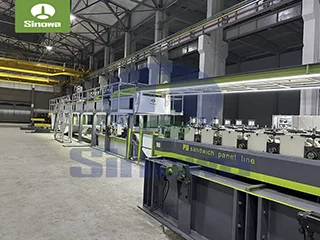
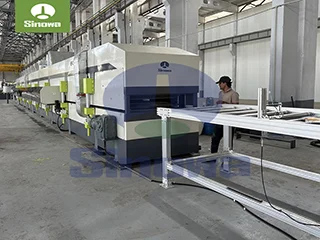
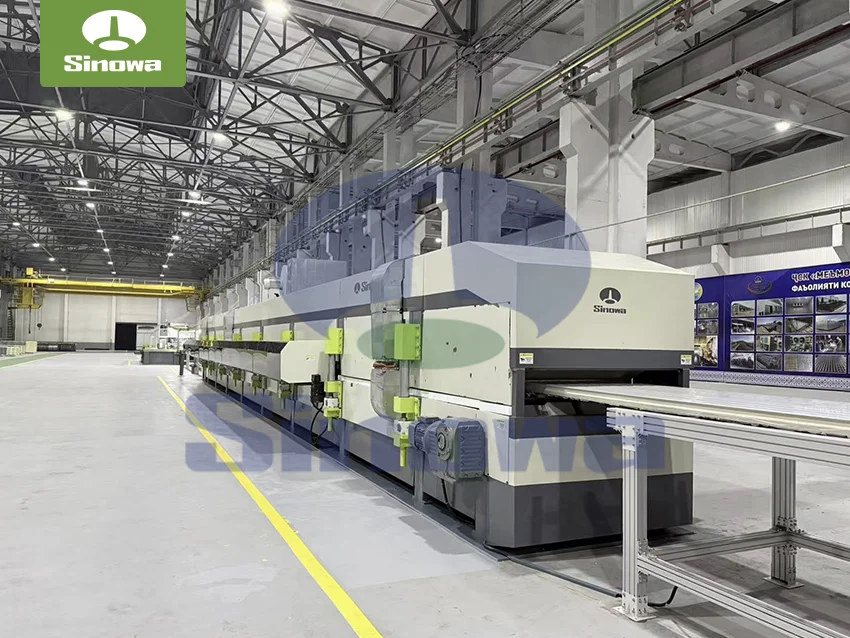
 sandwich panel machine
The fundamental principle of a PU sandwich panel production machine revolves around the integration of multiple sequential processes to form a composite structure consisting of two metal facings and a PU foam core. Unlike traditional manual or semi-automatic production methods, these machines operate in a continuous line, ensuring consistent quality, high production efficiency, and precise control over the panel’s specifications. The core objective is to bond the metal sheets firmly with the PU foam, creating a monolithic structure that eliminates thermal bridging—a common flaw in conventional building materials—and maximizes the panel’s overall performance. The entire production cycle is a carefully coordinated sequence of steps, each governed by precise parameters to ensure the final product meets the required standards for insulation, strength, and durability.
At the heart of a PU sandwich panel production machine is a set of core components that work in tandem to execute the production process. One of the most critical components is the uncoiling system, which is responsible for feeding the metal coils—typically made of color steel, stainless steel, or aluminum—into the production line. These metal coils, which can vary in thickness from 0.35mm to 0.8mm depending on the application, are mounted on uncoilers that ensure a smooth, consistent feed without causing damage to the metal surface. The uncoiling system often includes tension control mechanisms to prevent the metal sheets from wrinkling or stretching, which would compromise the final panel’s structural integrity.
Following the uncoiling process is the roll forming system, which shapes the metal sheets into the desired profile. This system consists of a series of rolling stands arranged in tandem, each equipped with precision rollers that gradually bend the metal sheets into the required shape through cold forming. The roll forming system is highly adjustable, allowing for the production of panels with different profiles and widths—typically ranging from 600mm to 1250mm—to suit various architectural and functional requirements. Some advanced machines feature double-headed roll forming systems, which form the upper and lower metal sheets separately, ensuring greater flexibility and precision in profile design. The roll forming process is crucial as it determines the metal facings’ rigidity and aesthetic appearance, directly impacting the final panel’s performance and visual appeal.
Another essential component is the PU foam injection system, which is responsible for creating the core of the composite panel. This system consists of a high-pressure mixing unit, material storage tanks, and injection nozzles. The PU foam is formed by mixing two liquid components—polyol and isocyanate—under controlled temperature and pressure conditions. The high-pressure impingement mixer ensures that the two components are thoroughly mixed to form a homogeneous mixture with consistent physical properties. The mixture is then injected continuously between the two pre-formed metal sheets at a pressure typically ranging from 150 to 200 bar. The injection process must be precisely timed and controlled to ensure the foam fills the entire gap between the metal sheets uniformly, without creating air pockets or uneven density, which would reduce the panel’s insulation efficiency and structural strength.
To facilitate the curing of the PU foam, the production machine is equipped with a heating and cooling system. After injection, the foam expands rapidly and requires a specific temperature range to cure properly. The heating system—often a hot air circulating furnace—maintains the temperature at an optimal level to promote the foam’s curing process, ensuring it bonds firmly with the metal sheets. Once the foam has cured sufficiently, the cooling system—typically using air or water cooling—lowers the temperature of the composite panel to stabilize its structure. This heating and cooling cycle is critical for achieving the PU foam’s desired properties, such as a thermal conductivity value as low as 0.022 W/m·K, which makes the panels ideal for temperature-controlled environments like cold storage facilities.
The cutting system is another vital component of the production machine, responsible for trimming the continuous composite panel into the required length. This system uses precision cutting tools—such as bandsaw cutters or circular saws—that can be adjusted to cut panels of varying lengths, usually from 2 meters to 18 meters. The cutting process is synchronized with the production line’s speed to ensure clean, precise cuts without damaging the panel’s edges or core. Some advanced machines feature automatic length measurement and cutting systems, further enhancing precision and reducing material waste.
Finally, the stacking and packing system completes the production process by collecting the cut panels, stacking them in an orderly manner, and preparing them for shipment. This system may include conveyor belts, robotic arms, or manual stacking stations, depending on the production line’s level of automation. The stacking system ensures that the panels are not damaged during handling, while the packing system protects them from moisture, dust, and other external factors during transportation and storage.
The production process of PU sandwich panels using these machines is a continuous, streamlined operation that can be divided into several key stages. The first stage is the preparation phase, where the metal coils and PU raw materials are inspected and loaded onto the machine. The metal coils are checked for surface defects, thickness uniformity, and width consistency, while the PU components are tested for purity and reactivity. This pre-production inspection is critical for ensuring the final product’s quality, as any defects in the raw materials will be propagated through the production process.
Once the preparation is complete, the production line is started, and the uncoiling system feeds the metal sheets into the roll forming system. The metal sheets are gradually shaped into the desired profile as they pass through the rolling stands, with each stand contributing a small amount of bending to avoid material fatigue. The formed metal sheets then move to the foam injection station, where the PU mixture is injected between them. The injection is timed to coincide with the movement of the metal sheets, ensuring a continuous, uniform layer of foam.
As the composite panel moves through the heating system, the PU foam expands and cures, bonding firmly with the metal sheets to form a rigid structure. The heating temperature and residence time are carefully controlled to ensure complete curing—too low a temperature or too short a residence time will result in incomplete bonding, while excessive heat may degrade the foam’s properties. After curing, the panel enters the cooling zone, where it is cooled to room temperature to stabilize its dimensions and structure.
Once cooled, the continuous panel is fed into the cutting system, where it is cut to the required length. The cut panels are then transported to the stacking area, where they are stacked neatly and secured to prevent movement. Finally, the stacked panels are packed with protective materials such as plastic film or cardboard, ready for delivery to customers.
The advantages of using PU sandwich panel production machines are numerous, both for manufacturers and end-users. For manufacturers, the primary benefit is high production efficiency. These machines can operate at speeds ranging from 3 to 7 meters per minute, enabling the production of large volumes of panels in a short period. The continuous production process also reduces labor costs, as fewer operators are required to monitor and control the line compared to manual production methods. Additionally, the precise control over production parameters ensures consistent quality, reducing the number of defective products and minimizing material waste.
For end-users, the panels produced by these machines offer exceptional performance benefits. The PU foam core provides superior thermal insulation, reducing energy consumption for heating and cooling by up to 40% compared to traditional building materials. This makes the panels ideal for cold storage facilities, where maintaining a consistent temperature is critical, and for buildings in regions with extreme weather conditions. The metal facings provide excellent structural strength, enabling the panels to withstand high winds, seismic forces, and heavy loads, while the lightweight nature of the composite structure reduces transportation and installation costs.
Another significant advantage is the versatility of the panels produced by these machines. The production process can be adjusted to produce panels of varying thicknesses (from 30mm to 250mm for cold storage panels), widths, and profiles, making them suitable for a wide range of applications. They can be used for roofing, wall cladding, interior partitions, ceilings, and even in modular constructions such as mobile homes and refrigerated trucks. The metal facings can also be customized with different colors and finishes to match the aesthetic requirements of any project, enhancing the panels’ visual appeal.
The durability of the panels is another key benefit. The PU foam core is resistant to moisture, corrosion, and chemical degradation, while the metal facings can be treated with anti-corrosive coatings to extend their service life. This combination ensures that the panels require minimal maintenance over their lifetime, reducing the total cost of ownership for building owners. Additionally, the panels are fire-resistant, with some configurations achieving class B1 or A2 fire ratings, making them a safe choice for various building applications.
The application scenarios of PU sandwich panels produced by these machines are diverse and continue to expand as the technology advances. In the industrial sector, they are widely used in warehouses, factories, and manufacturing plants for roofing and wall cladding, providing thermal insulation and structural protection. Cold storage facilities, such as refrigerated warehouses and food processing plants, rely heavily on these panels due to their superior thermal performance, which helps maintain the required low temperatures efficiently.
In the commercial sector, PU sandwich panels are used in shopping malls, office buildings, hotels, and retail spaces for interior and exterior applications. Their lightweight nature and easy installation make them ideal for fast-track construction projects, reducing the overall construction time and costs. The panels’ aesthetic flexibility also allows architects to create unique designs that enhance the building’s visual appeal.
The residential sector is another growing market for these panels, particularly in modular and prefabricated housing. They are used in the construction of apartment complexes, single-family homes, and holiday cabins, offering energy efficiency, quick installation, and durability. For historic buildings, the panels can be customized to match the original aesthetics, providing a non-invasive thermal upgrade that preserves the building’s architectural integrity.
Specialized applications include modular constructions, temporary structures, and refrigerated transportation. In modular construction, the panels are prefabricated in a factory and then assembled on-site, reducing construction time and minimizing waste. Temporary structures, such as construction site offices and disaster relief shelters, benefit from the panels’ lightweight and easy installation properties. Refrigerated trucks and containers use these panels to maintain temperature stability during transportation, ensuring the quality of perishable goods.
To ensure the long-term performance and safety of a PU sandwich panel production machine, proper operation and maintenance are essential. Operators must be thoroughly trained in the machine’s operation, including the correct setup of parameters, monitoring of the production process, and handling of raw materials. Before starting the machine, a comprehensive pre-operation check should be conducted to ensure all components are in good working order, including the uncoiling system, roll forming rollers, foam injection nozzles, heating and cooling systems, and cutting tools. This check should also include verifying the tightness of bolts, the integrity of electrical connections, and the availability of fire safety equipment.
During operation, operators must monitor the machine’s performance continuously, looking for signs of abnormalities such as unusual noises, vibrations, or fluctuations in temperature or pressure. Any deviations from the normal operating parameters should be addressed immediately, and the machine should be stopped if necessary to prevent damage or accidents. Regular cleaning of the machine is also important, particularly the foam injection system and cutting tools, to prevent the buildup of debris and ensure consistent performance.
Preventive maintenance is crucial for extending the machine’s service life and reducing downtime. This includes regular inspection and replacement of worn components, such as rollers, belts, and cutting blades, as well as lubrication of moving parts to reduce friction and wear. The hydraulic and pneumatic systems should be checked for leaks, and the filters should be replaced regularly to maintain system efficiency. A systematic maintenance schedule should be established, outlining the frequency and scope of maintenance tasks, and records should be kept to track the machine’s maintenance history.
In the event of a breakdown, the machine should be shut down immediately, and the power supply should be disconnected to ensure safety. Repairs should be carried out by qualified maintenance personnel, using genuine replacement parts to ensure the machine’s performance is not compromised. After repairs are completed, a test run should be conducted to verify that the machine is operating correctly before resuming full production.
As technology continues to advance, the future of PU sandwich panel production machines looks promising, with ongoing innovations focused on improving efficiency, automation, and environmental sustainability. Advances in control systems, such as the integration of PLC (Programmable Logic Controller) and HMI (Human-Machine Interface), have made these machines easier to operate and monitor, with real-time data collection and analysis enabling predictive maintenance and process optimization. Remote monitoring and control capabilities are also becoming more common, allowing operators to monitor the production process and address issues from a distance, reducing downtime and improving efficiency.
Environmental sustainability is another key area of innovation, with manufacturers developing machines that reduce energy consumption and minimize waste. This includes the use of energy-efficient motors, heat recovery systems, and the ability to process recycled materials. Additionally, advancements in PU foam technology are leading to the development of more environmentally friendly foam formulations that have lower VOC (Volatile Organic Compound) emissions and are more easily recyclable.
In conclusion, the PU sandwich panel production machine is a critical piece of equipment that has revolutionized the production of metal composite panels, enabling the creation of high-performance, versatile materials that meet the diverse needs of modern construction and manufacturing. Its sophisticated integration of uncoiling, roll forming, foam injection, heating, cooling, cutting, and stacking processes ensures consistent quality, high efficiency, and precise control over the final product’s specifications. The panels produced by these machines offer exceptional thermal insulation, structural strength, lightweight properties, and durability, making them suitable for a wide range of applications across industrial, commercial, residential, and specialized sectors. Proper operation and maintenance of these machines are essential to ensure their long-term performance and safety, while ongoing technological innovations continue to improve their efficiency, automation, and environmental sustainability. As the demand for energy-efficient, durable, and sustainable building materials grows, the role of PU sandwich panel production machines in shaping the future of the construction industry will only become more significant.
https://www.cnsinowa.com/sandwich-panel-machines/pu-sandwich-panel-production-machine-for-metal-composite-panels.html