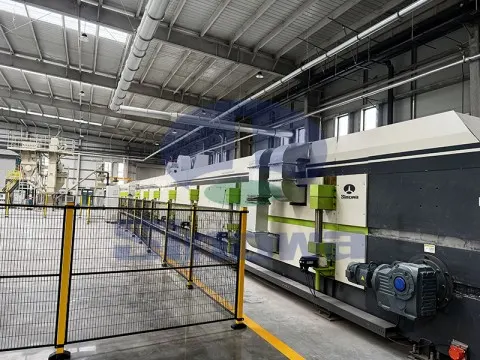
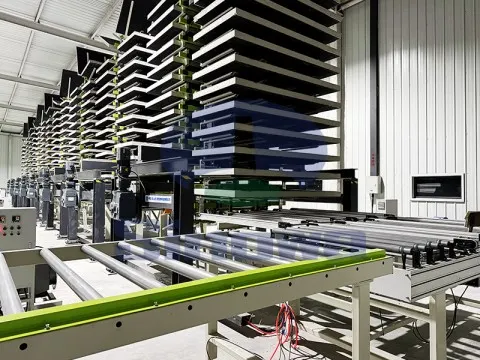
sandwich panel line
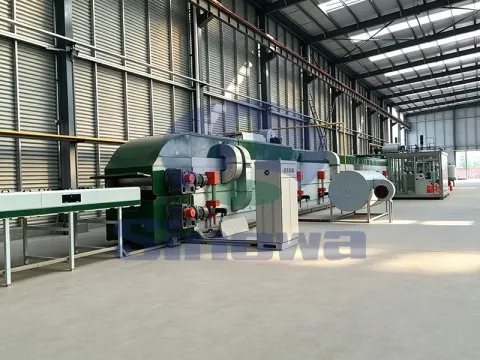
At the heart of every PU sandwich panel line lies a meticulously designed workflow that harmonizes mechanical processing, chemical reaction, and thermal curing to produce panels tailored for thermal insulation wall use, with each stage calibrated to preserve the integrity of the polyurethane foam core and optimize the bond between core and facings. The production journey commences with the preparation of outer facing materials, which are typically supplied in large, continuous rolls to support uninterrupted manufacturing. These facings, selected for their durability, weather resistance, and compatibility with polyurethane foam, undergo a series of preliminary treatments to prime them for bonding: unwinding to release the coiled material, leveling to eliminate warping or unevenness, surface cleaning to remove dust, oils, or contaminants that could hinder adhesion, and preheating to reach a temperature that fosters strong chemical bonding with the foam core. Advanced automated systems within the line manage this initial phase, incorporating precision alignment mechanisms to keep the facing materials perfectly centered as they move through the line, preventing misalignment that could compromise panel uniformity. This attention to detail in the pre-processing stage is non-negotiable, as even minor flaws in the facing materials can create weak points in the finished panel, reducing its thermal insulation efficiency and structural stability when installed in wall assemblies.
Following the preparation of the outer facings, the line transitions to the critical phase of polyurethane foam core formation, a process that relies on precise chemical metering, mixing, and in-line foaming to create a closed-cell foam structure ideal for thermal insulation. Polyurethane foam for sandwich panels is formed through the controlled reaction of two primary liquid components—polyol and isocyanate—blended with specialized additives that enhance foam density, flame resistance, flexibility, and thermal performance, all tailored to meet the demands of wall insulation applications. The PU sandwich panel line is equipped with high-precision dosing and mixing units that deliver these components in exact, consistent ratios, ensuring the chemical reaction proceeds uniformly and predictably. Unlike batch mixing methods, which can lead to inconsistent foam quality, the in-line mixing system operates continuously, feeding the blended liquid mixture directly between the two pre-treated facing layers as they advance through the line. As the liquid polyurethane mixture is dispensed, it begins to react and expand rapidly, filling the entire cavity between the facings without gaps or voids—an essential characteristic for maximizing thermal insulation, as air pockets or uneven foam distribution would create thermal bridges that erode the panel’s insulating capabilities. The expansion process is carefully regulated by the line’s mechanical constraints, with adjustable gap settings that dictate the final thickness of the panel, allowing manufacturers to produce insulation panels of varying dimensions to suit different wall types, from thin interior partition walls to thick exterior load-bearing walls.
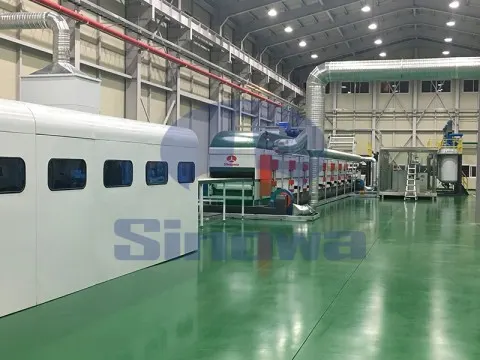
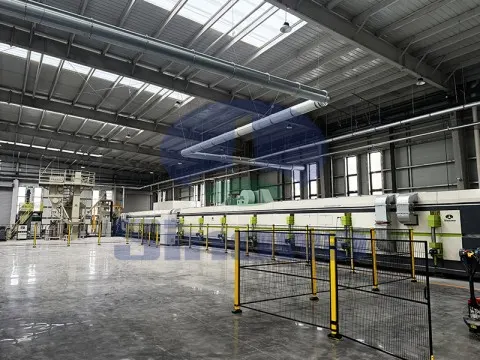
Once the polyurethane foam is injected and begins to expand, the sandwich panel assembly enters the curing and laminating stage, arguably the most vital phase for locking in thermal insulation performance and structural integrity. The panel moves through a continuous double-belt press system, where controlled heat and uniform pressure are applied across its entire surface to facilitate complete polymerization of the polyurethane foam and create a permanent, high-strength bond between the foam core and outer facings. The dual belts of the press maintain consistent pressure, preventing the foam from over-expanding and ensuring a smooth, flat panel surface while compressing the foam to achieve optimal density— a key factor in balancing thermal resistance and mechanical strength. The temperature within the press is finely tuned to accelerate the curing process without damaging the foam structure or facing materials, allowing the polyurethane to transition from a viscous liquid to a rigid, closed-cell solid that traps insulating gas molecules within its structure, delivering exceptional thermal resistance. This continuous curing process eliminates the need for lengthy off-line drying or curing times, a major advantage of integrated PU sandwich panel lines, as it enables a steady, high-volume output of fully cured, ready-to-use insulation panels. As the panel exits the press, it has achieved full structural stability, with the foam core and facings acting as a single unified component that resists warping, cracking, and delamination—critical qualities for wall insulation panels that must withstand long-term exposure to environmental stresses, temperature fluctuations, and mechanical loads.
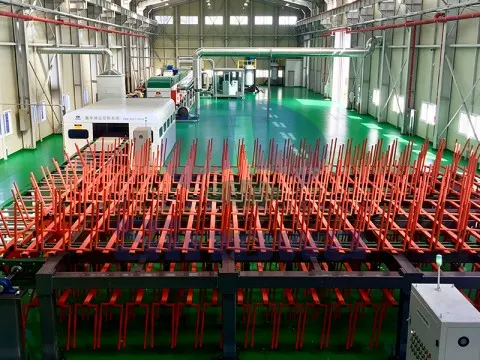
After curing, the finished sandwich panel progresses through post-processing stages designed to refine its dimensions, enhance its usability, and prepare it for installation in thermal insulation wall systems. The first post-processing step is precision cutting, where automated cutting equipment trims the continuous panel to standardized or custom lengths, matching the specifications of wall construction projects. The cutting system operates with high accuracy, ensuring clean, square edges that facilitate tight, seamless fitting during installation, minimizing air leakage and maximizing thermal efficiency at panel joints. Additional post-processing steps may include edge sealing, surface profiling, or protective film application, all integrated seamlessly into the line to avoid disrupting production flow. Edge sealing, in particular, is crucial for wall insulation panels, as it prevents moisture infiltration into the foam core—moisture can degrade polyurethane foam over time, reducing its thermal insulation properties and compromising panel longevity. Protective films shield the facing surfaces from scratches, dirt, and damage during transportation and storage, preserving the panel’s aesthetic and functional quality until it is installed on-site. Throughout these post-processing stages, the line maintains strict quality control through automated inspection systems that detect defects such as uneven thickness, incomplete bonding, or surface imperfections, diverting non-conforming panels from the production stream to ensure only high-quality products reach the market. This real-time quality monitoring is integral to the reliability of PU sandwich panel lines, as it upholds consistent performance standards for thermal insulation wall applications across every batch of panels produced.
The design and engineering of PU sandwich panel lines are deeply rooted in optimizing the unique properties of polyurethane foam for thermal insulation wall use, making these panels superior to many traditional insulation materials in both performance and practicality. Polyurethane foam boasts an extremely low thermal conductivity rate, meaning it effectively blocks the transfer of heat through walls—keeping interior spaces cool in hot climates and warm in cold climates, thereby reducing the energy consumption of heating, ventilation, and air conditioning systems. This exceptional thermal resistance is amplified by the closed-cell structure of the foam, which prevents air circulation within the core and eliminates thermal bridging, a common issue with porous or less dense insulation materials. Beyond thermal performance, PU sandwich panels produced via these integrated lines offer remarkable structural versatility: the rigid foam core provides compressive strength, while the outer facings add tensile and impact resistance, allowing the panels to serve as both insulation and structural components in wall assemblies. This dual functionality simplifies construction processes, as installers can fix the panels directly to wall frames or substrates without the need for separate structural supports, reducing labor time and material costs on construction sites. Additionally, the panels are lightweight despite their strength, easing transportation and handling, and their uniform dimensions enable fast, modular installation, accelerating project timelines for both new construction and wall retrofitting projects aimed at improving energy efficiency.
PU sandwich panel lines are also engineered for adaptability, allowing manufacturers to customize panels to meet the diverse requirements of thermal insulation wall applications across different building types and environmental conditions. By adjusting parameters such as foam density, panel thickness, facing material type, and core additives, the line can produce panels tailored for specific use cases: thin, lightweight panels for interior wall insulation in residential buildings, thicker, heavy-duty panels for exterior wall insulation in commercial warehouses or industrial facilities, and fire-retardant panels for high-safety environments such as public buildings or healthcare facilities. The flexibility of the production line extends to batch size as well, supporting both large-scale mass production for major construction projects and smaller custom runs for specialized wall insulation needs, making it a versatile solution for manufacturers serving a broad construction market. This adaptability is further enhanced by the line’s automated control systems, which allow operators to adjust production settings quickly and accurately, minimizing downtime between production runs and ensuring efficient resource utilization. The closed-loop design of modern PU sandwich panel lines also prioritizes sustainability, reducing material waste by optimizing raw material usage and recycling excess foam or facing trim where possible, aligning with the construction industry’s growing focus on eco-friendly manufacturing and green building practices.
In practical construction scenarios, PU sandwich panels manufactured via these dedicated lines have redefined the standards for thermal insulation wall systems, offering a cost-effective, long-lasting alternative to traditional insulation methods such as fiberglass batts, loose-fill insulation, or external insulation finishing systems. When installed as exterior wall insulation, the panels create a continuous thermal envelope around the building, eliminating gaps and thermal bridges that plague conventional insulation installations, leading to significant reductions in annual energy usage and utility costs. For interior wall insulation, the panels provide effective sound dampening alongside thermal resistance, improving indoor acoustic comfort in addition to temperature regulation. The durability of PU sandwich panels is another key advantage: they resist moisture absorption, mold growth, and pest infestation, maintaining their thermal insulation performance for decades without degradation, unlike some organic insulation materials that deteriorate over time. This longevity reduces the need for frequent insulation replacements, lowering long-term maintenance costs for building owners and contributing to the overall sustainability of the building lifecycle. Furthermore, the smooth, finished surfaces of the panels can be painted, clad, or finished to match any architectural design, making them a practical choice for both functional industrial structures and aesthetically focused residential or commercial buildings.
The impact of PU sandwich panel lines extends beyond individual construction projects, shaping the broader trajectory of the global construction industry’s shift toward energy-efficient, sustainable building practices. As governments and regulatory bodies worldwide implement stricter energy codes and carbon reduction targets, the demand for high-performance thermal insulation solutions continues to surge, and PU sandwich panel lines are at the forefront of meeting this demand responsibly. By enabling the mass production of high-quality, energy-efficient insulation panels, these lines make advanced thermal insulation technology accessible and affordable for construction projects of all scales, from small residential retrofits to large-scale commercial developments. The efficiency of the production process also reduces the environmental footprint of panel manufacturing, with streamlined workflows, minimal waste, and lower energy consumption compared to traditional manufacturing methods for insulation materials. Moreover, the energy savings delivered by PU sandwich panel walls over their operational lifespan far outweigh the environmental impact of their production, creating a net positive effect on global carbon emissions and resource conservation.
Looking ahead, PU sandwich panel lines for thermal insulation walls are poised to evolve further, driven by advancements in materials science, automation technology, and sustainable manufacturing practices. Ongoing research into polyurethane foam formulations is focused on enhancing eco-friendliness, with the development of bio-based raw materials and low-emission foaming agents that reduce the environmental impact of the foam core without sacrificing thermal performance. Automation and digitalization are also transforming the capabilities of these production lines, with the integration of smart sensors, real-time data analytics, and artificial intelligence to optimize production efficiency, predict maintenance needs, and further improve panel quality and consistency. These technological advancements will not only boost the performance and sustainability of PU sandwich panels but also expand their applications in thermal insulation wall systems, opening new possibilities for net-zero energy buildings and passive house designs that prioritize ultra-high energy efficiency.
In conclusion, PU sandwich panel lines represent a pinnacle of specialized manufacturing for thermal insulation wall solutions, combining technical precision, production efficiency, and material innovation to deliver panels that redefine building energy performance and structural versatility. From the seamless integration of raw material processing, foam formation, curing, and finishing to the customizable, high-performance end products, these production lines address the core challenges of modern construction: meeting rising energy efficiency standards, reducing operational costs, and building durable, sustainable structures. The unique properties of PU sandwich panels—exceptional thermal resistance, structural strength, ease of installation, and long-term durability—make them an indispensable component of modern wall insulation systems, while the efficiency and adaptability of the production lines ensure that these benefits are accessible across the global construction market. As the world continues to prioritize sustainable building and energy conservation, PU sandwich panel lines will remain a vital asset, driving innovation in thermal insulation technology and supporting the creation of buildings that are not only functional and comfortable but also environmentally responsible for generations to come.
Sinowa is a professional manufacturer of sandwich panel machine in china, we provide diversified and high-performance sandwich panel production lines, including fully automatic continuous PU sandwich panel line and customized special lines to meet mass production and personalized order demands. These sandwich panel lines support processing multiple foam core materials, such as PU, PIR, mineral wool, rock wool and glass wool, covering different insulation and fireproof standards.
Featuring stable operation, high efficiency, energy saving and easy maintenance, our PU sandwich panel line deliver sandwich panels with excellent thermal insulation, fire resistance, sound insulation and lightweight durability. The finished panels are widely applied in industrial workshops, warehouse roofing and wall cladding, cold storage insulation, serving global construction and industrial insulation markets.
https://www.cnsinowa.com/sandwich-panel-machines/pu-sandwich-panel-line-for-thermal-insulation-wall.html