 sandwich panel machine
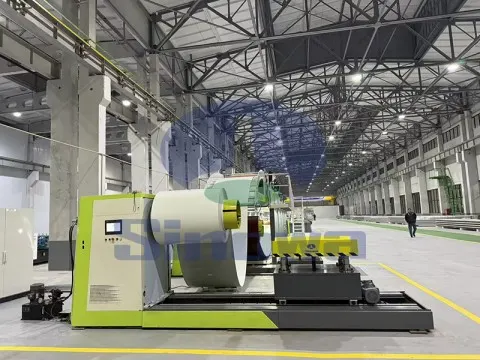
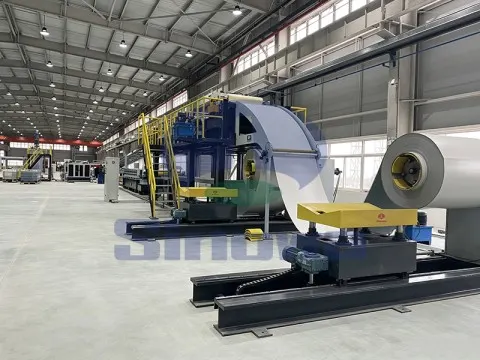
The overall structural composition of the PU sandwich panel machine with flat surface material follows a streamlined production logic, integrating multiple functional modules to realize one-stop processing from raw material feeding to finished product output. Each functional unit is closely connected and collaboratively operated to ensure the continuity and stability of the production process. The raw material feeding module serves as the initial link of the entire production line, mainly responsible for the orderly release of upper and lower flat surface substrates. This module is equipped with an intelligent tension control system, which can dynamically adjust the feeding speed and tension according to the substrate thickness and material characteristics. It effectively avoids substrate deformation, wrinkling and offset phenomena during the conveying process, laying a solid foundation for maintaining the flatness of subsequent composite panels. The feeding structure adopts a horizontal layout, which is compatible with multiple flat substrates including metal flat plates and non-metal decorative flat sheets, achieving high compatibility of raw materials and meeting the diversified production needs of different application scenarios.
Following the feeding module is the surface pretreatment unit, an indispensable part to guarantee the bonding stability between the substrate and the polyurethane core material. During the production process, flat surface substrates are inevitably contaminated with tiny dust, oil stains and oxide layers, which will reduce the interfacial adhesion between materials and affect the overall structural firmness of the sandwich panels. This pretreatment unit is fitted with efficient dust removal and surface polishing components. The dust removal structure uses circulating air flow to completely remove surface attachments, while the polishing mechanism carries out micro smoothing treatment on the substrate surface to increase surface roughness moderately. Such treatment optimizes the bonding condition between the flat substrate and polyurethane foam, enhancing the interfacial binding force without damaging the flatness and integrity of the substrate surface. After pretreatment, the substrates are conveyed to the heating and preheating station through the automated transmission track, where constant-temperature heating is implemented to eliminate surface moisture and stabilize the physical properties of the substrates, further improving the uniformity of subsequent foaming and composite forming.
The foaming and mixing system constitutes the core functional component of the entire PU sandwich panel line, directly determining the foaming quality, density uniformity and thermal insulation performance of the polyurethane core layer. This system is composed of raw material storage tanks, precision metering pumps and high-speed mixing components. Polyurethane resin raw materials, curing agents and foaming additives are separately stored in sealed storage tanks, and independent frequency conversion motors drive the metering pumps to accurately control the output flow of each raw material. According to the preset production parameters, all raw materials are transported to the high-speed mixing head in strict proportion for homogeneous mixing. The internal structure of the mixing head is optimized to form a turbulent mixing state, which eliminates raw material stratification and uneven mixing problems. The well-mixed polyurethane composite liquid is evenly coated on the inner side of the flat substrate through the reciprocating moving distributing mechanism. The linear reciprocating motion of the distributing head ensures that the liquid raw material covers the substrate surface without dead angles, realizing consistent coating thickness and laying the groundwork for the formation of a dense and uniform foam core layer.
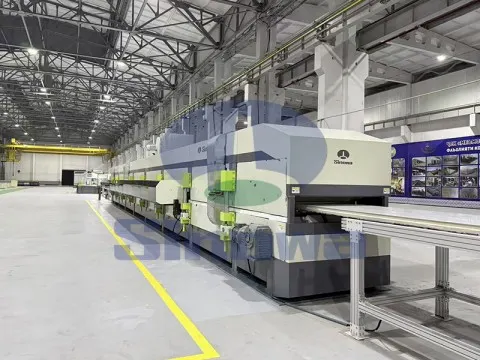
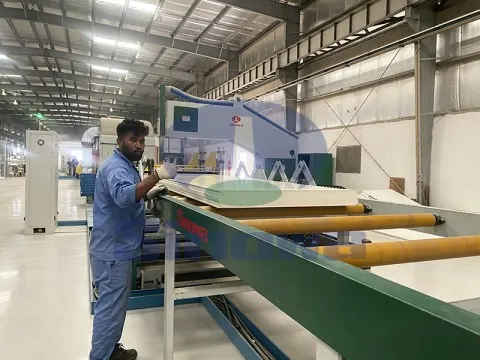
The double-belt forming machine is the key equipment to achieve flat composite forming of sandwich panels, undertaking the core processes of material compounding, foaming, curing and shaping. After being coated with polyurethane mixed liquid, the upper and lower flat substrates are synchronously sent into the closed forming cavity of the double-belt machine. The internal upper and lower clamping plates of the forming machine maintain a parallel horizontal state, and the precise spacing between the plates determines the thickness specification of the finished sandwich panels. During the operation, the heating system inside the clamping plates provides a constant-temperature curing environment, which accelerates the chemical foaming reaction of polyurethane raw materials. Under the combined effect of constant temperature and uniform pressure, the mixed liquid gradually foams, expands and solidifies into a continuous porous foam core layer. The flat clamping plates can evenly bear the expansion pressure generated by foaming, effectively preventing local bulging, depressions and uneven thickness on the panel surface. The whole curing and forming process is carried out in a closed space, which avoids the interference of external environmental factors and ensures that each batch of finished panels maintains excellent flatness and structural stability.
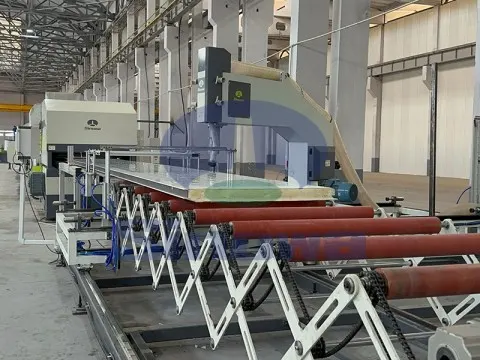
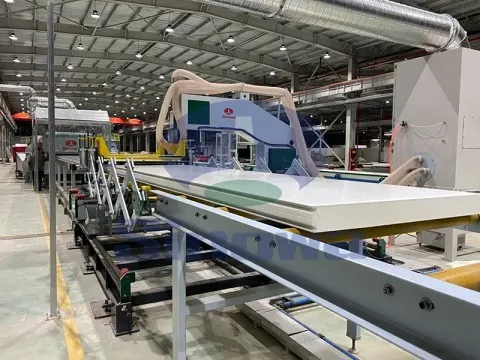
After completing foaming and curing forming, the semi-finished flat sandwich panels enter the trimming and shaping module for precision processing. Due to the spreading characteristics of polyurethane raw materials during foaming, the edges of the initially formed panels will produce irregular burrs and redundant materials. The trimming devices installed on both sides of the production line adopt synchronous cutting structures, which can calibrate the panel width in real time and cut off the redundant edge materials neatly. The cutting speed is synchronized with the conveying speed of the production line to ensure smooth and flat cutting sections without burrs and cracks. In addition to edge trimming, this module is also equipped with surface finishing components to polish the tiny uneven parts on the flat panel surface, further optimizing the surface smoothness and flatness of finished products. For panels requiring special edge sealing treatment, the equipment can complete automatic edge sealing and reinforcement through the auxiliary edge sealing structure, improving the edge compression resistance and waterproof performance of flat sandwich panels.
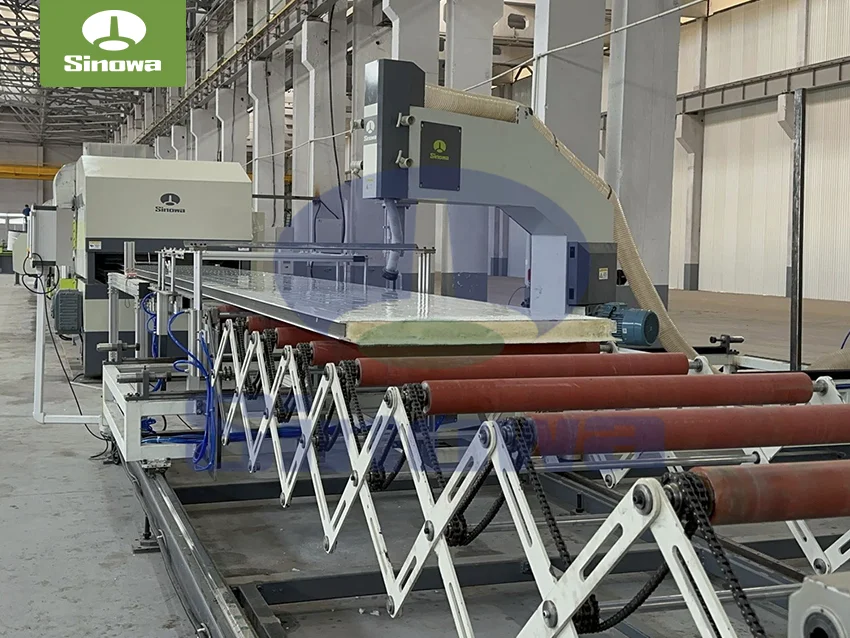
The final stage of the production process includes cooling, fixed-length cutting and stacking collection. The high-temperature panels after forming and trimming are transmitted to the circulating cooling channel, where multi-stage natural air cooling is adopted to slowly reduce the internal and external temperature of the panels. The gradual cooling mode can effectively eliminate the internal stress generated during high-temperature forming, avoiding panel warping and deformation caused by rapid temperature change and permanently maintaining the flat state of the panels. After cooling to the normal ambient temperature, the panels are positioned and measured by the intelligent length measuring system, and the fixed-length cutting mechanism completes accurate cutting according to the preset dimensional specifications. The cut flat sandwich panels are automatically sorted and stacked by the mechanical grabbing device. The stacked structure keeps the panels horizontally placed to prevent surface friction and extrusion damage, ensuring that the flat surface of each panel is intact before leaving the factory. The whole process from feeding to stacking is automated, with minimal manual intervention, which effectively reduces the error rate caused by human operation.
Compared with traditional profiled sandwich panel production equipment, the PU sandwich panel production line for flat surface materials has prominent technical characteristics and application advantages in structural design and production performance. Firstly, the equipment adopts an all-horizontal parallel conveying and forming structure, and all processing stations maintain a horizontal working state. The precise parallel control technology between the conveying track and forming plates ensures that the surface flatness error of finished panels is controlled within an extremely small range, meeting the high flatness requirements of decorative and purification engineering. Secondly, the intelligent parameter adjustment system of the equipment supports flexible switching of production specifications. By adjusting the operating parameters of metering pumps, forming spacing and cutting dimensions, it can produce flat sandwich panels with different thicknesses and sizes, realizing multi-specification flexible production on a single production line. The equipment also has excellent raw material adaptability, which can match flat substrates made of metal, inorganic non-metal and composite decorative materials to produce flat panels with different surface textures and functional characteristics.
In terms of production efficiency and operational stability, this type of flat panel production machine adopts an integrated continuous production process without intermittent shutdown in the middle link. The coordinated operation of all modules realizes seamless connection of each production step, greatly shortening the single-panel processing cycle. The key transmission and pressure-bearing parts of the equipment are made of high-rigidity structural materials, which can resist mechanical vibration and pressure impact during long-term continuous operation. The optimized mechanical transmission structure reduces the friction loss between components, extending the continuous operation cycle of the equipment and lowering the frequency of equipment maintenance. In addition, the equipment is equipped with a real-time monitoring system to track key parameters such as raw material mixing ratio, forming temperature, conveying speed and cutting accuracy in real time. Once abnormal data is detected, the system will automatically trigger early warning and fine-tune parameters to ensure the consistency and stability of each batch of finished products.
The flat-surface PU sandwich panels produced by this professional machine possess superior comprehensive performance, making them applicable to multiple industrial and civil fields. In the field of building enclosure structures, flat composite panels are widely used for the wall and roof decoration of temporary buildings, factory workshops and public buildings. Their smooth flat surfaces are convenient for later painting and decorative processing, and the internal polyurethane foam layer provides excellent thermal insulation and sound insulation effects, reducing building energy consumption. In the purification engineering industry, high-flatness sandwich panels become the preferred materials for dust-free workshops, medical isolation wards and laboratory spaces. The seamless and smooth surface is not easy to accumulate dust and bacteria, which is convenient for daily cleaning and disinfection, meeting the high hygienic standards of purification spaces.
In the cold storage and fresh-keeping storage industry, flat PU sandwich panels rely on the low thermal conductivity of polyurethane foam to build efficient thermal insulation spaces. The flat splicing structure can reduce assembly gaps, effectively preventing cold air leakage and improving the constant-temperature storage effect of cold storage. In addition, these flat panels can also be applied to the interior decoration of transportation tools such as refrigerated trucks and container carriages. The lightweight structural characteristics reduce the self-weight of transportation tools, while the flat and smooth inner surface optimizes the internal storage space. With the continuous development of new energy and environmental protection industries, flat PU sandwich panels have also been gradually applied to the exterior insulation and waterproof decoration of energy-saving buildings, providing reliable material support for green building construction.
To maintain the long-term stable operation of the polyurethane sandwich panel machine with flat surface material, standardized daily maintenance and scientific operation management are essential. In daily production, operators need to regularly clean the mixing head, distributing pipeline and forming cavity to prevent polyurethane raw materials from solidifying and adhering to the equipment interior, which may block the pipeline and affect the mixing uniformity of subsequent raw materials. The tension transmission components and bearing parts should be regularly coated with lubricating oil to reduce mechanical wear and ensure stable conveying of flat substrates. The temperature control system of the forming machine needs regular calibration to avoid temperature deviation affecting the foaming and curing quality of polyurethane. In addition, the dust removal and trimming components shall be inspected regularly to remove residual debris and ensure the flatness and smoothness of panel surfaces. Reasonable maintenance cycles and standardized operation procedures can effectively extend the service life of the equipment, reduce failure downtime and create stable production benefits for processing enterprises.
Looking at the future development trend of the flat-surface PU sandwich panel processing industry, this type of production machine will develop towards higher intelligence, energy saving and environmental protection, and multi-functional integration. With the popularization of digital control technology, the equipment will realize more refined automatic parameter setting and intelligent fault diagnosis. The production data of each link can be uploaded to the terminal system for real-time statistical analysis, helping enterprises optimize production processes and improve resource utilization efficiency. In terms of energy consumption optimization, the heating and cooling structures of the equipment will be further upgraded to adopt circulating energy-saving temperature control technology, reducing energy consumption in the production process and lowering the production cost of composite panels. In addition, the equipment will expand its processing functions, realizing integrated production of fireproof, antibacterial and corrosion-resistant functional flat sandwich panels by matching different modified raw materials, so as to adapt to the increasingly diversified market application needs.
In conclusion, the PU sandwich panel production machine with flat surface material, as professional processing equipment for high-quality flat composite panels, has irreplaceable application value in the modern composite material manufacturing industry. Its scientific and reasonable structural layout, stable and efficient production performance and flexible production mode enable processing enterprises to continuously output flat, high-strength and energy-saving polyurethane sandwich panels. Driven by the continuous progress of building energy conservation and industrial manufacturing technology, the market demand for flat PU sandwich panels will keep growing, which will further promote the technological iteration and performance upgrading of supporting production equipment. It is foreseeable that with the continuous optimization of intelligent control technology and energy-saving processing technology, this type of panel making machine will serve more industrial fields, provide reliable equipment support for the high-quality development of the composite material industry, and make greater contributions to the upgrading of modern building and industrial material systems.
Sinowa is a professional manufacturer of sandwich panel machine in china, we provide diversified and high-performance sandwich panel production lines, including fully automatic continuous PU sandwich panel line and customized special lines to meet mass production and personalized order demands. These sandwich panel lines support processing multiple foam core materials, such as PU, PIR, mineral wool, rock wool and glass wool, covering different insulation and fireproof standards.
Featuring stable operation, high efficiency, energy saving and easy maintenance, our PU sandwich panel line deliver sandwich panels with excellent thermal insulation, fire resistance, sound insulation and lightweight durability. The finished panels are widely applied in industrial workshops, warehouse roofing and wall cladding, cold storage insulation, serving global construction and industrial insulation markets.
https://www.cnsinowa.com/sandwich-panel-machines/pu-sandwich-panel-machine-with-flat-surface-material.html