 sandwich panel machine
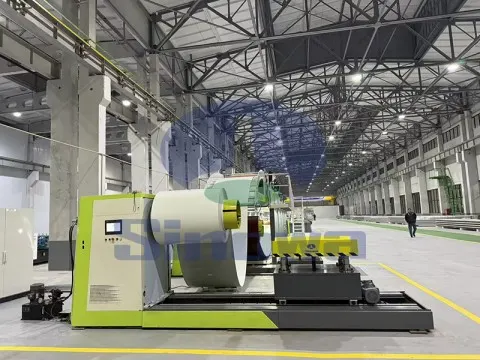
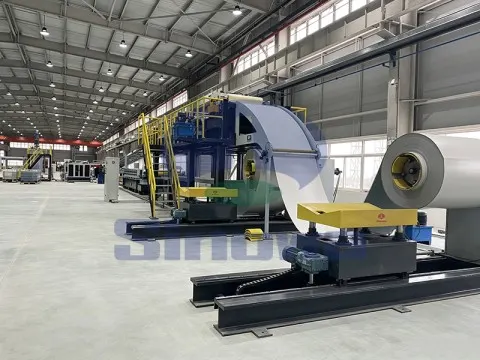
The overall structural design of the PU sandwich panel machine with corrugated surface material follows the logic of continuous streamlined production, and the whole production line consists of multiple interconnected functional modules with independent and coordinated operating mechanisms. The front-end part of the equipment is equipped with raw material unwinding units, which are specially designed to store and release metal sheet substrates used for corrugated surface layers. These unwinding components adopt adjustable bearing structures to adapt to metal coils of different widths and thicknesses, ensuring stable and tension-controlled feeding of raw materials during long-term continuous operation. A tension calibration system is embedded inside the unwinding unit to avoid material deviation and stretching deformation caused by uneven feeding speed, which lays a foundation for consistent surface flatness and corrugation uniformity of finished panels. After the raw metal sheet is released, it enters the surface pretreatment module, where simple surface cleaning and smoothing procedures are completed to remove dust, oxide layers and residual impurities attached to the substrate surface. This pretreatment process effectively enhances the adhesion between the metal substrate and the polyurethane foam layer, preventing delamination and peeling of composite materials in long-term service.
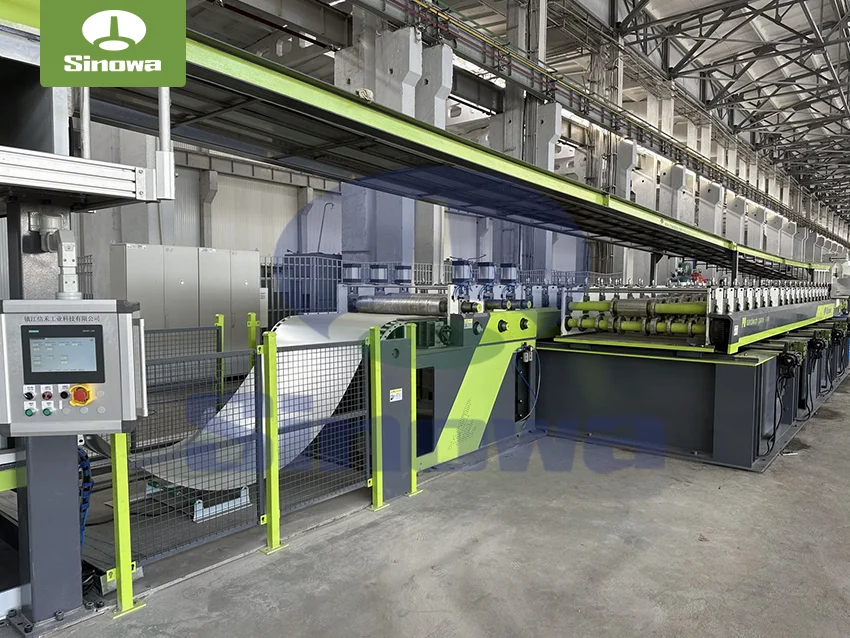
The corrugation forming module is the core functional section that distinguishes this equipment from ordinary flat sandwich panel production machine. Different from flat rolling structures, this module is equipped with customized profiling roller sets with concave and convex tooth-shaped structures. These profiling rollers are arranged in an orderly sequence according to the preset corrugation parameters, and the spacing and pressing depth of the rollers can be moderately adjusted to produce corrugated surfaces with different wave heights and wave distances. When the pretreated metal sheet passes through the gap between the upper and lower profiling rollers, uniform and regular corrugated textures are formed under continuous mechanical extrusion. The rolling speed of the profiling rollers maintains synchronous coordination with the overall operating speed of the production line to ensure that each corrugated unit has consistent dimensional accuracy without local deformation or irregular wrinkles. The mechanical rigidity of the forming roller components is strictly optimized to resist metal fatigue and abrasion during long-term high-frequency rolling, maintaining stable forming accuracy in long-cycle production.
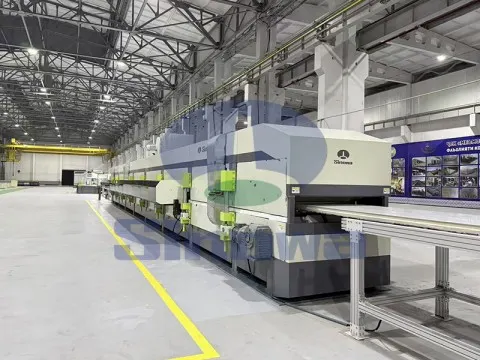
After the surface corrugation shaping is completed, the processed metal substrate is transported to the polyurethane foaming and lamination section, which determines the thermal insulation and bonding performance of the finished sandwich panels. The foaming system is equipped with independent material storage tanks for polyurethane raw materials, and two sets of metering pump units driven by variable frequency motors are installed at the discharge end of the tanks. These metering pumps can precisely control the output flow of different chemical components, realizing accurate proportional mixing of raw materials according to the foaming process requirements. The uniformly mixed polyurethane raw materials are evenly sprayed between the upper and lower metal substrates through a mobile distributing device. The mobile distributing structure can reciprocate horizontally to ensure that the foaming raw materials cover every corner of the composite area without blank spots or material accumulation. In the closed thermal insulation curing channel, the mixed polyurethane materials undergo chemical foaming and solidification reactions. The internal temperature of the curing channel is kept within a stable range to optimize the foaming density and cell structure of polyurethane, forming a fine and uniform porous thermal insulation layer.
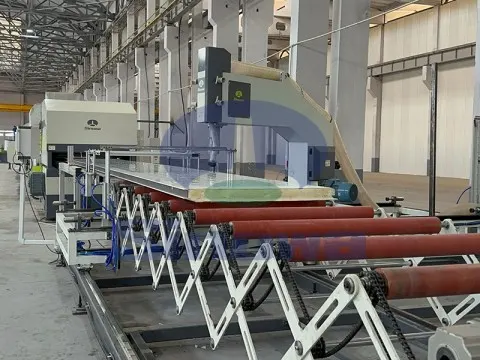
The pressing and shaping unit is arranged behind the foaming spraying mechanism, undertaking the task of compact composite bonding of multi-layer materials. This unit is composed of multiple groups of high-precision pressing rollers, and the vertical spacing between the upper and lower rollers can be adjusted within a certain range to adapt to sandwich panels of different thickness specifications. During the pressing process, the upper corrugated metal sheet, polyurethane foam core layer and flat bottom substrate are tightly bonded together under constant mechanical pressure. The slow and stable pressing speed enables the foam materials to fully fill the gaps between the substrates, eliminating internal voids and ensuring the overall compactness of the composite structure. Meanwhile, the pressure balance system installed on both sides of the pressing rollers can avoid unilateral stress deviation, preventing the finished panels from tilting and warping after molding. The integrated structure formed by hot pressing and curing significantly improves the overall structural strength of the corrugated sandwich panels, making them resistant to external impact and bending deformation.
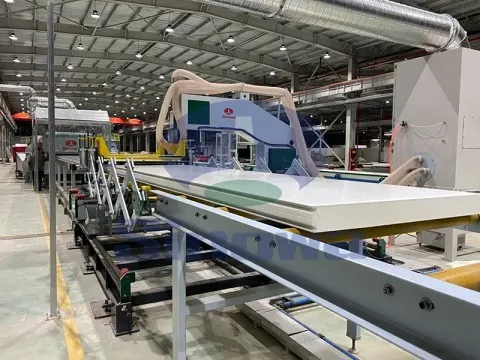
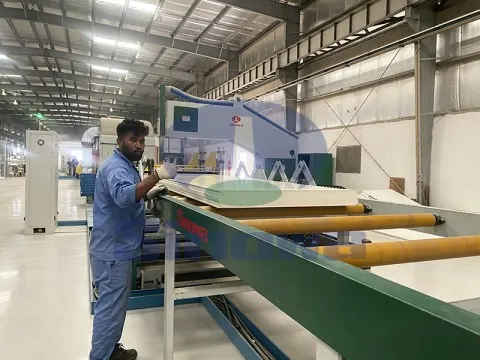
The follow-up processing modules of the sandwich panel production line include fixed-length cutting, edge trimming and automatic stacking mechanisms, which complete the final finishing work of finished products. The cutting mechanism adopts a movable cutting tool group, and the cutting stroke can be automatically positioned according to the preset panel length parameters. The relative distance between the upper and lower cutting blades is adjustable to ensure neat and burr-free cutting sections of metal composite panels. The edge trimming device can trim the redundant materials on both sides of the panels to unify the overall width specification of finished products and optimize the flatness of the edge structure. After cutting and trimming, the finished corrugated PU sandwich panels are transported to the stacking platform through the conveying track. The stacking mechanism adopts a sequential laminated placement method to avoid surface friction and collision damage between panels, and the neatly stacked finished products are convenient for subsequent transportation and storage. All links from raw material feeding to finished product output realize automated assembly line operation, requiring only a small number of operators to monitor the equipment operating status and adjust process parameters.
Compared with traditional flat sandwich panel production equipment, the PU sandwich panel line for corrugated surface materials has unique technical advantages in structural design and production performance. The corrugated forming technology endows the metal surface of the panel with higher mechanical strength, and the wavy structure can effectively disperse external pressure and wind load, so the finished panels have better wind resistance and compression resistance in building enclosure applications. In terms of material utilization, the precise metering and spraying system of the equipment can reasonably control the consumption of polyurethane raw materials, avoiding raw material waste caused by uneven manual feeding. The fully enclosed foaming and curing environment reduces the volatilization of chemical raw materials during the production process, which is in line with the low-carbon and environmentally friendly production concept of modern manufacturing industry. In addition, the modular structural design of the production line simplifies the daily maintenance work. Each functional module has an independent disassembly structure, which is convenient for staff to regularly clean, lubricate and replace wearing parts, reducing equipment failure rates and extending the overall service life.
The corrugated PU sandwich panels produced by this professional production equipment have comprehensive and excellent performance characteristics, covering thermal insulation, sound insulation, waterproofing and corrosion resistance. The dense porous structure of the internal polyurethane foam layer can effectively block heat conduction, realizing low thermal conductivity and stable thermal insulation effect. This performance can reduce the energy consumption of building temperature regulation, which is suitable for constant-temperature industrial workshops and cold storage buildings with high thermal insulation requirements. The corrugated uneven surface can form an air buffer layer when sound waves propagate, weakening sound reflection and transmission, thus achieving a good sound insulation and noise reduction effect. The metal substrate after special surface treatment has strong oxidation resistance and water impermeability, and the integrated composite structure can prevent rainwater from penetrating into the interior of the panels. Even in humid and corrosive external environments, the finished panels can maintain stable structural performance without mildew, rust or layer separation.
In terms of application scenarios, corrugated surface PU sandwich panels manufactured by this equipment are widely used in various construction and industrial fields. In industrial construction, these panels are commonly used for roof and wall enclosure of steel structure factories, playing a key role in heat preservation, rain prevention and workshop space protection. For logistics storage facilities, the lightweight and high-strength characteristics of the panels simplify the construction of warehouse enclosure structures, and their excellent thermal insulation performance meets the storage requirements of temperature-sensitive goods. In temporary construction projects such as construction site dormitories and emergency rescue shelters, the standardized finished panels are easy to transport and assemble, shortening the construction cycle of temporary buildings. In addition, the regular corrugated texture on the surface improves the aesthetic appearance of the buildings, making the panels applicable to the exterior wall decoration of large public buildings and agricultural greenhouses, realizing the integration of practicality and decoration.
In actual production and operation, the operating parameters of the PU sandwich panel production line with corrugated surface material need to be adjusted according to raw material characteristics and product usage requirements. Before formal production, operators need to check the tightness of each connecting part of the equipment, calibrate the metering accuracy of the foaming system and test the operating synchronization of the conveying and forming modules. For metal substrates with different thicknesses, the rolling pressure and gap of the profiling rollers should be appropriately modified to ensure clear and complete corrugated lines. When producing panels for different usage environments, the mixing ratio of polyurethane raw materials can be optimized to adjust the foaming density, so as to produce panels with different hardness and thermal insulation grades. During continuous operation, the temperature of the curing channel and the running speed of the assembly line need to maintain a dynamic balance to avoid unqualified products caused by insufficient foaming reaction or excessive curing time.
With the continuous development of the building material manufacturing industry, the upgrading direction of corrugated PU sandwich panel production equipment is gradually leaning towards intelligent control and energy-saving optimization. The introduction of intelligent sensing modules enables the equipment to automatically monitor key data such as internal temperature, operating pressure and feeding speed in real time. Once abnormal parameter fluctuations occur, the system can trigger early warning prompts and automatically adjust the operating state to ensure production stability. The optimized circulating heating structure of the curing channel reduces heat energy loss in the production process, cutting down the energy consumption of unit products. At the same time, the equipment is gradually compatible with more diversified composite raw materials, realizing the composite processing of different surface substrates and modified polyurethane foam layers, and expanding the application boundary of finished sandwich panels.
In conclusion, the polyurethane sandwich panel machine with corrugated surface material is a highly integrated and efficient composite building material production device. It realizes automated and standardized production of corrugated PU sandwich panels through the coordinated operation of unwinding, pretreatment, corrugation forming, foaming lamination, cutting and stacking modules. The equipment has outstanding advantages in production efficiency, product stability and resource utilization rate, and the produced panels have excellent mechanical properties and environmental adaptability. Driven by the booming demand for modern infrastructure construction and industrial building materials, this type of production machine will continue to be optimized and upgraded in technology, providing more high-quality enclosure materials for various construction scenarios. It will also occupy an increasingly important position in the green building material manufacturing industry, promoting the sustainable development of the composite panel processing field.
Sinowa is a professional manufacturer of sandwich panel machine in china, we provide diversified and high-performance sandwich panel production lines, including fully automatic continuous PU sandwich panel line and customized special lines to meet mass production and personalized order demands. These sandwich panel lines support processing multiple foam core materials, such as PU, PIR, mineral wool, rock wool and glass wool, covering different insulation and fireproof standards.
Featuring stable operation, high efficiency, energy saving and easy maintenance, our PU sandwich panel line deliver sandwich panels with excellent thermal insulation, fire resistance, sound insulation and lightweight durability. The finished panels are widely applied in industrial workshops, warehouse roofing and wall cladding, cold storage insulation, serving global construction and industrial insulation markets.
https://www.cnsinowa.com/sandwich-panel-machines/pu-sandwich-panel-machine-with-corrugated-surface-material.html