 sandwich panel line
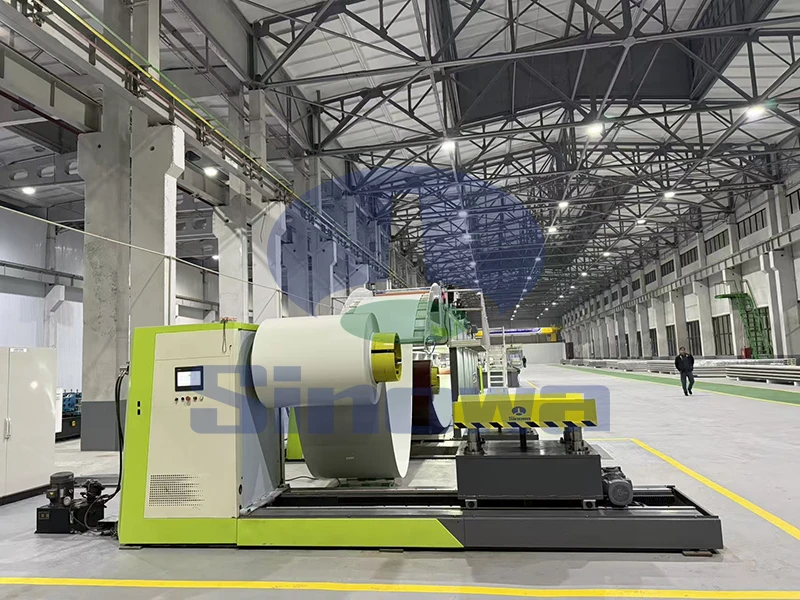
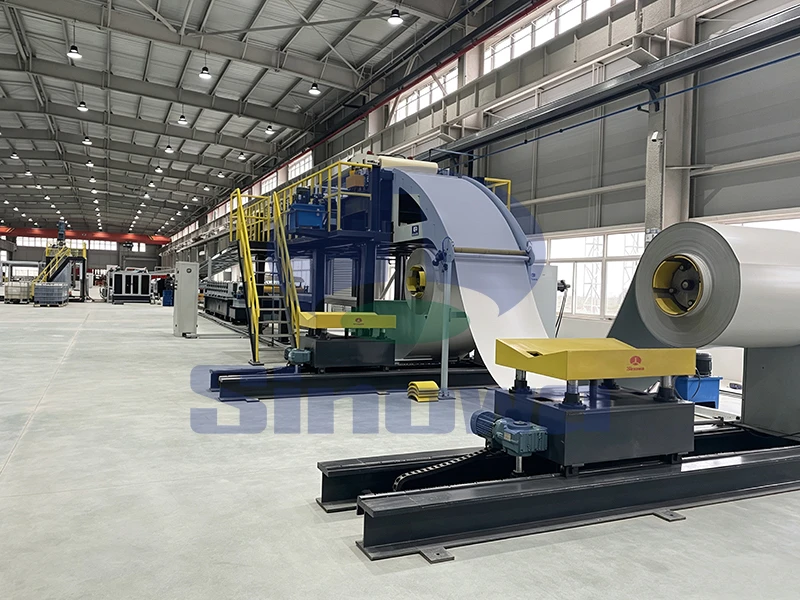
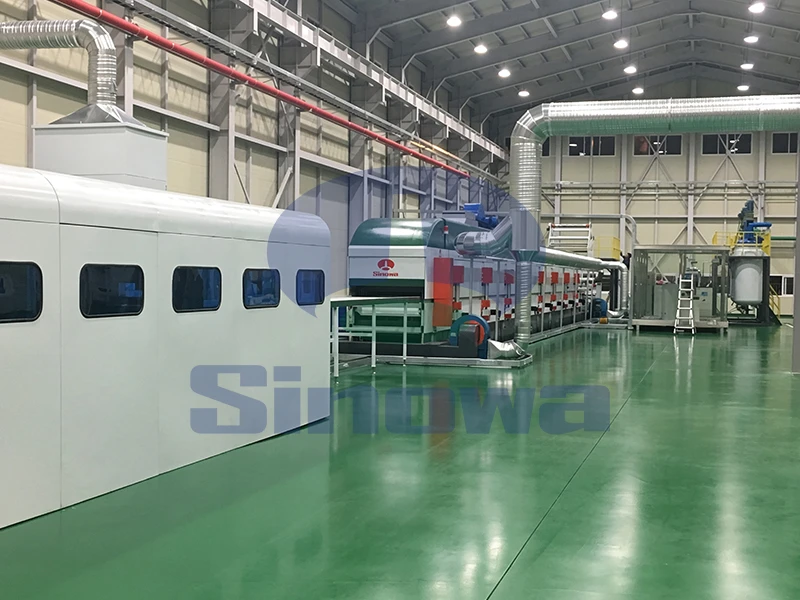
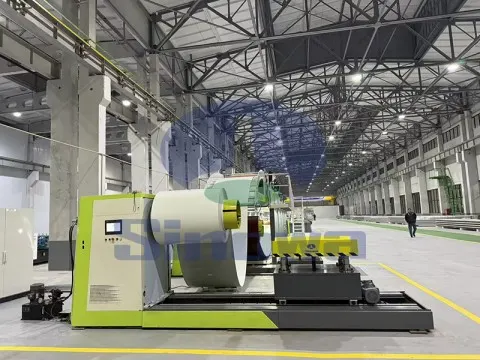
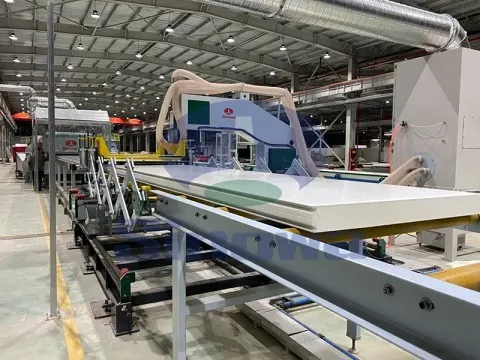
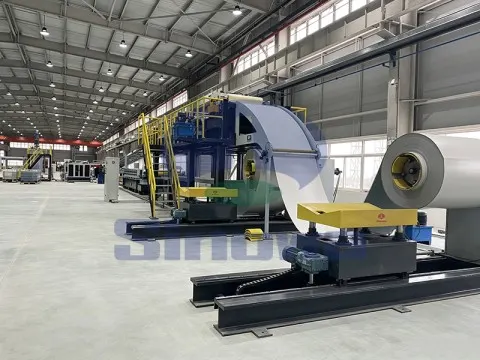
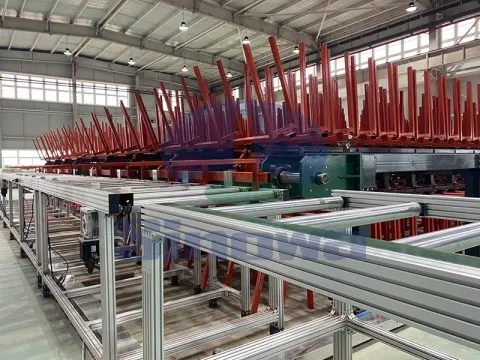
The overall structural composition of a complete sandwich panel manufacturing line follows a streamlined production sequence, which can be divided into multiple interconnected functional modules without independent segmentation during continuous operation. The upstream section of the production line is mainly responsible for raw material storage, unwinding and surface pretreatment, which lays a foundational condition for subsequent bonding processing. Metal coiled materials commonly used for surface layers are placed on special unwinding brackets, with auxiliary deviation correction devices installed to ensure linear feeding of sheet materials. During the long-term conveying process of metal sheets, minor lateral offset is inevitable due to mechanical vibration and material tension changes, so the high-sensitivity deviation correction structure continuously monitors the material conveying track and makes real-time fine adjustments to maintain the flat and orderly feeding state of surface sheets. In addition to metal raw materials, non-metal surface substrates such as fiber boards and composite decorative boards also need to go through surface dust removal and smoothing treatment in this stage, eliminating tiny particles and surface burrs that may affect the bonding tightness. The pretreatment process focuses on optimizing the surface roughness and cleanliness of raw materials, creating a stable physical connection interface for the adhesive between the surface layer and the core material.
![Sandwich Panel Manufacturing Line]()
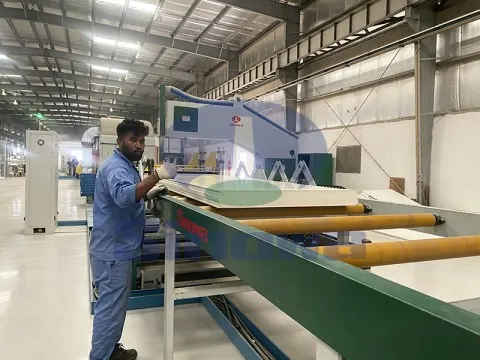
Following the raw material pretreatment unit is the adhesive coating system, which is a key functional module determining the bonding durability and structural stability of sandwich panels. The adhesive used in production is rationally configured according to the physical characteristics of different core materials and surface substrates, with adjustable viscosity and curing activity to adapt to various composite environments. The coating mechanism adopts a rolling coating structure to achieve uniform glue distribution on the inner surface of the surface sheet, avoiding common defects such as local glue accumulation or missing coating in manual gluing processes. The coating thickness is controlled by the gap between precision rollers, and the circulating feeding design of the adhesive prevents material waste caused by excessive glue discharge. In the actual coating process, the production line maintains a constant temperature environment in the coating area to stabilize the chemical activity of the adhesive, preventing viscosity fluctuation caused by ambient temperature changes. For composite products requiring higher bonding strength, double-sided synchronous coating technology is adopted to ensure that both the upper and lower surface sheets can form an effective adhesive connection with the core material, enhancing the overall structural integrity of the panel.
![Sandwich Panel Manufacturing Line]()
The core material feeding and laying module is located in the middle section of the manufacturing line, undertaking the task of quantitatively conveying and directional arranging lightweight core materials. Common core materials applied in industrial production include rock wool, polyurethane foam, glass wool and silicate composite materials, each with distinct physical properties and laying requirements. Fiber-based core materials such as rock wool and glass wool are transported through layered spreading equipment, which disperses condensed fiber clusters to ensure uniform bulk density of the core layer and avoid hollow gaps inside the finished panel. Foam core materials are conveyed by fixed-size cutting and feeding devices, maintaining consistent thickness and regular shape of raw materials. The internal metering structure of the feeding system can automatically adjust the conveying speed according to the operating rhythm of the front and rear equipment, realizing dynamic matching between core material supply and surface sheet transmission speed. During the laying process, the vibration leveling structure eliminates internal voids of the core material, optimizing the compactness of the intermediate layer and laying a foundation for the thermal insulation and sound insulation performance of finished sandwich panels.
![Sandwich Panel Manufacturing Line]()
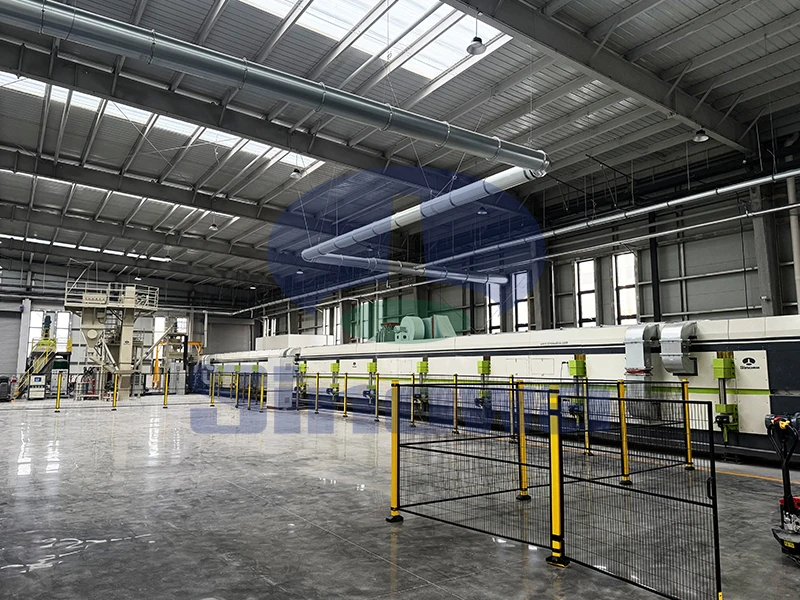
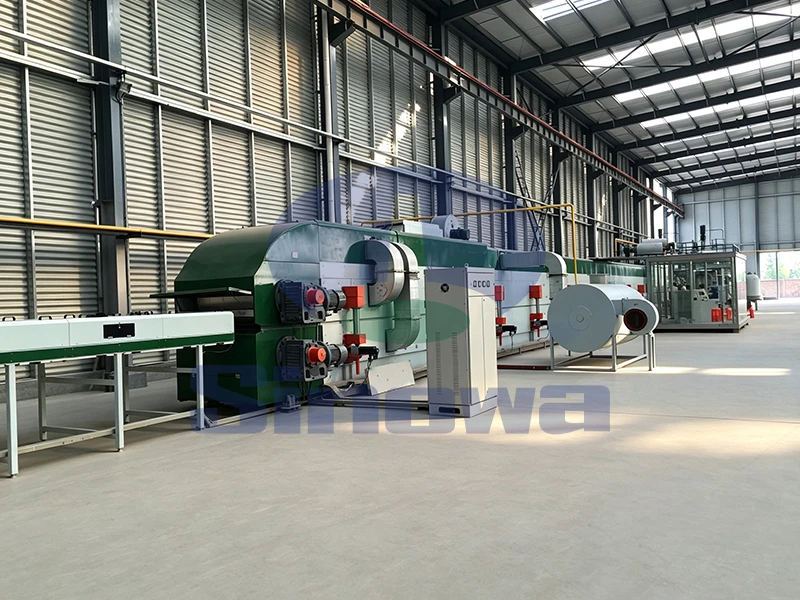
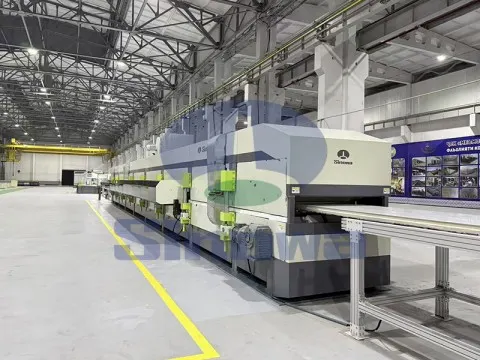
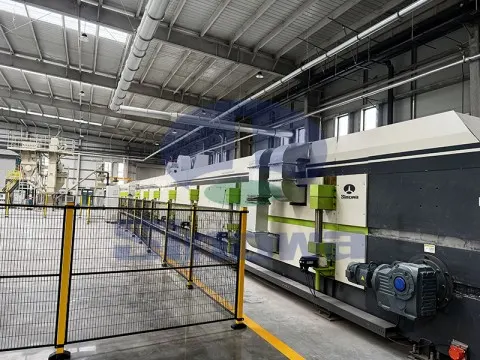
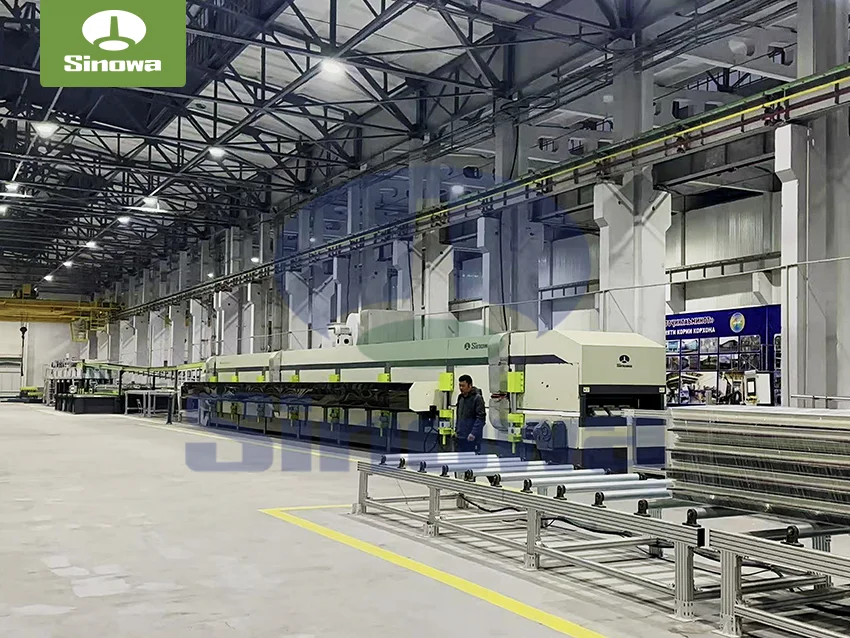
The composite pressing and heating curing unit is the core processing section of the entire production line, where the multi-layer composite structure completes permanent bonding and structural shaping. The pre-laminated semi-finished panels enter the closed pressing space composed of upper and lower pressing rollers, and stable mechanical pressure is applied to make the surface layer, adhesive and core material closely fit without gaps. The pressure control system adopts stepless adjustment mode, matching different pressure parameters according to the hardness and compression resistance of core materials to prevent irreversible deformation of fragile core materials caused by excessive pressure. The heating system is embedded in the pressing structure, adopting segmented temperature control design including preheating zone, constant temperature curing zone and slow cooling zone. The preheating zone moderately increases the material temperature to activate the molecular activity of the adhesive; the constant temperature curing zone maintains a stable high-temperature environment to accelerate the cross-linking reaction of the adhesive and form a firm bonding structure; the slow cooling zone gradually reduces the temperature to eliminate internal stress generated during the high-temperature processing of materials. The collaborative operation of pressure and temperature ensures that the composite panel achieves stable structural performance in a short time, shortening the curing cycle and improving continuous production efficiency.
![Sandwich Panel Manufacturing Line]()
After completing heating and curing, the continuous plate strips enter the trimming and shaping module to standardize the external dimensions of finished products. The edge trimming devices on both sides cut off the irregular edges generated in the composite process, ensuring consistent width of each panel. The precision cutting tool adopts high-speed rotating alloy blades, which can smoothly cut metal surface layers and fiber core materials without rough burrs or cracking damage. Meanwhile, the surface shaping roller structure performs micro-level smoothing on the upper and lower surfaces of the panels to eliminate tiny bulges and indentations generated during pressing, optimizing the flatness and appearance quality of finished products. For sandwich panels used for building enclosure connection, the grooving and hemming process is completed in this stage, processing standardized assembly interfaces at the plate edges to facilitate on-site splicing and installation of subsequent products. All trimming and shaping processes are synchronized with the production line conveying speed to avoid secondary positioning errors caused by repeated clamping of materials.
![Sandwich Panel Manufacturing Line]()
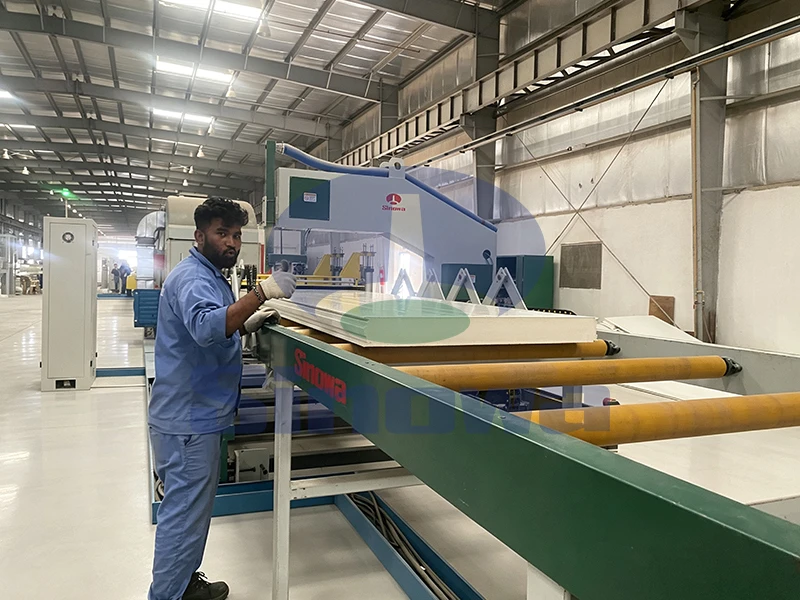
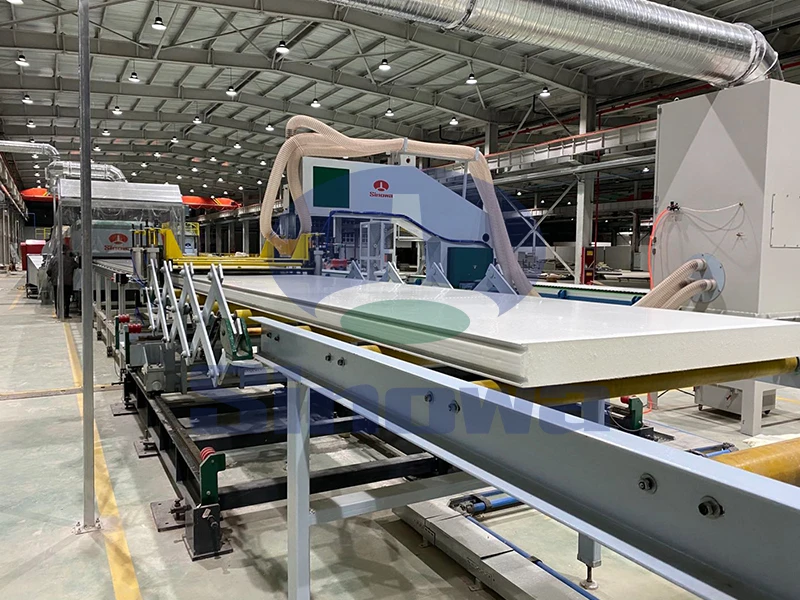
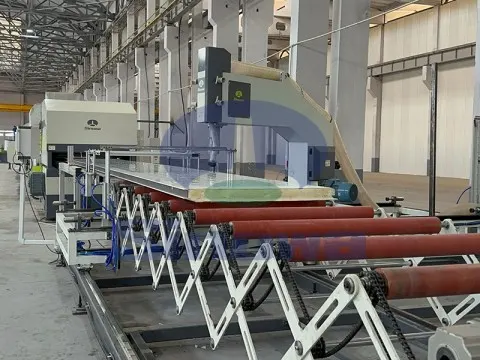
The fixed-length cutting system is arranged at the rear of the production line, realizing automatic sizing and separation of continuous plate strips. The intelligent induction device monitors the conveying distance of plates in real time, and sends cutting instructions when the materials reach the preset length specification. The cutting mechanism adopts gantry mobile cutting structure, which keeps the tool perpendicular to the plate surface during operation to ensure flat and neat cutting sections. The buffer conveying structure is installed at the front end of the cutting area to avoid production line shutdown caused by cutting actions, realizing non-stop dynamic cutting and effectively improving continuous production capacity. After cutting, the finished single panels are transported to the surface inspection platform through the discharging conveyor belt, entering the final quality control link of the production process.
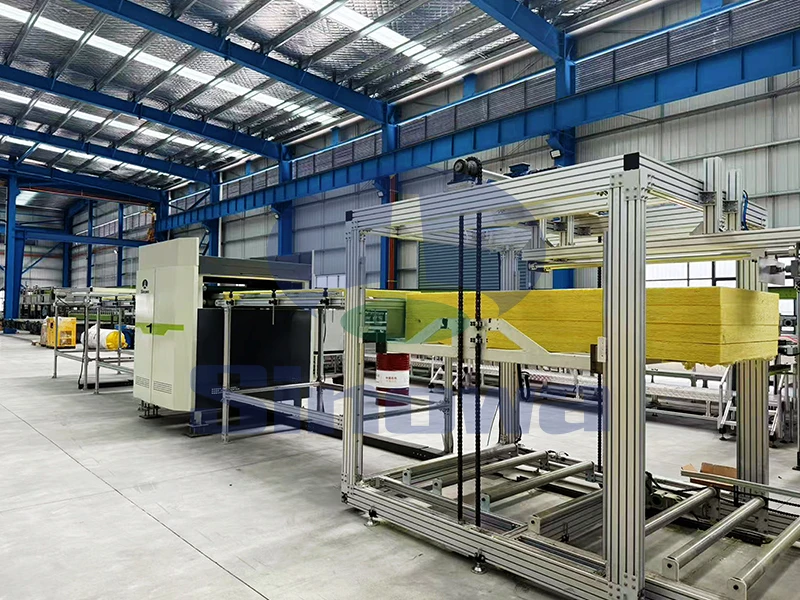
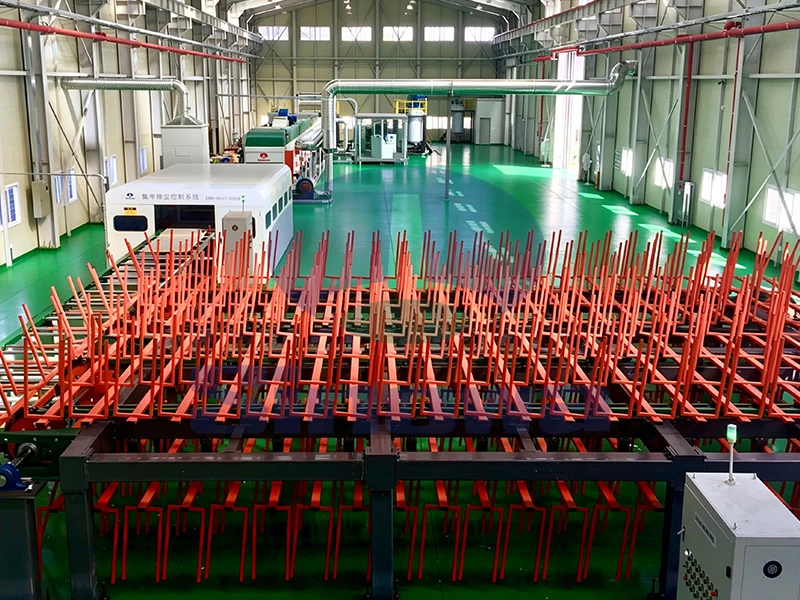
The automatic detection and stacking module undertakes the final quality screening and finished product storage work, which is an indispensable part to ensure the qualified rate of products. The surface detection system uses optical sensing components to identify surface defects such as bubbles, scratches, degumming and color difference of panels, and marks unqualified products through automatic labeling devices. The thickness detection probe regularly samples and monitors the overall thickness of panels to prevent unqualified products with dimensional deviation from entering the finished product stack. For qualified finished panels, the mechanical stacking arm performs orderly stacking according to fixed specifications, with adjustable stacking height and arrangement mode to adapt to different storage and transportation requirements. The buffer protection structure is installed at the contact part between the mechanical arm and the panels to avoid surface scratch damage caused by rigid contact. The stacked finished products are neatly arranged, which is convenient for subsequent packaging, handling and outbound transportation.
![Sandwich Panel Manufacturing Line]()
The central control system runs through all functional modules of the sandwich panel manufacturing line, serving as the intelligent brain to coordinate the synchronous operation of various equipment. The human-computer interaction interface centrally displays the operating parameters of each unit, including conveying speed, heating temperature, pressing pressure, cutting size and material consumption data. The programmable logic controller realizes linkage control of all mechanical structures, automatically adjusting the operating parameters of subsequent equipment according to the operating state of the upstream processing unit to maintain the overall production rhythm balance. When abnormal conditions such as material blockage, temperature overrun and equipment failure occur during production, the system will trigger an early warning prompt and execute automatic shutdown protection actions to reduce equipment loss and material waste. In addition, the data statistics function records daily output, raw material consumption and equipment operating status, providing data support for production management and process optimization.
In terms of mechanical design, the sandwich panel manufacturing line focuses on operational stability and energy-saving optimization. The main frame is made of high-strength metal profiles with integral welding and anti-corrosion treatment, which can resist mechanical vibration and environmental corrosion during long-term continuous operation and extend the service life of equipment. The transmission parts adopt synchronous transmission structures to ensure consistent operating speed of each conveying node and avoid plate deviation and deformation caused by speed difference. The heating system adopts heat circulation utilization technology to reduce heat loss in the curing process and improve energy utilization efficiency. The noise reduction structure is installed at the mechanical operation gap to weaken vibration noise generated by high-speed operation, optimizing the on-site production environment. All wearing parts are designed with standardized detachable structure, which simplifies daily maintenance and replacement procedures and reduces equipment maintenance costs in the later stage.
![Sandwich Panel Manufacturing Line]()
Different types of sandwich panel manufacturing lines have differentiated process configurations to meet diverse application scenario requirements. The production line for thermal insulation building panels focuses on optimizing the core material laying uniformity and adhesive low-temperature resistance, ensuring that the finished products maintain stable thermal insulation performance in extreme temperature environments. The production line for clean engineering panels increases surface polishing and dust-free processing procedures to reduce surface impurities and meet the high cleanliness requirements of pharmaceutical, food and electronic production workshops. The production line for movable house enclosure panels strengthens the hemming and bending processing functions of plate edges to improve the assembly convenience and structural firmness of on-site buildings. Despite the differences in functional configuration, all types of production lines follow the basic production logic of pretreatment, gluing, compounding, curing and shaping, maintaining the simplicity and efficiency of the industrial production process.
In actual industrial production, the operation management of the sandwich panel manufacturing line needs to comply with standardized production processes to ensure product quality stability. Before equipment startup, staff need to inspect the tightness of transmission parts, the residual amount of adhesive raw materials and the sensitivity of detection components to eliminate potential hidden dangers of equipment operation. During the production process, the ambient temperature and humidity of the production workshop should be kept within a reasonable range to avoid affecting the curing efficiency of the adhesive and the physical properties of composite materials. The feeding speed of raw materials needs to be matched with the curing time to prevent semi-finished products from being stacked and extruded in the production line. Regular cleaning of the equipment surface and residual materials inside the pipeline can avoid material deterioration and pipeline blockage caused by long-term accumulation of raw materials. Scientific operation management can effectively reduce the failure rate of the production line and maintain long-term stable production capacity.
![Sandwich Panel Manufacturing Line]()
The widespread application of sandwich panel manufacturing lines has brought significant optimization effects to the building material production industry. In terms of production efficiency, the integrated continuous processing mode realizes uninterrupted production from raw material feeding to finished product stacking, greatly shortening the production cycle compared with decentralized processing equipment. In terms of product quality, the unified parameter control of mechanical equipment avoids quality fluctuation caused by manual operation, ensuring consistent thickness, bonding strength and surface flatness of each batch of products. In terms of production cost, the automated production mode reduces labor input, and the precise metering system cuts down the waste of raw materials such as adhesives and core materials. In terms of environmental protection performance, the closed production structure reduces the volatilization of chemical additives, and the recyclable processing residues conform to the sustainable development concept of modern industrial production.
With the continuous upgrading of building industrialization and composite material technology, the technical development direction of sandwich panel manufacturing lines is gradually moving towards higher automation, intelligent monitoring and multi-material compatibility. The intelligent sensing technology will further realize real-time tracking of material internal structure changes during the composite curing process, accurately judging the bonding state of the intermediate layer. The modular equipment design enables the production line to quickly switch production specifications, realizing flexible production of panels with different thicknesses and core materials. The energy-saving and low-carbon transformation will optimize the heating circulation system and power transmission structure, reducing energy consumption per unit of finished products. In addition, the intelligent logistics docking function will be added to realize automatic connection between the production line and finished product storage equipment, further reducing manual intervention in the production link.
![Sandwich Panel Manufacturing Line]()
In conclusion, the sandwich panel manufacturing line is a comprehensive industrial production system integrating machinery, chemical industry and intelligent control technology. Through orderly coordination of multiple functional modules, it completes the whole process processing of composite panels, realizing large-scale and standardized production of sandwich building materials. The stable mechanical structure, precise parameter control and efficient production rhythm enable the production line to adapt to the production demands of different industries and different specification products. With the continuous progress of industrial manufacturing technology, the performance of sandwich panel manufacturing lines will be further optimized, providing more reliable production support for the development of modern construction industry, cold chain logistics, industrial purification and other fields, and continuously releasing the application potential of composite sandwich panels in diversified industrial scenarios.
Sinowa is a professional manufacturer of sandwich panel machine in china, we provide diversified and high-performance sandwich panel production lines, including fully automatic continuous PU sandwich panel line and customized special lines to meet mass production and personalized order demands. These sandwich panel lines support processing multiple foam core materials, such as PU, PIR, mineral wool, rock wool and glass wool, covering different insulation and fireproof standards.
Featuring stable operation, high efficiency, energy saving and easy maintenance, our PU sandwich panel line deliver sandwich panels with excellent thermal insulation, fire resistance, sound insulation and lightweight durability. The finished panels are widely applied in industrial workshops, warehouse roofing and wall cladding, cold storage insulation, serving global construction and industrial insulation markets.
https://www.cnsinowa.com/sandwich-panel-machines/sandwich-panel-manufacturing-line.html