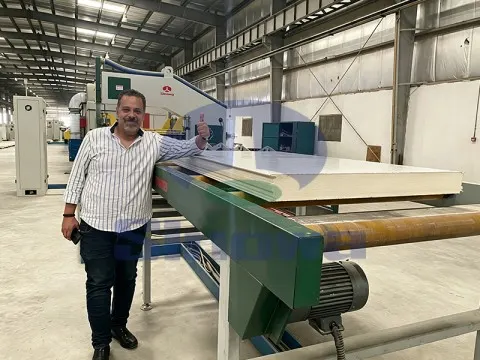
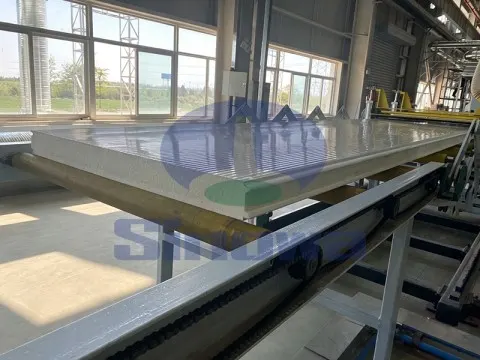
sandwich panel line
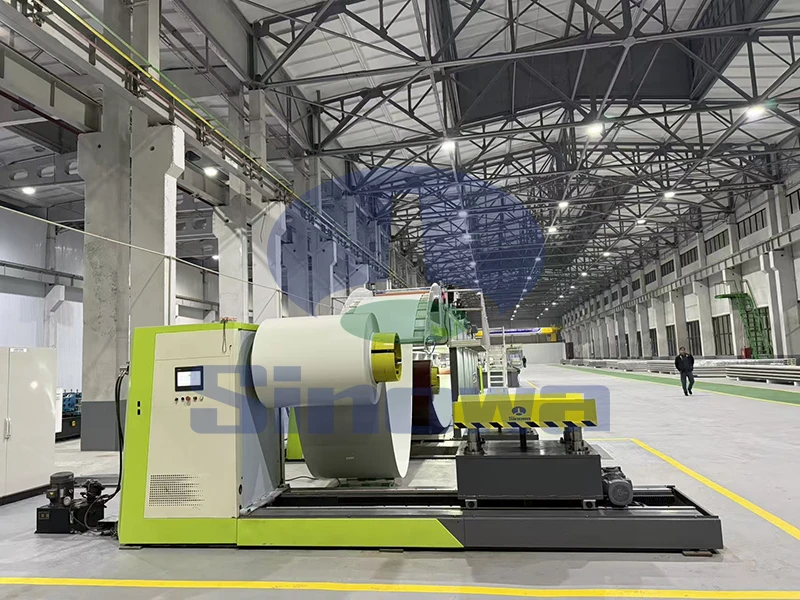
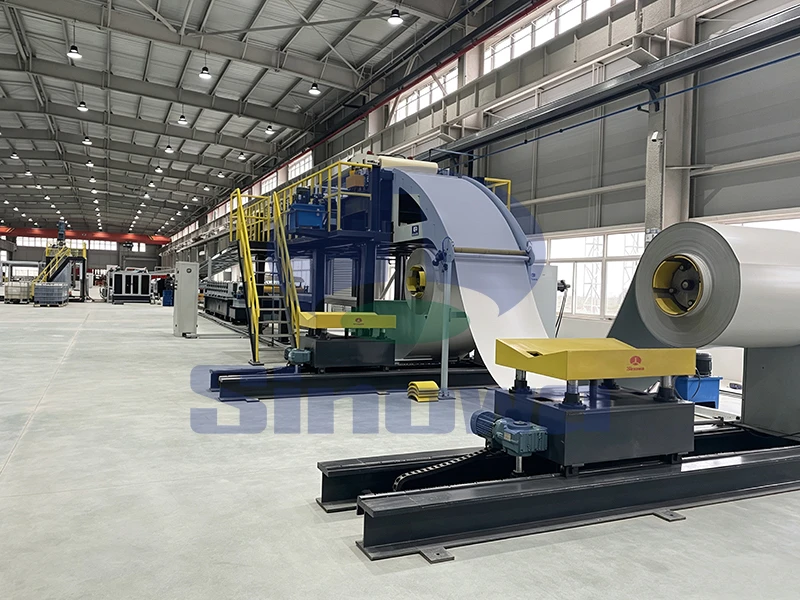
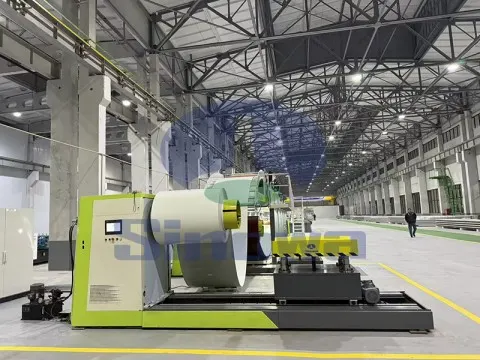
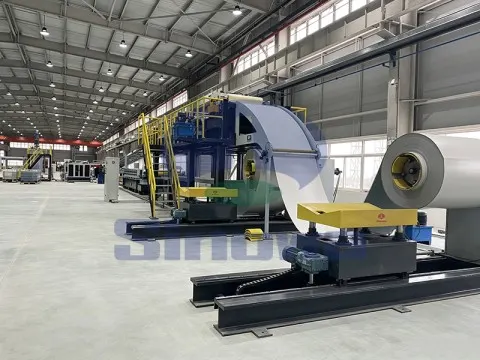
The overall structural composition of a complete PUF sandwich panel production line follows a sequential production logic, and each functional unit is closely connected to form an uninterrupted production chain. The front-end part of the production line is dominated by substrate feeding and pretreatment modules, which undertake the basic preparation work for panel composite molding. In this module, coiled metal or non-metal substrates are placed on automatic unwinding devices, which are equipped with precise deviation correction structures to ensure the horizontal flatness of substrates during transportation. Unwound substrates will pass through surface treatment equipment to remove surface dust, oil stains, and oxide layers; this subtle pretreatment process is crucial for enhancing the adhesion between substrates and polyurethane foam materials. Uneven surface attachments will create isolation gaps at the bonding interface, reducing the overall structural tightness and service life of finished panels. After pretreatment, the substrates are leveled and trimmed by roller sets to eliminate edge warping and surface wrinkles, providing qualified flat raw materials for subsequent composite processing.
The raw material metering and mixing system constitutes the core functional unit of the entire production line, determining the foaming quality and internal structural uniformity of PUF core materials. Polyurethane foam is synthesized through the chemical reaction of multiple raw materials including polyether polyol, curing agents, and foaming additives. This system adopts precision metering pump groups to transport various raw materials according to fixed proportion parameters, avoiding performance fluctuations caused by manual proportioning errors. All raw materials are delivered to a high-speed mixing head, where intense physical stirring achieves homogeneous blending at the molecular level. The mixing speed and internal pressure of the mixing head are dynamically adjusted according to production environmental parameters such as ambient temperature and humidity, ensuring that the mixed liquid materials maintain stable fluidity and chemical activity. Well-blended polyurethane liquid is evenly coated on the lower substrate through reciprocating material distribution structures; the controllable reciprocating movement of the distribution head enables the liquid material to cover the substrate surface without dead angles, laying a foundation for uniform foam molding.
![PUF Sandwich Panel Production Line]()
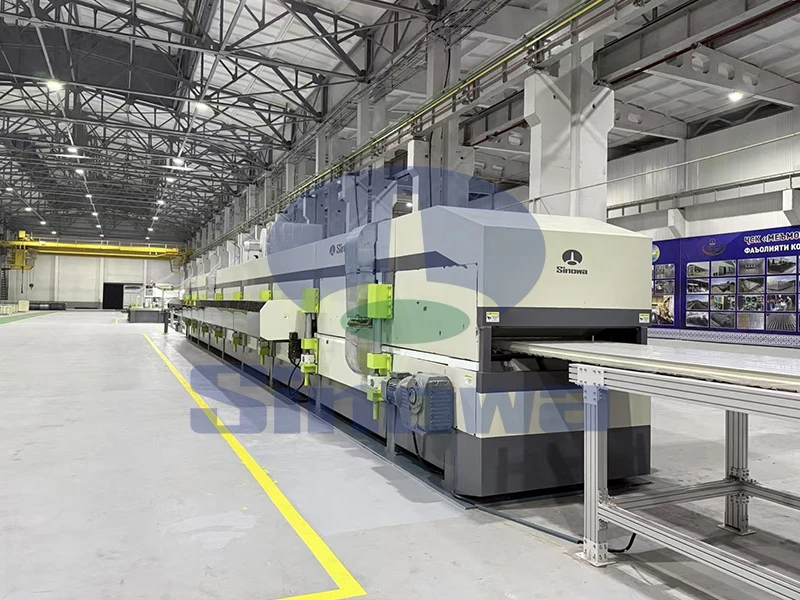
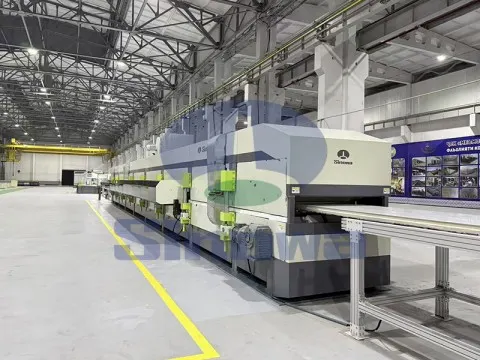
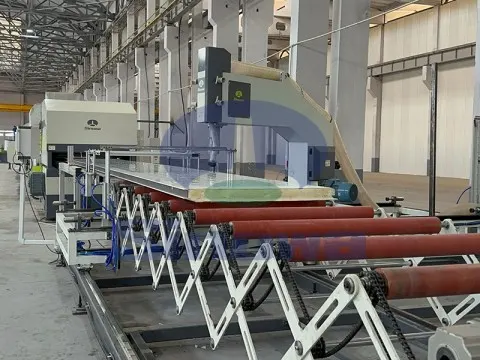
The continuous composite molding module is the key link to realize the integration of substrates and foam core materials, mainly relying on a double-belt molding machine to complete heating, pressurization, and foaming curing processes. After the polyurethane liquid is coated on the lower substrate, the upper substrate is automatically covered under the traction of the conveying device, forming a three-layer composite structure of upper substrate, polyurethane liquid layer, and lower substrate. The composite semi-finished product is then sent into the closed cavity of the double-belt machine, where segmented temperature control is implemented inside the cavity. The internal temperature is maintained within a stable medium-temperature range to trigger the cross-linking reaction of polyurethane raw materials, enabling gradual foaming and expansion of the liquid materials. During the foaming process, the upper and lower conveyor belts apply constant and uniform mechanical pressure to limit the free expansion of foam, so that the internal foam forms a compact and uniform porous structure. The pressure value is strictly controlled within a reasonable interval; excessive pressure will cause excessive compression of foam pores and reduce thermal insulation performance, while insufficient pressure will lead to loose internal structure and decreased mechanical strength of panels.
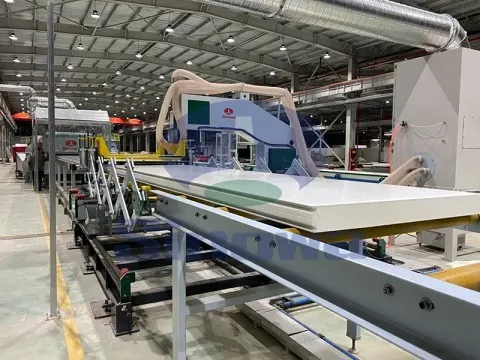
With the gradual completion of chemical reactions, polyurethane foam finishes curing and molding in the constant-temperature closed cavity, forming an integrated composite panel with stable bonding between substrates and core materials. After exiting the double-belt molding machine, the initially shaped panels enter the edge trimming and shaping module to optimize dimensional accuracy. The continuous panels produced by the assembly line have redundant edge parts generated during the composite molding process, and the automatic trimming devices on both sides of the production line cut off the irregular edges at a constant moving speed. This processing step unifies the width specifications of finished panels and removes burrs and uneven bonding parts at the edges, improving the appearance flatness and assembly compatibility of panels. Some production lines are also equipped with edge sealing processing structures, which perform reinforcement treatment on panel edges to prevent moisture penetration and foam aging at the edges during long-term use.
![PUF Sandwich Panel Production Line]()
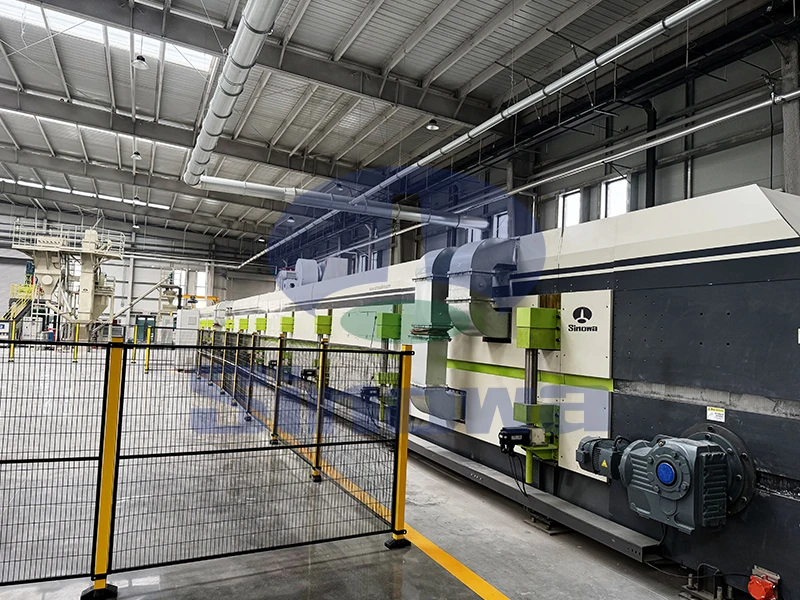
The subsequent cooling and shaping process is essential to stabilize the internal physical structure of PUF sandwich panels. The high-temperature panels just discharged from the molding equipment have not completely eliminated internal molecular stress, and direct stacking will cause irreversible deformation such as bending and warping. The production line is equipped with an extended natural cooling conveying channel, where panels are slowly cooled down to room temperature through air convection. The length of the cooling channel is matched with the production speed to ensure that each panel has sufficient heat dissipation time. During the cooling process, the internal pore structure of the foam is further stabilized, and the bonding force between the core material and substrates is permanently strengthened. For panels with special usage requirements, auxiliary air cooling devices can be added to accelerate surface heat dissipation, shortening the cooling cycle without damaging the internal structural stability of the panels.
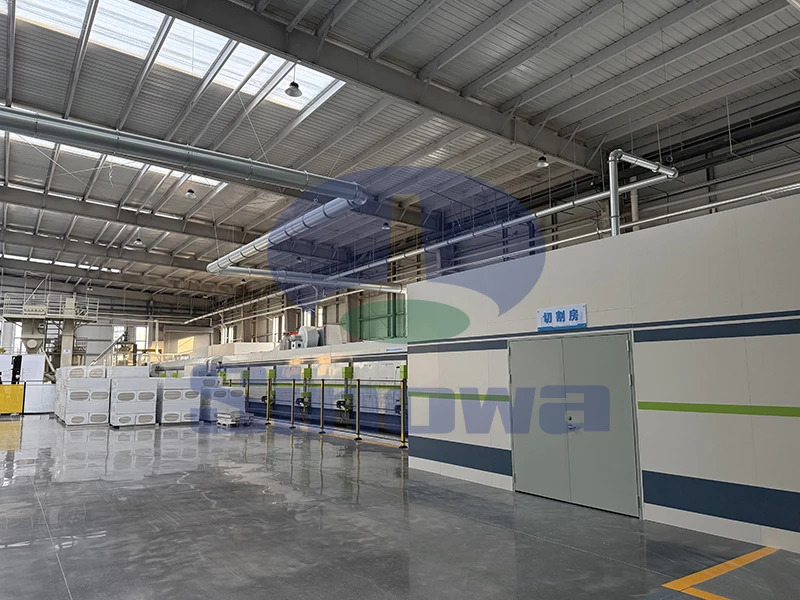
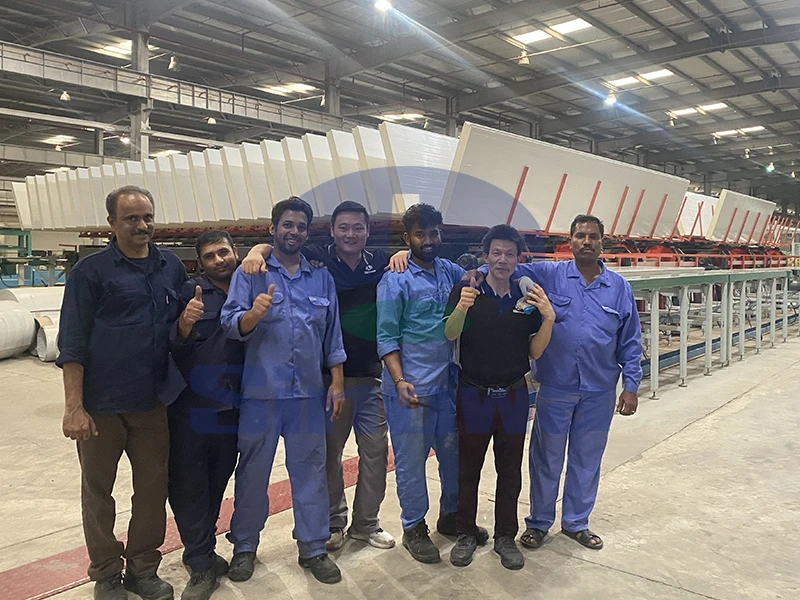
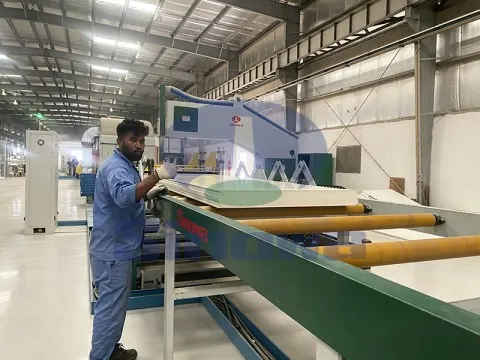
The final stage of the production line covers fixed-length cutting, surface inspection, and automatic stacking procedures. According to customized usage requirements, high-precision cutting equipment cuts continuous long panels into standard fixed-length finished products. The cutting tool adopts wear-resistant structural materials to ensure smooth and flat cutting sections without foam peeling or substrate deformation. After cutting, simple manual and mechanical combined inspections are carried out to check for surface scratches, bonding gaps, and foaming defects. Qualified finished panels are automatically transported to the stacking platform by the conveying system, and the mechanical stacking device arranges panels neatly in an orderly manner to save storage space and facilitate subsequent packaging and transportation. Unqualified semi-finished products are screened out separately for material recycling and secondary processing, reducing raw material waste in the production process.
![PUF Sandwich Panel Production Line]()
In terms of operational control, modern PUF sandwich panel production lines adopt integrated intelligent control systems to realize centralized management of all production links. The control terminal collects real-time data including raw material flow, molding temperature, operating pressure, and conveying speed through multiple sensor components arranged in each functional module. The system automatically adjusts operating parameters according to real-time monitoring data to maintain the consistency of the production process. For example, when the ambient temperature drops in winter, the system will appropriately increase the preheating temperature of raw materials and the curing temperature of the molding cavity to offset the impact of low temperature on chemical reactions. In addition, the intelligent system has an abnormal state early warning function; once parameters such as raw material proportioning deviation and equipment operating current exceed the safe range, the system will send prompt signals and perform automatic power-off protection to avoid equipment failure and defective product batch problems.
The reasonable structural design of the production line endows it with excellent raw material utilization efficiency and energy-saving performance. The closed raw material conveying pipeline avoids volatile loss of chemical raw materials, and the residual materials generated during edge trimming and cutting can be recycled and reused after centralized collection. The heating system of the molding cavity adopts a circulating heat preservation structure, which reduces heat loss during operation and lowers long-term energy consumption. All transmission components are optimized with low-friction structural design to reduce mechanical wear and equipment operating energy consumption. These energy-saving and consumption-reducing designs not only decrease the comprehensive production cost of panels but also conform to the development trend of green and low-carbon manufacturing in the modern building material industry.
![PUF Sandwich Panel Production Line]()
PUF sandwich panel production lines have strong production flexibility and can adapt to the manufacturing requirements of panels with different thicknesses, surface materials, and structural designs. By adjusting the spacing of the double-belt conveyor belts and raw material feeding amount, the production line can manufacture panels with different core material thicknesses to meet the thermal insulation needs of various usage environments. It can also be compatible with diversified substrates such as color-coated metal plates, stainless steel plates, and non-metal composite plates by replacing unwinding accessories and adjusting bonding process parameters. This flexible production capability enables a single production line to cover multiple product types, meeting the differentiated demands of industrial plants, cold storage warehouses, clean workshops, and temporary construction facilities.
In actual industrial production applications, the stable operation of PUF sandwich panel production lines is inseparable from standardized daily maintenance and scientific management. Daily maintenance work includes cleaning residual foam impurities on the surface of conveying rollers and mixing heads, checking the tightness of raw material conveying pipelines, and lubricating rotating transmission components. Regular deep maintenance involves calibrating metering pump accuracy, detecting sensor sensitivity, and overhauling the heating and pressure maintaining system. Scientific maintenance measures can effectively extend the service life of mechanical components, reduce equipment failure rates, and ensure long-term stable and continuous production. Meanwhile, standardized operating specifications require operators to master parameter adjustment logic and emergency disposal methods, so as to quickly respond to minor abnormal problems in the production process and avoid production interruption.
![PUF Sandwich Panel Production Line]()
From the perspective of industrial development, the continuous technological iteration of PUF sandwich panel production lines is driving the upgrading of the composite building material industry. Early intermittent production equipment has the disadvantages of low output, unstable product quality, and high labor dependence. Modern continuous production lines realize full-process automated operation from raw material feeding to finished product stacking, greatly improving production efficiency and product consistency. With the progress of material science and mechanical manufacturing technology, the production line is gradually developing towards higher intelligence, environmental protection, and precision. The optimized foaming process reduces harmful gas volatilization during production, and the upgraded control system further improves the dimensional accuracy and structural stability of finished panels.
The widespread application of high-performance PUF sandwich panels processed by advanced production lines has brought significant practical value to multiple industries. In industrial building construction, the lightweight and high-strength characteristics of panels simplify the installation process of factory building enclosures and shorten the construction cycle. In the cold chain storage industry, the low thermal conductivity of polyurethane foam core materials provides stable heat insulation conditions for cold storage spaces, reducing long-term energy consumption for refrigeration. In the field of environmental purification engineering, the smooth and corrosion-resistant surface of panels meets the cleanliness requirements of clean workshops. Driven by market demand, the technological optimization of PUF sandwich panel production lines will continue to advance, constantly breaking through the limitations of traditional production processes and providing more high-quality composite panel products for the construction and manufacturing industries.
![PUF Sandwich Panel Production Line]()
In conclusion, the PUF sandwich panel production line is a systematic and integrated mechanical equipment system combining chemical reaction technology, mechanical transmission technology, and intelligent control technology. Its complete production flow covers raw material pretreatment, precise proportioning and mixing, continuous composite molding, cooling shaping, and finished product processing. With the advantages of stable operation, high production efficiency, strong product compatibility, and low energy consumption, it has become the core production equipment in the composite building material industry. In the future, with the continuous innovation of industrial manufacturing technology, this type of production line will further realize intelligent customization and green production, continuously optimizing product performance and production efficiency to adapt to the increasingly stringent application standards of the construction industry, and providing reliable technical support for the high-quality development of the modern building material manufacturing field.
Sinowa is a professional manufacturer of sandwich panel machine in china, we provide diversified and high-performance sandwich panel production lines, including fully automatic continuous PU sandwich panel line and customized special lines to meet mass production and personalized order demands. These sandwich panel lines support processing multiple foam core materials, such as PU, PIR, mineral wool, rock wool and glass wool, covering different insulation and fireproof standards.
Featuring stable operation, high efficiency, energy saving and easy maintenance, our PU sandwich panel line deliver sandwich panels with excellent thermal insulation, fire resistance, sound insulation and lightweight durability. The finished panels are widely applied in industrial workshops, warehouse roofing and wall cladding, cold storage insulation, serving global construction and industrial insulation markets.
https://www.cnsinowa.com/sandwich-panel-machines/puf-sandwich-panel-production-line.html