sandwich panel machine
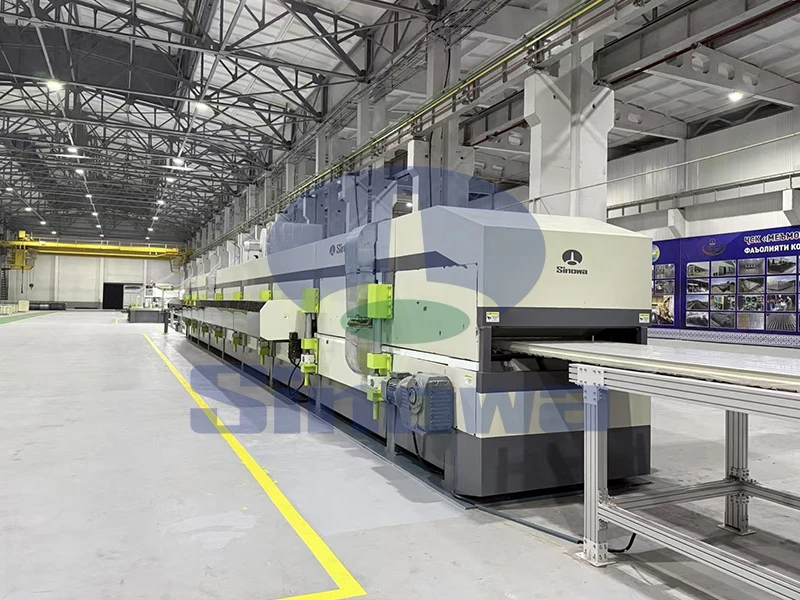
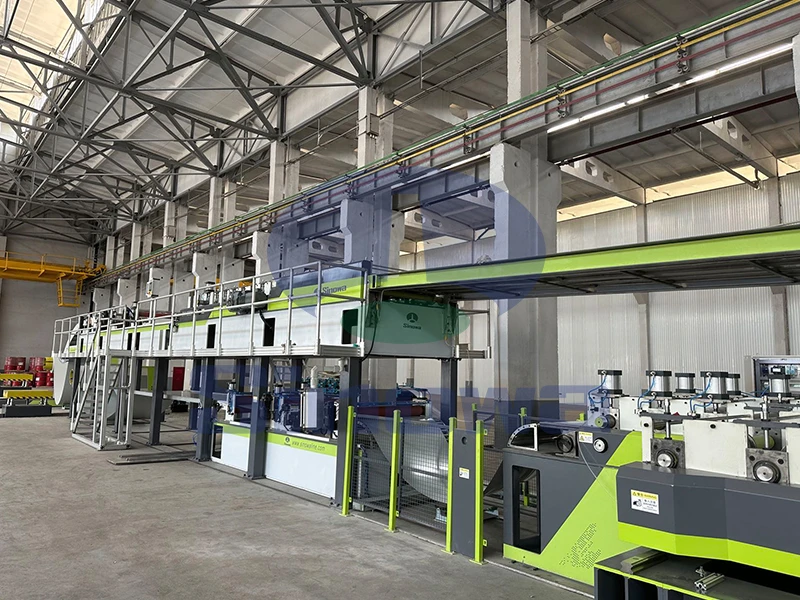
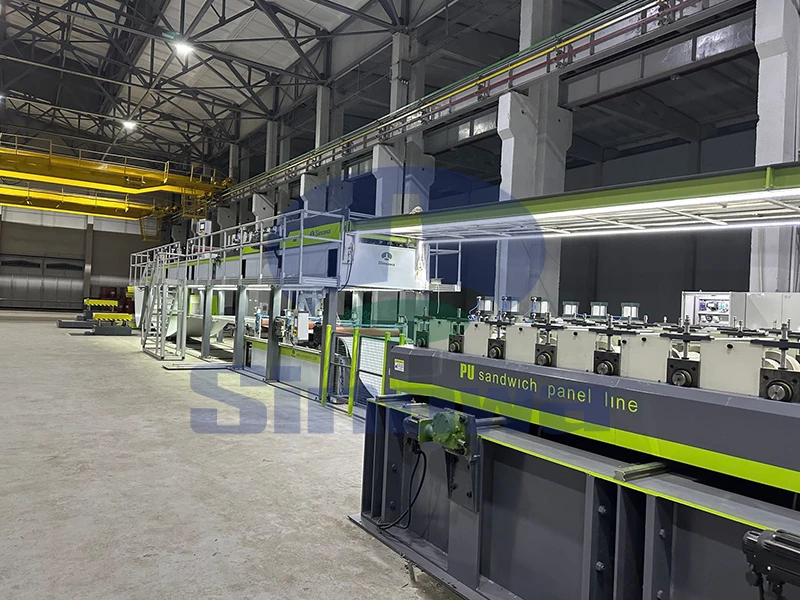
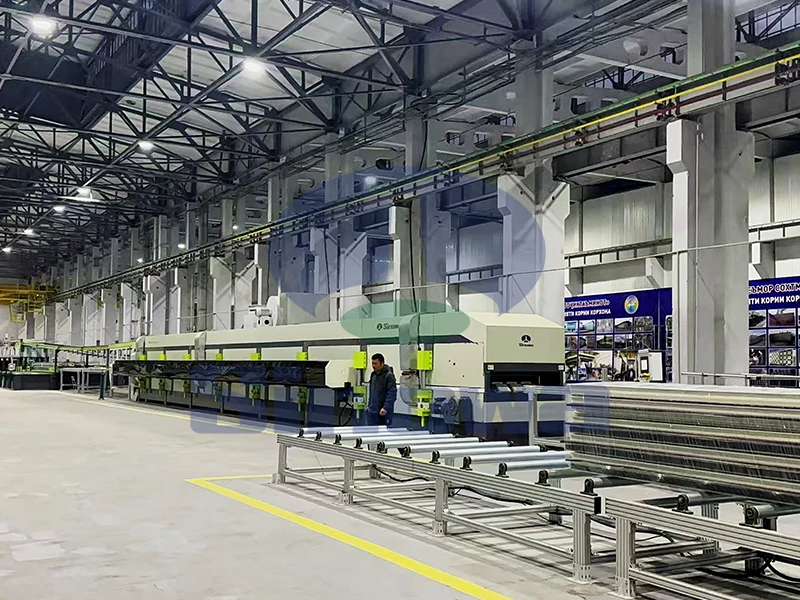
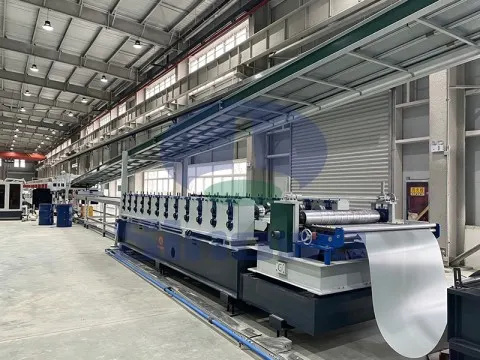
The structural composition of a complete sandwich panel machine is highly systematic and modular, and each functional module is closely connected to jointly complete the continuous production of panels. The overall equipment can be divided into multiple core functional units according to the production sequence, including raw material conveying unit, surface layer pretreatment unit, core material processing unit, gluing composite unit, pressure molding unit, constant temperature curing unit, precise cutting unit and finished product conveying unit. In addition, auxiliary systems such as intelligent control system, power transmission system and dust removal and purification system are configured to ensure the stable operation of the whole production line. Each unit has independent mechanical execution components and sensing detection parts, and the coordination between units is realized through digital signal transmission and program setting, so as to avoid manual intervention errors and realize streamlined continuous production. Different from single processing machinery, the sandwich panel production line has a high degree of integration. All functional units are arranged in a linear production layout according to the material processing sequence, which minimizes the material transportation distance in the production process and effectively improves the overall production efficiency.
PU sandwich panel machine serves as essential processing equipment for continuous fabrication of insulated composite panels, adopting streamlined production logic to complete multiple processing procedures in one integrated workflow. This type of machine mainly consists of raw material metering components, mixing and coating units, heating forming structures and trimming devices, which work together to ensure stable and orderly production operation. During operation, raw materials for polyurethane foaming are delivered at precise proportions through independent metering units, then fully blended in mixing components and evenly coated between two layers of surface materials. The composite materials are subsequently transported to constant-temperature forming areas, where controlled heating environment facilitates foaming and solidification of polyurethane materials to form compact and stable sandwich structures. After forming, the panels go through trimming processes to acquire regular and uniform outlines. Reasonable structural design enables the machine to maintain steady operating status during long-term continuous production, effectively reducing manual intervention and lowering unnecessary material waste. The finished panels produced by this machine feature good thermal insulation performance and structural stability, making them widely applicable in construction enclosure, warehouse insulation and other industrial usage scenarios, and the flexible parameter adjustment also enables the equipment to adapt to diverse production demands for panels with different thickness and specifications.
![sandwich panel machine]()
The PIR sandwich panel machine is a specialized industrial device designed for continuous fabrication of composite insulation panels, catering to the steady demand for energy-saving building materials in construction industries. This integrated production equipment consists of feeding units, foam injection systems, pressing structures and cutting assemblies, completing the whole manufacturing process from raw material feeding to finished panel forming in a continuous flow. During operation, surface metal materials are steadily transported through conveying mechanisms, while polyisocyanurate foam materials are evenly injected between two metal layers with precise material distribution control. The internal pressing structure maintains stable pressure and constant temperature to promote tight bonding and uniform foaming, ensuring consistent thickness and smooth surface of finished panels. With streamlined mechanical coordination, the machine minimizes manual intervention and maintains stable operating conditions for long-duration production. Its flexible structural design allows adjustment of panel specifications to fit diverse application scenarios such as building enclosures and thermal insulation projects. Reasonable internal layout also simplifies daily maintenance, reducing operational obstacles and prolonging service life. Optimized mechanical parameters effectively balance running stability and production efficiency, making it a practical processing device for large-scale production of high-performance insulation panels.
The rock wool sandwich panel machine serves as essential processing equipment for producing insulated building panels, integrating multiple processing procedures into one continuous production workflow. This automated production line consists of coordinated functional components to complete raw material feeding, surface plate shaping, rock wool core laying, glue coating, composite pressing, fixed-size cutting and finished product output in sequence. Adopting stable transmission and simple control logic, the equipment allows operators to adjust production parameters through intuitive control interfaces to adapt to different panel thicknesses and dimensional specifications. During operation, the equipment ensures even fitting between metal surface sheets and rock wool substrates with uniform glue distribution, which maintains stable structural compactness of finished panels. Reasonable mechanical structure design effectively reduces manual intervention, lowers labor workload and keeps consistent production stability in long-term continuous operation. With optimized internal transmission parts and buffering structures, the machine minimizes operational vibration and material deviation, avoiding flawed products caused by misalignment. Widely applied in construction material processing fields, this practical production device meets the basic manufacturing demands of thermal-insulated and fireproof sandwich panels, bringing smooth and orderly production procedures for processing factories with reliable running performance and convenient daily maintenance.
![sandwich panel machine]()
The mineral wool sandwich panel machine is a specialized industrial production device designed for continuous fabrication of composite insulation panels, widely applied in the manufacturing of building enclosure materials. This integrated production line combines multiple processing units to complete sequential production steps without excessive manual intervention. During operation, flat metal sheets are fed into the equipment and shaped into specific profiles through rolling components, while loose mineral wool raw materials are evenly arranged and leveled to maintain consistent thickness. The built-in gluing system evenly coats adhesive on the contact surfaces between metal sheets and mineral wool cores to ensure tight lamination. After composite bonding, semi-finished panels go through constant-temperature curing and pressing procedures to stabilize the internal structure and enhance overall compactness. Subsequent cutting and trimming processes standardize panel dimensions to meet general construction usage requirements. Reasonably structured with streamlined mechanical layouts, this machine simplifies production workflows and reduces manual operation errors. Its flexible structural design allows adjustable processing parameters to adapt to different panel thickness and size demands. The finished panels produced by this equipment feature stable thermal insulation and sound absorption properties, making the machine a reliable processing option for the building material manufacturing industry.
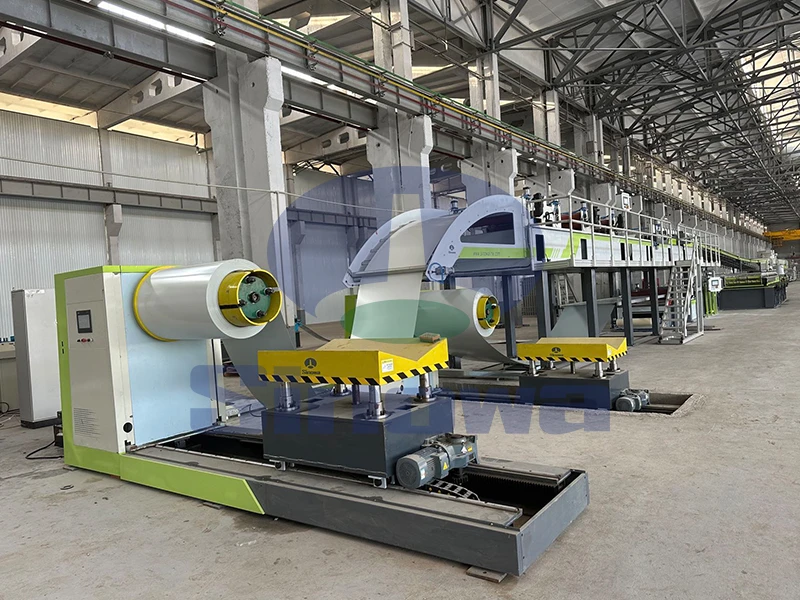
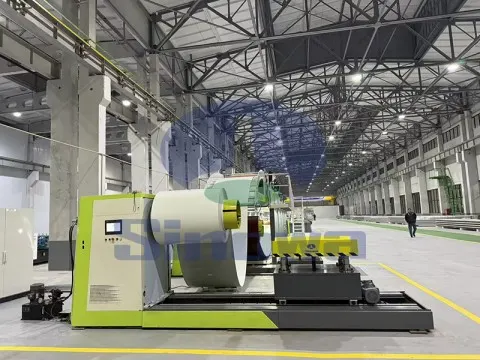
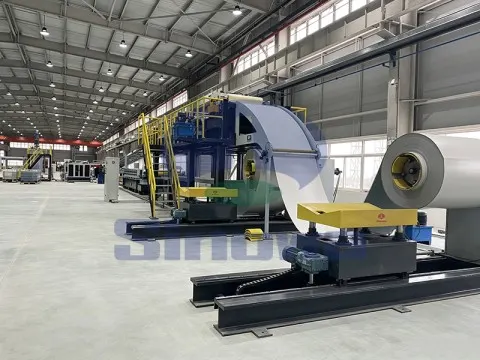
The raw material conveying unit is the starting link of the entire production process, undertaking the task of orderly and quantitative transportation of various raw materials required for panel production. The raw materials involved in production include metal coils for surface layers, non-metal flat plates, lightweight foam core materials, rock wool, glass wool and other filling core materials, as well as adhesive auxiliary materials required for composite bonding. This unit is equipped with automatic unwinding mechanisms and quantitative feeding structures. For coiled raw materials such as metal coils, the unwinding mechanism adopts a hydraulic tension control structure to ensure that the raw materials are discharged smoothly without wrinkling or tensile deformation during the conveying process. For bulk core materials and powdery auxiliary materials, the quantitative feeding structure uses spiral conveying and gravity blanking principles to accurately control the feeding amount per unit time. The internal sensing components of the unit can monitor the remaining raw material reserves in real time. When the material reserve is lower than the preset threshold, the system will automatically send out prompt signals to remind staff to supplement raw materials, so as to avoid production interruption caused by material shortage. The bottom of the conveying unit is equipped with a shock absorption base, which can reduce the vibration amplitude during mechanical operation and avoid position deviation of raw materials caused by equipment vibration.
![sandwich panel machine]()
The surface layer pretreatment unit is an indispensable processing link to ensure the bonding firmness and surface flatness of sandwich panels. Before composite molding, the surface of the surface layer raw material often has impurities such as oil stains, dust and oxide layers, which will seriously affect the bonding effect between the surface layer and the core material, and reduce the service life of finished panels. This unit is equipped with multi-stage cleaning and polishing structures. Firstly, the high-pressure air blowing device removes floating dust and particle impurities on the surface of the sheet, and then the rolling brush structure performs reciprocating scrubbing to eliminate stubborn attachments such as oil stains. For metal surface layers, the micro-polishing component will carry out fine polishing on the bonding surface to increase the surface roughness, thereby enhancing the mechanical adhesion between the adhesive and the sheet. After the cleaning and polishing process, the hot air drying structure will remove the residual moisture on the surface of the sheet. The drying temperature is kept within a stable range through temperature sensing and automatic adjustment components, which not only ensures the complete evaporation of moisture, but also avoids the structural deformation of the sheet caused by excessive temperature. All pretreatment processes are completed in a closed space, which can prevent cleaned impurities from falling back on the surface of the sheet and ensure the pretreatment quality of each batch of raw materials.
The core material processing unit is specially used for the shaping and trimming of inner filling materials. Different types of core materials have different physical characteristics. Foam materials have low density and good flexibility, while rock wool and inorganic fiber materials have high hardness and fibrous dispersion characteristics. This unit is equipped with replaceable processing molds and cutting components to adapt to core materials of different textures. For bulk and strip core materials, the leveling and trimming mechanism will calibrate the overall dimension of the core material to ensure that the thickness and width of the core material are consistent with the production standard parameters, eliminating the dimensional deviation caused by raw material molding. In view of the easy scattering of fiber core materials, the unit is equipped with dense limit structures to compress and arrange the scattered fibers orderly, improving the compactness of the core material. In addition, the surface of the core material will be subjected to micro-hole treatment in this link. The tiny holes distributed on the surface can increase the contact area between the core material and the adhesive, so that the adhesive can penetrate into the interior of the core material, further strengthening the bonding stability between layers. The processing speed of the core material keeps synchronous with the conveying speed of the surface sheet to ensure the matching continuity of subsequent composite processing.
![sandwich panel machine]()
The gluing composite unit is the key functional area to realize the layered bonding of sandwich panels, and its gluing uniformity and glue consumption control directly affect the structural stability of finished products. The unit adopts an automatic quantitative gluing system, which is composed of a glue storage tank, a conveying pipeline and a rolling gluing structure. The adhesive is transported to the gluing component through a pressure pipeline, and the rolling gluing structure evenly coats the adhesive on the bonding surfaces of the upper and lower surface sheets and the core material. Compared with manual gluing and simple spraying gluing, the rolling gluing method can effectively control the glue layer thickness, avoid local glue accumulation or glue shortage, and make the glue layer distribution more uniform. The internal flow control valve of the pipeline can adjust the glue output according to the material type and production speed. When processing thick plates and high-density core materials, the system will appropriately increase the glue consumption to ensure bonding strength; for thin lightweight panels, the glue consumption will be reduced to save production materials. After the gluing operation is completed, the preliminary composite assembly of the surface layer and the core material is completed through the limit docking structure, and the initial positioning is realized to prevent layer dislocation in the subsequent pressing process.
The pressure molding unit undertakes the task of compacting and shaping composite boards, which is the core link to determine the flatness and overall compactness of sandwich panels. This unit is equipped with a multi-group roller pressing structure and a hydraulic pressure adjusting system. The composite semi-finished boards enter the pressing area at a constant speed, and the upper and lower pressure rollers apply uniform vertical pressure to the boards. The pressure value can be dynamically adjusted according to the thickness, hardness and material characteristics of the panels. For metal surface panels with high hardness, the system will set higher pressure parameters to eliminate the gap between layers; for flexible non-metal panels, low-pressure slow pressing is adopted to prevent surface indentation and structural damage. The pressure rollers are made of wear-resistant and anti-corrosion metal materials, and the surface is finely polished to avoid scratching the surface of the panels. Meanwhile, the horizontal calibration structure is configured on both sides of the pressing unit to correct the horizontal deviation of the boards in the conveying process, ensuring that the overall thickness of the pressed panels is consistent without warping and deformation. The internal temperature of the pressing area is kept constant through the auxiliary heating structure, which can accelerate the initial curing reaction of the adhesive and shorten the molding cycle of the panels.
![sandwich panel machine]()
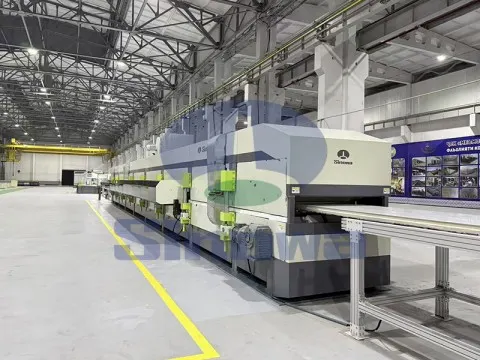
The constant temperature curing unit is used to further strengthen the bonding performance of composite panels and stabilize the internal structural stress of materials. After pressure molding, the adhesive inside the panels has not been completely cured, and the internal stress between different materials has not been completely released. If the panels are directly cut and formed, it is easy to produce problems such as layer separation and plate warping in the later use process. The interior of the curing unit is a closed heat preservation space, which is divided into multiple temperature control areas. The circulating hot air system is adopted to make the internal temperature evenly distributed without local overheating. According to the material characteristics of the panels, the system sets different curing temperature and time parameters. organic foam core materials are cured at medium and low temperatures to avoid thermal deformation of the core material structure; inorganic fireproof core materials can withstand higher curing temperatures to improve the curing efficiency of high-temperature resistant adhesives. During the curing process, the internal humidity is synchronously controlled to prevent the adhesive from deteriorating due to excessive dryness or moisture absorption. After graded constant temperature curing, the adhesive forms a stable bonding layer, and the internal stress of each material layer is completely released, which greatly improves the structural stability and durability of the finished panels.
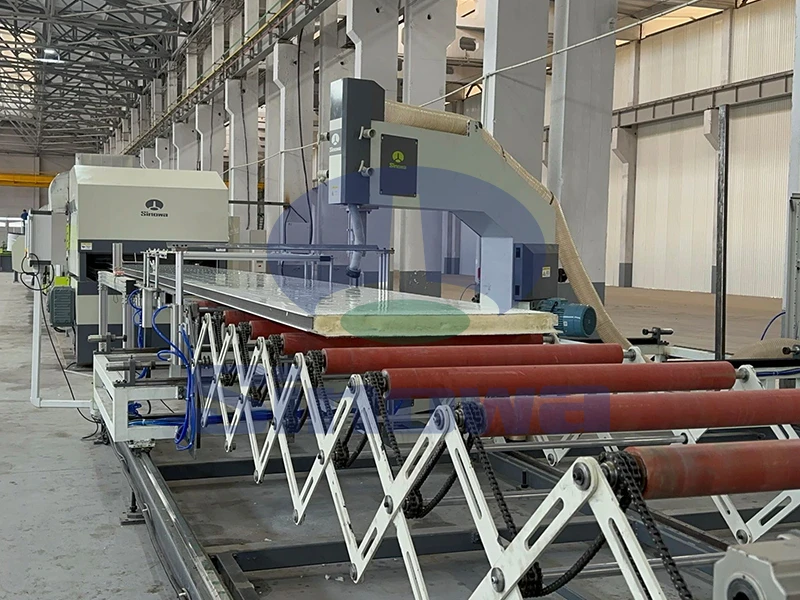
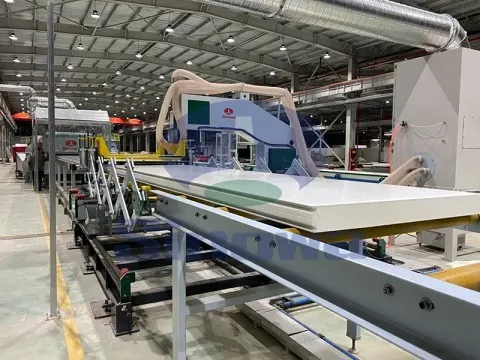
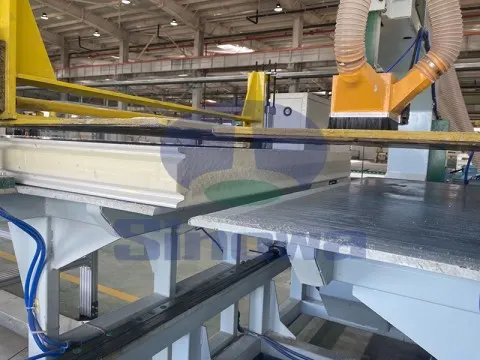
The precise cutting unit realizes the fixed-length cutting and edge trimming of cured semi-finished panels to meet the dimensional requirements of different application scenarios. This unit is equipped with numerical control cutting tools and infrared positioning sensing components. Before cutting, the infrared positioning system scans the outline of the panels in real time, accurately identifies the cutting position, and automatically adjusts the cutting angle and cutting stroke according to the preset dimensional parameters. The cutting tools are made of high-hardness alloy materials, which have strong wear resistance and cutting smoothness, and can complete cutting operations without generating rough burrs on the plate section. In order to adapt to different production requirements, the cutting unit supports multi-mode processing functions, including straight cutting, edge chamfering and notch trimming. For panels used for building exterior walls, the edge chamfering process is adopted to avoid sharp corners from causing collision damage during transportation and installation; for special-shaped engineering components, customized notch cutting can be completed through program setting. The cutting waste generated in the processing process is automatically collected by the negative pressure dust collection structure to avoid waste accumulation affecting the operating accuracy of mechanical components.
![sandwich panel machine]()
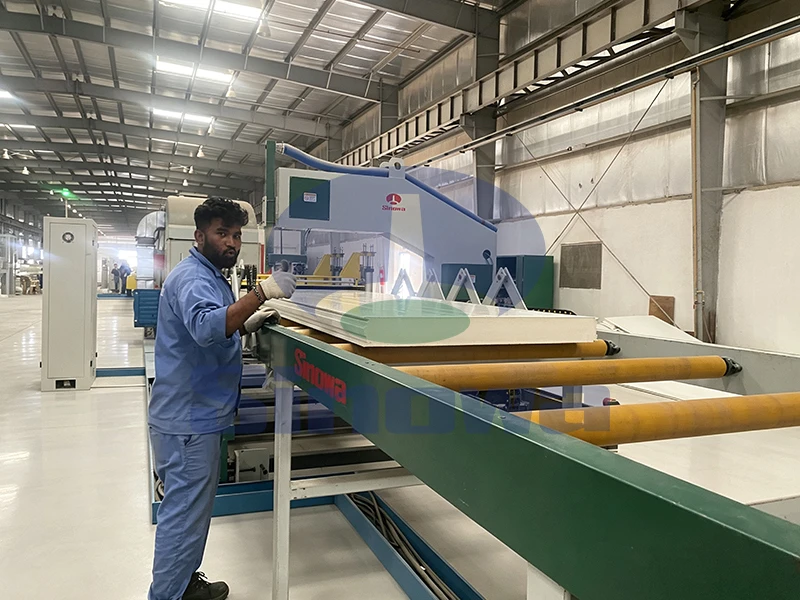
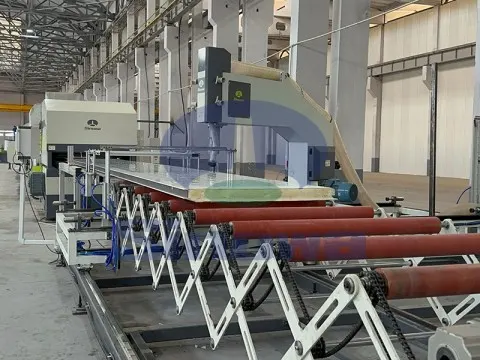
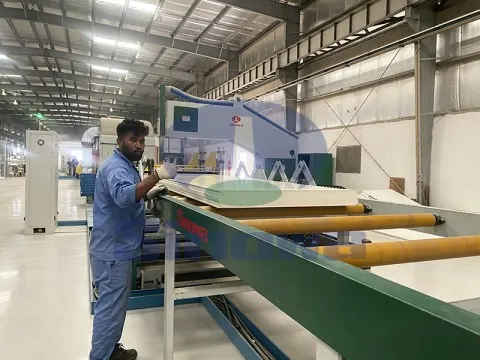
The finished product conveying unit is the terminal link of the production line, responsible for the orderly output, temporary storage and stacking of finished sandwich panels. This unit adopts a silent roller conveying structure, which can smoothly transport the cut finished panels to the designated stacking area at a constant speed. The conveying speed is matched with the cutting rhythm to avoid plate accumulation and collision. The stacking mechanism is equipped with a pneumatic lifting structure, which realizes automatic layered stacking of finished panels. The stacking height and spacing can be adjusted according to the plate thickness and storage requirements, so as to prevent extrusion deformation between stacked panels. In addition, the unit is equipped with a simple quality detection auxiliary structure. Staff can conduct rapid visual inspection of the surface flatness, bonding integrity and cutting precision of the panels during the conveying process, and screen out unqualified products in time to avoid defective products from flowing into the storage link. The bottom of the conveying unit is provided with a anti-slip limit base to ensure the overall stability of the equipment during long-term continuous operation.
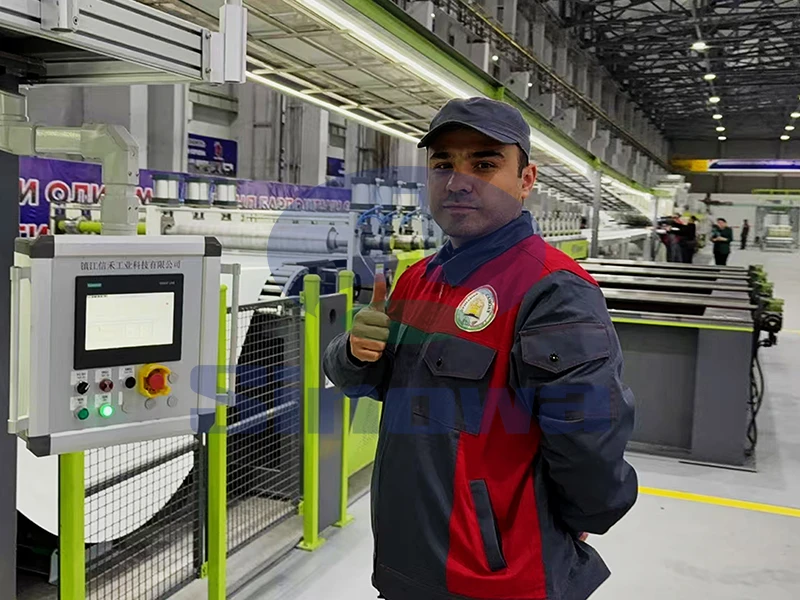
The intelligent control system runs through all functional units of the sandwich panel machine and is the central brain to coordinate the operation of the whole production line. The system takes programmable logic controllers as the core control component, and connects with sensing elements, execution motors and adjusting valves of each unit through signal lines. The human-computer interaction interface is simple and intuitive. Operators can set production parameters such as raw material feeding speed, gluing amount, pressing pressure, curing temperature and cutting size on the touch panel. After the parameters are confirmed, the system automatically generates an operation program to realize unmanned continuous production. In the production process, temperature sensors, pressure sensors and displacement sensors monitor the operating state of the equipment in real time. Once abnormal parameters such as excessive pressure, abnormal temperature and material conveying stagnation are detected, the system will automatically trigger an alarm mechanism and suspend the operation of faulty units to avoid equipment damage and product quality problems. The system also has a data storage function, which can record the production quantity, parameter changes and abnormal information of each batch of products, providing data support for subsequent production optimization and equipment maintenance.
![sandwich panel machine]()
In terms of mechanical operation logic, the sandwich panel machine follows the processing principle of sequential propulsion and synchronous coordination. All functional units keep a matched operating speed to ensure the continuity of material transmission. From raw material feeding to finished product output, the materials are always in a stable linear conveying state, without frequent acceleration, deceleration and stagnation. The power transmission system adopts servo motor drive and gear chain transmission structure, which has high transmission accuracy and low energy consumption. The transmission parts are equipped with lubrication and wear-resistant structures to reduce mechanical friction loss during long-term operation. In addition, the equipment adopts a modular assembly design in structural layout. Each functional unit is relatively independent in structure, which facilitates daily disassembly, maintenance and component replacement. When a single unit fails, the maintenance personnel can quickly locate the faulty module without affecting the normal operation of other units, effectively reducing the equipment downtime and improving the utilization rate of the production line.
The daily maintenance and standardized operation of sandwich panel machines are crucial to prolong the service life of equipment and maintain stable production quality. In terms of daily operation, operators need to complete pre-production inspection work, including checking the tightness of connecting parts, the flexibility of transmission components, the residual amount of lubricating oil and the sensitivity of sensing elements. Before formal production, no-load trial operation should be carried out to observe whether there is abnormal noise and vibration in the equipment, and parameter calibration should be completed to ensure that all indexes meet the production standards. During the production process, it is necessary to regularly clean the dust and adhesive residues attached to the surface of mechanical components to prevent impurities from accumulating and affecting the operating accuracy. For the gluing system, the residual adhesive in the pipeline needs to be cleaned regularly to avoid pipeline blockage caused by adhesive curing. In terms of regular maintenance, the transmission gears, bearings and other vulnerable parts should be regularly replaced with lubricating grease, and the worn cutting tools and pressure rollers should be inspected and replaced periodically. The circuit control part needs to be dust-proof and moisture-proof treated to prevent circuit short circuit and signal delay. Scientific maintenance management can effectively reduce the failure rate of equipment and keep the production line in an efficient operating state for a long time.
![sandwich panel machine]()
Sandwich panel machines have a wide range of industrial application values, covering many fields such as civil construction, industrial manufacturing, cold storage engineering and temporary building construction. In the field of industrial plant construction, the equipment produces metal sandwich panels with high strength and corrosion resistance, which are used for factory wall panels and roof panels. Such panels can adapt to harsh industrial environments such as high temperature, humidity and chemical corrosion, and reduce the maintenance cost of buildings. In cold storage and fresh-keeping engineering, the low thermal conductivity of foam core panels produced by the machine can effectively block heat transfer, reduce the energy consumption of refrigeration equipment, and meet the constant temperature storage requirements of food and chemical products. In temporary construction facilities such as construction dormitories and emergency rescue houses, lightweight sandwich panels are easy to transport and assemble, which can shorten the construction cycle and realize rapid construction of buildings. In addition, with the improvement of environmental protection requirements in the construction industry, the machine can produce inorganic fireproof sandwich panels, which have excellent fire resistance and smoke insulation performance, and are widely used in public buildings with high fire protection standards.
From the perspective of industry development trends, sandwich panel machines are constantly evolving towards intelligence, energy conservation and diversification. In terms of intelligent upgrading, the equipment will be combined with Internet of Things technology to realize remote monitoring and cloud data management. Managers can check the operating status of the production line and production data in real time through mobile terminals and computers, and complete remote parameter adjustment and fault diagnosis. In terms of energy saving and environmental protection, the optimized thermal circulation system and power transmission structure can reduce energy consumption per unit of products. The closed dust removal and waste recycling structure can realize the recovery and reuse of production waste, reducing the pollution of production links to the surrounding environment. In terms of diversified production, the equipment will strengthen the flexible production capacity, realize the rapid switching of different types of core materials and surface materials, and complete the integrated production of panels with different thicknesses, shapes and functions, so as to meet the personalized customization needs of different industries. In addition, the equipment will adopt more humanized structural design, optimize the operation interface and maintenance space, reduce the operation difficulty and maintenance cost, and improve the overall production efficiency.
In the context of the continuous development of the global construction industry and the continuous improvement of building energy-saving standards, the market demand for high-performance sandwich panels will continue to grow, which puts forward higher technical requirements for sandwich panel machines. The future equipment research and development will focus on breaking through the technical bottlenecks of high-strength composite bonding, ultra-thin plate processing and intelligent quality detection. By optimizing the mechanical structure and control algorithm, the production precision and product qualification rate will be further improved. At the same time, combined with the new material research and development results, the equipment will be adapted to more new composite materials to expand the application boundary of sandwich panels. As an important mechanical equipment in the field of building materials manufacturing, sandwich panel machines will always rely on technological innovation to promote the upgrading of the composite panel industry, provide efficient and reliable production guarantees for the construction industry, and make important contributions to the realization of green building and industrial construction development goals.
Sinowa is a professional manufacturer of sandwich panel machine in china, we provide diversified and high-performance sandwich panel production lines, including fully automatic continuous PU sandwich panel line and customized special lines to meet mass production and personalized order demands. These sandwich panel lines support processing multiple foam core materials, such as PU, PIR, mineral wool, rock wool and glass wool, covering different insulation and fireproof standards.
Featuring stable operation, high efficiency, energy saving and easy maintenance, our PU sandwich panel line deliver sandwich panels with excellent thermal insulation, fire resistance, sound insulation and lightweight durability. The finished panels are widely applied in industrial workshops, warehouse roofing and wall cladding, cold storage insulation, serving global construction and industrial insulation markets.
https://www.cnsinowa.com/sandwich-panel-machines/sandwich-panel-machine.html