 sandwich panel machine
The core design logic of energy saving PU sandwich panel machine lies in the systematic optimization of the entire production flow, covering raw material metering, foaming, forming, laminating, curing, and finished product cutting. Unlike conventional equipment that relies on fixed power output and open-loop operation modes, energy-saving models adopt a full-process adaptive power regulation system and closed thermal circulation structure, fundamentally solving the problems of excessive heat loss, idle power consumption, and raw material waste that have long troubled traditional production lines. The operational energy consumption of modern optimized equipment is significantly lower than that of traditional models, effectively reducing the comprehensive energy cost of panel production while maintaining stable and superior product quality, achieving a perfect balance between production efficiency, product performance, and energy conservation.
The production principle of PU sandwich panels determines that the foaming and curing stage is the key link of energy consumption, and it is also the core optimization focus of energy saving PU sandwich panel production machine. Polyurethane raw materials require precise temperature, pressure, and proportion control during mixing and foaming to form a uniform and dense foam core layer. Traditional equipment often suffers from inaccurate raw material ratio control and unstable temperature regulation, leading to inconsistent foaming density, which not only affects the thermal insulation performance of finished panels but also causes repeated heating and power compensation, resulting in massive energy waste. Energy-saving equipment is equipped with high-precision dynamic metering and mixing systems that can automatically adjust the feeding proportion and mixing speed of polyurethane raw materials according to real-time production speed and environmental temperature. This precise control ensures that the foam core maintains a highly uniform density during the forming process, eliminating quality defects caused by uneven mixing and avoiding secondary processing and rework energy consumption caused by unqualified products.
In terms of thermal energy management, energy saving PU sandwich panel manufacturing machine adopts a fully enclosed thermal insulation structure and waste heat recovery circulation system, which is the most critical energy-saving technology breakthrough compared with traditional equipment. The foaming and curing process of PU foam requires a stable constant temperature environment. Traditional open production structures lead to continuous heat dissipation during equipment operation, requiring long-term high-power heating to maintain process temperature. The optimized equipment builds an independent closed thermal insulation space for the curing and laminating area, which greatly reduces internal heat loss and shortens the preheating time required for equipment startup. At the same time, the built-in waste heat recovery device can capture the residual heat generated during the continuous lamination and curing process, and reuse the recovered heat for preheating raw materials and pre-warming the production workshop environment. This cyclic thermal energy utilization mode effectively reduces the additional energy consumption required for raw material preheating and equipment temperature stabilization, realizing efficient recycling of thermal resources and reducing overall energy loss in the production process.
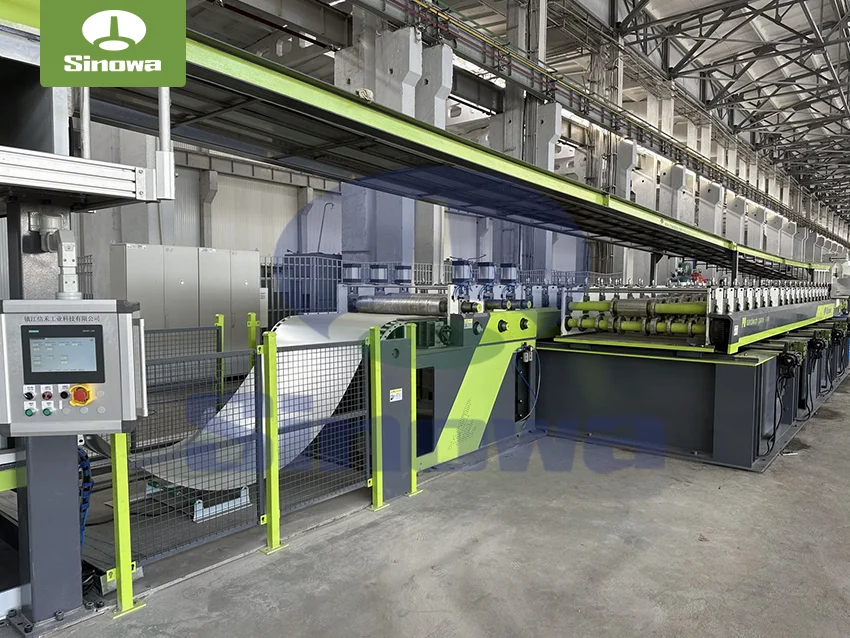
The power drive system of the equipment has also undergone comprehensive energy-saving upgrading. Traditional sandwich panel production lines mostly use fixed-frequency motors with constant power output, which will generate a large amount of invalid power consumption during equipment idling, low-speed operation, and material switching. Energy saving PU sandwich panel making machine is fully equipped with high-efficiency variable frequency drive motors and intelligent power management modules. The system can monitor the real-time operating load of each functional unit including uncoiling, roll forming, pouring, lamination, and cutting in real time, and automatically adjust the operating power and operating speed of the motor according to the production load. When the equipment is in standby, material replacement, or low-speed production state, the system will intelligently reduce power output to avoid long-term no-load power consumption. This adaptive power regulation mode completely changes the fixed energy consumption mode of traditional equipment, greatly reducing invalid power loss in the full-cycle operation process, and significantly improving the effective utilization rate of electric energy.
The structural optimization of the laminating and forming unit further enhances the energy-saving performance and production stability of the equipment. The double-track continuous laminating structure adopted by energy-saving models ensures uniform pressure distribution during the composite bonding process of the upper and lower surface materials and PU foam core layer. Uniform and stable laminating pressure avoids local extrusion deformation and incomplete bonding of the foam layer, ensuring the overall structural uniformity of finished panels. At the same time, the optimized mechanical structure reduces the operating resistance of the equipment during continuous operation, lowering the mechanical loss and power consumption caused by friction resistance. In addition, the equipment adopts modular structural design, which not only improves the overall operational stability and reduces failure rate but also facilitates daily maintenance and parameter adjustment. Stable equipment operation reduces downtime and repeated startup energy consumption, because frequent startup and shutdown of mechanical equipment will generate instantaneous high power consumption, and stable continuous production can effectively avoid this part of energy waste.
Raw material utilization efficiency is another important dimension of energy saving and environmental protection for energy saving PU sandwich panel machinery. Traditional open foaming equipment has a low raw material utilization rate, and excess polyurethane raw materials are volatilized or wasted during the pouring and foaming process, which not only increases production costs but also causes unnecessary resource waste and environmental burden. Modern energy-saving equipment adopts closed mold foaming technology and precise quantitative pouring control, which can accurately control the pouring amount of polyurethane raw materials according to the thickness and specification of the produced panels. The closed foaming structure avoids raw material overflow and volatilization, greatly improving the utilization rate of PU raw materials. High raw material utilization means that the same amount of raw materials can produce more qualified finished products, indirectly reducing the energy consumption per unit product and realizing energy conservation and consumption reduction from the source of raw material application.
In terms of intelligent control, energy saving PU sandwich panel production machinery is equipped with a mature integrated intelligent control system, which realizes full-process automated monitoring and precise parameter control. The system can collect and analyze real-time data such as production speed, foaming temperature, curing pressure, raw material flow, and equipment operating power, and automatically optimize and adjust various process parameters according to changes in external ambient temperature and production specifications. For example, in low-temperature environments, the system will appropriately extend the constant temperature curing time and fine-tune the raw material mixing temperature to ensure product qualification rate; in high-temperature environments, it will reduce redundant heating power to avoid excessive energy supply. The intelligent automatic regulation function eliminates the energy waste caused by manual parameter adjustment errors and delayed response, maintaining the equipment in the optimal energy-saving operating state at all times. Meanwhile, the system has an abnormal state monitoring function, which can timely identify abnormal energy consumption and equipment operation faults, avoiding long-term high-energy consumption operation caused by hidden equipment faults.
The energy-saving advantages of the equipment are also reflected in the long-term continuous production adaptability. The optimized heat preservation and heat insulation design enables the equipment to maintain a stable production temperature range in different seasonal and environmental temperature conditions, realizing all-weather continuous production throughout the year. Traditional equipment is greatly affected by ambient temperature, requiring long-term high-power heating in winter and prone to foaming quality instability in summer, which requires frequent parameter adjustment and energy compensation. Energy-saving equipment with an independent thermal insulation structure can quickly reach the optimal production temperature after startup and maintain temperature stability for a long time, greatly reducing the energy consumption required for temperature compensation in extreme environments. The stable and continuous production capacity not only improves production efficiency and order delivery capacity but also avoids repeated temperature adjustment and equipment debugging energy consumption caused by intermittent production.
In terms of environmental protection performance synchronized with energy saving, energy saving PU sandwich panel line abandons inefficient and environmentally harmful production processes and adopts green and low-carbon production configurations. The optimized foaming system uses low-carbon and environmentally friendly foaming components, which reduces harmful gas volatilization during production while ensuring foaming efficiency. The supporting waste gas and residual material recovery device can collect and treat trace waste generated in the production process, realizing clean production. While reducing energy consumption, the equipment minimizes the impact of the production process on the surrounding environment, conforming to the global industrial green upgrading trend. The low energy consumption and low emission production mode not only reduces the operating cost of production enterprises but also helps enterprises meet increasingly stringent environmental production standards and enhance the green competitiveness of products in the market.
The finished products produced by energy saving PU sandwich panel production line also have more superior comprehensive performance, which indirectly realizes energy saving and emission reduction in the downstream application field. Precise foaming and curing control makes the PU foam core layer of the sandwich panel have uniform and fine cell structure, excellent thermal insulation performance, and high structural strength. The finished panels have lower thermal conductivity and better airtightness, which can effectively reduce the energy consumption of building temperature regulation and cold storage refrigeration operation in subsequent application scenarios. For prefabricated buildings and cold storage projects that use these high-quality sandwich panels, the excellent thermal insulation effect can greatly reduce the load of air conditioning and refrigeration equipment, realizing long-term energy saving in the whole life cycle of building and facility operation. This upstream production energy saving and downstream application energy saving linkage effect makes the energy-saving sandwich panel production equipment have higher industrial application value.
With the continuous advancement of industrial energy-saving technology, the iterative upgrading of energy saving polyurethane sandwich panel production line is also accelerating. The current equipment optimization direction is mainly focused on deeper intelligent energy-saving control, higher-efficiency heat recovery systems, and more refined raw material utilization technology. Future equipment will realize more accurate full-process digital energy consumption monitoring, which can independently analyze the energy consumption data of each production link, automatically optimize the production process flow, and further reduce the unit energy consumption of products. At the same time, the integration of multi-energy complementary utilization technology will make the equipment more adaptable to green energy production modes, helping the entire sandwich panel manufacturing industry move towards low-carbon and sustainable development.
In summary, energy saving PU sandwich panel machine has completely subverted the high-consumption and low-efficiency production mode of traditional equipment through systematic optimization of thermal circulation, power drive, raw material utilization, and intelligent control. Its core advantages are reflected in the full-process reduction of invalid energy consumption, improvement of resource utilization efficiency, stability of product quality, and realization of green and clean production. In the context of global emphasis on energy conservation, emission reduction, and green industrial transformation, this energy-saving production equipment not only reduces the production operating costs of manufacturing enterprises but also provides high-quality and low-carbon composite material products for the downstream construction and cold chain industries, playing an important role in promoting the high-quality and sustainable development of the entire industrial chain. As market demand for green building materials continues to expand and energy-saving technology continues to mature, energy saving PU sandwich panel manufacturing line will become the standard configuration of the industry, leading the sandwich panel manufacturing industry to develop in a more efficient, low-carbon, and intelligent direction.
https://www.cnsinowa.com/sandwich-panel-machines/energy-saving-pu-sandwich-panel-machine.html